On this page
The Central Asian Shepherd Dog, often called the Alabai, is a powerful giant livestock guardian breed with nutritional needs that differ significantly from most large dogs. Their slow growth rate, massive bone structure, and naturally lower activity levels mean that proper feeding is critical for maintaining healthy joints, ideal body weight, and long-term mobility.
Many owners searching for “What is the best food for a Central Asian Shepherd Dog?” or “How much should an Alabai eat per day?” quickly discover that overfeeding can be just as harmful as underfeeding.
Why Central Asian Shepherd Dog Nutrition Is Different
Originally developed to protect livestock in harsh climates across Central Asia, these dogs evolved to thrive on nutrient-dense diets without excessive calories. Unlike sporting breeds that require constant high-energy intake, Central Asian Shepherd Dogs typically perform best with moderate calorie consumption and controlled growth during puppyhood.
- Slow skeletal and joint development
- Efficient metabolism compared to many giant breeds
- High risk of obesity when overfed
- Greater sensitivity to excessive growth rates during puppyhood
- Better digestive stability with consistent diets
Rapid growth, excessive calories, and poorly balanced diets can contribute to hip dysplasia, elbow problems, and unnecessary stress on developing joints.
Best Food for a Central Asian Shepherd Dog
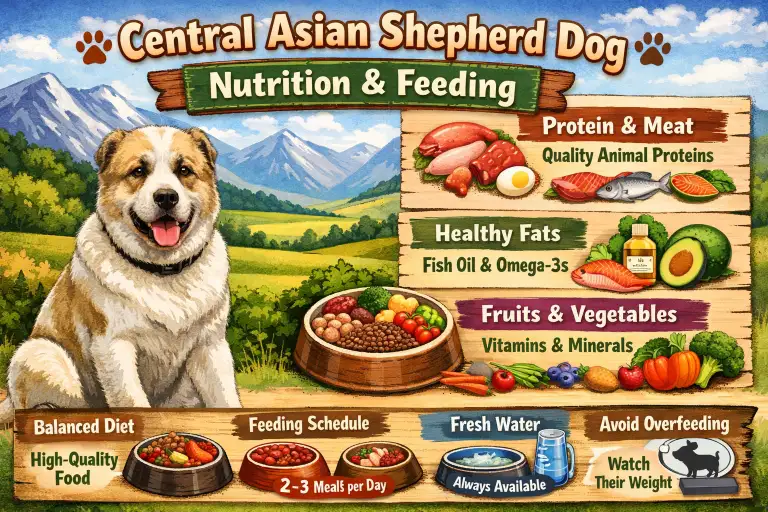
The best diet for a Central Asian Shepherd focuses on balanced nutrition, joint support, and controlled calories.
| Diet Type | Best For | Main Advantages | Potential Drawbacks |
|---|---|---|---|
| Large Breed Kibble | Most households | Balanced and affordable | Quality varies by manufacturer |
| Fresh Cooked Food | Owners seeking premium nutrition | Highly digestible and moisture rich | Higher monthly cost |
| Raw Feeding | Experienced owners | Minimal processing | Requires professional balancing |
| Canned Food | Picky eaters | Excellent palatability | Often calorie dense |
| Freeze-Dried Diets | Travel and convenience | Long shelf life | Expensive for giant breeds |
| Homemade Diets | Medical or allergy cases | Ingredient control | Requires veterinary formulation |
What to Look for in Dog Food Labels
| Nutrient | Importance | Recommended Approach |
|---|---|---|
| Protein | Muscle maintenance | Moderate to high quality protein sources |
| Fat | Energy and coat health | Moderate fat levels |
| Calcium & Phosphorus | Bone development | Large-breed specific balance |
| AAFCO Certification | Nutritional completeness | Complete and balanced formulation |
| Life Stage Formula | Growth requirements | Large or giant breed recipes |
Avoid foods marketed as extreme protein, mass gain formulas, or products promising rapid growth in puppies.
How Much Should a Central Asian Shepherd Dog Eat?
Daily calorie needs vary depending on body weight, age, and activity level.
| Body Weight | Low Activity | Moderate Activity | Working Guardian |
|---|---|---|---|
| 88 lbs (40 kg) | 1,600–1,800 kcal | 1,900–2,100 kcal | 2,300–2,500 kcal |
| 110 lbs (50 kg) | 1,800–2,000 kcal | 2,100–2,300 kcal | 2,500–2,800 kcal |
| 132 lbs (60 kg) | 2,000–2,200 kcal | 2,300–2,600 kcal | 2,800–3,100 kcal |
| 154 lbs (70 kg) | 2,200–2,400 kcal | 2,600–2,900 kcal | 3,100–3,400 kcal |
These values are starting points only. Monitor body condition rather than relying solely on food measurements.
Central Asian Shepherd Puppy Feeding Guide
One of the biggest mistakes owners make is trying to encourage rapid growth. Giant breed puppies should grow slowly and steadily.
- Use giant breed puppy food.
- Feed measured meals rather than free-feeding.
- Avoid unnecessary supplements.
- Monitor weight and body condition monthly.
- Prioritize joint health over rapid size gains.
| Age | Meals Per Day |
|---|---|
| 2–6 Months | 3 Meals Daily |
| 6–18 Months | 2–3 Meals Daily |
| Adult | 2 Meals Daily |
| Senior | 2 Smaller Meals Daily |
Common Central Asian Shepherd Feeding Problems
Weight Gain
This breed gains weight easily if activity decreases while calorie intake remains unchanged.
Loose Stool
Rich foods, rapid diet changes, and excessive treats are the most common causes.
Picky Eating
Many Central Asian Shepherd Dogs naturally eat less frequently than other breeds. Skipping a meal occasionally is often normal if body weight remains stable.
Bloat Risk
Because of their size, splitting meals into two or more feedings per day may help reduce the risk of gastric dilatation-volvulus (GDV).
Safe Treats for Central Asian Shepherd Dogs
- Cooked chicken
- Lean beef
- Boiled eggs
- Carrots
- Green beans
- Dog-safe training treats
Foods to Avoid
- Chocolate
- Onions and garlic
- Grapes and raisins
- Cooked bones
- Fatty table scraps
- Salty human snacks
Frequently Asked Questions
What is the best food for a Central Asian Shepherd Dog?
Most dogs thrive on a premium large or giant breed formula with moderate calories and balanced minerals.
How much should an Alabai eat per day?
Most adult dogs consume between 1,800 and 3,000 calories daily depending on body weight and activity level.
Do Central Asian Shepherd Dogs need supplements?
Most healthy dogs eating complete diets do not require supplements unless recommended by a veterinarian.
Is grain-free food better for Central Asian Shepherd Dogs?
No. Grain-free diets are not necessary unless a veterinarian confirms a specific food allergy.
Can I feed raw food to a Central Asian Shepherd Dog?
Yes, but only if the diet is professionally balanced to avoid nutritional deficiencies and skeletal problems.
Final Thoughts
The best Central Asian Shepherd Dog diet is rarely the most expensive or trendy option. These giant guardians perform best with consistent meals, controlled portions, balanced nutrients, and slow growth during puppyhood.

Ata Ur Rehman is the founder of Pet Age in Human Years Calculator, an educational platform that provides age conversion charts and lifespan guides for dogs, cats, birds, and other companion animals. His work focuses on helping pet owners understand how animal ages translate into human years using commonly accepted age conversion formulas and published lifespan averages.
The website compiles breed and species lifespan data from kennel clubs, breed organizations, and general animal lifespan studies to present simple and easy-to-understand guides for pet owners worldwide.
This website was created to centralize animal age conversion charts into one easy reference platform for pet owners.
This article is for general education. For symptoms, medication, diet changes, or health concerns, use a qualified veterinarian who can assess your individual pet.