On this page
Dachshund History, Appearance, Size Types, and Breed Traits
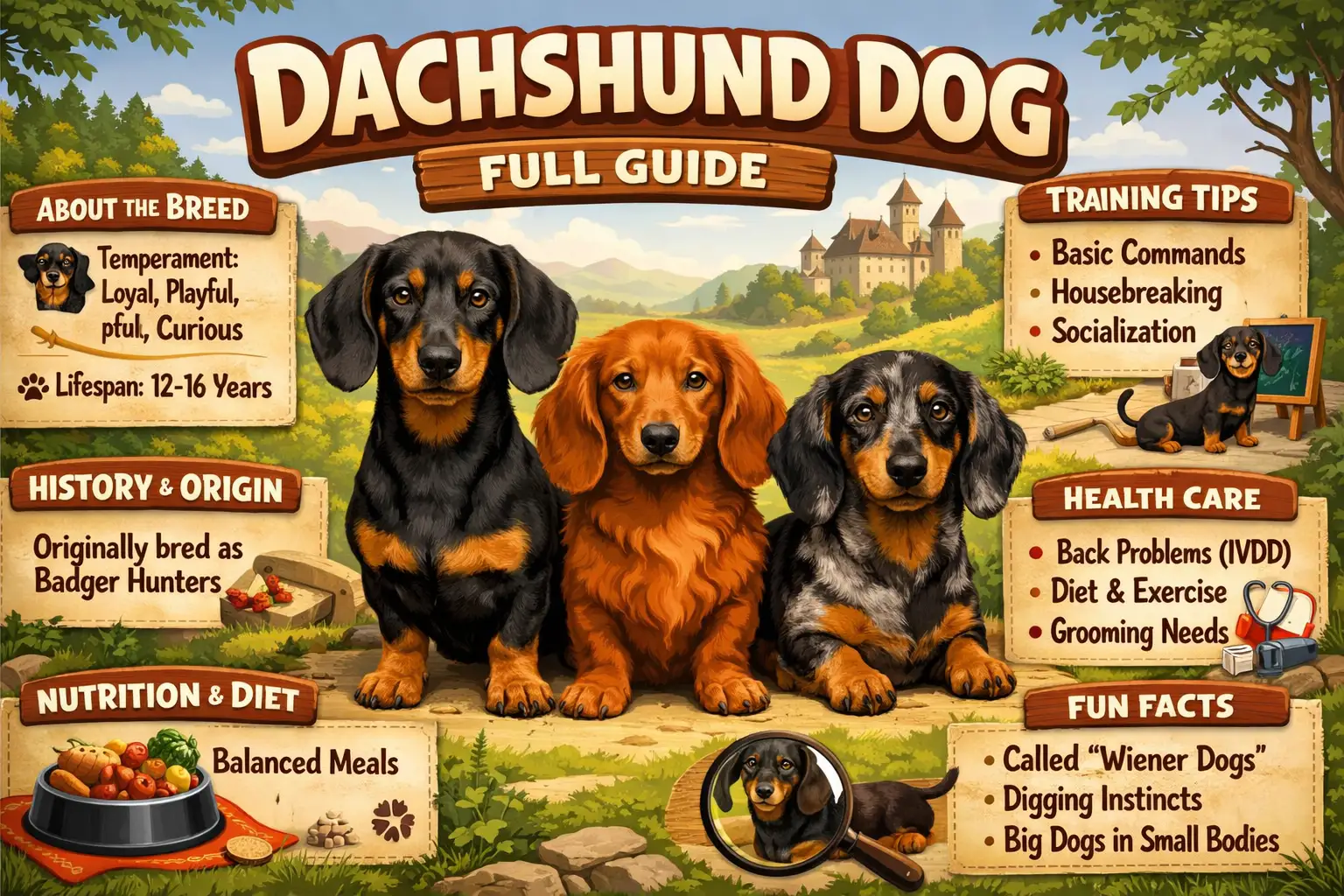
The Dachshund dog breed is a small hound known for its long body, short legs, bold temperament, and loyal personality. Often called a sausage dog or wiener dog, the Dachshund may look playful and cute, but this breed was originally developed as a determined hunting dog with strong instincts, confidence, and a loud alert bark.
This Dachshund dog breed guide explains what future owners and current owners should know before choosing or caring for this breed. You’ll learn about Dachshund temperament, lifespan, size types, coat types, grooming needs, training difficulty, health risks, ownership cost, and whether this breed is the right fit for your home.
Dachshunds can be excellent companions for the right owner, but they are not automatically easy dogs. Their long spine requires careful handling, their stubborn personality needs patient training, and their strong attachment to people means they do best with owners who can provide structure, attention, and safe daily routines.
Dachshund Dog Breed Quick Answer
The Dachshund is a small German hound breed with a typical lifespan of about 12 to 16 years. Most Dachshunds are loyal, clever, brave, playful, alert, and stubborn. They come in standard and miniature sizes, with smooth, long-haired, and wire-haired coat types. The breed is best for owners who can manage barking, prevent jumping and stair strain, control weight, and provide consistent training.
| Topic | Quick Details |
|---|---|
| Breed type | Small hound dog |
| Country of origin | Germany |
| Best known for | Long body, short legs, bold personality |
| Common temperament | Loyal, clever, brave, stubborn, alert |
| Typical lifespan | 12-16 years |
| Size types | Standard and miniature |
| Coat types | Smooth, long-haired, and wire-haired |
| Main health concern | Back problems, spine strain, and excess weight |
| Best for | Owners who want a loyal small dog and can manage training, barking, and safe handling |
What This Dachshund Guide Covers
- Dachshund history, appearance, size types, and coat types
- Standard vs miniature Dachshund differences
- Dachshund temperament, barking, stubbornness, and behavior
- Dachshund behavior with kids, strangers, dogs, and cats
- Dachshund exercise, training, grooming, and daily care needs
- Dachshund lifespan, aging, and health risks
- Dachshund cost, pros and cons, and lifestyle fit
- Common questions about Dachshund ownership
The Dachshund dog breed originated in Germany, where it was developed as a hunting hound for tracking and pursuing badgers, rabbits, and other animals that lived in underground tunnels. The name “Dachshund” is commonly translated as “badger dog,” which reflects the breed’s original working purpose.
This background explains many Dachshund traits owners still notice today. Their long body, short legs, deep chest, strong nose, loud bark, and determined attitude were all useful for hunting in tight spaces. Even as family pets, many Dachshunds remain bold, vocal, curious, and independent because those instincts are part of the breed’s foundation.
Modern Dachshunds are usually kept as companion dogs, but they are not built or behaved like passive lap dogs. Their body shape requires careful handling, and their hound personality means they often need patient training, controlled exercise, and consistent daily structure.
Dachshund breed overview
| Trait | Dachshund Dog Breed Details |
|---|---|
| Breed group | Hound |
| Country of origin | Germany |
| Original purpose | Hunting badgers, rabbits, and small burrowing animals |
| Common nicknames | Sausage dog, wiener dog, doxie |
| Size types | Standard and miniature |
| Coat types | Smooth, long-haired, and wire-haired |
| Typical temperament | Loyal, brave, clever, alert, stubborn |
| Typical lifespan | 12-16 years |
| Main care concern | Protecting the back and preventing excess weight |
Standard vs Miniature Dachshund
Dachshunds come in two main size types: standard and miniature. Both share the same long-backed body shape and bold Dachshund temperament, but their size, handling needs, and lifestyle fit can differ.
| Feature | Standard Dachshund | Miniature Dachshund |
|---|---|---|
| Adult weight | Usually 16-32 pounds | Usually under 11 pounds |
| Typical height | About 8-9 inches | About 5-6 inches |
| Body strength | Sturdier and stronger | Smaller and more delicate |
| Exercise needs | Moderate daily activity | Moderate activity in shorter sessions |
| Best fit | Owners who want a small but sturdy hound | Owners who want a smaller companion for apartments or tighter spaces |
| Care warning | Still needs back protection and weight control | Needs extra care with handling, jumping, and rough play |
A miniature Dachshund is not automatically easier than a standard Dachshund. Miniatures may be smaller, but they can still bark, chase, dig, resist training, and develop back problems if they jump often or gain too much weight.
Dachshund coat types and grooming needs
The Dachshund dog breed has three coat types: smooth, long-haired, and wire-haired. Coat type affects grooming effort, shedding, and appearance, but it does not completely determine personality. Training, genetics, socialization, and daily routine matter more than coat alone.
| Coat Type | Appearance | Shedding | Grooming Effort | Owner Notes |
|---|---|---|---|---|
| Smooth Dachshund | Short, sleek, shiny coat | Low to medium | Easy | Best for owners who want simple brushing and low grooming effort |
| Long-haired Dachshund | Soft, flowing coat with feathering | Medium | Moderate | Needs regular brushing to prevent tangles around ears, chest, legs, and tail |
| Wire-haired Dachshund | Rough, dense coat with beard-like facial hair | Low to medium | Moderate to high | May need trimming or coat maintenance depending on texture |
For a deeper breakdown of brushing, bathing, shedding, nail care, ear cleaning, and coat maintenance, use the Dachshund Grooming Basics guide.
Dachshund colors and patterns
Dachshunds come in several colors and patterns, including red, black and tan, chocolate, cream, dapple, brindle, and piebald. These colors can make each Dachshund look unique, but color should never be the main reason for choosing a puppy or adult dog.
Health, body structure, temperament, responsible breeding, and long-term care needs matter more than coat color. This is especially important for Dachshunds because spine safety, weight control, and joint protection can directly affect comfort, mobility, and lifespan.
Why the Dachshund body shape needs special care
The Dachshund’s long spine and short legs are part of the breed’s signature appearance, but they also create one of the breed’s biggest care responsibilities. Frequent jumping, rough handling, repeated stair use, and excess body weight can increase strain on the back.
Owners should support both the chest and rear when lifting a Dachshund, avoid letting the dog jump from high furniture, use ramps where possible, and keep the dog at a healthy weight. These habits are important for every Dachshund, whether standard, miniature, smooth, long-haired, or wire-haired.
Dachshund Temperament, Personality, and Behavior
The Dachshund temperament is best described as loyal, brave, clever, alert, playful, and stubborn. This breed is small in size, but it often behaves like a much larger dog. Dachshunds were bred to work independently underground, so many still like to make their own decisions instead of immediately following commands.
A well-raised Dachshund can be affectionate and deeply bonded with its family, but this is not usually a quiet, soft, low-effort breed. Many Dachshunds bark at noises, challenge rules, chase small animals, and become strongly attached to one favorite person. Their personality is one of the main reasons people love them, but it is also why training and structure matter.
Dachshund personality traits at a glance
| Trait | Typical Level | What It Means in Daily Life |
|---|---|---|
| Loyalty | Very high | Often forms a strong bond with one person or the whole family |
| Intelligence | High | Learns quickly but may ignore commands if not motivated |
| Stubbornness | High | Needs patient, consistent training instead of harsh correction |
| Barking | High | Often alerts at strangers, noises, visitors, and boredom |
| Affection | High | Usually enjoys closeness, cuddling, and attention from trusted people |
| Prey drive | Medium to high | May chase cats, birds, squirrels, or small pets without training |
| Independence | High | Can act confident, bossy, or selective about listening |
Are Dachshunds good family dogs?
Dachshunds can be good family dogs when children are gentle and adults supervise handling. Their long back makes them vulnerable to injury from rough play, sudden pulling, jumping, or being picked up incorrectly. For this reason, Dachshunds are often a better fit for families with older children who can respect the dog’s body and boundaries.
With family members, many Dachshunds are loving, playful, funny, and attached. They enjoy being involved in daily life and may follow their favorite person from room to room. If left alone too long without exercise, attention, or mental stimulation, some Dachshunds may bark, chew, dig, or develop separation-related stress.
Dachshund behavior with strangers, kids, dogs, and cats
| Situation | Typical Dachshund Behavior | Owner Advice |
|---|---|---|
| With children | Affectionate and playful if handled gently | Teach children not to lift, squeeze, chase, or roughhouse with the dog |
| With strangers | Alert, cautious, and vocal at first | Use early socialization to reduce fear-based barking |
| With other dogs | Can be friendly, bossy, or defensive | Introduce slowly and reward calm behavior |
| With cats | May chase because of prey drive | Supervise closely and train early if living with cats |
| When left alone | May bark, chew, dig, or become anxious | Build independence gradually and provide safe enrichment |
Are Dachshunds aggressive?
Dachshunds are not automatically aggressive, but they can become reactive, defensive, or overly vocal if they are poorly socialized, handled roughly, allowed to guard people or furniture, or placed in stressful situations. Their bold nature can make them seem fearless, but fear, pain, lack of training, and back discomfort can all affect behavior.
The best way to reduce aggression risk is to start socialization early, reward calm behavior, avoid punishment-based training, manage barking before it becomes a habit, and protect the dog from rough handling. A Dachshund that feels safe and understands household rules is usually more confident and easier to manage.
Miniature Dachshund temperament
The miniature Dachshund temperament is usually very similar to the standard Dachshund temperament: loyal, alert, clever, stubborn, and affectionate. Miniatures may be smaller and easier to carry, but they still need training, socialization, exercise, and safe handling. Their size does not remove the breed’s barking tendency, prey drive, or back-care needs.
Why Dachshunds bark and act stubborn
Barking and stubbornness are common Dachshund behavior traits because the breed was developed to work independently and signal hunters with its voice. A Dachshund may bark at visitors, outside sounds, other dogs, boredom, excitement, or separation stress. The goal is not to remove the dog’s natural personality, but to teach better control.
Short training sessions, food rewards, calm routines, leash practice, crate confidence, and mental games usually work better than force. For a deeper plan, use the Dachshund Training Guide.
More Dachshund Resources
Use these related Dachshund resources for topics that are covered in more detail on their dedicated pages:
- Dachshund Dog Age Calculator
- Dachshund Age Chart
- Dachshund Nutrition and Feeding Guide
- Dachshund Cost of Ownership Guide

Ata Ur Rehman is the founder of Pet Age in Human Years Calculator, an educational platform that provides age conversion charts and lifespan guides for dogs, cats, birds, and other companion animals. His work focuses on helping pet owners understand how animal ages translate into human years using commonly accepted age conversion formulas and published lifespan averages.
The website compiles breed and species lifespan data from kennel clubs, breed organizations, and general animal lifespan studies to present simple and easy-to-understand guides for pet owners worldwide.
This website was created to centralize animal age conversion charts into one easy reference platform for pet owners.
This article is for general education. For symptoms, medication, diet changes, or health concerns, use a qualified veterinarian who can assess your individual pet.