On this page
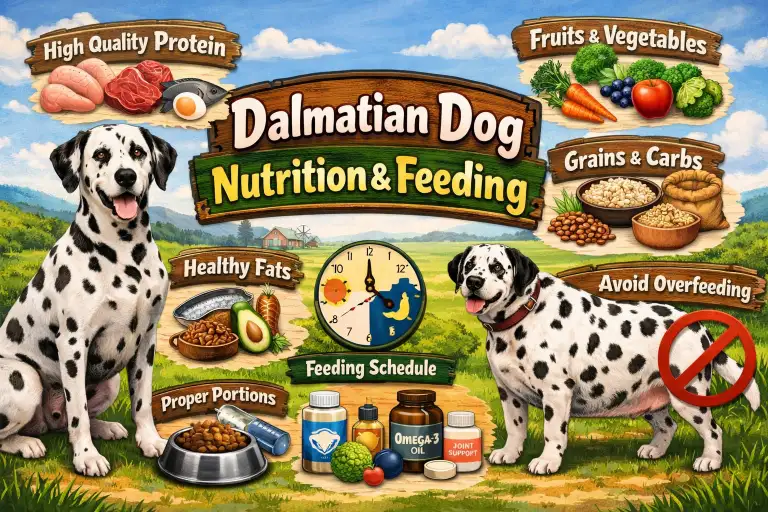
Choosing the right diet for your Dalmatian is one of the most important steps for protecting their long-term health. A Dalmatian’s nutritional needs are different from many other dog breeds because they process purines differently, which can increase the risk of uric acid buildup and bladder stones.
The best food for a Dalmatian is not simply a high-quality dog food. It should support urinary health, healthy weight, digestion, energy levels, skin, and coat condition. Understanding what to feed a Dalmatian and which foods to avoid can help prevent common health problems before they develop.
Dalmatians convert purines into uric acid instead of breaking them down completely like most dogs. Too much uric acid can lead to crystal formation and urinary stones. This is why a low-purine diet for Dalmatians is often recommended, especially for dogs prone to urinary issues.
This complete Dalmatian nutrition guide explains the best foods for Dalmatians, recommended protein sources, feeding amounts, calorie needs, foods to avoid, and practical tips for maintaining a healthy lifestyle.
Why Nutrition Is Important for Dalmatian Health
A balanced diet affects almost every part of your Dalmatian’s health. Since this breed is naturally active and energetic, the wrong diet can contribute to weight gain, digestive issues, low energy, and urinary problems.
| Health Concern | How Diet Affects It | Why Nutrition Matters |
|---|---|---|
| Urate bladder stones | High-purine foods increase uric acid levels | A proper diet may help reduce stone formation risk |
| Weight gain | Excess calories and treats add unnecessary fat | Healthy weight supports joints and overall health |
| Digestive problems | Poor ingredients or sudden food changes affect digestion | Balanced nutrition improves stool quality |
| Skin and coat problems | Lack of essential nutrients affects skin health | Quality fats support a shiny coat and healthy skin |
| Low energy | Incorrect calorie balance affects stamina | Proper nutrition keeps active Dalmatians energetic |
What Should a Dalmatian Eat?
The best diet for a Dalmatian should provide balanced nutrition while controlling purine intake. Owners should focus on quality ingredients, moderate protein levels, healthy fats, fiber, and plenty of water.
A common mistake is believing that Dalmatians need a low-protein diet. This is not completely accurate. Dalmatians need protein for muscle maintenance and energy, but the source of protein matters more than the amount.
Essential Nutrients for Dalmatians
| Nutrient | Importance | Best Sources |
|---|---|---|
| Protein | Supports muscles and energy | Eggs, chicken, turkey, lean meats |
| Healthy fats | Supports skin, coat, and energy | Fish oil, quality animal fats |
| Carbohydrates | Provides daily energy | Rice, oats, vegetables |
| Fiber | Improves digestion | Vegetables and whole grains |
| Water | Helps dilute urine | Fresh clean water daily |
Best Protein Sources for Dalmatians (Low Purine Options)
When choosing food for a Dalmatian, selecting the right protein source is extremely important. Low-purine proteins are generally safer choices because they produce less uric acid compared with high-purine ingredients.
| Protein Source | Purine Level | Recommended for Dalmatians |
|---|---|---|
| Eggs | Very Low | Excellent choice |
| Chicken muscle meat | Low | Good option |
| Turkey muscle meat | Low | Good option |
| Lamb | Low to Moderate | Use in moderation |
| Lean beef | Moderate | Limited amounts |
| Organ meats (liver, kidney) | Very High | Avoid |
| Sardines and anchovies | Very High | Avoid |
| Brewer’s yeast ingredients | High | Avoid |
Recommended Nutrition Levels for Adult Dalmatians
Every dog has different needs depending on age, activity level, and health condition. However, adult Dalmatians generally benefit from balanced nutrition with moderate protein and controlled calories.
| Nutrient | Recommended Range |
|---|---|
| Protein | Approximately 18–25% |
| Fat | Approximately 10–15% |
| Fiber | Approximately 3–6% |
| Moisture | Higher moisture is beneficial |
Increasing water intake is especially important for Dalmatians because proper hydration helps dilute urine and supports bladder health.
How to Choose the Best Dog Food for a Dalmatian
Reading dog food labels carefully can help you choose a healthier option for your Dalmatian. The ingredient list matters more than marketing claims on the packaging.
| Food Label Area | Look For | Avoid |
|---|---|---|
| First ingredients | Named meat sources like chicken or turkey | Unclear meat by-products |
| Protein source | Muscle meat proteins | High-purine organs and fish meals |
| Nutrition statement | Complete and balanced formula | Foods without feeding guidelines |
| Marketing claims | Clear ingredient information | Trendy but unclear claims |
Grain-free food is not automatically healthier for Dalmatians. Ingredients such as peas and lentils used in some grain-free formulas may contain higher purine levels, so always check the complete ingredient list.
Key Nutrition Tips for Dalmatians
- Choose balanced food designed for your dog’s life stage.
- Focus on low-purine protein sources.
- Avoid organ meats and high-purine treats.
- Provide fresh water at all times.
- Monitor weight and adjust portions when needed.
How Much Should You Feed a Dalmatian? Feeding Chart, Calories & Portions
Knowing how much food a Dalmatian needs is just as important as choosing the right diet. Overfeeding can lead to obesity, which may increase stress on joints and affect urinary health. Underfeeding can cause poor energy levels, muscle loss, and nutritional deficiencies.
The correct amount of food depends on your Dalmatian’s age, weight, activity level, metabolism, and the calorie content of their food.
Daily Calorie Requirements for Dalmatians
| Dalmatian Weight | Low Activity | Normal Activity | High Activity |
|---|---|---|---|
| 15 kg | 700–800 calories | 850–950 calories | 1,050–1,150 calories |
| 20 kg | 850–950 calories | 1,000–1,100 calories | 1,200–1,350 calories |
| 25 kg | 1,000–1,100 calories | 1,150–1,300 calories | 1,400–1,600 calories |
| 30 kg | 1,150–1,300 calories | 1,300–1,500 calories | 1,600–1,800 calories |
Dalmatian Portion Control Tips
- Measure your Dalmatian’s food instead of guessing portions.
- Adjust meals based on body condition and activity level.
- Keep treats below 10% of daily calories.
- Avoid frequent table scraps because they add hidden calories and purines.
How Many Times Should a Dalmatian Eat Per Day?
| Age | Recommended Meals Per Day |
|---|---|
| Dalmatian puppy (2–6 months) | 3–4 meals |
| Dalmatian puppy (6–12 months) | 2–3 meals |
| Adult Dalmatian | 2 meals |
| Senior Dalmatian | 2 smaller meals |
How to Tell If Your Dalmatian Has a Healthy Weight
| Body Check | Healthy Sign |
|---|---|
| Ribs | Easy to feel but not clearly visible |
| Waist | Visible when looking from above |
| Belly | Slightly tucked upward |
| Energy Level | Active and playful |
Best Foods for Dalmatians and Foods to Avoid
The best food for a Dalmatian should support urinary health while providing enough nutrients for energy, muscles, and overall wellness. Some foods are naturally higher in purines and should be avoided or limited.
Best Food Options for Dalmatians
| Food Type | Benefits | Important Notes |
|---|---|---|
| Low-purine dry kibble | Convenient and balanced | Choose quality ingredients |
| Wet dog food | Adds extra moisture | Monitor calories |
| Fresh cooked meals | High-quality ingredients | Must be nutritionally balanced |
| Freeze-dried food | Easy to prepare | Add water when needed |
Safe Human Foods for Dalmatians
| Food | Why It Is Safe |
|---|---|
| Eggs | Low purine and nutrient-rich |
| Plain chicken | Easy-to-digest protein source |
| Turkey | Lower purine protein option |
| Rice | Gentle carbohydrate source |
| Carrots | Low-calorie healthy snack |
| Apples without seeds | Provides fiber |
Foods Dalmatians Should Avoid
| Food | Reason to Avoid |
|---|---|
| Organ meats | Extremely high in purines |
| Sardines and anchovies | High purine content |
| Yeast products | May increase uric acid levels |
| Grapes and raisins | Toxic for dogs |
| Onions | Can damage red blood cells |
| Chocolate | Toxic to dogs |
Frequently Asked Questions About Dalmatian Nutrition
What is the best food for a Dalmatian?
The best food for a Dalmatian is a balanced diet that provides quality protein, moderate fat, healthy carbohydrates, fiber, and plenty of moisture. Foods with low-purine protein sources such as eggs, chicken, and turkey are often preferred for supporting urinary health.
Do Dalmatians need a low-purine diet?
Many Dalmatians benefit from a low-purine diet because this breed has a genetic tendency to produce higher uric acid levels. A diet lower in purines may help reduce the risk of urate bladder stones, especially in dogs with urinary problems.
Can Dalmatians eat high-protein dog food?
Dalmatians can eat protein, but the protein source is important. High-purine proteins such as organ meats and certain fish should generally be avoided. Quality low-purine proteins are usually better choices.
What foods cause bladder stones in Dalmatians?
Foods high in purines may increase the risk of uric acid crystals and bladder stones. Common high-purine foods include organ meats, sardines, anchovies, and some yeast-based ingredients.
How much should a Dalmatian eat per day?
Most adult Dalmatians need around two meals per day. The exact amount depends on body weight, activity level, age, and the calorie density of their food. Always adjust portions according to your dog’s body condition.
Can Dalmatians eat raw food?
Raw diets can be challenging for Dalmatians because many raw ingredients, especially organ meats, may contain high levels of purines. If considering a raw diet, consult a veterinarian or canine nutrition specialist first.
Why is my Dalmatian gaining weight?
Weight gain usually happens because of excess calories, too many treats, large portions, or reduced activity. Measuring meals and limiting treats can help maintain a healthy Dalmatian weight.
How much water should a Dalmatian drink?
Dalmatians should always have access to fresh water. Good hydration helps dilute urine and supports normal bladder function, making water an important part of Dalmatian urinary health.
When should I contact a veterinarian about my Dalmatian’s diet?
Contact a veterinarian if your Dalmatian has blood in urine, difficulty urinating, sudden weight loss, loss of appetite, repeated urinary problems, or signs of pain.
Final Thoughts on Dalmatian Nutrition
Feeding a Dalmatian correctly is an important part of preventive healthcare. A balanced diet with controlled purines, proper portions, and enough water can support urinary health, energy, digestion, and overall quality of life.
The best approach is simple: choose quality ingredients, monitor your Dalmatian’s weight, avoid high-purine foods, and adjust their diet as their health needs change.

Ata Ur Rehman is the founder of Pet Age in Human Years Calculator, an educational platform that provides age conversion charts and lifespan guides for dogs, cats, birds, and other companion animals. His work focuses on helping pet owners understand how animal ages translate into human years using commonly accepted age conversion formulas and published lifespan averages.
The website compiles breed and species lifespan data from kennel clubs, breed organizations, and general animal lifespan studies to present simple and easy-to-understand guides for pet owners worldwide.
This website was created to centralize animal age conversion charts into one easy reference platform for pet owners.
This article is for general education. For symptoms, medication, diet changes, or health concerns, use a qualified veterinarian who can assess your individual pet.