On this page
Dobermans are intelligent, athletic, and loyal dogs known for their strength and protective instincts. Like all dogs, they age much differently than humans. Many owners still believe the old rule that one dog year equals seven human years, but modern research shows that this method is overly simplistic and inaccurate, especially for large breeds like Doberman Pinschers.
Our Doberman Age Calculator helps you estimate your dog’s age in human years using a more accurate understanding of canine aging. Knowing your Doberman’s human age equivalent can help you better understand their developmental stage, health requirements, nutritional needs, and expected lifestyle changes.
Whether you have a playful puppy, a mature adult, or a senior Doberman, understanding how your dog ages can help you provide the best possible care throughout their life.
How the Doberman Age Calculator Works
The traditional “7 dog years equals 1 human year” rule fails to account for the rapid growth and development that occurs during a dog’s first few years of life. Dobermans mature very quickly compared to humans.
Modern canine aging models use biological and developmental data to estimate human age equivalents more accurately. Large breeds such as Dobermans tend to mature rapidly in their early years but often experience age-related health issues earlier than smaller breeds.
The calculator uses age conversion principles based on modern canine aging research to provide a more realistic estimate of your Doberman’s equivalent human age.
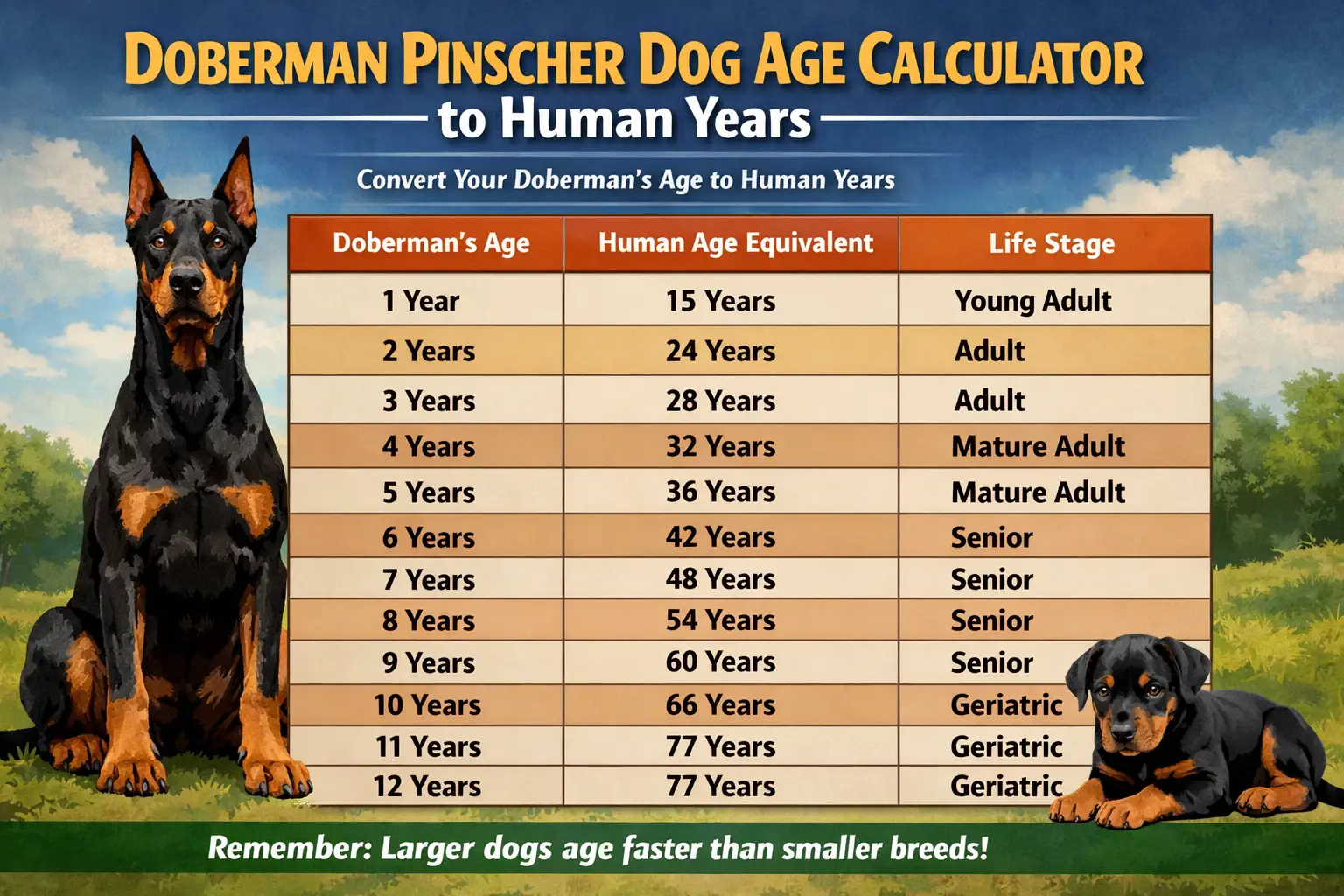
Doberman Age to Human Years Chart
The following chart provides a general estimate of Doberman age in human years.
| Doberman Age | Human Age Equivalent | Life Stage |
|---|---|---|
| 1 Year | 15 Years | Puppy |
| 2 Years | 24 Years | Young Adult |
| 3 Years | 28 Years | Adult |
| 4 Years | 32 Years | Adult |
| 5 Years | 36 Years | Adult |
| 6 Years | 40 Years | Adult |
| 7 Years | 44 Years | Senior |
| 8 Years | 48 Years | Senior |
| 9 Years | 52 Years | Senior |
| 10 Years | 56 Years | Senior |
| 11 Years | 60 Years | Senior |
| 12 Years | 64 Years | Senior |
| 13 Years | 68 Years | Senior |
| 14 Years | 72 Years | Senior |
For example, a 5-year-old Doberman is roughly equivalent to a 36-year-old human, while a 10-year-old Doberman corresponds to approximately 56 human years.
Why Dobermans Age Differently Than Humans
Dobermans experience dramatic physical and mental development during their first two years of life. By the time a Doberman reaches its first birthday, it has already progressed through developmental stages that would take humans well over a decade to complete.
Several factors influence how Dobermans age:
Breed Size
Large breeds generally age faster than smaller breeds and often have shorter lifespans.
Genetics
Genetic factors influence longevity and susceptibility to age-related diseases.
Diet and Nutrition
Balanced nutrition supports healthy development and may slow age-related decline.
Exercise Levels
Regular exercise helps maintain cardiovascular health, muscle strength, and joint mobility.
Veterinary Care
Preventive care can identify health concerns before they become serious.
Doberman Growth and Development Timeline
Dobermans undergo significant physical and behavioral changes throughout their lives.
Puppy Stage (0–12 Months)
During puppyhood, Dobermans experience rapid growth. They develop social skills, learn basic commands, and establish behavioral patterns.
Important milestones include:
- Teething
- House training
- Socialization
- Obedience training
- Rapid skeletal growth
Young Adult Stage (1–3 Years)
Most Dobermans reach their full height by around 18 months, although muscle development continues afterward.
Characteristics include:
- High energy levels
- Improved focus
- Increased confidence
- Peak athletic development
Adult Stage (3–6 Years)
Adult Dobermans are typically at their physical and mental peak.
Common traits include:
- Stable temperament
- Consistent exercise needs
- Strong muscle condition
- High intelligence and trainability
Senior Stage (7+ Years)
Many Dobermans enter their senior years around age seven.
Changes may include:
- Reduced stamina
- Joint stiffness
- Slower recovery after exercise
- Increased health monitoring requirements
Doberman Life Stages Explained
| Life Stage | Age Range | Characteristics |
|---|---|---|
| Puppy | 0–12 Months | Growth, learning, socialization |
| Young Adult | 1–3 Years | Physical maturity, high energy |
| Adult | 3–6 Years | Peak performance and stability |
| Senior | 7+ Years | Aging-related changes begin |
Understanding these life stages allows owners to adjust exercise routines, diet plans, and veterinary care appropriately.
Average Doberman Lifespan
The average Doberman Pinscher lifespan ranges from 10 to 13 years. Some individuals may live longer when provided with excellent care and favorable genetics.
Factors affecting lifespan include:
- Genetics
- Heart health
- Body condition
- Exercise habits
- Preventive healthcare
- Environmental factors
Female Dobermans sometimes live slightly longer than males, although individual variation is significant.
Common Health Problems in Aging Dobermans
As Dobermans age, they become more susceptible to certain health conditions.
Dilated Cardiomyopathy (DCM)
One of the most significant health concerns affecting Dobermans. This heart condition can reduce cardiac function and impact lifespan.
Hip Dysplasia
Joint abnormalities may contribute to discomfort and reduced mobility.
Hypothyroidism
A hormonal disorder that can affect energy levels, weight, and coat quality.
Von Willebrand Disease
An inherited bleeding disorder found in some Doberman bloodlines.
Wobbler Syndrome
A neurological condition affecting the cervical spine and mobility.
Routine veterinary screening helps identify these conditions early.
Signs Your Doberman Is Becoming a Senior
Many owners wonder when their Doberman officially becomes a senior dog.
Common signs include:
- Graying around the muzzle
- Reduced energy levels
- Weight gain
- Joint stiffness
- Increased sleeping
- Reduced hearing or vision
- Slower recovery after activity
Recognizing these signs early allows you to adjust care and improve quality of life.
How to Help Your Doberman Live Longer
Although genetics play a role, owners can positively influence longevity through proper care.
Feed a High-Quality Diet
Choose nutritionally balanced food appropriate for your Doberman’s life stage.
Maintain a Healthy Weight
Obesity increases stress on joints and cardiovascular systems.
Exercise Regularly
Daily physical activity supports muscle strength and overall health.
Schedule Veterinary Checkups
Regular exams allow early detection of disease.
Provide Mental Stimulation
Training, puzzle toys, and enrichment activities help maintain cognitive health.
Monitor Heart Health
Because Dobermans are prone to heart conditions, routine cardiac evaluations are valuable.
Doberman vs Other Large Dog Breeds
| Breed | Average Lifespan |
|---|---|
| Doberman Pinscher | 10–13 Years |
| German Shepherd | 9–13 Years |
| Boxer | 10–12 Years |
| Rottweiler | 8–10 Years |
| Great Dane | 7–10 Years |
| Labrador Retriever | 10–12 Years |
Compared to many giant breeds, Dobermans generally enjoy a relatively favorable lifespan when properly cared for.
Frequently Asked Questions
How old is a 2-year-old Doberman in human years?
A 2-year-old Doberman is approximately 24 human years old.
What is the average lifespan of a Doberman?
Most Dobermans live between 10 and 13 years.
At what age is a Doberman considered a senior?
Many veterinarians consider Dobermans seniors around age 7.
Is the 7 dog years rule accurate?
No. Modern canine aging research shows that dog aging is not linear, especially during early life.
Do female Dobermans live longer than males?
Some studies suggest females may live slightly longer, although genetics and healthcare are more important factors.
What is the most common health problem in Dobermans?
Dilated Cardiomyopathy (DCM) is one of the most significant health concerns affecting the breed.
How can I help my Doberman live longer?
Provide balanced nutrition, regular exercise, preventive healthcare, mental stimulation, and routine veterinary checkups.
Why do large dogs age faster?
Large dogs grow rapidly and experience different biological aging processes compared to smaller breeds.
Related Doberman Resources
To learn more about caring for your Doberman, explore these helpful guides:
- Doberman Full Breed Guide
- Doberman Training Guide
- Doberman Grooming Guide
- Doberman Nutrition and Feeding Guide
- Doberman Cost of Ownership Guide
Final Thoughts
Understanding your Doberman’s age in human years helps you make better decisions about care, nutrition, exercise, and preventive health management. While every dog ages differently, using a Doberman Age Calculator provides valuable insight into your dog’s current life stage and future needs.
By combining accurate age conversion with proper care, you can help your Doberman enjoy a healthy, active, and fulfilling life.

Ata Ur Rehman is the founder of Pet Age in Human Years Calculator, an educational platform that provides age conversion charts and lifespan guides for dogs, cats, birds, and other companion animals. His work focuses on helping pet owners understand how animal ages translate into human years using commonly accepted age conversion formulas and published lifespan averages.
The website compiles breed and species lifespan data from kennel clubs, breed organizations, and general animal lifespan studies to present simple and easy-to-understand guides for pet owners worldwide.
This website was created to centralize animal age conversion charts into one easy reference platform for pet owners.
This article is for general education. For symptoms, medication, diet changes, or health concerns, use a qualified veterinarian who can assess your individual pet.