On this page
As pet owners, we all want the very best for our furry friends — including healthy, white teeth and fresh, pleasant breath. But with so many dental chews on the shelves, have you ever found yourself wondering: Do they actually work? And which one is right for my small dog?
Don’t worry — this guide is here to uncover the science behind dental chews. We’ll not only dive into the pros and cons, but also walk you through specific research data and where it comes from — so you can make the best choice for your dog with confidence.
What Is the Role of Dental Chews in Oral Care?
Before we dive into specific products, let’s first get a clear understanding: where do dental chews actually fit into a complete pet oral care routine?
Veterinarians generally agree that daily toothbrushing is the gold standard for protecting your dog’s dental health. Ideally, brushing your dog’s teeth every day with a pet-safe toothpaste is the most effective way to remove plaque. One study followed 20 Beagles as their teeth were brushed daily and tracked changes in their oral bacteria. The results showed that daily brushing significantly reduced the total number of bacteria in the dogs’ mouths — and kept those levels low over time.
However, getting an energetic dog to sit still and open wide for a toothbrush is a real challenge for many pet owners. According to statistics, only about 1% of pet owners manage to brush their dog’s teeth every single day.
This is where dental chews come in. They are not a replacement for brushing, but rather an excellent supplement and a practical backup option.
The correct oral care priority should be:
- Daily brushing (with pet-safe toothpaste)
- Professional veterinary dental cleanings
- Supportive dental products (like chews, water additives, or wipes)
Dental chews are great helpers for daily maintenance, but they cannot replace professional treatment.
Are Dental Chews Really Good for Dogs?
To help you get a clearer picture, here are the pros and cons of dental chews, laid out simply.
Pros
- Scientifically effective
Multiple studies have shown that dental chews can significantly reduce plaque and tartar, improve bad breath, and help prevent periodontal disease.
- Convenient
No complicated steps — just give one chew a day. Dogs love them, and owners save time and effort.
- Provides mental satisfaction
The act of chewing itself brings dogs joy and relaxation. Dental chews make a great daily reward.
- A helpful backup
For dogs that absolutely refuse toothbrushing, dental chews are the next best option.
Cons
- Can’t replace professional dental cleanings
Dental chews mainly work on the surfaces above the gum line. They cannot treat periodontal disease that has already spread below the gums.
- Potential physical risks
If your dog tends to swallow rather than chew, large chunks of dental chews can cause choking or intestinal blockages. Also, chews that are too hard may lead to broken teeth.
- Harmful ingredients
Some products contain unnecessary additives, artificial colors, or ingredients that dogs may be allergic to. You’ll need to read labels carefully when shopping.
How to Choose Dental Chews for Dogs
1. Look for the VOHC Seal
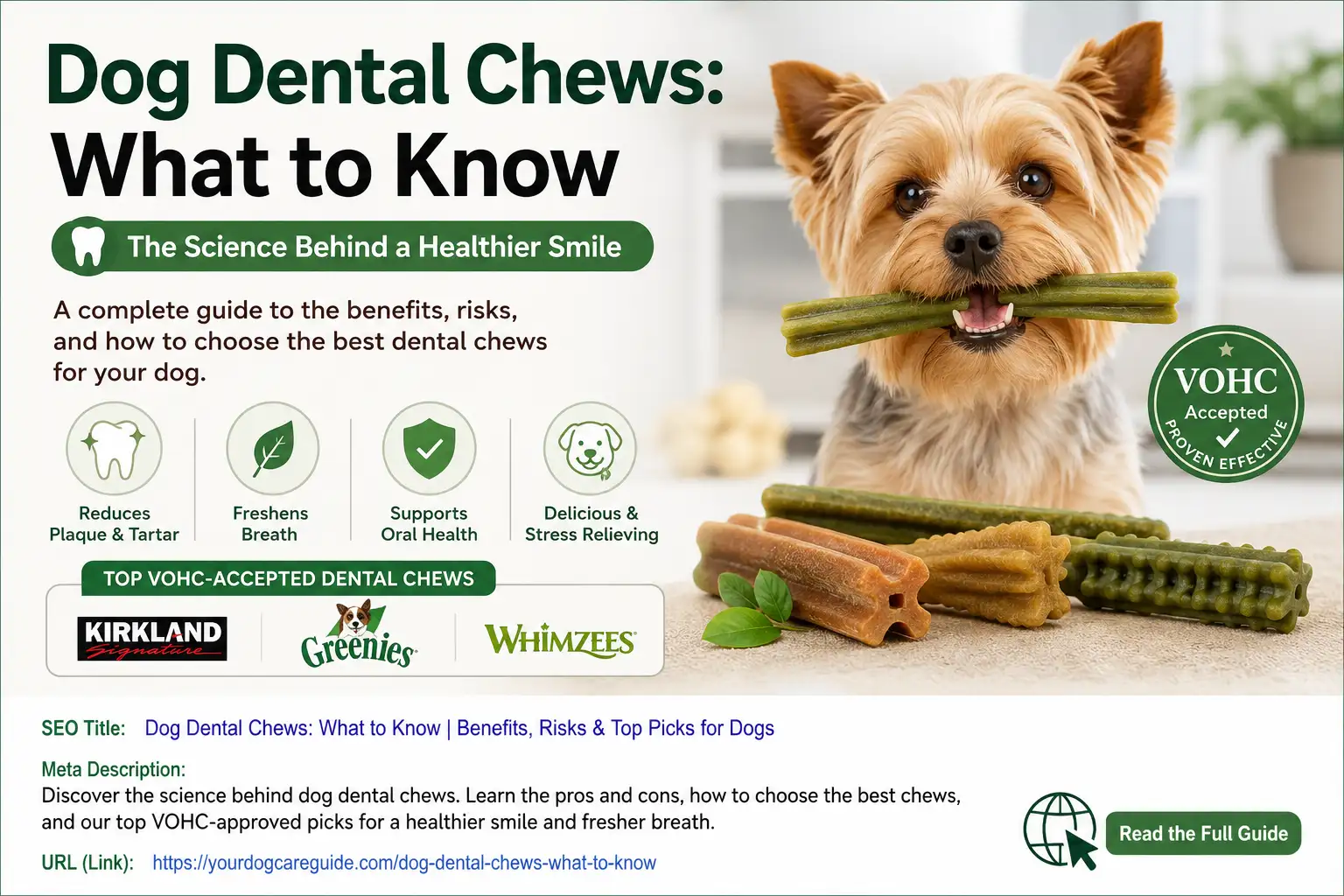
The VOHC (Veterinary Oral Health Council) awards its seal of acceptance to products that have been proven effective through rigorous scientific testing. Choosing a dental chew with the VOHC seal is your first step toward buying something that actually works.
2. Choose Based on Your Dog’s Size
Small dogs – Look for small-breed formulas. Studies have shown that toy breeds (like Yorkies and Chihuahuas) respond well to dental chews, but it’s essential to pick a product with the right size and hardness for them.
Large dogs – Need larger, more durable chews to ensure enough chewing time for effective cleaning.
3. Check the Ingredients
Take a moment to read the label. Avoid unnecessary additives, artificial colors, or ingredients your dog may be allergic to.
4. Pick the Right Texture
The best dental chews are firm but give slightly — you should be able to leave a mark with your fingernail or bend them a little. This texture cleans teeth effectively while minimizing the risk of broken teeth.
A special note on hardness:
Never give your dog items that are extremely hard, such as antlers, cow hooves, or hard bones, hard nylon products. These are common causes of broken teeth in dogs.
How to Feed Dental Chews to Your Dog
1. One Chew Per Day
Dental chews are not regular treats — they’re functional products. One chew per day is enough. Giving more can lead to bloating, loose stools, or even obesity.
2. Pick the Right Size
A dental chew should be slightly longer than your dog’s mouth. This forces them to chew with their side teeth, which creates the friction needed for cleaning. If it’s too short, they might swallow it whole — and that’s a choking hazard.
3. Choose the Right Time
The best time is about 30 minutes after a meal, or as a daily reward (for example, after coming back from a walk). Avoid giving a dental chew when your dog is extremely hungry — they’ll gulp it down, and the cleaning effect will be much weaker.
4. Watch Your Dog While They Chew
Don’t just toss a dental chew and walk away. This is especially important the first few times you give a new chew — you don’t know how your dog will handle it. Watching them chew helps prevent choking.
5. Make Sure Fresh Water Is Available
After finishing a dental chew, your dog might feel thirsty. Keep fresh water nearby.
Which Dental Chews Are Worth Buying?
| Brand | Key Features |
| Kirkland Signature (Costco) | Best value for money. VOHC certified — meaning its effectiveness is backed by science. Much more affordable than most pet store brands. |
| Greenies | Also VOHC certified. Great palatability (dogs love the taste). |
| WHIMZEES | Focuses on natural, vegetarian ingredients. Unique shape helps extend chewing time. |
| Vetradent | A veterinary channel brand. Often recommended by vets. |
FAQs
Do vets really recommend dental chews?
Many veterinarians recommend VOHC-certified dental chews as part of a daily oral care routine. However, they also emphasize that daily toothbrushing is still the most effective way to remove plaque.
What is the best dental chew?
There’s no single “best” — only what’s best for your dog. The right dental chew for your dog is:
- Backed by scientific research
- Made with safe ingredients
- The right size for their mouth
- Calorie-appropriate
- Safe in texture (not too hard)
And most importantly — something your dog actually enjoys chewing
Which dog breeds are most prone to dental problems?
Small and toy breeds are at the highest risk for periodontal disease. Studies of WSAVA have shown that breed has a significant impact on dental health indicators. This is because their teeth are packed tightly into a narrow jaw, making it easier for food particles and plaque to build up.
Conclusion
A small dental chew, used consistently, can make a world of difference — giving your dog fresh breath and a healthy smile for years to come.

Ata Ur Rehman is the founder of Pet Age in Human Years Calculator, an educational platform that provides age conversion charts and lifespan guides for dogs, cats, birds, and other companion animals. His work focuses on helping pet owners understand how animal ages translate into human years using commonly accepted age conversion formulas and published lifespan averages.
The website compiles breed and species lifespan data from kennel clubs, breed organizations, and general animal lifespan studies to present simple and easy-to-understand guides for pet owners worldwide.
This website was created to centralize animal age conversion charts into one easy reference platform for pet owners.
This article is for general education. For symptoms, medication, diet changes, or health concerns, use a qualified veterinarian who can assess your individual pet.