On this page
Proper Dogue de Bordeaux grooming is essential for keeping this powerful mastiff healthy, comfortable, and free from common skin problems. Although this breed has a short coat that does not require complicated trimming, their facial wrinkles, heavy drooling, sensitive skin, and large body size create specific grooming needs that owners must understand.
The Dogue de Bordeaux is not a high-maintenance breed because of its coat, but it is a breed where consistency matters. Regular brushing, wrinkle cleaning, bathing, nail care, and skin checks help prevent odor, irritation, infections, and discomfort.
Unlike long-haired breeds that require frequent brushing to prevent mats, the Dogue de Bordeaux needs grooming focused mainly on skin health and moisture control. The biggest challenges owners face are usually:
- Managing year-round shedding from the short dense coat
- Keeping facial wrinkles clean and completely dry
- Preventing skin irritation caused by trapped moisture
- Maintaining nails, ears, teeth, and overall hygiene
A good grooming routine also helps your Dogue de Bordeaux become comfortable with handling. This is especially important for a large breed because regular grooming makes veterinary visits, nail trims, and health checks easier throughout their life.
Is the Dogue de Bordeaux Easy to Groom?
The Dogue de Bordeaux is considered moderate maintenance when compared with other dog breeds. Their short coat makes brushing simple, but their wrinkles and sensitive skin require extra attention.
| Grooming Area | Difficulty Level | Why It Matters |
|---|---|---|
| Coat brushing | Easy | Short coat is simple to maintain but sheds throughout the year |
| Bathing | Moderate | Over-bathing can remove natural oils and cause dry skin |
| Wrinkle cleaning | Moderate to High | Moisture trapped inside folds can lead to odor and infections |
| Nail trimming | Moderate | Large body weight makes proper nail length important for movement |
| Skin monitoring | High | Sensitive skin requires regular checks for irritation and redness |
The key to successful Dogue de Bordeaux grooming is not spending hours every day on maintenance. Instead, owners should build a simple routine that includes short but consistent grooming sessions.
Dogue de Bordeaux Coat, Skin, and Wrinkle Care Explained
The Dogue de Bordeaux has a short, fine, and soft coat that lies close to the body. While the coat itself is easy to manage, the breed’s skin structure creates unique grooming requirements.
Many owners underestimate shedding because the hair is short. However, Dogue de Bordeaux dogs shed continuously throughout the year. Regular brushing removes loose hair, spreads natural oils, and helps owners identify skin problems early.
The most important grooming concern is the dog’s facial wrinkles. These folds can trap:
- Drool
- Food particles
- Dirt
- Moisture
- Bacteria and yeast
If wrinkles are not cleaned and dried properly, dogs can develop unpleasant odors, redness, irritation, or infections.
Dogue de Bordeaux Coat Characteristics and Grooming Impact
| Feature | Description | Grooming Requirement |
|---|---|---|
| Coat type | Short, smooth, and dense | Weekly brushing is usually enough |
| Shedding level | Moderate throughout the year | Regular brushing helps control loose hair |
| Skin sensitivity | Prone to irritation in some dogs | Use gentle dog-safe grooming products |
| Facial wrinkles | Deep folds around the face | Require frequent cleaning and drying |
| Drooling | Common in the breed | Regular wiping helps prevent moisture buildup |
Why Wrinkle Cleaning Is Important for Dogue de Bordeaux
Wrinkle care is the most important part of a Dogue de Bordeaux grooming routine. The deep folds around the face create areas where air circulation is limited, allowing moisture and bacteria to remain trapped.
Owners should check wrinkles regularly and clean them gently using a soft cloth or dog-safe wipes. After cleaning, every fold should be dried completely because damp skin is the main cause of many wrinkle-related problems.
| Common Problem | Where It Happens | Warning Signs |
|---|---|---|
| Yeast buildup | Facial wrinkles and skin folds | Musty smell, redness, itching |
| Bacterial irritation | Lips and deep wrinkles | Soreness, swelling, discharge |
| Skin allergies | Belly, paws, and body | Licking, scratching, irritated skin |
| Hot spots | Neck and chest areas | Hair loss, wet or painful patches |
Dogue de Bordeaux Grooming Routine at Home (Step-by-Step)
A consistent grooming routine keeps a Dogue de Bordeaux healthy without requiring professional grooming appointments. Because this breed has a short coat, most owners can handle regular care at home with the right tools and schedule.
The goal of grooming is simple: remove loose hair, keep skin clean, prevent moisture buildup, and check for early signs of health problems.
Essential Grooming Tools for a Dogue de Bordeaux
| Grooming Tool | Main Purpose | Recommended Use |
|---|---|---|
| Rubber curry brush | Removes loose hair and dirt from the short coat | 1–2 times per week |
| Soft bristle brush | Spreads natural oils and improves coat condition | Weekly |
| Dog-safe shampoo | Cleans skin without removing natural oils | Every 4–8 weeks or when needed |
| Soft towels | Dries coat and facial wrinkles | After every bath |
| Nail clippers or grinder | Keeps nails at a healthy length | Every 3–4 weeks |
| Cotton pads or wrinkle wipes | Cleans facial folds and sensitive areas | Daily or as needed |
How Often Should You Groom a Dogue de Bordeaux?
The Dogue de Bordeaux does not need daily full grooming sessions, but some areas require frequent attention. A simple schedule helps prevent most common grooming problems.
| Grooming Task | Frequency | Important Notes |
|---|---|---|
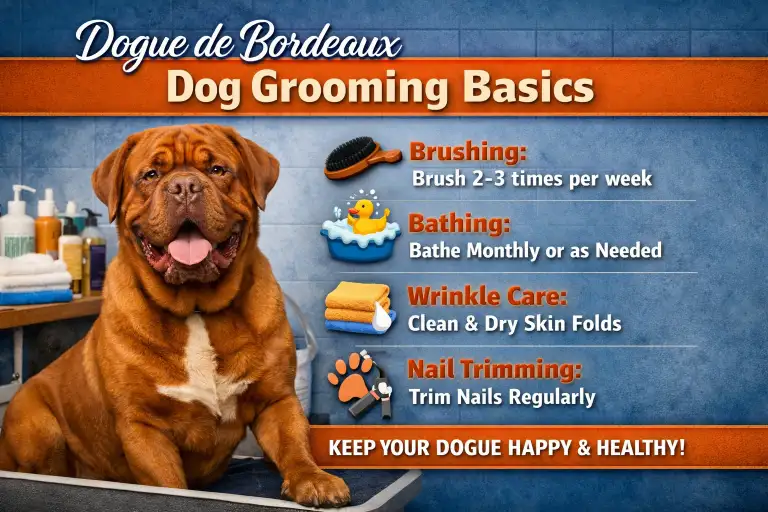
| Brushing | 1–2 times per week | Helps control shedding and keeps the coat healthy |
| Wrinkle cleaning | Daily or every other day | Always dry folds completely after cleaning |
| Bathing | Every 4–8 weeks | Avoid excessive bathing to protect skin oils |
| Nail trimming | Every 3–4 weeks | Long nails can affect walking and comfort |
| Ear cleaning | Weekly check | Look for redness, odor, or excess wax |
| Dental care | Several times per week | Helps reduce plaque and gum problems |
Bathing a Dogue de Bordeaux: Best Practices
Bathing is an important part of Dogue de Bordeaux grooming, but too many baths can create skin problems. This breed has sensitive skin, and frequent washing may remove protective oils that keep the coat healthy.
When bathing your Dogue de Bordeaux:
- Brush the coat before getting your dog wet
- Use lukewarm water instead of hot water
- Choose a gentle dog-specific shampoo
- Rinse completely to remove all product residue
- Dry wrinkles, skin folds, and hard-to-reach areas carefully
The drying process is just as important as washing. Moisture left inside facial folds can quickly lead to odor and irritation.
Dogue de Bordeaux Wrinkle Cleaning Routine
Wrinkle cleaning should be treated as a regular health check, not just a grooming task. While cleaning the folds, owners can look for redness, swelling, unusual odor, or skin changes.
| Step | What To Do | What To Avoid |
|---|---|---|
| Inspect folds | Check all facial wrinkles for moisture or debris | Do not ignore hidden folds |
| Clean gently | Use a soft damp cloth or dog-safe wipe | Avoid harsh rubbing |
| Dry completely | Pat folds until no moisture remains | Never leave wrinkles wet |
| Monitor skin | Look for redness, smell, or irritation | Do not apply random creams or oils |
Nail, Ear, and Dental Care for Dogue de Bordeaux
Although wrinkles and skin receive the most attention, other grooming areas are equally important. A large breed like the Dogue de Bordeaux depends on healthy feet, ears, and teeth for long-term comfort.
| Area | Why It Matters | Signs To Watch For |
|---|---|---|
| Nails | Supports proper movement and joint comfort | Clicking sounds, uneven walking |
| Ears | Prevents wax buildup and irritation | Head shaking, bad smell, redness |
| Teeth | Reduces plaque and gum disease risk | Bad breath, difficulty eating |
| Skin | Helps identify problems early | Itching, bumps, hair loss |
Common Dogue de Bordeaux Grooming Mistakes to Avoid
Most grooming problems happen because of small mistakes repeated over time. Understanding what to avoid helps protect your dog’s skin and overall health.
| Mistake | Why It Causes Problems | Better Approach |
|---|---|---|
| Bathing too often | Can dry the skin and increase irritation | Follow a moderate bathing schedule |
| Ignoring wrinkles | Allows bacteria and moisture buildup | Clean and dry folds regularly |
| Using human shampoo | May irritate sensitive dog skin | Use dog-formulated products |
| Not drying after baths | Creates a damp environment for infections | Dry every fold completely |
| Skipping nail care | Can affect movement and posture | Trim nails consistently |
Do Dogue de Bordeaux Need Professional Grooming?
Most Dogue de Bordeaux owners can manage regular grooming at home. Because the breed has a short coat, professional grooming is usually not required unless there are specific problems.
| Grooming Task | Can Be Done at Home? | When Professional Help May Be Needed |
|---|---|---|
| Brushing | Yes | Heavy shedding or coat problems |
| Bathing | Yes | Large dogs that are difficult to handle |
| Nail trimming | Usually | Very thick nails or nervous dogs |
| Skin problems | No | Red, painful, infected, or smelly skin |
Frequently Asked Questions About Dogue de Bordeaux Grooming
How often should a Dogue de Bordeaux be groomed?
A Dogue de Bordeaux should receive basic grooming every week, including brushing and skin checks. Wrinkle cleaning should be done more frequently, usually daily or every other day depending on drooling and moisture levels.
Do Dogue de Bordeaux shed a lot?
Yes, Dogue de Bordeaux dogs shed throughout the year. Their short coat does not mat easily, but regular brushing helps remove loose hair and keeps the coat healthier.
How do you clean Dogue de Bordeaux wrinkles?
Clean Dogue de Bordeaux wrinkles by gently wiping inside the folds with a soft cloth or dog-safe wipe, then drying the area completely. Keeping wrinkles dry is the most important step.
How often should you bathe a Dogue de Bordeaux?
Most Dogue de Bordeaux dogs only need a bath every 4–8 weeks unless they become dirty. Too many baths can dry the skin and increase irritation.
Why does my Dogue de Bordeaux smell bad after a bath?
A bad smell after bathing is often caused by moisture trapped in wrinkles, incomplete drying, skin irritation, or infections. Check facial folds and other skin areas carefully.
Can I groom my Dogue de Bordeaux at home?
Yes. Most grooming needs can be handled at home with regular brushing, wrinkle cleaning, bathing, nail care, and skin checks.
Should a Dogue de Bordeaux be shaved in summer?
No. Shaving is not recommended because the short coat already helps protect the skin. Proper hydration, shade, and normal coat care are better ways to manage heat.
Final Thoughts: Keeping Your Dogue de Bordeaux Clean and Healthy
Dogue de Bordeaux grooming is simple when it becomes part of your regular routine. This breed does not require complicated coat maintenance, but it does need consistent attention to wrinkles, skin, shedding, nails, and hygiene.
The most important habits are brushing regularly, keeping facial folds clean and dry, using gentle grooming products, and checking your dog’s skin often. These small actions can prevent many common problems and help your Dogue de Bordeaux stay comfortable throughout life.
A well-maintained Dogue de Bordeaux is not only cleaner but also healthier, easier to handle, and more comfortable as they grow older.

Ata Ur Rehman is the founder of Pet Age in Human Years Calculator, an educational platform that provides age conversion charts and lifespan guides for dogs, cats, birds, and other companion animals. His work focuses on helping pet owners understand how animal ages translate into human years using commonly accepted age conversion formulas and published lifespan averages.
The website compiles breed and species lifespan data from kennel clubs, breed organizations, and general animal lifespan studies to present simple and easy-to-understand guides for pet owners worldwide.
This website was created to centralize animal age conversion charts into one easy reference platform for pet owners.
This article is for general education. For symptoms, medication, diet changes, or health concerns, use a qualified veterinarian who can assess your individual pet.