On this page
The average English Setter lifespan is between 10 and 14 years. Many dogs live long, healthy lives when they receive proper nutrition, regular exercise, routine veterinary care, and a healthy weight throughout adulthood.
Like many medium-to-large sporting breeds, lifespan can vary based on genetics, breeding quality, lifestyle, and overall health management. Dogs from responsible breeders that undergo health testing often have fewer inherited problems.
English Setter Lifespan Overview
| Factor | Impact on Lifespan |
|---|---|
| Quality nutrition | Supports healthy weight and organ function |
| Regular exercise | Helps prevent obesity and joint issues |
| Preventive veterinary care | Early detection of health problems |
| Responsible breeding | Reduces inherited disease risk |
| Mental stimulation | Supports overall wellbeing |
Owners can improve longevity by maintaining a consistent exercise routine, avoiding obesity, and scheduling regular wellness exams.
Common Health Issues
English Setters are generally healthy dogs, but like all breeds they can be prone to certain inherited and age-related health conditions.
Common Health Conditions in English Setters
| Health Condition | Description |
|---|---|
| Hip Dysplasia | Improper hip joint development causing pain and mobility issues |
| Elbow Dysplasia | Abnormal elbow development affecting movement |
| Progressive Retinal Atrophy (PRA) | Eye disease that may lead to vision loss |
| Hypothyroidism | Low thyroid hormone production affecting metabolism |
| Deafness | Can occur in some bloodlines |
| Bloat (GDV) | Serious stomach condition requiring emergency treatment |
Regular veterinary examinations and purchasing puppies from health-tested parents can reduce many long-term risks.
Warning Signs to Monitor
- Difficulty standing or walking
- Excessive weight gain
- Vision changes
- Frequent ear infections
- Reduced activity levels
- Digestive problems
Early intervention often improves treatment outcomes.
Grooming Requirements
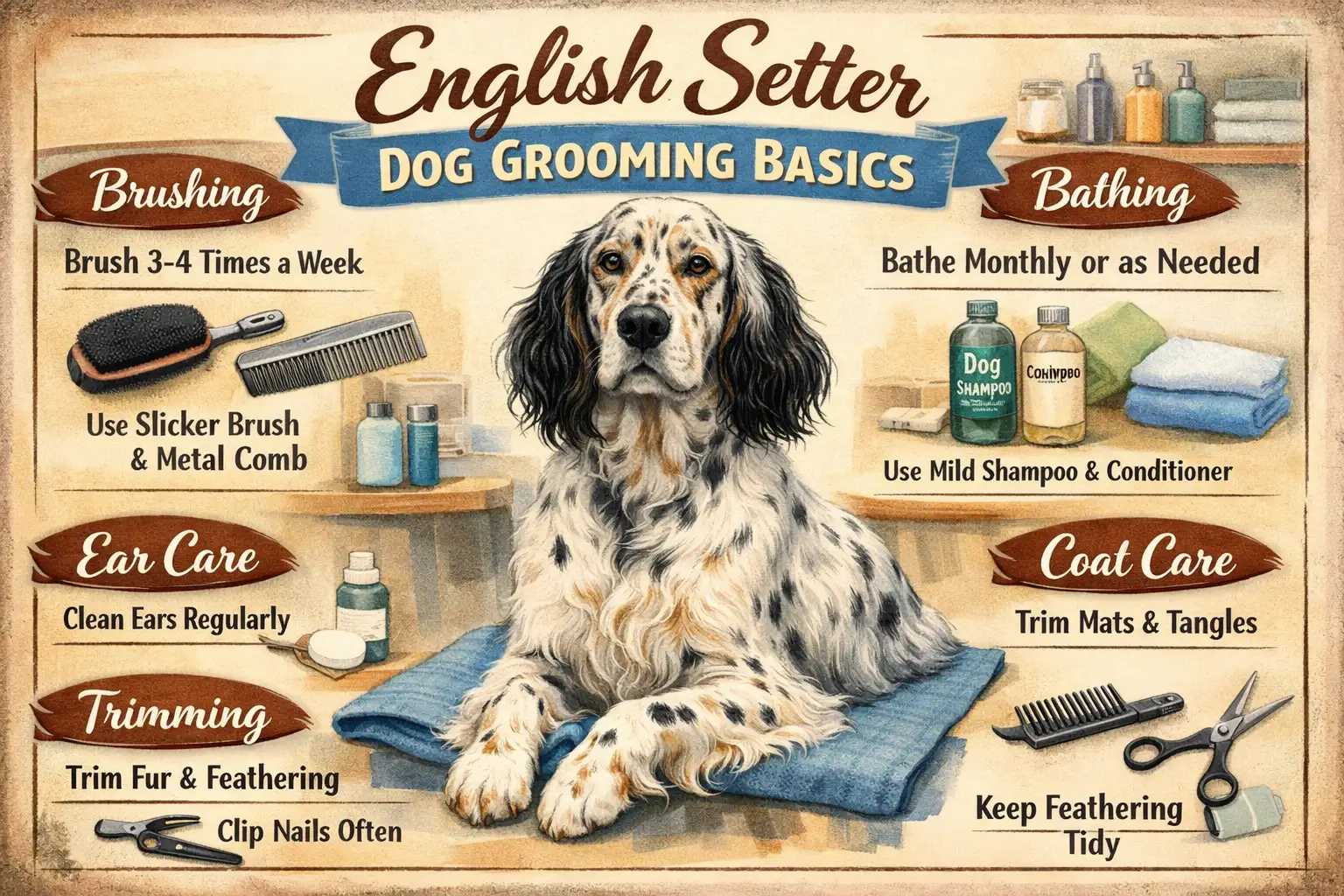
The English Setter’s beautiful coat requires regular maintenance. While not the highest-maintenance breed, grooming should not be ignored.
Their long feathering can collect dirt, grass, and debris during outdoor activities. Consistent brushing helps prevent matting and keeps the coat healthy.
English Setter Grooming Schedule
| Grooming Task | Recommended Frequency |
|---|---|
| Brushing | 3–4 times weekly |
| Ear cleaning | Weekly |
| Nail trimming | Every 3–4 weeks |
| Bathing | Every 6–8 weeks |
| Teeth brushing | Several times weekly |
The ears deserve special attention because their floppy shape can trap moisture and increase infection risk.
Do English Setters Shed?
Yes. English Setters are moderate shedders throughout the year and may shed more heavily during seasonal coat changes. Regular brushing helps control loose hair and reduces shedding around the home.
Training and Intelligence
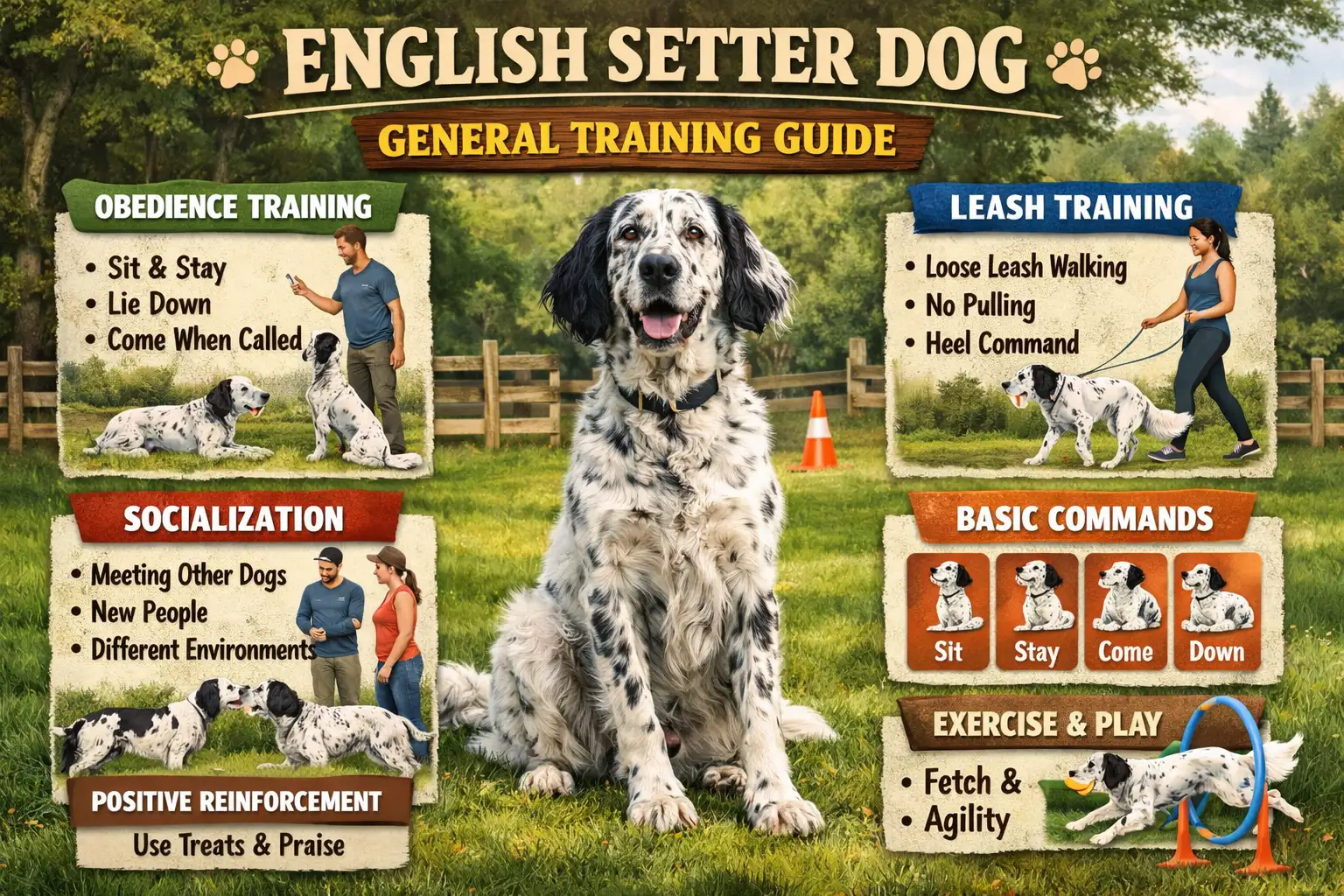
English Setters are intelligent dogs that generally enjoy learning, especially when training sessions are positive and rewarding.
Because they were bred to work closely with hunters, they tend to respond well to guidance and cooperation. However, they can sometimes become distracted by interesting scents and outdoor distractions.
Training Strengths
- Eager to please
- Intelligent and trainable
- Responsive to positive reinforcement
- Strong human focus
- Good social learning abilities
Training Challenges
- Can become distracted outdoors
- May ignore commands when following scents
- Sensitive to harsh corrections
- Slow maturation compared to some breeds
Short, enjoyable training sessions often produce the best results.
Feeding and Nutrition
Proper nutrition plays an important role in maintaining an English Setter’s energy level, muscle condition, and long-term health.
The exact amount of food depends on age, activity level, metabolism, and overall health.
General Feeding Guidelines
| Life Stage | Feeding Frequency |
|---|---|
| Puppy | 3–4 meals daily |
| Adult | 2 meals daily |
| Senior | 2 smaller meals daily |
Owners should choose a complete, balanced diet appropriate for the dog’s age and activity level.
Weight Management
Because excess weight can worsen joint problems, owners should:
- Monitor body condition regularly
- Avoid excessive treats
- Maintain daily exercise
- Adjust food portions as activity levels change
Cost of Owning an English Setter
Before bringing home an English Setter, prospective owners should understand the ongoing financial commitment.
Estimated Ownership Costs
| Expense Category | Typical Cost Range |
|---|---|
| Puppy Purchase | Varies by breeder and location |
| Food | Ongoing monthly expense |
| Veterinary Care | Annual routine and preventive care |
| Grooming Supplies | Regular maintenance costs |
| Training | Optional but recommended |
| Pet Insurance | Optional ongoing expense |
Actual costs vary significantly depending on location and individual circumstances.
Pros and Cons of the English Setter
Pros
- Friendly and affectionate
- Excellent family companion
- Generally good with children
- Beautiful appearance
- Intelligent and trainable
- Enjoys outdoor activities
Cons
- Requires substantial exercise
- Does not enjoy long periods alone
- Regular grooming needed
- Can be stubborn when distracted
- Strong prey drive in some individuals
- Not ideal as a guard dog
English Setter vs Similar Sporting Breeds
| Breed | Energy Level | Grooming Needs | Trainability | Family Friendliness |
|---|---|---|---|---|
| English Setter | High | Moderate to High | High | Excellent |
| Irish Setter | Very High | High | Moderate | Excellent |
| Gordon Setter | High | High | High | Very Good |
| English Springer Spaniel | High | Moderate | High | Excellent |
While all four breeds are sporting dogs, the English Setter is often viewed as one of the gentlest and most people-oriented options.
Frequently Asked Questions
Is an English Setter a good family dog?
Yes. English Setters are known for being affectionate, gentle, and friendly with family members. They typically do well with children when properly supervised.
Do English Setters bark a lot?
No. Most English Setters are moderate barkers and are generally quieter than many other active breeds.
Can English Setters live in apartments?
They can, but it is not ideal. Their exercise requirements are easier to meet in homes with access to outdoor space.
Are English Setters easy to train?
They are intelligent and capable learners but respond best to positive reinforcement and consistent training methods.
Do English Setters get along with other pets?
Most English Setters do well with other dogs. Early socialization helps improve compatibility with cats and smaller animals.
How much exercise does an English Setter need?
Most adults require approximately one to two hours of physical activity daily, along with mental stimulation.
Do English Setters shed?
Yes. They are moderate shedders and require regular brushing to manage loose hair and maintain coat condition.
Final Thoughts
The English Setter is a beautiful sporting breed that combines elegance, affection, intelligence, and athletic ability. While their appearance often attracts attention, successful ownership depends on understanding their exercise requirements, grooming needs, and desire for close human companionship.
For active families, outdoor enthusiasts, and owners looking for a friendly and devoted companion, the English Setter can be an outstanding choice. However, prospective owners should be prepared to invest time in training, exercise, and regular grooming. When their physical and emotional needs are met, English Setters often become loyal family members that bring years of companionship and enjoyment.

Ata Ur Rehman is the founder of Pet Age in Human Years Calculator, an educational platform that provides age conversion charts and lifespan guides for dogs, cats, birds, and other companion animals. His work focuses on helping pet owners understand how animal ages translate into human years using commonly accepted age conversion formulas and published lifespan averages.
The website compiles breed and species lifespan data from kennel clubs, breed organizations, and general animal lifespan studies to present simple and easy-to-understand guides for pet owners worldwide.
This website was created to centralize animal age conversion charts into one easy reference platform for pet owners.
This article is for general education. For symptoms, medication, diet changes, or health concerns, use a qualified veterinarian who can assess your individual pet.