On this page
The Flat-Coated Retriever is one of the most cheerful and people-oriented dog breeds in the retriever family. Known for its glossy coat, athletic build, and outgoing personality, this breed is often called the “Peter Pan of Retrievers” because it tends to maintain a playful and youthful attitude long after reaching adulthood.
Originally developed as a hunting and retrieving dog, the Flat-Coated Retriever combines intelligence, enthusiasm, and strong social instincts. These dogs thrive when they are included in family activities and given regular physical and mental stimulation. While their affectionate nature makes them wonderful companions, their high energy levels and emotional sensitivity mean they are not the perfect fit for every household.
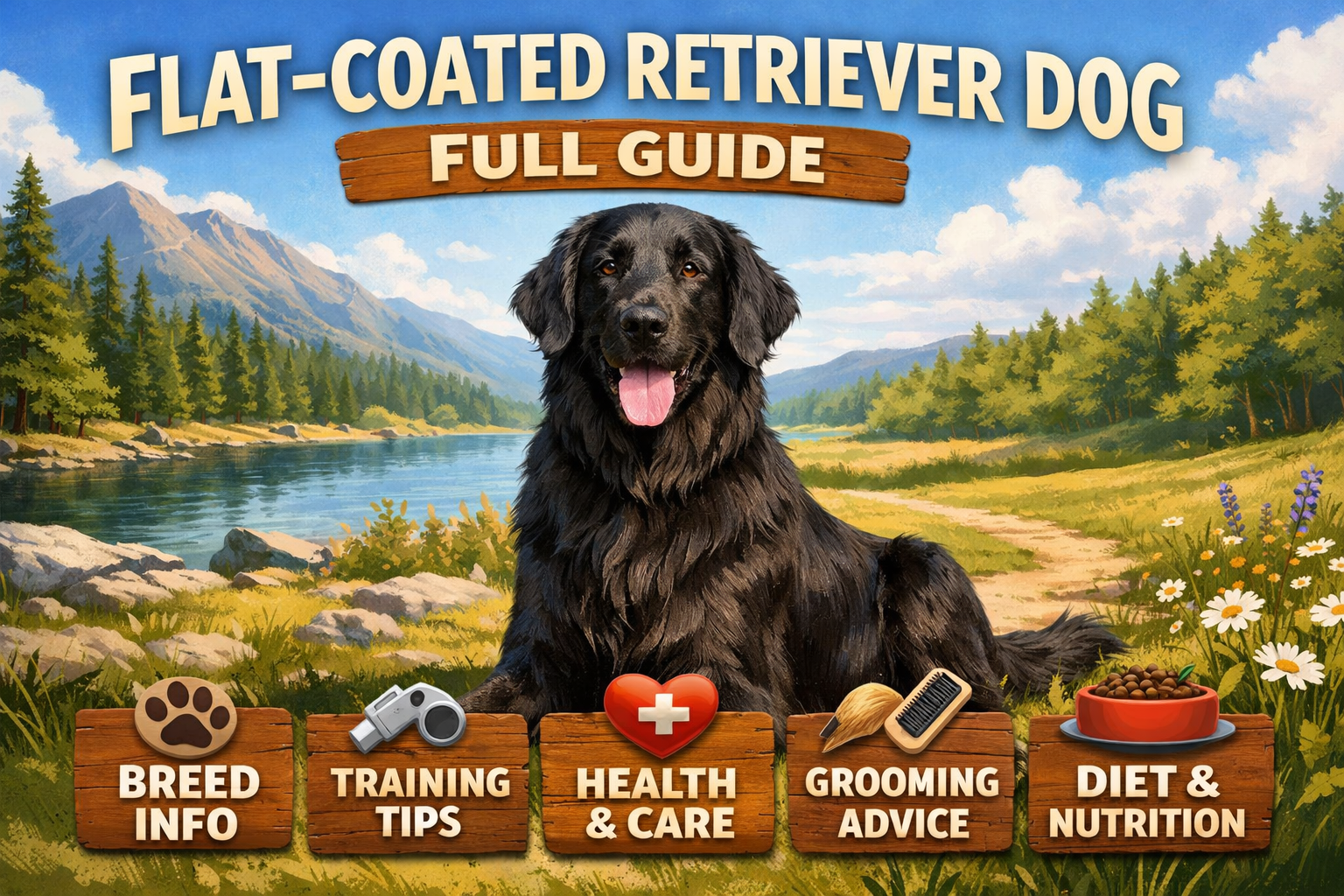
This guide covers everything prospective owners should know about the Flat-Coated Retriever, including temperament, personality, exercise needs, grooming requirements, health concerns, lifespan, ownership costs, and suitability for different lifestyles.
Flat-Coated Retriever Temperament, Personality & Suitability
The Flat-Coated Retriever is widely recognized for its friendly, optimistic, and affectionate personality. Unlike some working breeds that can be reserved around strangers, Flat-Coated Retrievers are typically welcoming toward visitors and eager to make new friends.
One of the breed’s defining characteristics is its slow emotional maturity. Many Flat-Coated Retrievers retain puppy-like enthusiasm for much of their lives. While owners often find this charming, it also means these dogs require consistent training and structure throughout adulthood.
They are highly people-focused dogs that prefer companionship over independence. Being left alone for extended periods can lead to boredom, separation-related behaviors, and destructive habits.
Temperament Traits at a Glance
| Trait | What It Means in Daily Life |
|---|---|
| Friendliness | Extremely friendly with family, guests, and strangers |
| Energy Level | High energy requiring daily exercise |
| Trainability | Intelligent and eager to learn |
| Emotional Sensitivity | Responds best to positive reinforcement |
| Independence | Low; prefers constant companionship |
| Playfulness | Remains playful well into adulthood |
| Family Compatibility | Excellent family companion |
Flat-Coated Retrievers generally do very well with children. Their playful nature and patience make them excellent family dogs. However, their enthusiasm and size can sometimes result in accidental bumps or knockdowns around very young children.
Most Flat-Coated Retrievers are also sociable with other dogs. Early socialization helps ensure positive interactions throughout adulthood. While they usually coexist peacefully with smaller pets, their retrieving instincts may occasionally encourage chasing behavior.
Lifestyle Suitability Overview
| Lifestyle | Suitability | Notes |
|---|---|---|
| Families with Children | Excellent | Thrives in active family environments |
| First-Time Owners | Moderate | Friendly but demanding in exercise needs |
| Apartment Living | Fair | Possible with significant daily activity |
| Seniors | Fair to Poor | Energy level may be challenging |
| Active Owners | Excellent | Ideal hiking, running, and outdoor companion |
| Multi-Pet Homes | Good | Usually social with proper introductions |
Common Misconceptions
Myth: Flat-Coated Retrievers calm down quickly after puppyhood.
Reality: Many remain highly playful and energetic throughout most of their lives.
Myth: Friendly dogs are easy dogs.
Reality: Their friendliness does not eliminate the need for training, structure, and exercise.
Size, Appearance, Exercise & Daily Care Needs
The Flat-Coated Retriever is a medium-to-large sporting breed with an elegant yet athletic appearance. Unlike heavier retrievers, this breed maintains a lean and balanced frame designed for endurance and movement.
Size and Physical Characteristics
| Feature | Typical Range |
|---|---|
| Height | 22–24.5 inches |
| Weight | 55–75 pounds |
| Build | Athletic and well-balanced |
| Coat Type | Dense, flat, weather-resistant |
| Coat Colors | Black or liver |
| Life Stage Classification | Large breed dog |
The breed’s smooth, glossy coat is one of its most recognizable features. Feathering appears on the legs, chest, and tail, adding to the dog’s elegant appearance without requiring excessive grooming.
Daily Exercise Requirements
Flat-Coated Retrievers are highly active dogs that need significant daily exercise to remain healthy and well-behaved. A short walk around the block is rarely enough for this breed.
Daily Care and Activity Needs
| Daily Need | Recommendation |
|---|---|
| Physical Exercise | 90–120 minutes daily |
| Mental Stimulation | Training, scent work, puzzle games |
| Brushing | 2–3 times per week |
| Shedding | Moderate year-round |
| Swimming | Excellent activity option |
| Heat Tolerance | Moderate to low |
Without adequate activity, owners may observe excessive barking, chewing, jumping, digging, or other unwanted behaviors.
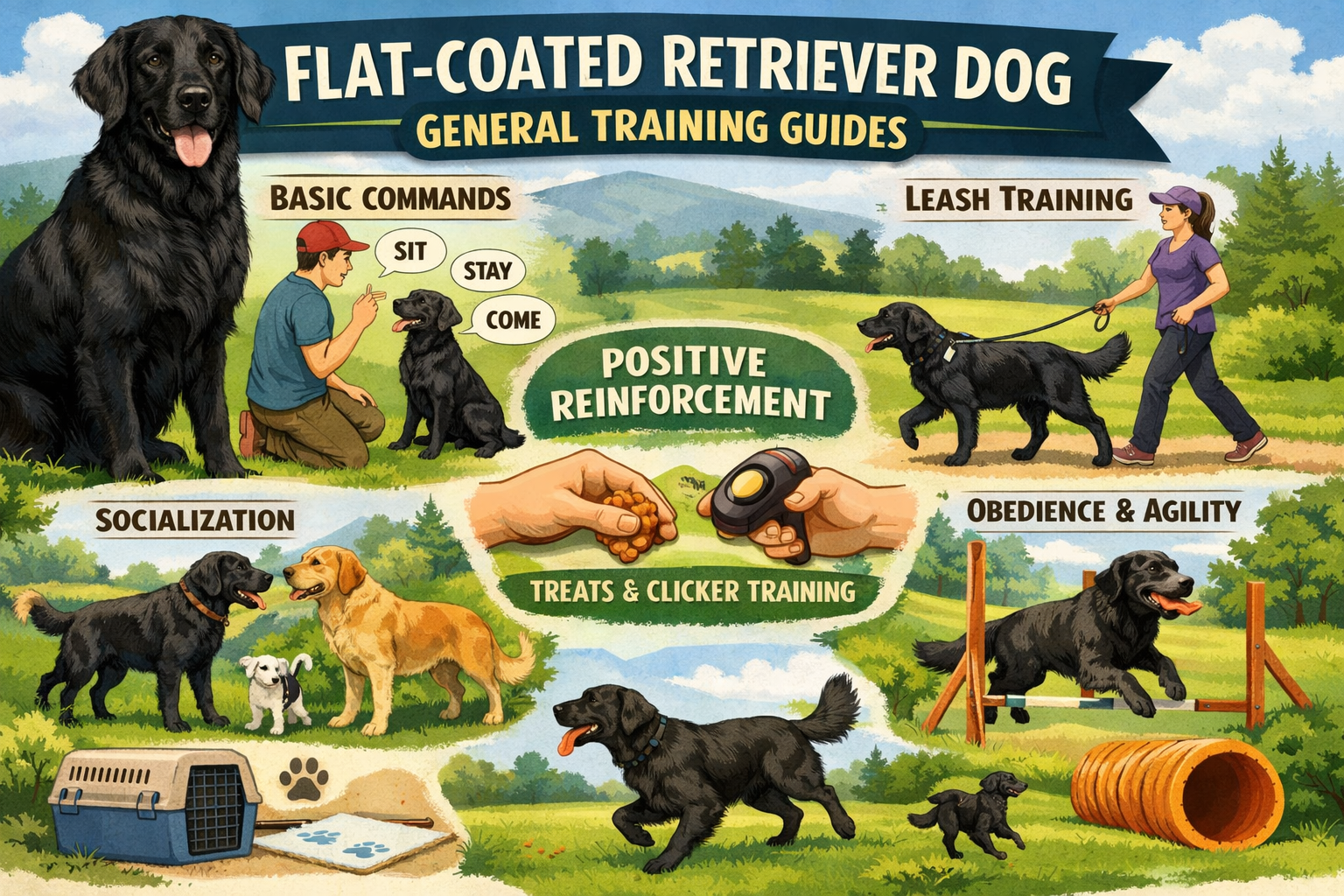
Mental exercise is equally important. Advanced obedience training, retrieval games, scent work, agility activities, and interactive toys can help satisfy the breed’s need for stimulation.
Grooming Requirements
Grooming needs are moderate compared with some other retriever breeds.
Owners should focus on:
- Brushing several times weekly
- Checking ears after swimming
- Trimming nails regularly
- Monitoring feathering for tangles
- Maintaining dental hygiene
Regular grooming also provides an opportunity to check for skin issues, lumps, or other health concerns.
Health, Lifespan & Long-Term Ownership Considerations
The Flat-Coated Retriever is a loving and devoted breed, but prospective owners should understand that it faces several significant health challenges compared with many other retrievers.
Flat-Coated Retriever Lifespan
The average Flat-Coated Retriever lifespan ranges from approximately 8 to 10 years. While some individuals exceed this range, the breed is generally considered shorter-lived than several other retriever breeds.
Lifespan and Health Overview
| Area | What Owners Should Know |
|---|---|
| Average Lifespan | 8–10 years |
| Senior Years Begin | Around 6–7 years |
| Weight Management | Essential for overall health |
| Preventive Care | Regular screenings recommended |
| Pet Insurance | Strongly recommended |
Common Health Problems
One of the biggest concerns in the breed is cancer. Flat-Coated Retrievers unfortunately have a higher incidence of certain cancers compared with many other breeds.
Common Flat-Coated Retriever Health Issues
| Condition | Risk Level | Notes |
|---|---|---|
| Cancer | High | Most significant breed concern |
| Histiocytic Sarcoma | High | Particularly associated with the breed |
| Hip Dysplasia | Moderate | Can impact mobility |
| Elbow Dysplasia | Moderate | May cause discomfort and lameness |
| Eye Disorders | Moderate | Routine screening recommended |
| Bloat (GDV) | Moderate | Potential emergency condition |
Responsible breeders conduct health testing to reduce the likelihood of inherited conditions. While testing cannot guarantee a perfectly healthy dog, it can significantly improve breeding outcomes.
Emotional Well-Being
The emotional needs of the Flat-Coated Retriever are often underestimated.
These dogs form strong bonds with their families and generally do not enjoy spending long periods alone. They thrive in homes where they receive consistent attention, interaction, and companionship.
Cost of Owning a Flat-Coated Retriever
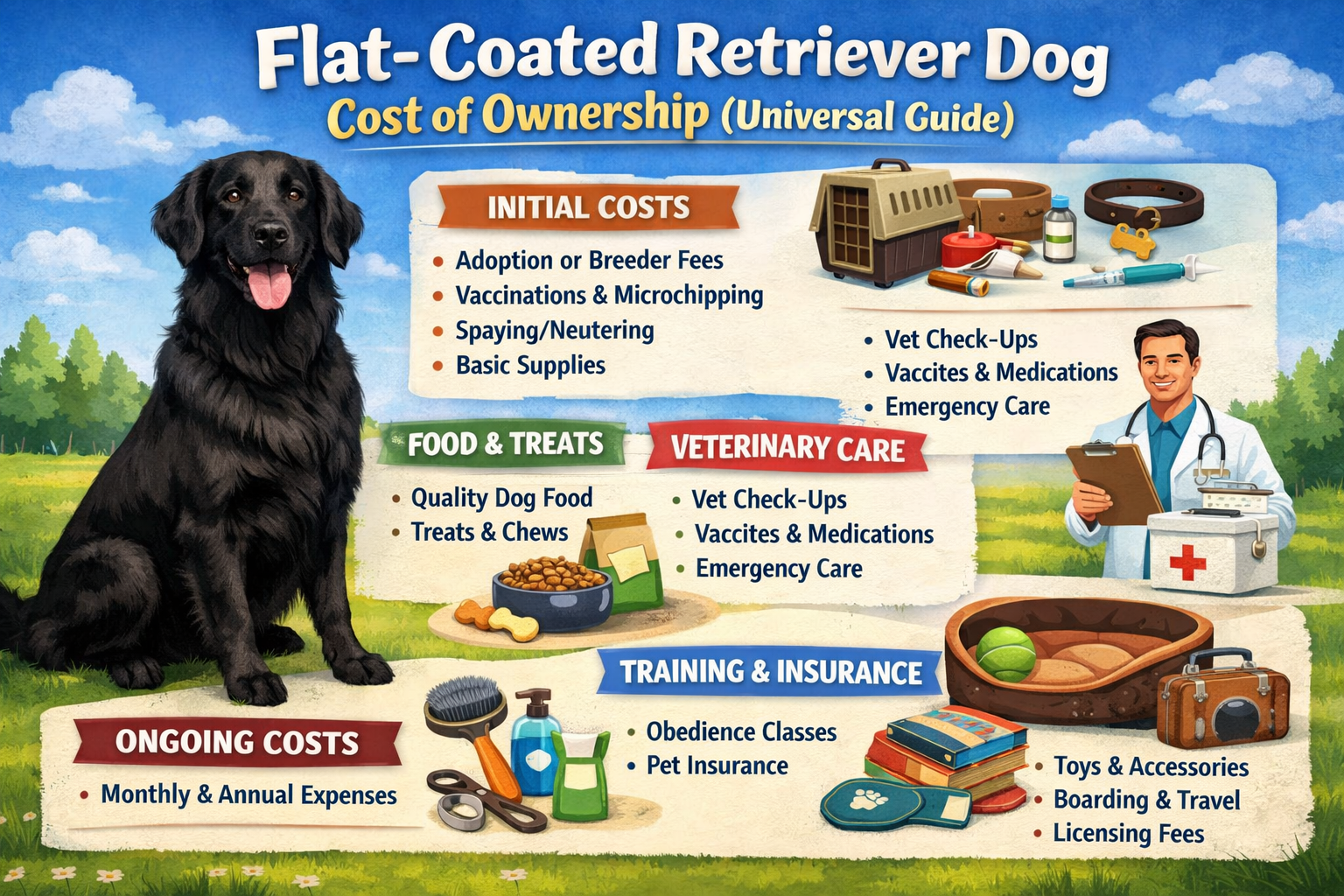
Before bringing home a Flat-Coated Retriever, it is important to understand both the initial investment and long-term expenses associated with ownership.
Typical Ownership Costs
| Cost Category | Expected Expense |
|---|---|
| Puppy Purchase | Moderate to High |
| Food | Moderate to High |
| Routine Veterinary Care | Moderate |
| Emergency Veterinary Care | Potentially High |
| Grooming | Low to Moderate |
| Training | Moderate |
| Pet Insurance | Recommended |
Medical expenses can become substantial over time, particularly if serious health conditions develop. Many owners choose comprehensive pet insurance while the dog is young.
Pros and Cons of the Flat-Coated Retriever
Pros and Cons at a Glance
| Pros | Cons |
|---|---|
| Extremely friendly personality | High daily exercise requirements |
| Excellent family companion | Slow emotional maturity |
| Intelligent and trainable | Requires significant attention |
| Strong bond with owners | Does not tolerate isolation well |
| Athletic and versatile | Elevated health risks |
| Great outdoor companion | Can be overly exuberant |
Flat-Coated Retriever vs Similar Retriever Breeds
Many prospective owners compare the Flat-Coated Retriever with other retriever breeds before making a decision.
Breed Comparison
| Breed | Energy Level | Health Risk | Grooming Needs | Best For |
|---|---|---|---|---|
| Flat-Coated Retriever | Very High | High | Moderate | Active, involved owners |
| Golden Retriever | High | Moderate | High | Family households |
| Labrador Retriever | High | Moderate | Low | First-time dog owners |
| Curly-Coated Retriever | High | Moderate | Low | Independent owners |
| Nova Scotia Duck Tolling Retriever | Very High | Moderate | Moderate | Dog sports enthusiasts |
The Flat-Coated Retriever stands out because of its combination of enthusiasm, emotional warmth, and playful personality. However, it also demands a greater commitment in terms of activity, engagement, and health management.
Frequently Asked Questions
Are Flat-Coated Retrievers good family dogs?
Yes. Flat-Coated Retrievers are generally excellent family dogs. They are affectionate, social, and enjoy spending time with both adults and children.
Do Flat-Coated Retrievers bark a lot?
They are not usually excessive barkers, but they may bark when bored, under-exercised, or seeking attention.
How much exercise does a Flat-Coated Retriever need?
Most adults need approximately 90 to 120 minutes of physical activity daily along with mental enrichment.
Are Flat-Coated Retrievers easy to train?
Yes. They are intelligent and eager to please. Positive reinforcement methods typically produce excellent results.
What is the average lifespan of a Flat-Coated Retriever?
Most Flat-Coated Retrievers live between 8 and 10 years, although some may live longer with excellent care and favorable genetics.
Do Flat-Coated Retrievers shed?
Yes. They shed moderately throughout the year and usually experience heavier seasonal shedding periods.
Are Flat-Coated Retrievers good for first-time owners?
They can be, but their high energy levels and exercise requirements may be challenging for some inexperienced owners.
Can Flat-Coated Retrievers live in apartments?
Apartment living is possible only if owners can consistently meet the breed’s substantial exercise and mental stimulation needs.
Final Thoughts
The Flat-Coated Retriever is one of the most joyful and affectionate sporting breeds available today. Its friendly nature, intelligence, athletic ability, and deep attachment to family members make it an exceptional companion for active households.
However, this breed is not low maintenance. Prospective owners should be prepared for substantial exercise requirements, ongoing training, emotional dependency, and potential health challenges. Families willing to invest the necessary time and attention are often rewarded with a loyal, enthusiastic, and endlessly entertaining companion.
For active individuals and families seeking a loving retriever with a playful personality and strong desire for companionship, the Flat-Coated Retriever remains an outstanding choice.

Ata Ur Rehman is the founder of Pet Age in Human Years Calculator, an educational platform that provides age conversion charts and lifespan guides for dogs, cats, birds, and other companion animals. His work focuses on helping pet owners understand how animal ages translate into human years using commonly accepted age conversion formulas and published lifespan averages.
The website compiles breed and species lifespan data from kennel clubs, breed organizations, and general animal lifespan studies to present simple and easy-to-understand guides for pet owners worldwide.
This website was created to centralize animal age conversion charts into one easy reference platform for pet owners.
This article is for general education. For symptoms, medication, diet changes, or health concerns, use a qualified veterinarian who can assess your individual pet.