On this page
Training a German Shepherd requires structure, consistency, and age-appropriate expectations. This breed is highly intelligent, energetic, protective, and eager to work, which makes German Shepherds very trainable when their training starts early and follows a clear plan.
This guide explains how to train a German Shepherd from puppy basics to adult obedience, including commands, leash training, crate training, socialization, behavior problems, and when to seek professional help.
If you are also tracking your dog’s life stage, use the German Shepherd Dog Age Calculator to better understand whether your dog is in the puppy, adolescent, adult, or senior stage. Training expectations should change as your German Shepherd matures.
Understanding German Shepherd Training Needs
German Shepherds were bred to work, learn quickly, and stay alert to their surroundings. These traits are useful for obedience training, but they can also create problems if the dog is not given enough structure, exercise, and mental stimulation.
A German Shepherd that is not trained properly may become overly protective, reactive on leash, difficult to control around strangers, or destructive when bored. Training should focus on calm obedience, controlled socialization, confidence building, and clear communication.
Key German Shepherd Traits That Affect Training
- High intelligence: German Shepherds learn quickly, but they also notice inconsistency.
- Strong loyalty: They bond closely with their family and need controlled exposure to new people.
- Protective instincts: Without training, this can turn into barking, guarding, or reactivity.
- High energy: Daily exercise and mental work are essential for focus.
- Work drive: They respond well to structured tasks, obedience drills, and reward-based training.
German Shepherd Training Timeline by Age
The right training plan depends on your German Shepherd’s age. A young puppy needs short, positive sessions. An adolescent German Shepherd needs impulse control and consistency. An adult dog may need behavior correction, obedience reinforcement, or advanced training.
| Age Stage | Training Focus | Best Skills to Teach |
|---|---|---|
| 8–12 weeks | Foundation and bonding | Name response, crate comfort, potty routine, gentle handling |
| 3–6 months | Basic obedience | Sit, stay, come, leash basics, socialization |
| 6–12 months | Impulse control | Loose-leash walking, leave it, place command, calm greetings |
| 1–3 years | Adult obedience | Reliable recall, advanced commands, behavior correction |
| Senior stage | Maintenance and comfort | Gentle obedience, mental enrichment, low-impact routines |
For age-specific context, you can compare your dog’s stage using the German Shepherd age chart.
How to Train a German Shepherd Puppy
German Shepherd puppy training should begin as soon as your puppy comes home. The goal is not strict discipline. The goal is to build trust, teach simple rules, and create a predictable routine.
- Use short training sessions of 5–10 minutes.
- Reward good behavior immediately with praise, treats, or play.
- Use the same command words every time.
- Start socialization early but keep it controlled and positive.
- Do not encourage jumping, biting, chasing, or rough guarding behavior.
Basic German Shepherd Obedience Training
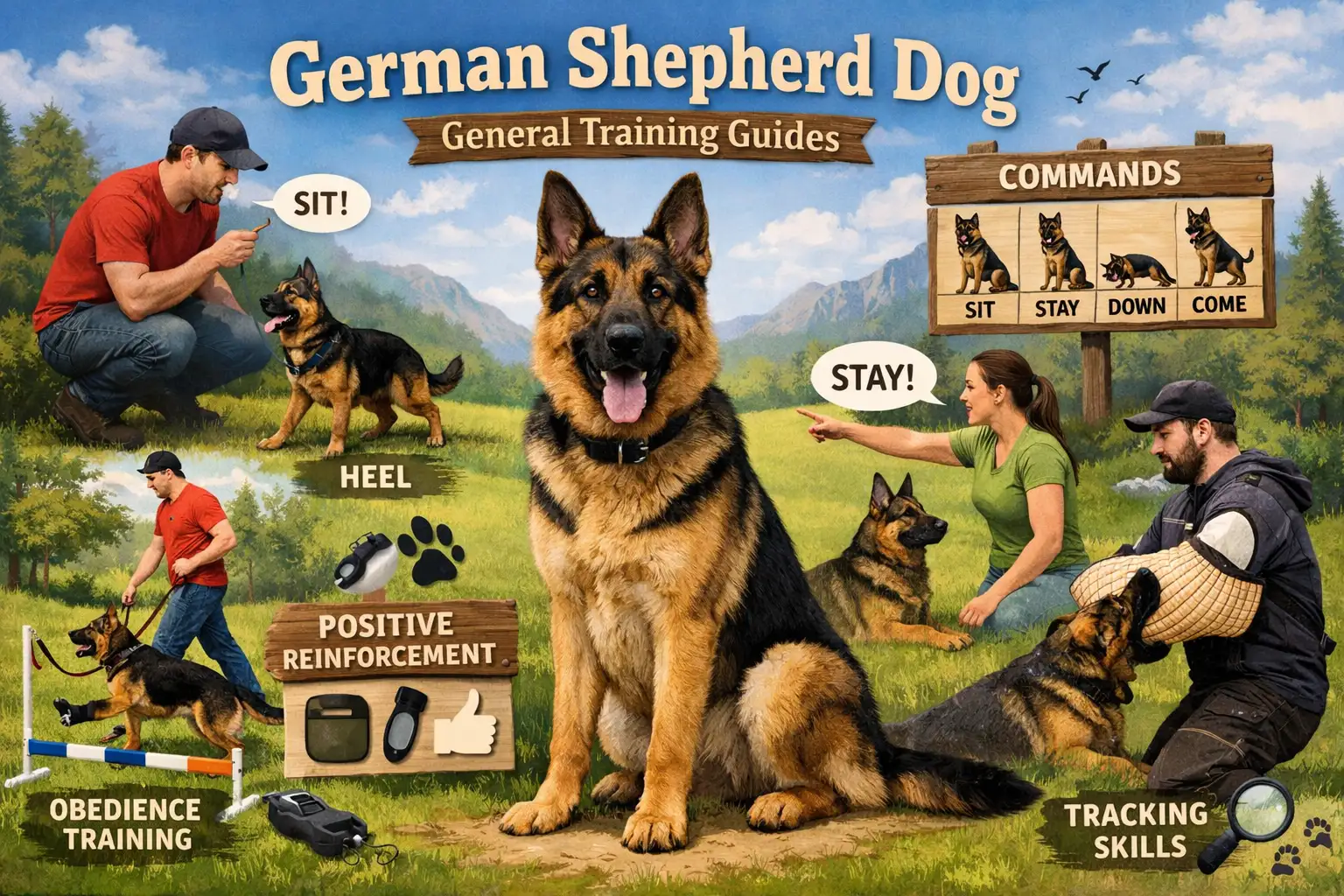
Basic obedience gives your German Shepherd the structure they need to behave calmly at home, on walks, and around other people. Start with simple commands before moving into advanced training.
| Command | How to Teach It | Training Tip |
|---|---|---|
| Sit | Hold a treat near the nose, move it slightly upward, and reward when the dog sits. | Use before meals, doors, and greetings. |
| Stay | Ask for sit, show your hand, step back briefly, then reward calm waiting. | Increase distance slowly. |
| Come | Call your dog in a happy voice and reward when they reach you. | Never punish after recall. |
| Leave it | Reward your dog for ignoring food, toys, or distractions on command. | Useful for safety and impulse control. |
| Place | Teach your dog to go to a bed or mat and stay there calmly. | Helpful for guests and overexcitement. |
German Shepherd Leash Training
Leash training is one of the most important skills for a German Shepherd because this breed is strong, alert, and easily stimulated by movement, people, and other dogs.
- Start in a quiet area with few distractions.
- Reward your dog when they walk beside you without pulling.
- Stop walking as soon as your dog pulls ahead.
- Resume only when the leash becomes loose again.
- Practice short walks before moving into busier environments.
The goal is not to force your German Shepherd to walk perfectly at first. The goal is to teach that pulling does not move the walk forward, while calm walking earns progress and rewards.
German Shepherd Crate Training
Crate training helps a German Shepherd feel secure, supports potty training, and reduces destructive behavior when introduced correctly. The crate should feel like a safe resting space, not a punishment.
- Place the crate in a quiet but familiar area of the home.
- Add comfortable bedding and safe chew toys.
- Let your dog enter voluntarily using treats or food.
- Close the door for short periods while your dog stays calm.
- Gradually increase crate time as your German Shepherd becomes comfortable.
German Shepherd Socialization Training
Socialization teaches your German Shepherd how to stay calm around people, dogs, sounds, surfaces, and new environments. This is especially important because German Shepherds can become suspicious or protective if they are under-socialized.
- Introduce new people calmly and slowly.
- Reward neutral behavior around other dogs.
- Expose your dog to traffic sounds, doorbells, grooming tools, and different walking areas.
- Avoid overwhelming your dog with crowded or chaotic environments too early.
- Focus on calm confidence, not forced interaction.
Socialization should continue into adulthood. A German Shepherd that met people as a puppy still needs ongoing exposure, training, and reinforcement.
Common German Shepherd Training Problems and Fixes
German Shepherd behavior problems usually come from unclear rules, boredom, fear, lack of socialization, or inconsistent training. The solution is to identify the cause, then use a structured correction plan.
Jumping on People
Jumping often happens when a German Shepherd is excited and has not learned calm greetings.
- Ignore jumping and avoid eye contact.
- Reward only when all four paws are on the floor.
- Ask for a sit before greeting.
- Keep greetings calm and consistent.
Leash Pulling
Leash pulling is common because German Shepherds are strong and curious. Do not allow pulling to become the normal walking pattern.
- Stop moving when the leash tightens.
- Reward your dog when they return to your side.
- Practice direction changes to improve focus.
- Use short, consistent walks for training.
Separation Anxiety
German Shepherds form strong bonds with their owners, which can sometimes lead to stress when left alone.
- Practice short departures before longer absences.
- Keep leaving and returning calm.
- Use crate training or a safe resting space.
- Provide mental enrichment before alone time.
- Seek help if your dog panics, destroys objects, or injures themselves.
German Shepherd Aggression Toward Other Dogs
Aggression or reactivity toward other dogs should be handled carefully. German Shepherds may bark, lunge, or growl because of fear, frustration, poor socialization, or protective instincts.
- Keep your dog at a safe distance from triggers.
- Reward calm behavior before your dog reacts.
- Avoid forcing face-to-face greetings.
- Use controlled exposure instead of dog park chaos.
- Work with a qualified trainer if the behavior is intense or unsafe.
Do not punish growling or warning signs. Instead, manage distance, reduce stress, and train calm replacement behaviors.
When to Seek Professional Help
Some German Shepherd behavior problems require professional support. A qualified trainer or behavior consultant can help if the behavior is becoming unsafe, intense, or difficult to manage at home.
- Aggression: Biting, lunging, snapping, or repeated growling at people or dogs.
- Severe separation anxiety: Panic, destruction, nonstop barking, or self-injury when alone.
- Fearfulness: Extreme fear of people, dogs, sounds, or normal environments.
- No progress: Consistent training is not improving the behavior.
- Safety concerns: You cannot physically control your dog during walks or triggers.
What to Expect from Professional German Shepherd Training
Professional training usually begins with a behavior assessment. The trainer will look at your German Shepherd’s age, triggers, obedience level, environment, and daily routine before creating a plan.
- Assessment: The trainer identifies the cause of the behavior.
- Custom plan: The plan is built around your dog’s temperament and goals.
- Owner coaching: You learn how to repeat the training correctly at home.
- Follow-up: Progress is reviewed and adjusted over time.
Progress can take days, weeks, or months depending on the dog’s age, history, consistency, and the severity of the behavior. Training works best when the whole household follows the same rules.
German Shepherd Training FAQs
Are German Shepherds easy to train?
Yes, German Shepherds are usually easy to train because they are intelligent and eager to work. However, they need consistency, structure, and daily mental stimulation.
When should I start training a German Shepherd puppy?
You should start training a German Shepherd puppy as soon as they come home. Begin with name response, potty routine, crate comfort, gentle handling, and simple commands.
How long does it take to train a German Shepherd?
Basic training can begin showing results within a few weeks, but reliable obedience takes months of consistent practice. Training should continue throughout the dog’s life.
How do I stop my German Shepherd from pulling on the leash?
Stop walking when your German Shepherd pulls, reward loose-leash walking, and practice in low-distraction areas first. Do not let pulling become the way your dog moves forward.
Can an adult German Shepherd still be trained?
Yes, adult German Shepherds can still be trained. Adult dogs may need more time to change habits, but they can learn obedience, leash manners, socialization skills, and calmer behavior with consistency.

Ata Ur Rehman is the founder of Pet Age in Human Years Calculator, an educational platform that provides age conversion charts and lifespan guides for dogs, cats, birds, and other companion animals. His work focuses on helping pet owners understand how animal ages translate into human years using commonly accepted age conversion formulas and published lifespan averages.
The website compiles breed and species lifespan data from kennel clubs, breed organizations, and general animal lifespan studies to present simple and easy-to-understand guides for pet owners worldwide.
This website was created to centralize animal age conversion charts into one easy reference platform for pet owners.
This article is for general education. For symptoms, medication, diet changes, or health concerns, use a qualified veterinarian who can assess your individual pet.