On this page
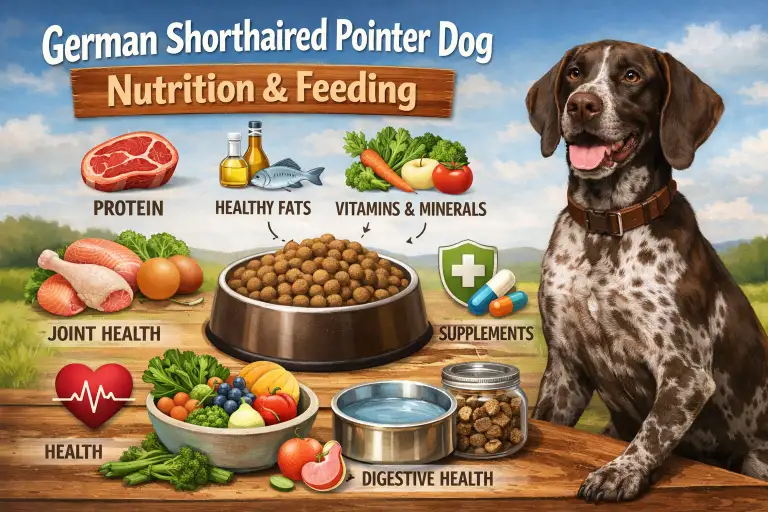
German Shorthaired Pointers (GSPs) are energetic, athletic dogs bred for hunting, tracking, and endurance activities. Their high activity levels mean they require a balanced diet that supports lean muscle development, sustained energy, healthy joints, and overall wellness.
Unlike many breeds, German Shorthaired Pointers often maintain a naturally lean appearance. New owners sometimes mistake a healthy body condition for being underweight. A properly fed GSP should have a visible waist, a tucked abdomen, and ribs that can be felt easily without excessive fat covering.
A well-balanced German Shorthaired Pointer diet should support:
- Strong muscles and recovery after exercise
- Sustained stamina for active lifestyles
- Healthy bones and joints
- Skin and coat health
- Consistent energy throughout the day
- Healthy digestion and stool quality
Nutritional Requirements for German Shorthaired Pointers
Because GSPs are active working dogs, nutrition quality matters just as much as calorie intake.
Most healthy adult German Shorthaired Pointers thrive on:
- High-quality animal protein as the primary ingredient
- Moderate to high fat levels for endurance and energy
- Balanced carbohydrates for sustained fuel
- Fiber for digestive health
- Omega-3 fatty acids for joints and skin
- Complete vitamins and minerals for overall wellness
Nutritional Targets for Adult German Shorthaired Pointers
| Goal | What to Look For | Why It Matters |
|---|---|---|
| Muscle maintenance | Meat-first ingredients and quality protein | Supports lean body condition and recovery |
| Endurance | Moderate-to-high healthy fats | Provides long-lasting energy |
| Joint support | Omega-3 fatty acids and quality protein | Supports mobility and comfort |
| Skin and coat health | Balanced Omega-3 and Omega-6 fatty acids | Helps maintain a healthy coat |
| Digestive health | Fiber and digestible ingredients | Promotes consistent digestion |
How Much to Feed a German Shorthaired Pointer
The amount of food a German Shorthaired Pointer needs depends on several factors:
- Age
- Weight
- Activity level
- Metabolism
- Overall health condition
Working, hunting, and highly active GSPs often require significantly more calories than household pets.
German Shorthaired Pointer Feeding Chart
| Weight | Low Activity | Moderate Activity | High Activity / Working |
|---|---|---|---|
| 45 lbs | 900–1,000 calories | 1,200–1,400 calories | 1,600–1,800 calories |
| 55 lbs | 1,000–1,200 calories | 1,400–1,600 calories | 1,800–2,100 calories |
| 65 lbs | 1,200–1,400 calories | 1,600–1,800 calories | 2,100–2,400 calories |
These values are starting guidelines. Individual dogs may require adjustments based on body condition and activity level.
How Many Cups Should a German Shorthaired Pointer Eat?
Dog foods vary significantly in calorie density.
To estimate daily portions:
Daily Cups = Target Daily Calories ÷ Calories Per Cup
Example:
- Target calories: 1,600 calories
- Food contains: 400 calories per cup
Daily feeding amount:
1,600 ÷ 400 = 4 cups per day
Divide total food into two or three meals.
Body Condition Assessment
The best feeding calculator is your dog’s body condition.
Signs of ideal condition:
- Ribs easily felt but not prominently visible
- Defined waist when viewed from above
- Noticeable abdominal tuck from the side
If your dog appears too thin:
- Increase food by 10–15%
- Reassess after 2–3 weeks
If your dog gains excess weight:
- Reduce food by 10–15%
- Limit high-calorie treats
German Shorthaired Pointer Puppy Feeding Chart
Growing puppies require more calories per pound than adult dogs.
| Puppy Age | Meals Per Day | Feeding Notes |
|---|---|---|
| 8–12 weeks | 4 meals | Frequent feeding supports growth |
| 3–6 months | 3 meals | Maintain steady calorie intake |
| 6–12 months | 2–3 meals | Monitor growth and body condition |
| 12+ months | 2 meals | Transition to adult feeding schedule |
Choose a high-quality puppy formula designed to support controlled growth and healthy skeletal development.
Best Food Types for German Shorthaired Pointers
No single diet works for every dog. The best food depends on activity level, digestion, budget, and personal preference.
| Food Type | Advantages | Disadvantages |
|---|---|---|
| Dry kibble | Convenient, affordable, nutritionally complete | Quality varies between brands |
| Fresh food | Highly palatable and digestible | More expensive |
| Wet food | Excellent moisture content | Higher cost for large dogs |
| Freeze-dried food | Convenient and nutrient dense | Can be expensive |
| Raw diet | Appeals to many active dogs | Requires careful nutritional balancing |
| Homemade diet | Full ingredient control | Difficult to formulate properly |
What to Look for in German Shorthaired Pointer Food
When selecting food, prioritize:
- Animal protein listed first
- Complete and balanced nutrition
- Appropriate life-stage formulation
- Digestible ingredients
- Healthy fats for energy and endurance
Good indicators that a diet is working include:
- Firm stools
- Consistent energy
- Healthy skin
- Shiny coat
- Stable body weight
Safe and Unsafe Foods for German Shorthaired Pointers
Treats should account for no more than 10% of daily calories.
| Safe Foods | Foods to Avoid |
|---|---|
| Cooked chicken | Chocolate |
| Cooked turkey | Grapes |
| Plain pumpkin | Raisins |
| Carrots | Onions |
| Green beans | Garlic |
| Cooked eggs | Xylitol |
| Plain rice | Alcohol |
Common Feeding Problems in German Shorthaired Pointers
Because of their active nature, GSPs may experience several feeding-related challenges.
| Problem | Potential Solution |
|---|---|
| Underweight condition | Increase calories gradually |
| Excessive hunger | Increase protein and fiber |
| Loose stools | Simplify ingredients and feeding routine |
| Picky eating | Establish consistent meal times |
| Rapid eating | Use slow feeders or puzzle bowls |
| Weight gain | Monitor portions and treats |
| Digestive sensitivity | Transition foods slowly |
Switching Dog Foods Safely
Sudden diet changes can cause digestive upset.
Use a gradual transition schedule:
| Day | Old Food | New Food |
|---|---|---|
| 1–3 | 75% | 25% |
| 4–6 | 50% | 50% |
| 7–9 | 25% | 75% |
| 10+ | 0% | 100% |
Slow transitions help reduce digestive problems and improve acceptance of the new food.
Feeding Senior German Shorthaired Pointers
As GSPs age, their calorie needs may decrease while nutritional needs remain important.
Senior dogs often benefit from:
- High-quality protein
- Joint-supporting nutrients
- Omega-3 fatty acids
- Weight management
- Easily digestible ingredients
Regular weight monitoring becomes increasingly important during senior years.
Frequently Asked Questions
What is the best diet for a German Shorthaired Pointer?
A high-quality diet rich in animal protein, healthy fats, and balanced nutrients is generally best. Active dogs often perform well on performance-oriented formulas designed for athletic breeds.
How much should a German Shorthaired Pointer eat per day?
Most adult German Shorthaired Pointers consume between 1,000 and 2,400 calories daily depending on body weight and activity level.
How many times a day should a German Shorthaired Pointer eat?
Most adult dogs do well with two meals per day. Puppies may require three to four meals daily.
Are German Shorthaired Pointers prone to obesity?
GSPs are typically lean and active, but they can become overweight if calorie intake exceeds activity levels.
Can German Shorthaired Pointers eat raw food?
Some owners choose raw diets, but meals must be properly balanced to avoid nutritional deficiencies and food safety concerns.
What foods should German Shorthaired Pointers never eat?
Avoid chocolate, grapes, raisins, onions, garlic, xylitol-containing products, and alcohol.
Final Thoughts
A healthy German Shorthaired Pointer diet focuses on quality nutrition, proper calorie intake, and feeding practices that match the dog’s age, size, and activity level. Whether your GSP is a family companion, sporting dog, or hunting partner, maintaining a lean body condition and providing balanced nutrition will support long-term health, endurance, and overall quality of life.
Monitor weight regularly, adjust portions as needed, and choose foods that provide complete nutrition for your dog’s specific life stage.

Ata Ur Rehman is the founder of Pet Age in Human Years Calculator, an educational platform that provides age conversion charts and lifespan guides for dogs, cats, birds, and other companion animals. His work focuses on helping pet owners understand how animal ages translate into human years using commonly accepted age conversion formulas and published lifespan averages.
The website compiles breed and species lifespan data from kennel clubs, breed organizations, and general animal lifespan studies to present simple and easy-to-understand guides for pet owners worldwide.
This website was created to centralize animal age conversion charts into one easy reference platform for pet owners.
This article is for general education. For symptoms, medication, diet changes, or health concerns, use a qualified veterinarian who can assess your individual pet.