On this page
German Shorthaired Pointers are often considered low-maintenance dogs when it comes to grooming, but that does not mean grooming can be ignored. Their short, dense coat sheds throughout the year, collects dirt from outdoor activities, and can develop odor if basic care is neglected.
Regular grooming helps control shedding, reduce odor, maintain healthy skin, and keep your German Shorthaired Pointer comfortable. It also provides an opportunity to check for skin problems, parasites, ear infections, or other health concerns before they become serious.
If you stay consistent with brushing, bathing, nail trimming, ear cleaning, and dental care, grooming a German Shorthaired Pointer is relatively simple compared to many other sporting breeds.
German Shorthaired Pointer Grooming at a Glance
| Grooming Factor | Difficulty Level |
|---|---|
| Coat Maintenance | Easy |
| Shedding Level | Moderate |
| Bathing Needs | Low to Moderate |
| Undercoat | No Thick Undercoat |
| Odor Potential | Low with Proper Care |
| Professional Grooming | Occasionally Helpful |
| Brushing Frequency | 1–2 Times Per Week |
German Shorthaired Pointer Shedding and Coat Type
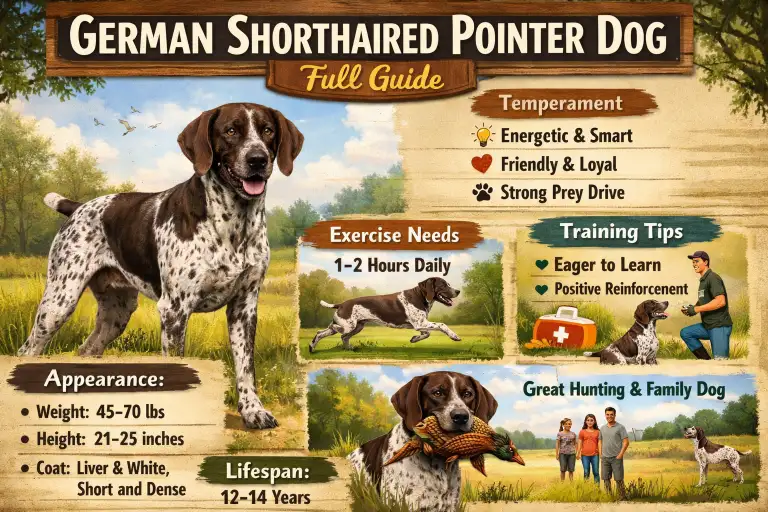
German Shorthaired Pointers have a short, dense, water-resistant coat designed for hunting and outdoor work. The coat lies close to the body and requires far less maintenance than long-haired breeds.
Although their coat is short, German Shorthaired Pointers do shed. Many new owners assume short-haired dogs shed less, but the small hairs often become embedded in clothing, furniture, and carpets.
Shedding occurs year-round and typically increases during seasonal transitions in spring and fall. Regular brushing helps remove loose hair before it spreads throughout the home.
Because the coat sits close to the skin, dirt, oils, and allergens can accumulate if grooming is neglected. Consistent brushing helps maintain skin health and reduces unpleasant odors.
Coat Characteristics
| Coat Feature | Description |
|---|---|
| Coat Length | Short |
| Coat Density | Dense |
| Coat Type | Single Coat |
| Undercoat | Minimal to None |
| Seasonal Shedding | Moderate |
| Grooming Difficulty | Easy |
Do German Shorthaired Pointers Have an Undercoat?
One of the most common questions owners ask is whether German Shorthaired Pointers have an undercoat.
Unlike many double-coated breeds, German Shorthaired Pointers do not have a thick insulating undercoat. Instead, they have a dense single coat that provides protection while remaining relatively easy to maintain.
Because they lack a heavy undercoat, they generally do not require extensive deshedding treatments. Regular brushing with a grooming mitt or soft rubber brush is usually enough to keep shedding under control.
The absence of a thick undercoat also means their coat dries faster after swimming and bathing compared to many sporting breeds.
Do German Shorthaired Pointers Smell?
German Shorthaired Pointers are generally considered low-odor dogs. They do not naturally produce a strong dog smell when properly cared for.
However, active dogs spend significant time outdoors, and dirt, moisture, oils, and bacteria can build up over time. Without regular grooming, even a naturally clean breed can develop odor.
Common causes of odor include:
- Excess oil buildup on the skin
- Wet ears after swimming
- Poor coat maintenance
- Skin allergies
- Ear infections
- Outdoor debris and mud
- Infrequent brushing
Regular brushing and ear cleaning are often enough to prevent most odor problems.
Odor Risk Factors
| Cause | Odor Risk |
|---|---|
| Dirty Coat | Moderate |
| Wet Ears | High |
| Skin Infection | High |
| Poor Grooming Routine | Moderate |
| Regular Grooming | Low |
Are German Shorthaired Pointers High-Maintenance?
German Shorthaired Pointers are considered low to moderate maintenance when compared with many other hunting and sporting breeds.
Their grooming requirements are simple, but their exercise requirements are not. Owners often find physical activity and mental stimulation far more demanding than grooming.
As long as brushing, bathing, nail care, ear cleaning, and dental care are performed consistently, grooming remains straightforward throughout the dog’s life.
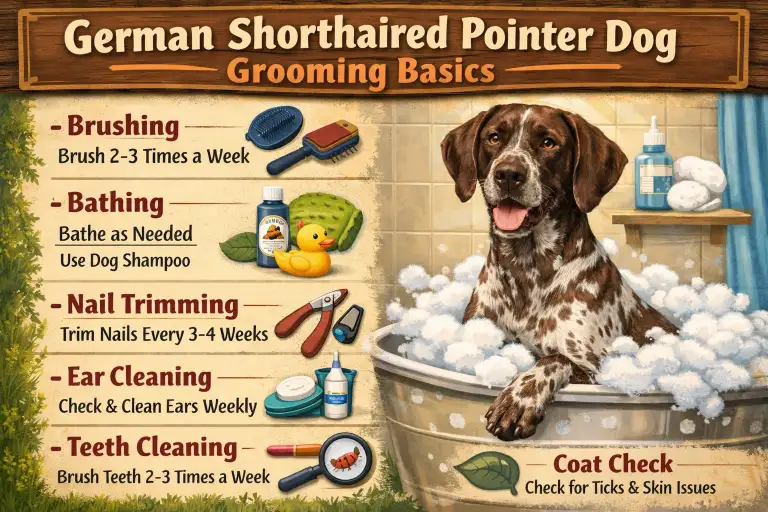
German Shorthaired Pointer Grooming Routine at Home
Most owners can perform the majority of grooming tasks at home without professional assistance.
Brushing
Brush your German Shorthaired Pointer one to two times per week using a rubber grooming mitt, soft-bristle brush, or grooming glove.
Benefits of regular brushing include:
- Reduced shedding
- Healthier skin
- Better coat shine
- Less odor buildup
- Early detection of skin problems
Bathing
German Shorthaired Pointers typically need a bath every 6 to 8 weeks.
More frequent bathing may be necessary if your dog:
- Swims regularly
- Gets muddy during outdoor activities
- Develops noticeable odor
- Has skin conditions requiring treatment
Always use a dog-specific shampoo formulated for sensitive skin.
Drying
After bathing:
- Remove excess water with a towel.
- Allow air drying when possible.
- Use low heat if using a dryer.
- Avoid excessive heat around the skin.
Best Grooming Tools for German Shorthaired Pointers
| Tool | Purpose |
|---|---|
| Rubber Grooming Mitt | Removes loose hair |
| Soft Bristle Brush | Distributes natural oils |
| Dog Shampoo | Cleans coat safely |
| Ear Cleaner | Prevents ear infections |
| Nail Clippers | Maintains nail length |
| Nail Grinder | Smooths rough nail edges |
| Toothbrush and Dog Toothpaste | Supports dental health |
Nail, Ear, Dental, and Skin Care
Proper grooming extends beyond the coat.
Nail Care
Check nails every 2 to 3 weeks.
Signs nails need trimming include:
- Clicking sounds on hard floors
- Difficulty walking comfortably
- Changes in posture
Long nails can affect movement and place unnecessary stress on joints.
Ear Care
German Shorthaired Pointers have floppy ears that can trap moisture and debris.
Clean ears every 2 to 4 weeks and always inspect them after:
- Swimming
- Bathing
- Hiking
- Hunting trips
Watch for:
- Redness
- Odor
- Discharge
- Excess scratching
Dental Care
Brush teeth several times each week using dog toothpaste.
Good dental care helps prevent:
- Bad breath
- Plaque buildup
- Gum disease
- Tooth loss
Skin Checks
During grooming sessions, inspect your dog’s skin for:
- Hot spots
- Rashes
- Parasites
- Bald patches
- Excessive redness
- Unusual lumps
Early detection often prevents more serious health issues.
German Shorthaired Pointer Puppy Grooming
Introducing grooming during puppyhood helps create positive lifelong habits.
Start with:
- Gentle brushing sessions
- Paw handling
- Ear inspections
- Short nail trimming sessions
- Positive reinforcement
Puppies that become comfortable with grooming early are usually easier to manage as adults.
Grooming Schedule for German Shorthaired Pointers
| Grooming Task | Recommended Frequency |
|---|---|
| Brushing | 1–2 Times Weekly |
| Bathing | Every 6–8 Weeks |
| Nail Trimming | Every 2–3 Weeks |
| Ear Cleaning | Every 2–4 Weeks |
| Teeth Brushing | Several Times Weekly |
| Skin Inspection | Weekly |
Common Grooming Mistakes to Avoid
Many owners accidentally create grooming problems by making simple mistakes.
Avoid:
- Bathing too frequently
- Using human shampoo
- Ignoring ear maintenance
- Allowing nails to overgrow
- Skipping dental care
- Using harsh grooming products
- Assuming short-haired dogs do not shed
When to Use a Professional Groomer
Most German Shorthaired Pointers can be maintained at home. However, professional grooming may be beneficial if:
- You are uncomfortable trimming nails
- Your dog resists grooming
- You want professional deshedding assistance
- Your dog has skin or coat issues
- You need help managing seasonal shedding
Professional groomers can also identify potential skin or coat concerns that require veterinary attention.
Final Thoughts
German Shorthaired Pointer grooming is relatively simple compared to many dog breeds, but consistency remains important. Regular brushing, occasional bathing, ear cleaning, nail trimming, and dental care help keep your dog healthy, comfortable, and odor-free.
Although they are not considered high-maintenance groomers, they do shed throughout the year and require routine care to maintain healthy skin and coat condition. A few minutes of grooming each week can prevent many common problems and help your German Shorthaired Pointer look and feel its best.
Frequently Asked Questions About German Shorthaired Pointer Grooming
How often should you groom a German Shorthaired Pointer?
Most German Shorthaired Pointers should be brushed one to two times per week, with regular nail trimming, ear cleaning, and dental care performed throughout the month.
How much do German Shorthaired Pointers shed?
German Shorthaired Pointers shed moderately throughout the year and typically experience heavier shedding during seasonal changes in spring and fall.
Do German Shorthaired Pointers have an undercoat?
No. German Shorthaired Pointers do not have a thick double coat. They have a dense single coat that is easier to maintain than many double-coated breeds.
Do German Shorthaired Pointers smell bad?
No. They are generally considered low-odor dogs. Most odor issues result from poor grooming, wet ears, skin problems, or infrequent brushing.
How often should you bathe a German Shorthaired Pointer?
Most dogs in this breed only need bathing every 6 to 8 weeks unless they become unusually dirty or develop noticeable odor.
Are German Shorthaired Pointers high-maintenance?
They are considered low to moderate maintenance for grooming. Their exercise and activity requirements are usually more demanding than their grooming needs.
What is the best brush for a German Shorthaired Pointer?
A rubber grooming mitt or soft-bristle brush is usually the best choice for removing loose hair and maintaining coat health.
Can German Shorthaired Pointers be professionally groomed?
Yes. While most grooming can be done at home, professional groomers can assist with nail trimming, seasonal shedding management, and specialized coat care.

Ata Ur Rehman is the founder of Pet Age in Human Years Calculator, an educational platform that provides age conversion charts and lifespan guides for dogs, cats, birds, and other companion animals. His work focuses on helping pet owners understand how animal ages translate into human years using commonly accepted age conversion formulas and published lifespan averages.
The website compiles breed and species lifespan data from kennel clubs, breed organizations, and general animal lifespan studies to present simple and easy-to-understand guides for pet owners worldwide.
This website was created to centralize animal age conversion charts into one easy reference platform for pet owners.
This article is for general education. For symptoms, medication, diet changes, or health concerns, use a qualified veterinarian who can assess your individual pet.