On this page
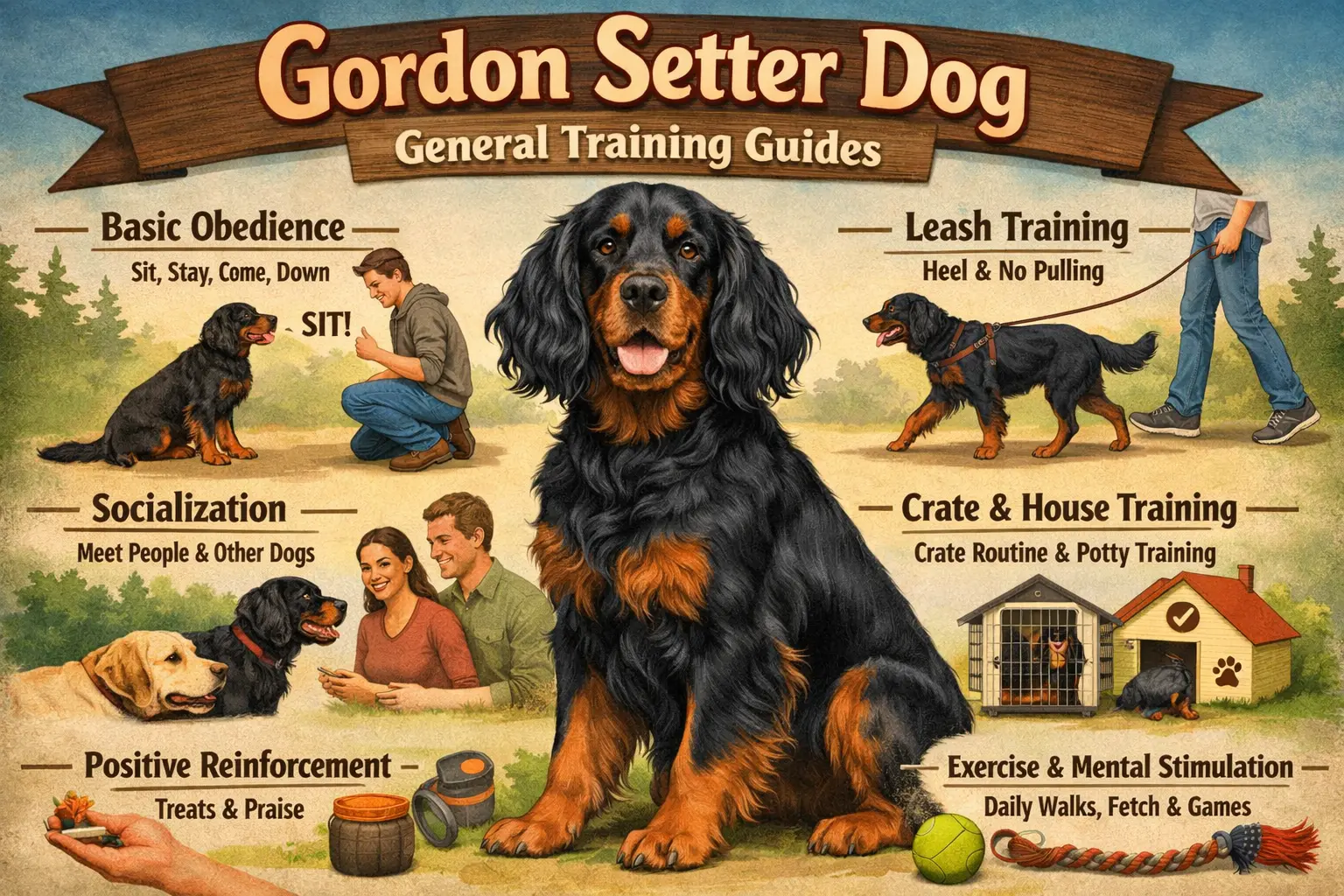
Training a Gordon Setter successfully requires more than teaching basic commands. This intelligent sporting breed was developed to work closely with hunters in challenging environments, which means Gordon Setters are energetic, independent thinkers with strong instincts and a natural desire to explore. While these qualities make them excellent companions and working dogs, they can also create training challenges if their needs are not properly understood.
Many Gordon Setter owners experience problems such as pulling on the leash, unreliable recall, excessive excitement, jumping on people, or a dog that listens perfectly at home but ignores commands outdoors. These behaviors are common and usually stem from the breed’s natural instincts rather than stubbornness or lack of intelligence.
The good news is that Gordon Setters are highly trainable when owners use the right approach. Positive reinforcement, consistency, mental stimulation, and age-appropriate expectations are the keys to success. Whether you are raising a young puppy, navigating adolescence, or improving obedience in an adult dog, understanding how Gordon Setters learn will help you achieve better results.
In this guide, you’ll learn how to:
- Train a Gordon Setter puppy effectively
- Build reliable recall and obedience
- Improve leash manners and focus
- Manage hunting instincts and distractions
- Solve common behavior problems
- Create a realistic training routine that works
Why Gordon Setter Training Is Different
Not all dog breeds learn the same way. Gordon Setters are intelligent, sensitive, and energetic dogs that were bred for endurance and independent decision-making in the field. These traits influence how they respond to training.
Many owners become frustrated when their Gordon Setter:
- Becomes distracted outdoors
- Ignores commands around wildlife
- Pulls strongly during walks
- Gets overexcited around visitors
- Appears stubborn during training sessions
In reality, these behaviors often reflect natural breed tendencies rather than deliberate disobedience.
Gordon Setter Traits and Their Training Impact
| Trait | What It Looks Like | Training Focus |
|---|---|---|
| High Energy | Constant movement and excitement | Daily exercise and mental enrichment |
| Strong Prey Drive | Chasing birds, squirrels, and scents | Recall and impulse control |
| Intelligence | Learns quickly but gets bored | Variety and engagement |
| Sensitivity | Responds to tone and emotions | Positive reinforcement |
| Independence | May question commands | Consistency and patience |
Understanding these breed characteristics helps owners set realistic expectations and avoid common training mistakes.
Understanding Gordon Setter Behavior
Training becomes easier when you understand why your Gordon Setter behaves the way they do.
Originally bred as bird dogs, Gordon Setters naturally use their noses to investigate the world around them. Their strong scenting ability can make outdoor training challenging because environmental distractions often compete with your commands.
They are also extremely people-oriented dogs that form strong bonds with their families. This loyalty can be an advantage during training because they enjoy working alongside their owners.
Common Gordon Setter Behaviors
| Behavior | Why It Happens | Training Solution |
|---|---|---|
| Pulling on leash | Excitement and curiosity | Loose-leash training |
| Selective listening | Environmental distractions | Gradual distraction training |
| Jumping on people | Enthusiasm and social nature | Calm greeting exercises |
| Chasing wildlife | Natural hunting instinct | Recall and impulse control |
| Excessive excitement | High energy levels | Exercise before training |
A Gordon Setter that seems difficult to train often simply needs a training program that matches their energy level and instincts.
Gordon Setter Training by Age
Different life stages require different training priorities.
Puppy Stage (8 Weeks to 6 Months)
This is the most important socialization period.
Focus on:
- Name recognition
- House training
- Crate training
- Basic obedience
- Socialization
- Handling exercises
Puppies have short attention spans, so training sessions should last only 5 to 10 minutes.
Adolescent Stage (6 to 18 Months)
This stage is often the most challenging.
Many Gordon Setters become more independent during adolescence and may temporarily seem to forget previously learned commands.
Focus on:
- Consistency
- Recall reliability
- Impulse control
- Leash manners
- Managing distractions
Patience is critical during this phase.
Young Adult Stage (18 Months to 3 Years)
At this stage, Gordon Setters begin to mature mentally.
Focus on:
- Advanced obedience
- Real-world reliability
- Off-leash control in safe environments
- Continued socialization
- Mental enrichment activities
Adult Stage (3+ Years)
Adult Gordon Setters are generally more stable but still require regular training.
Focus on:
- Maintaining obedience
- Mental stimulation
- Exercise routines
- Reinforcing good habits
Gordon Setter Puppy Training Roadmap
The first year of life lays the foundation for future behavior.
8–12 Weeks
Training Goals:
- Learn name
- Begin house training
- Introduce crate
- Socialization
Daily Training:
- 5-minute sessions
- Positive experiences
- Gentle handling
3–4 Months
Training Goals:
- Sit
- Down
- Come
- Leave It
Daily Training:
- Short obedience games
- Controlled socialization
- Leash introduction
4–6 Months
Training Goals:
- Stay
- Loose leash walking
- Focus exercises
- Recall practice
Daily Training:
- Structured walks
- Reward-based obedience
- Controlled distractions
6–12 Months
Training Goals:
- Reliable recall
- Impulse control
- Advanced obedience
- Real-world training
Daily Training:
- Outdoor practice
- Distraction work
- Confidence building
Socialization Checklist for Gordon Setter Puppies
Expose your puppy safely to:
- Men and women
- Children
- Different dogs
- Different surfaces
- Car rides
- Veterinary visits
- Grooming procedures
- Household noises
Proper socialization helps prevent fear and anxiety later in life.
Building Engagement Before Obedience
One of the biggest mistakes owners make is focusing on commands before building engagement.
Your Gordon Setter should learn that paying attention to you is rewarding.
Simple engagement exercises include:
- Rewarding eye contact
- Name response games
- Following exercises
- Food motivation games
- Recall games
Dogs that enjoy interacting with their owners learn faster and retain training more effectively.
To understand your dog's current life stage, use the Gordon Setter Dog Age Calculator.
Frequently Asked Questions
Are Gordon Setters easy to train?
Gordon Setters are intelligent and capable learners, but they are not always easy to train for inexperienced owners. Their independence, high energy, and strong hunting instincts can create challenges. With consistency, positive reinforcement, and patience, most Gordon Setters become highly responsive and well-behaved companions.
At what age should I start training my Gordon Setter puppy?
Training should begin as soon as your puppy arrives home, typically around 8 weeks of age. Early training should focus on socialization, house training, crate training, name recognition, and basic obedience. Starting early helps prevent unwanted habits from developing later.
How long does it take to train a Gordon Setter?
Basic obedience can often be established within a few weeks of consistent practice. However, training is an ongoing process. Most Gordon Setters continue developing mentally until around 2–3 years of age, meaning advanced reliability and off-leash obedience may take several months or longer to achieve.
Why does my Gordon Setter ignore me outside?
This is a common issue caused by distractions. Gordon Setters were bred to work in outdoor environments and naturally pay attention to scents, wildlife, and movement. Gradually increasing distractions during training and consistently rewarding attention can improve outdoor responsiveness.
How do I improve my Gordon Setter’s recall?
Reliable recall requires regular practice and strong rewards. Start in a quiet, secure environment and reward every successful response. Gradually increase distractions as your dog improves. Avoid calling your dog for unpleasant experiences, as this can weaken recall reliability.
How much exercise does a Gordon Setter need?
Most adult Gordon Setters need at least 1 to 2 hours of physical activity daily. This should include walks, playtime, training exercises, and mental enrichment. Dogs that do not receive enough exercise often develop behavior problems due to boredom and excess energy.
Are Gordon Setters good off leash?
They can be, but only after extensive recall training. Because of their strong prey drive, Gordon Setters should not be trusted off leash in unsafe or unfenced areas until they have demonstrated consistent recall under distractions.
What is the biggest training challenge with Gordon Setters?
For many owners, reliable recall and distraction control are the most difficult aspects of training. Their natural hunting instincts can make them highly focused on scents and movement, especially outdoors.
Do Gordon Setters respond well to positive reinforcement?
Yes. Gordon Setters generally respond much better to rewards, praise, toys, and encouragement than to harsh corrections. Positive reinforcement helps build confidence and strengthens the bond between dog and owner.
Can older Gordon Setters still be trained?
Absolutely. While puppies often learn faster, adult Gordon Setters can successfully learn new commands, behaviors, and routines. Consistency and patience remain important regardless of age.
Final Thoughts
Training a Gordon Setter is a long-term investment that pays off throughout your dog’s life. While this breed can be energetic, independent, and occasionally stubborn, they are also highly intelligent, loyal, and eager to work alongside their owners when training is approached correctly.
The most successful Gordon Setter owners focus on building a strong relationship rather than simply teaching commands. Consistent routines, positive reinforcement, regular exercise, and mental stimulation create the foundation for a well-mannered and confident dog.
Remember that progress is rarely perfectly linear. Some days will feel easier than others, especially during adolescence when Gordon Setters often test boundaries and become more distracted. Stay patient, remain consistent, and celebrate small improvements along the way.
By understanding your Gordon Setter’s natural instincts, adapting your training methods to the breed, and practicing regularly in real-world situations, you can develop reliable obedience, stronger communication, and a deeper bond with your dog.
With the right approach, your Gordon Setter can become not only a well-trained companion but also a happy, confident, and trusted member of your family.

Ata Ur Rehman is the founder of Pet Age in Human Years Calculator, an educational platform that provides age conversion charts and lifespan guides for dogs, cats, birds, and other companion animals. His work focuses on helping pet owners understand how animal ages translate into human years using commonly accepted age conversion formulas and published lifespan averages.
The website compiles breed and species lifespan data from kennel clubs, breed organizations, and general animal lifespan studies to present simple and easy-to-understand guides for pet owners worldwide.
This website was created to centralize animal age conversion charts into one easy reference platform for pet owners.
This article is for general education. For symptoms, medication, diet changes, or health concerns, use a qualified veterinarian who can assess your individual pet.