On this page
Proper Greater Swiss Mountain Dog grooming is essential for keeping your Swissy healthy, comfortable, and looking their best. These powerful and affectionate dogs have a thick double coat designed to protect them from harsh weather conditions, but their dense fur also requires regular care to prevent shedding problems, mats, skin irritation, and unpleasant odors.
Many owners wonder, “How often should you groom a Greater Swiss Mountain Dog?” The answer depends on the season, coat condition, and your dog’s lifestyle. During heavy shedding periods, Swissys need frequent brushing to remove loose undercoat. During normal seasons, regular weekly grooming helps maintain a healthy coat and reduces hair around your home.
A consistent Swissy grooming routine does more than improve appearance. Regular brushing, bathing, nail care, ear cleaning, and dental care help prevent common health issues and allow you to notice problems early, including skin infections, hot spots, allergies, and ear problems.
Grooming is also a great way to strengthen your bond with your Greater Swiss Mountain Dog. Dogs that become comfortable with grooming from an early age are usually calmer during vet visits, nail trims, and professional grooming sessions.
Understanding the Greater Swiss Mountain Dog Coat
The Greater Swiss Mountain Dog coat is one of the breed’s most important features. Swissys have a short to medium-length double coat made up of two layers:
- Outer coat: A dense, coarse layer that protects against dirt, moisture, and weather.
- Undercoat: A soft, thick layer that provides insulation during cold temperatures.
This double coat naturally helps regulate body temperature, which means Greater Swiss Mountain Dogs should never be shaved. Removing their coat can interfere with their natural protection and increase the risk of sunburn and temperature problems.
Because of their thick undercoat, Swissys are considered moderate to heavy shedders. Most owners notice the biggest increase in shedding during spring and fall, when the dog naturally releases old coat to prepare for seasonal changes.
How Often Should You Groom a Greater Swiss Mountain Dog?
The ideal Greater Swiss Mountain Dog grooming schedule depends on shedding patterns and coat condition. Regular maintenance prevents tangles, reduces loose hair, and keeps your dog’s skin healthy.
| Season or Coat Condition | Brushing Frequency | Bathing Schedule | Grooming Tips |
|---|---|---|---|
| Spring shedding season | Daily brushing | Every 4–6 weeks or needed | Use an undercoat rake to remove loose fur |
| Fall shedding season | Daily brushing | Monthly or needed | Focus on removing thick undercoat |
| Normal coat periods | 2–3 times per week | Monthly or when dirty | Check for mats and skin problems |
| After muddy walks | Brush after drying | As needed | Remove dirt before it builds up |
Areas that require extra attention include:
- Behind the ears
- Under the front legs
- Chest and neck area
- Behind the back legs
- Around the tail
These areas are more likely to develop mats because friction causes loose hair to collect and tangle. Regular brushing keeps your Swissy comfortable and prevents painful knots from forming.
Best Grooming Routine for a Greater Swiss Mountain Dog
A successful Greater Swiss Mountain Dog grooming routine does not need to be complicated. The key is consistency. A few minutes of maintenance several times each week can prevent major grooming problems later.
1. Regular Brushing to Control Shedding
Brushing is the most important part of Swissy coat care. It removes loose hair, spreads natural oils throughout the coat, improves circulation, and helps you check for skin issues.
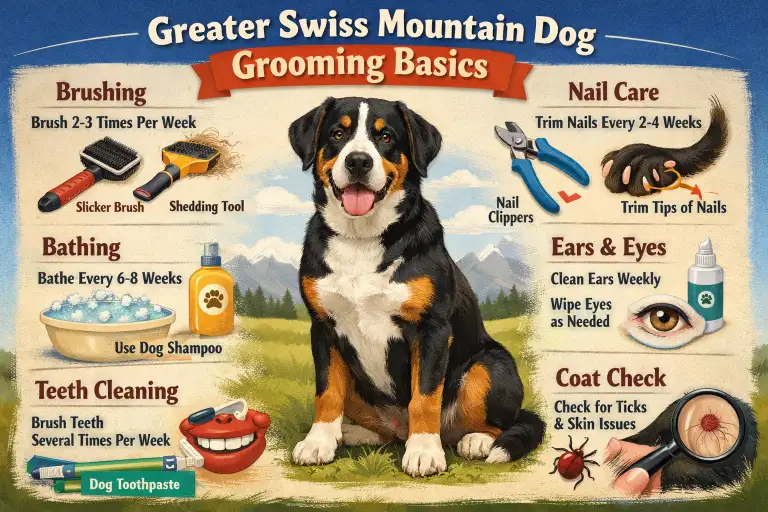
During heavy shedding seasons, brush your Greater Swiss Mountain Dog daily. Outside shedding periods, brushing two or three times per week is usually enough to maintain a healthy coat.
2. Bathing Your Greater Swiss Mountain Dog
Greater Swiss Mountain Dogs do not require frequent baths unless they become dirty. Over-bathing can remove natural oils and cause dry skin. Most Swissys do well with a bath every month or when needed.
Always use a gentle dog-safe shampoo and make sure the thick undercoat dries completely after bathing. Moisture trapped in the coat can contribute to skin irritation and unpleasant smells.
3. Managing Seasonal Shedding
Greater Swiss Mountain Dog shedding can be intense during spring and fall. During these periods, an undercoat rake or deshedding tool can help remove loose fur before it ends up around your house.
Never aggressively remove the coat or overuse deshedding tools. The goal is to remove dead hair while protecting the healthy coat underneath.
Essential Grooming Tools for a Greater Swiss Mountain Dog
Having the right Greater Swiss Mountain Dog grooming tools makes coat care easier and more effective. Because Swissys have a dense double coat, regular brushes designed for short-haired dogs may not remove enough loose undercoat.
| Grooming Tool | Main Purpose | How to Use |
|---|---|---|
| Slicker Brush | Removes loose hair and small tangles | Use gently across the body, legs, and chest |
| Undercoat Rake | Removes dead undercoat during shedding | Best for spring and fall shedding seasons |
| Pin Brush | Smooths and maintains the outer coat | Use after brushing to finish the coat |
| Dematting Comb | Helps remove small mats | Use carefully around ears and legs |
| Nail Clippers or Grinder | Keeps nails at a healthy length | Trim small amounts to avoid cutting the quick |
| Dog Ear Cleaner | Maintains ear health | Clean gently with a cotton pad |
Nail Care, Ear Cleaning, Teeth, and Skin Maintenance
A complete Swissy grooming routine includes more than brushing. Regular care of your dog’s nails, ears, teeth, and skin helps prevent discomfort and health problems.
Greater Swiss Mountain Dog Nail Care
Your Greater Swiss Mountain Dog’s nails should usually be trimmed every 4–6 weeks. Long nails can affect your dog’s walking style, create discomfort, and put extra stress on joints.
Trim small sections at a time and avoid cutting into the quick, which contains blood vessels and nerves. If your dog is nervous about nail trimming, introduce the process slowly with positive rewards.
Greater Swiss Mountain Dog Ear Cleaning
Check your Swissy’s ears weekly for signs of problems such as redness, bad odor, excessive wax, or scratching. Regular ear checks can help catch infections early.
Use a veterinarian-approved ear cleaning solution and avoid inserting cotton swabs deep into the ear canal.
Dental Care for a Greater Swiss Mountain Dog
Dental hygiene is an important part of overall grooming. Brush your dog’s teeth several times per week using dog-safe toothpaste to reduce plaque, tartar buildup, and bad breath.
Dental chews and appropriate chew toys can also support oral health, but they should not replace regular brushing.
Skin and Coat Health Checks
Weekly grooming sessions are the perfect opportunity to check your Greater Swiss Mountain Dog for:
- Skin redness or irritation
- Hot spots
- Lumps or unusual bumps
- Matted fur
- Parasites
- Dry or flaky skin
Greater Swiss Mountain Dog Grooming Tips by Age
The grooming needs of a Swissy can change throughout their life. Puppies, adults, and senior dogs all require slightly different care.
| Age | Grooming Needs |
|---|---|
| Greater Swiss Mountain Dog Puppy | Start early with gentle brushing, handling, and nail trimming to build confidence |
| Adult Swissy | Maintain regular brushing, bathing, nail care, and seasonal shedding management |
| Senior Swissy | Use softer brushes and be gentle with joints, skin sensitivity, and mobility issues |
Common Greater Swiss Mountain Dog Grooming Mistakes to Avoid
- Shaving the coat: A Swissy’s double coat protects them from temperature changes.
- Bathing too frequently: Excessive bathing can dry out the skin.
- Ignoring shedding: Loose undercoat can quickly lead to tangles and mats.
- Using human shampoo: Human products may irritate your dog’s skin.
- Skipping nail care: Long nails can affect comfort and movement.
Frequently Asked Questions About Greater Swiss Mountain Dog Grooming
How often should you groom a Greater Swiss Mountain Dog?
Most Greater Swiss Mountain Dogs should be brushed 2–3 times per week. During heavy shedding seasons in spring and fall, daily brushing is recommended to remove loose undercoat and control shedding.
Do Greater Swiss Mountain Dogs shed a lot?
Yes, Greater Swiss Mountain Dogs are moderate to heavy shedders. They typically shed more heavily during seasonal coat changes, especially in spring and fall.
Can you shave a Greater Swiss Mountain Dog?
No. Shaving a Greater Swiss Mountain Dog is not recommended because their double coat naturally protects them from heat, cold, and sun exposure.
What is the best brush for a Greater Swiss Mountain Dog?
The best grooming tools for a Swissy include a slicker brush, pin brush, and undercoat rake. These tools help remove loose hair while protecting the natural coat.
How often should a Greater Swiss Mountain Dog be bathed?
A Greater Swiss Mountain Dog usually needs a bath about once a month or whenever they become dirty. Always use a gentle dog shampoo and dry the coat completely.
Are Greater Swiss Mountain Dogs easy to groom?
Greater Swiss Mountain Dogs are considered moderate-maintenance dogs. Their coat is not difficult to manage, but their size and heavy shedding require consistent brushing and routine care.
When should I start grooming my Greater Swiss Mountain Dog puppy?
You should begin grooming your Swissy puppy as early as possible. Short, positive grooming sessions help them become comfortable with brushes, nail trims, and handling.
Final Thoughts on Greater Swiss Mountain Dog Grooming
Keeping your Greater Swiss Mountain Dog well-groomed is one of the best ways to support their health, comfort, and happiness. A regular grooming routine reduces shedding, prevents mats, protects skin health, and creates a stronger bond between you and your dog.
With the right tools, consistent brushing, proper bathing, and regular checks of nails, ears, teeth, and skin, grooming your Swissy becomes a simple and rewarding part of responsible ownership.

Ata Ur Rehman is the founder of Pet Age in Human Years Calculator, an educational platform that provides age conversion charts and lifespan guides for dogs, cats, birds, and other companion animals. His work focuses on helping pet owners understand how animal ages translate into human years using commonly accepted age conversion formulas and published lifespan averages.
The website compiles breed and species lifespan data from kennel clubs, breed organizations, and general animal lifespan studies to present simple and easy-to-understand guides for pet owners worldwide.
This website was created to centralize animal age conversion charts into one easy reference platform for pet owners.
This article is for general education. For symptoms, medication, diet changes, or health concerns, use a qualified veterinarian who can assess your individual pet.