On this page
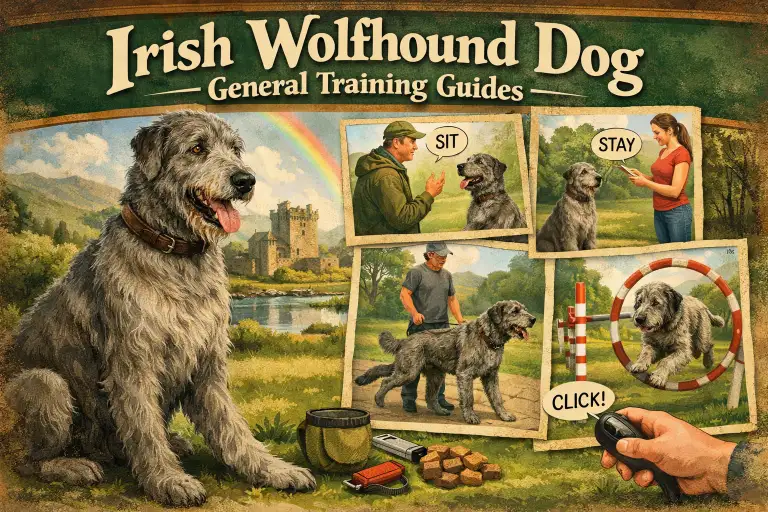
Training an Irish Wolfhound is one of the most rewarding parts of owning this majestic giant breed. Although they are famous for their calm temperament and affectionate personality, Irish Wolfhounds are not born with perfect manners. Their enormous size, slow emotional maturity, and independent thinking mean early, consistent training is essential. A fully grown Irish Wolfhound can easily outweigh many adults, so teaching polite behavior from puppyhood is about safety as much as obedience.
Unlike highly driven working breeds, Irish Wolfhounds respond best to patience, positive reinforcement, and calm leadership. They are sensitive dogs that thrive when they trust their owner. Harsh corrections or repetitive drills usually reduce their confidence rather than improve their behavior.
Whether you’ve recently welcomed an Irish Wolfhound puppy or adopted an adult, this guide covers everything you need to know—from puppy training and socialization to leash manners, recall, obedience, common behavior problems, and advanced training tips.
Why Irish Wolfhound Training Is Different
Irish Wolfhounds were originally bred to hunt wolves and large game, yet they have developed into one of the gentlest companion breeds. Their impressive height and strength require responsible training from an early age.
Unlike many large breeds, Irish Wolfhounds mature slowly. While they may reach adult height within the first year, their mental development often continues until they are around two years old. This means owners should expect adolescent behavior long after the dog appears fully grown.
Key characteristics that affect training include:
- Gentle and sensitive personality
- Independent decision-making
- Slow emotional maturity
- Strong prey drive outdoors
- Moderate intelligence with thoughtful responses
- Calm indoor temperament
Training should focus on building trust rather than dominance. Irish Wolfhounds learn quickly when they understand what is expected and are rewarded consistently.
Irish Wolfhound Training Characteristics
| Trait | Training Impact | Best Approach |
|---|---|---|
| Giant size | Poor manners become dangerous | Start training early |
| Sensitive temperament | Harsh corrections reduce confidence | Positive reinforcement |
| Slow maturity | Progress may seem gradual | Be patient and consistent |
| Independent thinking | May question commands | Use rewards and motivation |
| Strong prey drive | Recall requires extra work | Practice in secure areas |
Understanding Irish Wolfhound Behavior
Before teaching commands, it helps to understand how Irish Wolfhounds think.
These dogs are observant rather than reactive. They rarely display unnecessary aggression or excessive barking. Instead, they prefer evaluating situations before responding.
Because they are emotionally intelligent, they quickly recognize their owner’s mood and body language. Calm handlers usually achieve better results than loud or forceful trainers.
Irish Wolfhounds also become deeply attached to their families. They enjoy companionship and may become anxious if isolated for long periods.
Natural Behaviors
| Behavior | Normal? | Training Recommendation |
|---|---|---|
| Leaning on people | Yes | Teach polite greetings |
| Chasing wildlife | Yes | Strengthen recall |
| Slow response | Yes | Reward immediately |
| Pulling during adolescence | Common | Practice loose-leash walking |
| Jumping when excited | Sometimes | Redirect calmly |
When to Start Training an Irish Wolfhound
Training begins the day your puppy arrives home.
The first few months establish lifelong habits. Puppies absorb new experiences rapidly, making early socialization one of the most important aspects of training.
Training Timeline
| Age | Main Focus |
|---|---|
| 8–12 weeks | Name recognition, potty training, handling |
| 3–4 months | Sit, stay, come, leash introduction |
| 4–6 months | Socialization, loose-leash walking |
| 6–12 months | Obedience around distractions |
| 12–24 months | Advanced manners and reliability |
Essential Irish Wolfhound Puppy Training
Puppies should learn everyday life skills before advanced obedience.
House Training
Take puppies outside:
- After waking
- After meals
- After play
- Before bedtime
Reward immediately after successful toileting.
Crate Training
A crate should always feel like a safe resting place.
Benefits include:
- Easier house training
- Better travel preparation
- Safe management
- Reduced destructive behavior
Never use the crate as punishment.
Name Recognition
Say your puppy’s name once.
When they look at you:
- Praise warmly.
- Offer a small treat.
- Repeat throughout the day.
This simple exercise forms the foundation for recall.
Socialization
Proper socialization is just as important as obedience.
Expose your Irish Wolfhound to:
- Children
- Adults
- Seniors
- Dogs of different sizes
- Cats (where appropriate)
- Veterinary clinics
- Grooming
- Traffic
- Umbrellas
- Wheelchairs
- Loud household noises
Each new experience should be positive and controlled.
Basic Commands Every Irish Wolfhound Should Learn
Teaching practical commands improves safety and daily life.
Sit
Useful before meals, greetings, and crossing roads.
Stay
Helps prevent dangerous situations.
Come
Possibly the most important command because of the breed’s prey drive.
Down
Encourages calm behavior.
Leave It
Stops dangerous investigations.
Drop It
Prevents swallowing unsafe objects.
Wait
Improves impulse control.
Heel
Makes walking easier despite the dog’s enormous size.
Command Priority Table
| Command | Importance | Difficulty |
|---|---|---|
| Come | Very High | High |
| Sit | High | Easy |
| Stay | High | Medium |
| Leave It | High | Medium |
| Heel | High | Medium |
| Down | Medium | Easy |
| Wait | Medium | Medium |
| Drop It | Medium | Medium |
Leash Training an Irish Wolfhound
Loose-leash walking should begin while your puppy is still manageable.
Never allow pulling simply because the puppy is small. Habits formed early become much harder to change in adulthood.
Tips
- Use a properly fitted harness or collar.
- Reward walking beside you.
- Stop moving when pulling begins.
- Resume once the leash becomes loose.
- Keep sessions short.
Consistency matters more than distance.
Recall Training
Irish Wolfhounds possess hunting instincts.
Reliable recall requires months of practice.
Steps include:
- Start indoors.
- Reward every successful recall.
- Practice in fenced areas.
- Increase distractions gradually.
- Never punish your dog for returning late.
Use especially valuable treats during recall practice.
Positive Reinforcement
Irish Wolfhounds respond exceptionally well to reward-based training.
Effective rewards include:
- Small soft treats
- Calm praise
- Gentle affection
- Favorite toys
- Access to walks
Avoid:
- Physical punishment
- Yelling
- Alpha-roll techniques
- Choke corrections
These methods often damage trust.
Common Training Problems
Pulling on the Leash
Cause:
Strength and excitement.
Solution:
Reward loose-leash walking consistently.
Jumping
Cause:
Friendly enthusiasm.
Solution:
Ignore jumping and reward four paws on the floor.
Poor Recall
Cause:
Distractions and prey drive.
Solution:
Increase reward value and practice gradually.
Selective Listening
Cause:
Adolescent independence.
Solution:
Keep sessions short and engaging.
Barking
Irish Wolfhounds are generally quiet.
Excessive barking may indicate boredom, stress, or insufficient exercise.
Common Problems and Solutions
| Problem | Likely Cause | Solution |
|---|---|---|
| Pulling | Excitement | Loose-leash training |
| Jumping | Greeting people | Reward calm behavior |
| Poor recall | Prey drive | Long-line practice |
| Chewing | Puppy teething | Appropriate chew toys |
| Ignoring commands | Low motivation | Better rewards |
Exercise and Mental Stimulation
Training alone is not enough.
Irish Wolfhounds also need:
- Daily walks
- Gentle play
- Puzzle toys
- Scent games
- Short obedience sessions
Avoid excessive running while joints are developing.
Training Adult Irish Wolfhounds
Adult Irish Wolfhounds can absolutely learn new behaviors.
Training may take longer if previous habits are deeply established, but consistency produces excellent results.
Focus on:
- Calm leadership
- Clear expectations
- Daily repetition
- Positive reinforcement
When to Seek Professional Help
Consult a qualified positive reinforcement trainer if your dog shows:
- Aggression
- Extreme fear
- Resource guarding
- Severe leash reactivity
- Unmanageable pulling
- Anxiety that affects daily life
Early intervention is easier than correcting established behaviors later.
Irish Wolfhound Training Tips
- Keep sessions between 5 and 15 minutes.
- End every session positively.
- Reward desired behavior immediately.
- Avoid repetitive drilling.
- Be patient during adolescence.
- Practice in different environments.
- Reinforce calm behavior daily.
- Build trust before expecting perfection.
Frequently Asked Questions
Are Irish Wolfhounds easy to train?
Yes, Irish Wolfhounds are generally easy to train when positive reinforcement, patience, and consistency are used. They are intelligent but mature slowly, so owners should expect gradual progress rather than instant obedience.
When should Irish Wolfhound puppy training begin?
Training should begin as soon as the puppy arrives home, usually around eight weeks of age. Early socialization and basic manners help prevent unwanted behaviors later.
What is the best training method for Irish Wolfhounds?
Positive reinforcement is the most effective method. Reward desired behaviors with treats, praise, toys, or play while avoiding punishment-based techniques.
Are Irish Wolfhounds stubborn?
They can appear stubborn because they are independent thinkers. Most are simply calm and thoughtful rather than disobedient.
How long should training sessions be?
Puppies benefit from sessions lasting 5 to 10 minutes, while older dogs can train for 10 to 20 minutes before needing a break.
Can an adult Irish Wolfhound still be trained?
Yes. Adult Irish Wolfhounds can successfully learn new commands and improve manners with consistent practice and motivation.
How much exercise does an Irish Wolfhound need?
Most adult Irish Wolfhounds enjoy one to two moderate walks daily along with mental enrichment. Puppies should avoid excessive exercise while growing.
Should Irish Wolfhounds be trained off leash?
Only after they have developed reliable recall and only in safe, secure areas. Their prey drive can cause them to chase wildlife unexpectedly.
Final Thoughts
Irish Wolfhound training is about building a respectful partnership rather than demanding perfect obedience. These gentle giants respond best to kindness, patience, and consistent guidance. By starting early, focusing on positive reinforcement, and practicing everyday manners, you’ll raise a confident, well-behaved companion that is safe, reliable, and enjoyable to live with. Training is a lifelong process, but the trust and bond you develop with your Irish Wolfhound make every session worthwhile.

Ata Ur Rehman is the founder of Pet Age in Human Years Calculator, an educational platform that provides age conversion charts and lifespan guides for dogs, cats, birds, and other companion animals. His work focuses on helping pet owners understand how animal ages translate into human years using commonly accepted age conversion formulas and published lifespan averages.
The website compiles breed and species lifespan data from kennel clubs, breed organizations, and general animal lifespan studies to present simple and easy-to-understand guides for pet owners worldwide.
This website was created to centralize animal age conversion charts into one easy reference platform for pet owners.
This article is for general education. For symptoms, medication, diet changes, or health concerns, use a qualified veterinarian who can assess your individual pet.