On this page
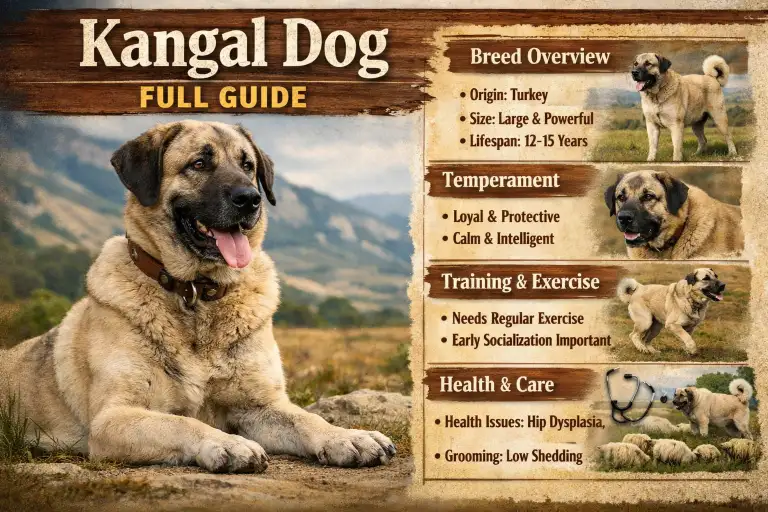
The Kangal Dog, also known as the Kangal Shepherd Dog, is one of the world’s most respected livestock guardian breeds. Originally developed in the Sivas province of Turkey, this powerful and intelligent dog has protected sheep and other livestock from predators such as wolves, bears, and jackals for centuries.
Known for its strength, loyalty, courage, and independent thinking, the Kangal Dog is not just a large breed — it is a working guardian with strong natural instincts. Unlike many companion breeds, Kangals were bred to make decisions on their own while protecting flocks, which makes them highly intelligent but also more challenging to train for inexperienced owners.
Today, the Kangal is valued around the world as both a livestock guardian dog and a loyal family companion. With proper socialization, training, and enough space, a Kangal can become a calm, protective, and devoted member of the household.
This complete Kangal Dog breed guide covers everything you need to know, including Kangal Dog size, temperament, lifespan, training requirements, grooming needs, health concerns, feeding, cost, and whether this breed is right for your family.
Kangal Dog Breed Overview
| Feature | Details |
|---|---|
| Breed Name | Kangal Dog / Kangal Shepherd Dog |
| Origin | Sivas Province, Turkey |
| Breed Type | Livestock Guardian Dog |
| Size | Large to Giant |
| Height | 28–32 inches |
| Weight | 90–145 pounds |
| Lifespan | 12–15 years |
| Coat Type | Short double coat |
| Common Color | Fawn with black mask |
| Temperament | Loyal, protective, calm, independent |
| Best For | Farms, large properties, experienced owners |
Kangal Dog History and Origin
The history of the Kangal Dog is deeply connected to Turkish farming and pastoral traditions. For hundreds of years, shepherds in central Turkey relied on Kangals to protect valuable livestock from dangerous predators.
Unlike hunting dogs that chase prey, Kangals were developed as guardian dogs. Their job was to stay with the flock, observe their surroundings, and respond when danger appeared.
The breed’s natural guarding ability comes from a combination of:
- Exceptional intelligence
- Strong protective instincts
- Fearlessness against predators
- Independence and decision-making ability
- Deep loyalty toward their owners and livestock
A Kangal does not require constant commands to protect its territory. Instead, it evaluates situations and reacts based on instinct, which is one reason the breed is considered one of the most effective livestock guardian dogs in the world.
The Kangal Dog is officially recognized by organizations including the Fédération Cynologique Internationale and Turkish canine authorities.
Kangal Dog Appearance and Physical Characteristics
The Kangal Dog has a powerful yet balanced appearance. Although it is a large and muscular breed, it is not heavy or clumsy. Kangals were built for endurance, speed, and agility, allowing them to patrol large areas and protect livestock for long periods.
Their body structure includes:
- A broad chest
- Strong neck and shoulders
- Muscular legs
- Powerful jaws
- Athletic movement
- Large protective frame
Despite their impressive size, Kangals are surprisingly agile. They can move quickly when necessary and are capable of confronting large predators.
Kangal Dog Size and Weight
One of the most common questions people ask is:
“How big does a Kangal Dog get?”
Kangals are among the largest guardian breeds, with males typically being larger than females.
| Gender | Height | Weight |
|---|---|---|
| Male Kangal | 29–32 inches | 110–145 pounds |
| Female Kangal | 28–31 inches | 90–120 pounds |
A fully grown Kangal Dog can easily outweigh many family dogs, so owners must be prepared for the responsibility that comes with owning such a powerful breed.
Kangal Dog Coat, Colors, and Grooming Needs
The Kangal has a practical coat designed for outdoor work in changing weather conditions.
Their coat features:
- Short double-layer coat
- Dense undercoat for insulation
- Weather-resistant outer coat
- Fawn-colored body
- Distinctive black facial mask
Common Kangal coat colors include:
- Pale fawn
- Golden fawn
- Grayish fawn
The black mask around the muzzle and face is one of the breed’s most recognizable features.
Kangal Dog Shedding
Kangals are moderate shedders. Their shedding increases during seasonal coat changes, especially:
- Spring
- Fall
Regular brushing helps remove loose hair and keeps the coat healthy.
Kangal Grooming Requirements
| Grooming Task | Frequency |
|---|---|
| Brushing | Weekly |
| Bathing | Occasionally |
| Nail trimming | Monthly or as needed |
| Ear cleaning | Regular checks |
| Dental care | Several times per week |
The Kangal is considered a relatively low-maintenance breed compared with many other large dogs because its coat does not require professional grooming.
Kangal Dog Temperament and Personality
The Kangal Dog temperament is one of the most important things potential owners should understand.
Kangals are naturally:
- Loyal
- Calm
- Alert
- Protective
- Intelligent
- Independent
They are not aggressive without reason, but they have strong guarding instincts. A Kangal may appear relaxed at home while constantly monitoring its surroundings.
Their personality is different from many traditional family dogs because they were bred to think independently rather than follow commands every second.
Are Kangal Dogs Good Family Dogs?
Yes, Kangal Dogs can be good family dogs when raised correctly.
With their owners, Kangals are often:
- Affectionate
- Gentle
- Patient
- Protective
However, their large size and guarding instincts mean they require:
- Early socialization
- Consistent training
- Experienced handling
- Proper boundaries
They are usually patient with children, but due to their size, supervision is always recommended.
A Kangal is not the right choice for someone looking for a casual indoor pet or a dog that requires minimal training.
Is a Kangal Dog Right for You?
A Kangal may be a good match if you:
✅ Have a large yard or farm
✅ Understand guardian breeds
✅ Have experience with large dogs
✅ Can provide daily exercise
✅ Are willing to train and socialize consistently
A Kangal may not be suitable if you:
❌ Live in an apartment
❌ Want an easy first-time dog
❌ Have limited space
❌ Cannot manage an independent breed
The Kangal is a remarkable dog, but it requires an owner who respects its instincts and understands its working background. When given the right environment, this breed becomes one of the most loyal and dependable guardians a person can have.
Kangal Dog Training: Intelligence, Challenges & Best Methods
Training a Kangal Dog requires patience, consistency, and an understanding of guardian breed behavior. Kangals are highly intelligent dogs, but they were bred to work independently rather than blindly follow commands.
This independence is not a sign of poor intelligence. In fact, it is one of the reasons Kangals are excellent livestock guardians. They can evaluate threats and make decisions without human direction.
However, this same trait can make training challenging for inexperienced owners.
Best Training Approach for a Kangal Dog
Successful Kangal training should focus on:
- Positive reinforcement
- Consistent rules
- Early socialization
- Calm leadership
- Building trust
Avoid harsh punishment because Kangals are sensitive to unfair treatment and may become more resistant if training damages their trust.
When Should You Start Training a Kangal Puppy?
Kangal puppy training should begin as early as possible.
Important early training areas include:
- Basic obedience commands
- Leash training
- Meeting different people
- Exposure to new environments
- Learning household boundaries
Early socialization is especially important because adult Kangals naturally become protective of their territory.
Kangal Dog Exercise Requirements
Despite their calm personality indoors, Kangals are active working dogs that need regular physical and mental stimulation.
A healthy adult Kangal usually needs:
- 1–2 hours of daily activity
- Long walks
- Open space to move
- Mental challenges
- Outdoor exploration
A fenced yard or large property is ideal because Kangals enjoy monitoring and patrolling their surroundings.
Can Kangal Dogs Live in Apartments?
Generally, no.
Apartment living is not recommended for a Kangal because:
- They are extremely large dogs
- They need room to move
- They have natural guarding instincts
- They may become bored without enough activity
A rural home, farm, or property with secure fencing is usually the best environment.
Kangal Dog Feeding Guide and Nutrition Needs
Because Kangals are large, muscular dogs, proper nutrition plays an important role in maintaining healthy joints, muscles, and weight.
A Kangal’s diet should include:
- High-quality protein
- Balanced fats
- Essential vitamins and minerals
- Joint-supporting nutrients
Large breed dogs should not be overfed because excessive weight can increase the risk of joint problems.
How Much Should a Kangal Dog Eat?
The exact amount depends on:
- Age
- Weight
- Activity level
- Food quality
- Health condition
Adult Kangals commonly require a large-breed dog food formula divided into two meals per day.
Puppies require carefully controlled nutrition because rapid growth can increase the risk of skeletal problems.
Kangal Dog Health Problems and Lifespan
The Kangal Dog lifespan is typically 12–15 years, which is relatively good for a large breed.
Like all giant dogs, Kangals can experience certain health issues.
Common Kangal Dog health problems include:
| Health Issue | Description |
|---|---|
| Hip Dysplasia | Abnormal development of the hip joint |
| Elbow Dysplasia | Joint development problem affecting movement |
| Bloat (Gastric Dilatation-Volvulus) | Serious stomach condition common in deep-chested dogs |
| Eye Problems | Possible vision-related conditions |
| Obesity | Can worsen joint stress |
How to Keep a Kangal Healthy
Owners can support their Kangal’s health by:
- Maintaining a healthy weight
- Providing regular exercise
- Scheduling veterinary checkups
- Feeding a balanced diet
- Monitoring joint health
Because Kangals are large dogs, preventive care is extremely important.
Kangal Dog Grooming Requirements
The Kangal Dog is relatively easy to groom compared with many large breeds.
Their short double coat only requires basic maintenance.
Grooming Routine
| Task | Recommended Frequency |
|---|---|
| Brushing | Once per week |
| Heavy shedding brushing | More often during spring/fall |
| Bathing | Only when needed |
| Nail trimming | Regularly |
| Ear checks | Weekly |
| Dental care | Several times weekly |
Their coat naturally protects them from harsh weather, making them suitable for outdoor environments.
Kangal Dog Price: How Much Does a Kangal Cost?
The Kangal Dog price depends on factors such as:
- Breeder reputation
- Bloodline
- Location
- Pedigree
- Health testing
Average Kangal puppy prices are usually:
$1,000–$3,000
Additional ownership costs include:
- Food
- Veterinary care
- Training
- Insurance
- Fencing requirements
- Grooming supplies
Because Kangals are large dogs, the long-term cost of ownership can be higher than many medium-sized breeds.
Kangal Dog vs Anatolian Shepherd: Key Differences
Many people compare the Kangal Dog and Anatolian Shepherd because both are Turkish livestock guardian breeds.
| Feature | Kangal Dog | Anatolian Shepherd |
|---|---|---|
| Origin | Turkey (Sivas region) | Turkey |
| Size | Large | Large |
| Temperament | Calm, loyal, protective | Independent, serious |
| Guarding Ability | Exceptional | Excellent |
| Training | Moderate difficulty | Moderate difficulty |
| Best For | Experienced owners, farms | Experienced owners, rural homes |
Both breeds are excellent guardians, but Kangals are often recognized for their exceptional confidence and predator-deterrent ability.
Kangal Dog Pros and Cons
Advantages of Owning a Kangal
| Pros |
|---|
| Extremely loyal and protective |
| Excellent livestock guardian |
| Calm family companion when trained properly |
| Low grooming requirements |
| Intelligent and independent |
| Strong natural instincts |
Challenges of Owning a Kangal
| Cons |
|---|
| Requires experienced ownership |
| Needs plenty of space |
| Can be stubborn during training |
| Not ideal for apartments |
| Strong protective instincts require socialization |
| Large size increases ownership costs |
Frequently Asked Questions About Kangal Dogs
How big does a Kangal Dog get?
A full-grown Kangal Dog usually weighs between 90 and 145 pounds. Males typically stand around 29–32 inches tall, while females are slightly smaller.
Are Kangal Dogs aggressive?
Kangal Dogs are not naturally aggressive, but they are highly protective. They may react strongly if they believe their family, territory, or livestock is threatened.
Proper training and socialization help them become stable and confident dogs.
Are Kangal Dogs good family pets?
Yes, Kangals can be excellent family dogs for the right owners. They are loyal, gentle, and protective, but their size and guarding instincts require responsible handling.
Can a Kangal Dog live with children?
Kangals are often patient with children, but because they are extremely large dogs, supervision is recommended, especially with younger children.
Are Kangal Dogs easy to train?
Kangals are intelligent but independent. They are not difficult because they lack intelligence — they are challenging because they think for themselves.
Consistent positive training works best.
How long do Kangal Dogs live?
The average Kangal Dog lifespan is around 12–15 years with proper care, nutrition, exercise, and veterinary attention.
Do Kangal Dogs need a lot of exercise?
Yes. Kangals need daily exercise, outdoor activity, and mental stimulation. They do best with large spaces where they can move freely.
Are Kangal Dogs good guard dogs?
Yes. The Kangal is considered one of the best livestock guardian dogs in the world because of its courage, intelligence, and protective instincts.
How much does a Kangal puppy cost?
A Kangal puppy usually costs between $1,000 and $3,000, depending on breeder quality, bloodline, and location.
What is the difference between a Kangal and a Kangal Shepherd Dog?
The names Kangal Dog and Kangal Shepherd Dog generally refer to the same breed. The breed is traditionally known as a livestock guardian from Turkey.
Final Thoughts: Is the Kangal Dog the Right Breed for You?
The Kangal Dog is not an ordinary large dog. It is a powerful working guardian with centuries of history protecting livestock and families.
This breed is best suited for owners who understand:
- Large guardian breeds
- Independent dog behavior
- Proper socialization
- Responsible training
For the right owner, a Kangal is one of the most loyal, intelligent, and dependable dogs available. With enough space, proper care, and consistent leadership, the Kangal Dog can become an incredible lifelong companion and protector.

Ata Ur Rehman is the founder of Pet Age in Human Years Calculator, an educational platform that provides age conversion charts and lifespan guides for dogs, cats, birds, and other companion animals. His work focuses on helping pet owners understand how animal ages translate into human years using commonly accepted age conversion formulas and published lifespan averages.
The website compiles breed and species lifespan data from kennel clubs, breed organizations, and general animal lifespan studies to present simple and easy-to-understand guides for pet owners worldwide.
This website was created to centralize animal age conversion charts into one easy reference platform for pet owners.
This article is for general education. For symptoms, medication, diet changes, or health concerns, use a qualified veterinarian who can assess your individual pet.