On this page
If you have ever searched “how old is my Keeshond in human years?”, you may have heard the common rule that one dog year equals seven human years. However, this simple formula does not accurately represent how dogs age, especially for a medium-sized breed like the Keeshond.
Keeshonds mature quickly during their first years of life and then age more gradually as adults. This means a 1-year-old Keeshond is already similar to a young human adult, while each additional year adds human age at a slower rate.
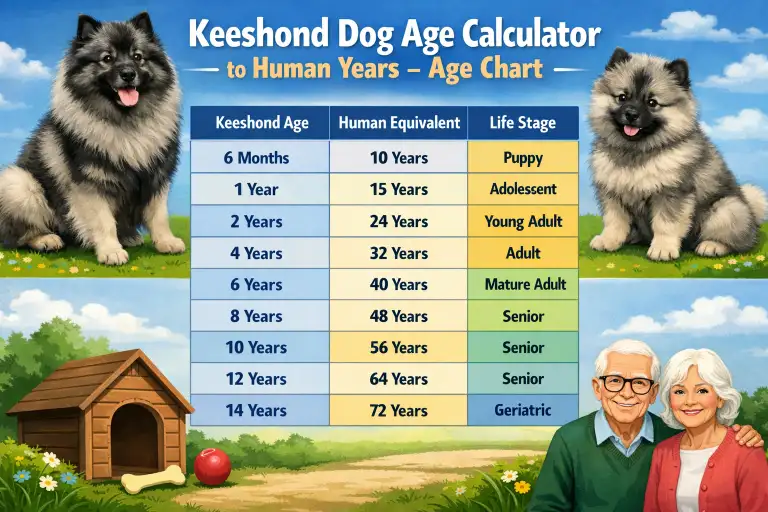
This Keeshond age chart helps you understand your dog’s real age in human years and gives a clearer picture of their life stage, health needs, exercise requirements, and care routine.
For a more personalized calculation, you can also use our Keeshond age calculator, which provides a breed-specific estimate based on your dog’s exact age.
Keeshond Age Chart (Dog Years to Human Years)
The table below shows an estimated comparison between Keeshond years and human years. Since Keeshonds are a medium-sized breed, their aging pattern is different from small and large dogs.
| Keeshond Age | Human Age Equivalent | Life Stage |
|---|---|---|
| 2 months | About 3 human years | Puppy |
| 4 months | About 6 human years | Puppy |
| 6 months | About 10 human years | Puppy |
| 1 year | About 15 human years | Young adult |
| 2 years | About 24 human years | Adult |
| 3 years | About 28 human years | Adult |
| 4 years | About 32 human years | Adult |
| 5 years | About 36 human years | Adult |
| 6 years | About 40 human years | Adult |
| 7 years | About 44 human years | Mature adult |
| 8 years | About 48 human years | Senior |
| 9 years | About 52 human years | Senior |
| 10 years | About 56 human years | Senior |
| 11 years | About 60 human years | Senior |
| 12 years | About 64 human years | Senior |
| 13 years | About 68 human years | Senior |
| 14 years | About 72 human years | Senior |
| 15 years | About 76 human years | Senior |
Quick Keeshond Human Age Comparison
If you only need a quick answer, these common milestones can help:
| Keeshond Age | Equivalent Human Age |
|---|---|
| 1 year old Keeshond | Approximately 15 human years |
| 5 year old Keeshond | Approximately 36 human years |
| 10 year old Keeshond | Approximately 56 human years |
| 15 year old Keeshond | Approximately 76 human years |
How Keeshond Life Stages Compare to Human Aging
Understanding your Keeshond’s life stage helps you provide better care. A puppy needs training and socialization, while an older Keeshond may need more attention toward joint health, nutrition, and regular veterinary visits.
| Life Stage | Keeshond Age | What Happens |
|---|---|---|
| Puppy | 0–12 months | Rapid growth, learning, social development, and training |
| Adult | 1–6 years | Peak energy, stable personality, strong physical condition |
| Mature Adult | 7–8 years | Gradual slowing and increased need for health monitoring |
| Senior | 9+ years | Lower energy, possible joint changes, more frequent checkups |
Why the 7 Dog Years = 1 Human Year Rule Is Wrong
The old idea that one dog year equals seven human years is easy to remember, but it does not accurately explain canine aging.
Dogs age much faster during their first year of life. A Keeshond puppy reaches physical and mental maturity much earlier than a human child. After this early development stage, the aging process slows down.
The reason a Keeshond age chart is more accurate is because it considers:
- Breed size
- Growth speed
- Average lifespan
- Adult aging patterns
- Senior health changes
Keeshond Lifespan and When a Keeshond Becomes a Senior
The average Keeshond lifespan is around 12 to 15 years. With proper nutrition, regular exercise, healthy weight management, and preventive veterinary care, some Keeshonds may live beyond their expected lifespan.
Most Keeshonds are considered senior dogs around 8 to 9 years old. However, becoming a senior does not mean your Keeshond will suddenly lose energy. Many older Keeshonds remain playful, intelligent, and active when their health needs are properly managed.
Knowing your Keeshond’s age in human years can help you understand when to adjust their diet, exercise routine, and healthcare plan.
| Keeshond Age | Life Stage | Common Changes |
|---|---|---|
| 1–3 years | Young Adult | High energy, strong muscles, active behavior |
| 4–6 years | Adult | Stable personality and peak physical condition |
| 7–8 years | Mature Adult | May slow down slightly and need more recovery time |
| 9–11 years | Senior | Possible joint stiffness, reduced stamina, more rest |
| 12+ years | Senior | More attention needed for mobility, teeth, vision, and overall health |
How to Help Your Keeshond Age Healthy and Live Longer
A healthy Keeshond does not stay young by chance. Long-term care habits play an important role in helping your dog maintain energy, mobility, and quality of life throughout every stage.
1. Maintain a Healthy Weight
Keeping your Keeshond at a healthy weight is one of the most important parts of aging well. Extra weight can increase stress on joints and may contribute to mobility problems as your dog gets older.
Regular weight checks and portion control can help prevent obesity and support a longer, healthier life.
2. Provide Age-Appropriate Nutrition
Your Keeshond’s nutritional needs change as they age. Puppies need nutrients for growth, adults need balanced maintenance diets, and senior dogs may benefit from food designed to support joints, digestion, and overall wellness.
| Life Stage | Nutrition Focus |
|---|---|
| Puppy | Growth support, quality protein, balanced calories |
| Adult | Maintain healthy weight and muscle condition |
| Senior | Joint support, digestion, controlled calories |
3. Keep Your Keeshond Active
Keeshonds are intelligent and energetic dogs that benefit from regular physical and mental stimulation.
- Daily walks help maintain mobility
- Play sessions support physical fitness
- Training exercises keep the brain active
- Puzzle toys provide mental enrichment
Even senior Keeshonds benefit from gentle exercise because movement helps support muscles and joints.
4. Schedule Regular Veterinary Checkups
Routine veterinary visits help identify health problems early. Adult Keeshonds generally benefit from yearly exams, while senior dogs may need more frequent monitoring.
Older Keeshonds should receive attention toward:
- Dental health
- Joint mobility
- Weight changes
- Vision and hearing changes
- Heart health
Signs Your Keeshond May Be Aging
Every Keeshond ages differently, but common signs of aging may include:
| Age-Related Sign | Recommended Action |
|---|---|
| Difficulty climbing stairs | Discuss joint support and mobility options with your veterinarian |
| Less interest in exercise | Adjust activity levels while keeping gentle movement |
| Weight changes | Review diet and health with a veterinarian |
| Behavior changes | Check for pain, stress, or health concerns |
| Changes in appetite | Monitor closely and seek professional advice if needed |
Frequently Asked Questions About Keeshond Age
How old is my Keeshond in human years?
Your Keeshond’s human age depends on their current age and life stage. For example, a 1-year-old Keeshond is approximately equal to a 15-year-old human, while a 10-year-old Keeshond is around 56 human years old.
What is a 5-year-old Keeshond in human years?
A 5-year-old Keeshond is approximately 36 human years old. At this stage, most Keeshonds are healthy adults and still enjoy an active lifestyle.
What is a 10-year-old Keeshond in human years?
A 10-year-old Keeshond is approximately 56 human years old. This is considered a senior stage where regular health monitoring becomes more important.
How long do Keeshonds usually live?
Keeshonds typically live between 12 and 15 years. Genetics, diet, exercise, and veterinary care all influence their lifespan.
When is a Keeshond considered a senior dog?
Most Keeshonds are considered seniors around 8 to 9 years old. However, many remain active and healthy for several more years with proper care.
Is the 7 dog years rule accurate for Keeshonds?
No. The idea that one dog year equals seven human years is outdated. Dogs age quickly during early life and then slow down as adults, which is why breed-specific charts provide better estimates.
How can I calculate my Keeshond’s age in human years?
You can use a Keeshond age calculator or refer to a breed-specific Keeshond age chart to estimate your dog’s equivalent human age.
Do Keeshonds age faster than small dogs?
Keeshonds have a moderate aging pattern because they are a medium-sized breed. Small dogs often age more slowly, while large breeds usually age faster.
Final Thoughts: Understanding Your Keeshond’s Real Age
A Keeshond age chart gives you a better understanding of where your dog is in life compared with humans. Instead of relying on the outdated seven-year rule, breed-specific age conversion helps you recognize important milestones and provide better care.
Whether your Keeshond is a playful puppy, an active adult, or a loving senior companion, understanding their age in human years allows you to make smarter decisions about nutrition, exercise, training, and health care.
For a more personalized result, use our Keeshond age calculator to find your dog’s estimated human age based on their exact age.

Ata Ur Rehman is the founder of Pet Age in Human Years Calculator, an educational platform that provides age conversion charts and lifespan guides for dogs, cats, birds, and other companion animals. His work focuses on helping pet owners understand how animal ages translate into human years using commonly accepted age conversion formulas and published lifespan averages.
The website compiles breed and species lifespan data from kennel clubs, breed organizations, and general animal lifespan studies to present simple and easy-to-understand guides for pet owners worldwide.
This website was created to centralize animal age conversion charts into one easy reference platform for pet owners.
This article is for general education. For symptoms, medication, diet changes, or health concerns, use a qualified veterinarian who can assess your individual pet.