On this page
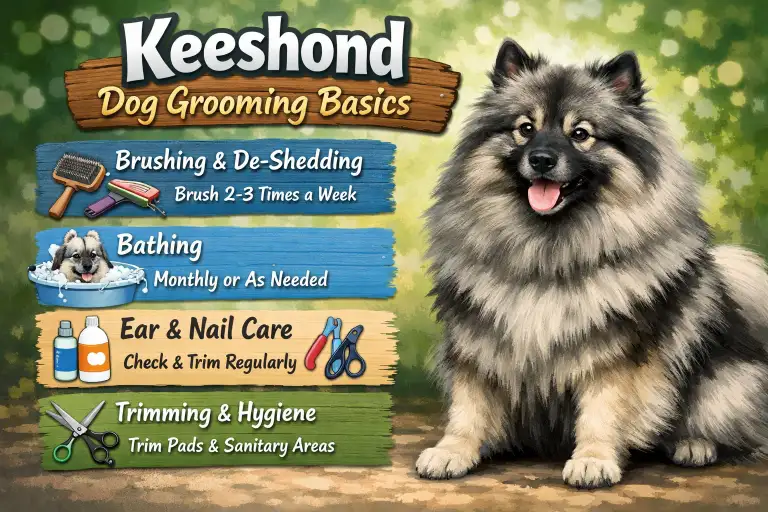
Keeshond grooming is about much more than maintaining the breed’s famous fluffy appearance. Proper grooming plays a major role in keeping your dog comfortable, preventing skin problems, controlling shedding, and protecting the health of the coat throughout its life.
Although many owners hear that the Keeshond is a naturally clean breed, the reality is that its thick double coat requires consistent maintenance. Without regular brushing and proper coat care, Keeshonds can quickly develop matting, trapped moisture, skin irritation, and painful hot spots.
This complete Keeshond grooming guide explains everything owners need to know about brushing schedules, bathing routines, coat blow seasons, grooming tools, and professional grooming requirements.
Why Keeshond Grooming Is Different From Other Dog Breeds
The Keeshond is a classic double-coated Spitz breed. Unlike short-haired dogs or hair breeds such as the Poodle, the Keeshond coat is designed to regulate body temperature in both hot and cold weather.
The coat consists of two separate layers:
- Outer coat (guard hairs): Protects against dirt, moisture, UV rays, and environmental damage.
- Dense undercoat: Provides insulation and naturally sheds throughout the year.
This unique coat structure means Keeshond grooming focuses on coat preservation rather than haircuts.
Characteristics of the Keeshond Double Coat
| Coat Feature | Impact on Grooming |
|---|---|
| Dense undercoat | Requires regular brushing to prevent matting. |
| Long guard hairs | Protect the skin and should never be shaved. |
| Seasonal coat blow | Produces heavy shedding during spring and fall. |
| Moisture retention | Requires complete drying after baths. |
Does a Keeshond Shed a Lot?
Yes. Keeshonds are considered heavy shedders.
While the breed sheds moderately throughout the year, owners should expect intense seasonal shedding periods known as a coat blow. During these periods, large amounts of undercoat are released over several weeks.
Most Keeshonds experience heavy shedding:
- During spring coat transitions.
- During autumn seasonal changes.
- Following illness, stress, pregnancy, or hormonal changes.
- When indoor lighting conditions affect natural coat cycles.
Normal Keeshond Shedding vs Problem Shedding
| Shedding Type | What It Looks Like | Recommended Action |
|---|---|---|
| Normal shedding | Loose fur during brushing sessions. | Maintain regular brushing schedule. |
| Seasonal coat blow | Large clumps of undercoat coming out. | Increase brushing frequency. |
| Abnormal shedding | Bald spots, redness, odor, or sores. | Consult a veterinarian. |
Should You Shave a Keeshond?
No. Veterinarians and professional groomers strongly recommend avoiding shaving unless medically necessary.
Shaving a Keeshond can:
- Damage the protective guard hairs.
- Increase the risk of sunburn.
- Interfere with natural temperature regulation.
- Cause uneven coat regrowth.
- Increase future matting problems.
In some cases, a damaged double coat may take years to recover and may never fully return to normal.
Best Grooming Tools for a Keeshond
Using the correct grooming equipment makes Keeshond grooming significantly easier and safer.
| Tool | Purpose | Recommended Frequency |
|---|---|---|
| Slicker brush | Removes loose fur and tangles. | 2–3 times weekly. |
| Undercoat rake | Removes loose undercoat. | Weekly or during coat blow. |
| Metal comb | Detects hidden mats close to skin. | After brushing sessions. |
| Dog shampoo | Cleans skin without irritation. | Every 4–8 weeks. |
| High-velocity dryer | Fully dries the undercoat. | After every bath. |
How Often Should You Groom a Keeshond?
| Grooming Task | Normal Schedule | During Heavy Shedding |
|---|---|---|
| Brushing | 2–3 times weekly | Daily or every other day |
| Undercoat removal | Weekly | 2–3 times weekly |
| Bathing | Every 4–8 weeks | As required |
| Nail trimming | Every 3–4 weeks | No change |
| Ear checks | Weekly | Weekly |
| Professional grooming | Every 8–12 weeks | Highly recommended during coat blow |
Frequently Asked Questions About Keeshond Grooming
How often should you brush a Keeshond?
Most Keeshonds require brushing two to three times per week. During seasonal shedding periods, daily brushing may be necessary.
Do Keeshonds need professional grooming?
While many owners groom at home, professional grooming every 8 to 12 weeks helps manage heavy shedding and maintain coat health.
Can you shave a Keeshond in summer?
No. Shaving damages the coat’s natural insulation system and may actually make overheating more likely.
Are Keeshonds high-maintenance dogs?
Keeshonds are considered moderate to high-maintenance when it comes to grooming because of their thick double coat and seasonal shedding.

Ata Ur Rehman is the founder of Pet Age in Human Years Calculator, an educational platform that provides age conversion charts and lifespan guides for dogs, cats, birds, and other companion animals. His work focuses on helping pet owners understand how animal ages translate into human years using commonly accepted age conversion formulas and published lifespan averages.
The website compiles breed and species lifespan data from kennel clubs, breed organizations, and general animal lifespan studies to present simple and easy-to-understand guides for pet owners worldwide.
This website was created to centralize animal age conversion charts into one easy reference platform for pet owners.
This article is for general education. For symptoms, medication, diet changes, or health concerns, use a qualified veterinarian who can assess your individual pet.