On this page
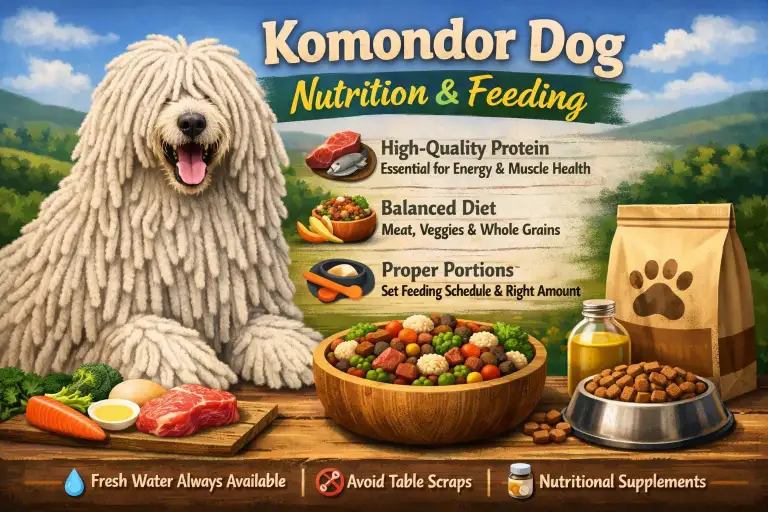
The Komondor is a large, powerful livestock guardian dog with unique nutritional needs. Because of their slow growth, heavy bone structure, muscular body, and famous corded coat, feeding a Komondor the right diet is essential for maintaining healthy joints, strong muscles, proper weight, digestion, and coat quality.
Many Komondor owners ask: What is the best food for a Komondor? or How much should a Komondor eat every day? The answer depends on your dog’s age, weight, activity level, metabolism, and overall health.
A balanced Komondor diet should provide the right amount of protein, healthy fats, vitamins, minerals, and calories without encouraging rapid growth or excess weight gain. Overfeeding during puppyhood can put unnecessary stress on developing bones and joints, while underfeeding can reduce energy, immunity, and coat health.
This complete Komondor feeding guide explains what to feed your dog, how much food they need, the best diet options, puppy feeding requirements, calorie needs, and common nutrition problems.
Why Proper Nutrition Is Important for a Komondor
Komondors are not ordinary large dogs. Their size, slow maturity, and thick corded coat make nutrition especially important. A poor-quality diet can contribute to weight problems, joint stress, digestive issues, and poor coat condition.
| Health Area | How Good Nutrition Helps |
|---|---|
| Growth and joints | Supports strong bones and reduces stress on hips and elbows |
| Coat and skin | Helps maintain healthy cords and reduces skin problems |
| Digestion | Improves stool quality and nutrient absorption |
| Weight control | Maintains a healthy body condition and prevents obesity |
| Energy levels | Provides steady fuel for daily activity |
| Immune health | Supports resistance against illness and infections |
What Should a Komondor Eat?
The best diet for a Komondor should contain high-quality ingredients that support their large frame, active lifestyle, and coat maintenance. A complete and balanced large-breed dog food is usually the safest choice for most Komondors.
The ideal Komondor diet should include:
- High-quality animal protein for muscle development and maintenance
- Healthy fats for energy, skin, and coat health
- Controlled calories to prevent unnecessary weight gain
- Balanced calcium and phosphorus for proper bone development
- Digestible carbohydrates and fiber for healthy digestion
- Essential vitamins and minerals for overall health
Essential Nutrients for Komondors
| Nutrient | Benefits |
|---|---|
| Protein | Builds muscles, supports immunity, and maintains body strength |
| Fat | Provides energy and supports healthy skin and coat |
| Carbohydrates | Provides fuel for activity and daily function |
| Calcium and Phosphorus | Supports strong bones when properly balanced |
| Fiber | Improves digestion and stool quality |
| Omega Fatty Acids | Supports skin health and coat condition |
Recommended Nutrition Levels for Adult Komondors
| Nutrient | Recommended Range |
|---|---|
| Protein | 22%–26% |
| Fat | 10%–16% |
| Fiber | Moderate levels for digestion |
| Calcium and Phosphorus | Balanced levels for large breeds |
How to Choose the Best Dog Food for a Komondor
When selecting food for your Komondor, always check the nutrition label instead of relying only on marketing claims. Words like “premium” or “natural” do not always mean the food is better.
| Dog Food Label | What to Look For |
|---|---|
| Ingredient list | Real animal protein should appear near the beginning |
| Guaranteed analysis | Check protein, fat, and fiber levels |
| AAFCO statement | Look for “complete and balanced nutrition” |
| Large breed formula | Helps control calories and mineral balance |
Most Komondors do not need grain-free food unless recommended by a veterinarian. Large-breed formulas are often a better option because they are designed to support slower growth and healthy weight management.
How Much Food Should a Komondor Eat?
The amount of food your Komondor needs depends on:
- Age
- Body weight
- Activity level
- Health condition
- Type of food being fed
A working Komondor guarding livestock may need significantly more calories than a companion dog living a less active lifestyle.
Daily Calorie Requirements for Komondors
| Weight | Low Activity | Moderate Activity | Working / High Activity |
|---|---|---|---|
| 90–100 lbs | 1,800–2,000 kcal | 2,100–2,300 kcal | 2,500+ kcal |
| 100–120 lbs | 2,000–2,200 kcal | 2,300–2,600 kcal | 2,800+ kcal |
| 120–130 lbs | 2,200–2,400 kcal | 2,600–2,900 kcal | 3,100+ kcal |
Komondor Feeding Schedule by Age
| Life Stage | Meals Per Day |
|---|---|
| Komondor puppy (2–6 months) | 3 meals daily |
| Young Komondor (6–12 months) | 2–3 meals daily |
| Adult Komondor | 2 meals daily |
| Senior Komondor | 2 smaller meals daily |
Komondor Puppy Nutrition: Feeding for Healthy Growth
Komondor puppies grow slowly and require careful feeding. Rapid growth caused by overfeeding can increase the risk of skeletal problems and joint stress.
For a healthy Komondor puppy:
- Choose a large-breed puppy formula
- Avoid excessive calories
- Do not add calcium supplements unless advised by a veterinarian
- Feed measured portions instead of free feeding
- Monitor body condition regularly
Best Food Types for Komondors
There are several feeding options available. The best choice depends on your dog’s needs, your budget, and your ability to provide balanced nutrition.
| Food Type | Advantages | Disadvantages |
|---|---|---|
| Kibble | Affordable, convenient, nutritionally balanced | Some formulas contain lower-quality ingredients |
| Fresh Food | Highly palatable and easy to digest | More expensive |
| Raw Diet | High moisture and natural ingredients | Requires careful preparation and safety management |
| Canned Food | Good moisture content and appealing taste | Higher cost |
| Homemade Diet | Complete control over ingredients | Risk of nutritional imbalance without expert planning |
Healthy Treats and Foods Komondors Can Eat
Treats should make up no more than 10% of daily calories.
Safe Foods for Komondors
- Cooked chicken
- Plain rice
- Carrots
- Cucumber
- Pumpkin
Foods to Avoid
- Chocolate
- Grapes and raisins
- Onions and garlic
- Xylitol-containing products
- Alcohol
- Fatty or heavily seasoned foods
Common Komondor Feeding Problems and Solutions
| Problem | Possible Solution |
|---|---|
| Not eating meals | Create a consistent feeding schedule |
| Always hungry | Measure portions and reduce unnecessary treats |
| Loose stool | Change food slowly and improve fiber intake |
| Weight gain | Reduce calories and increase healthy activity |
| Picky eating | Avoid constantly changing foods or adding toppings |
Frequently Asked Questions About Komondor Nutrition
What is the best dog food for a Komondor?
The best food for a Komondor is a high-quality large-breed formula with balanced protein, fat, calories, and minerals. The ideal choice depends on age, activity level, and health needs.
How much should a Komondor eat per day?
Most adult Komondors need around 1,800–3,100+ calories daily depending on their weight and activity level.
Can Komondors eat raw food?
Yes, some Komondors can eat raw diets, but they should be carefully balanced and prepared safely. Veterinary guidance is recommended.
Do Komondor puppies need special food?
Yes. Komondor puppies should eat large-breed puppy food designed for controlled growth and healthy joint development.
How can I keep my Komondor coat healthy through diet?
A diet rich in quality protein, healthy fats, and omega fatty acids helps support healthy skin and strong cords.
When should I contact a veterinarian about feeding problems?
Contact your veterinarian if your Komondor refuses food, loses weight unexpectedly, has ongoing diarrhea, vomiting, or noticeable coat and skin changes.

Ata Ur Rehman is the founder of Pet Age in Human Years Calculator, an educational platform that provides age conversion charts and lifespan guides for dogs, cats, birds, and other companion animals. His work focuses on helping pet owners understand how animal ages translate into human years using commonly accepted age conversion formulas and published lifespan averages.
The website compiles breed and species lifespan data from kennel clubs, breed organizations, and general animal lifespan studies to present simple and easy-to-understand guides for pet owners worldwide.
This website was created to centralize animal age conversion charts into one easy reference platform for pet owners.
This article is for general education. For symptoms, medication, diet changes, or health concerns, use a qualified veterinarian who can assess your individual pet.