On this page
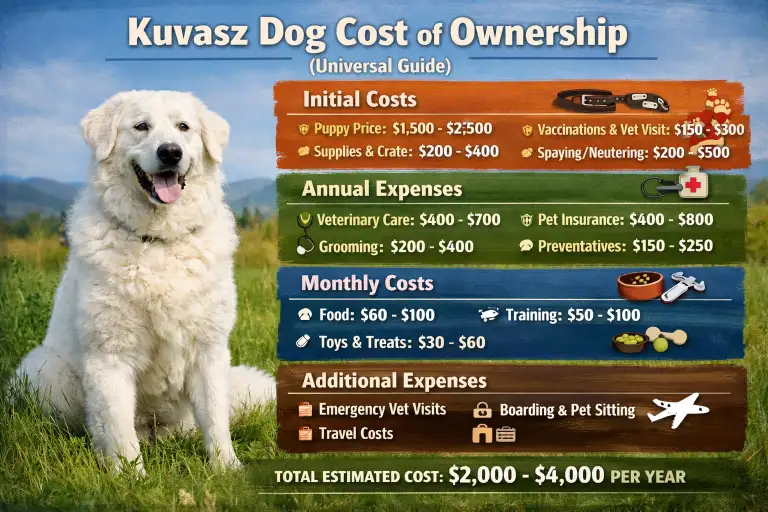
Bringing home a Kuvasz is a rewarding experience, but it also comes with a significant financial responsibility. This large Hungarian livestock guardian breed requires more than just food and affection. From quality nutrition and veterinary care to professional training, grooming, and emergency expenses, the cost of owning a Kuvasz is higher than that of many other dog breeds.
Understanding the true cost of Kuvasz ownership before adopting or buying one helps you create a realistic budget and avoid unexpected expenses. Whether you’re considering a puppy from a reputable breeder or adopting an adult rescue, knowing what to expect financially will help you provide the best possible care throughout your dog’s life.
Average Kuvasz Ownership Costs at a Glance
| Expense Category | Estimated Cost |
|---|---|
| First-Year Cost | $4,000 – $8,000+ |
| Annual Ownership Cost | $2,400 – $5,500+ |
| Lifetime Cost (10–12 Years) | $25,000 – $65,000+ |
This guide explains every major expense associated with owning a Kuvasz, including purchase price, monthly costs, veterinary care, food, grooming, insurance, and long-term ownership expenses.
Kuvasz First-Year Cost: Puppy vs. Rescue Dog
The first year of owning a Kuvasz is usually the most expensive. Besides the purchase or adoption fee, you’ll need to budget for vaccinations, veterinary exams, supplies, obedience training, socialization, and home preparation.
| Expense | Kuvasz Puppy | Adult Rescue |
|---|---|---|
| Purchase or Adoption | $1,500 – $3,500+ | $200 – $600 |
| Initial Veterinary Exams | $150 – $300 | $150 – $300 |
| Spay or Neuter | $300 – $800 | Often Included |
| Microchip | $40 – $75 | Often Included |
| Crate, Bed, Bowls & Supplies | $400 – $900 | $400 – $700 |
| Training & Socialization | $150 – $1,000 | $150 – $500 |
| Total First-Year Cost | $4,000 – $8,000+ | $2,500 – $5,000+ |
Although adopting an adult Kuvasz is generally less expensive than buying a puppy, rescue dogs may still require medical care, behavioral training, and new equipment. Don’t overlook hidden setup costs such as secure fencing, heavy-duty crates, grooming tools, durable toys, and large dog beds.
Monthly Kuvasz Ownership Costs
After the first year, your expenses become more predictable. However, because the Kuvasz is a giant working breed, ongoing costs remain higher than average throughout its life.
| Expense | Monthly | Yearly |
|---|---|---|
| Premium Dog Food | $90 – $250 | $1,100 – $3,000 |
| Treats & Chews | $15 – $30 | $180 – $360 |
| Routine Veterinary Care | $30 – $65 | $500 – $1,200 |
| Grooming & Coat Maintenance | $10 – $100 | $120 – $1,200 |
| Training & Refreshers | $10 – $70 | $120 – $800 |
| Licensing & Registration | — | $10 – $30 |
| Pet Insurance | $50 – $90 | $600 – $1,080 |
| Replacement Supplies | $10 – $20 | $120 – $240 |
| Total | $200 – $450+ | $2,400 – $5,500+ |
Because Kuvasz dogs are large and active, they consume more food than medium-sized breeds. Their thick double coat also requires regular brushing and seasonal grooming to control shedding and maintain healthy skin. Consistent obedience training is equally important for managing their independent guardian instincts.
What Makes Kuvasz Ownership More Expensive?
The cost of owning a Kuvasz depends on several factors beyond the initial purchase price. Large breed care, health risks, lifestyle, and preventive healthcare all influence your long-term expenses.
| Cost Factor | Financial Impact |
|---|---|
| Large Body Size | Higher food consumption, larger equipment, increased veterinary costs |
| Male vs. Female | Males generally eat more and require larger supplies |
| Working or Active Lifestyle | Additional calories, advanced training, increased injury risk |
| Health Conditions | Hip dysplasia ($1,500–$7,000+), bloat surgery ($2,000–$6,000+) |
| Emergency Veterinary Care | $800 – $3,000+ |
| Pet Insurance | $25 – $130+ per month depending on coverage |
| Home & Property Needs | Secure fencing, boarding, large yards, durable equipment |
Proper training and secure fencing are essential investments for this protective livestock guardian breed. Skipping early socialization or obedience classes can lead to behavioral issues that become much more expensive to correct later.
Kuvasz Lifetime Cost Breakdown
Over a lifespan of approximately 10 to 12 years, owning a Kuvasz represents a substantial financial investment. While routine expenses make up most of the budget, unexpected medical emergencies and property-related costs can significantly increase total ownership costs.
| Lifetime Expense | Estimated Cost |
|---|---|
| Food & Treats | $15,000 – $30,000 |
| Routine Veterinary Care | $5,000 – $12,000 |
| Grooming | $1,500 – $6,000 |
| Training | $1,500 – $5,000 |
| Pet Insurance | $6,000 – $15,000 |
| Supplies & Equipment | $2,000 – $5,000 |
| Hidden Expenses | $3,000 – $10,000+ |
| Total Lifetime Cost | $25,000 – $65,000+ |
Hidden expenses often include emergency veterinary treatment, dental procedures, boarding, replacing damaged household items, upgrading fencing, and purchasing larger vehicles or travel crates for transporting a giant breed.
Is a Kuvasz Worth the Cost?
A Kuvasz is an exceptional companion for experienced owners who understand the responsibilities of caring for a large guardian breed. While the purchase price may seem high, the ongoing costs of nutrition, healthcare, training, and maintenance represent the biggest financial commitment.
If you’re considering adding a Kuvasz to your family, plan for at least several thousand dollars each year and maintain an emergency savings fund for unexpected veterinary expenses. Careful budgeting ensures your Kuvasz receives excellent care while protecting your financial stability for years to come.
Frequently Asked Questions About Kuvasz Costs
How much does a Kuvasz puppy cost?
A Kuvasz puppy from a reputable breeder typically costs between $1,500 and $3,500+. Puppies from champion bloodlines, health-tested parents, or show-quality breeders may cost even more.
How much does it cost to own a Kuvasz per month?
The average monthly cost of owning a Kuvasz ranges from $200 to $450+. This includes premium food, routine veterinary care, grooming, pet insurance, treats, and replacement supplies.
What is the first-year cost of owning a Kuvasz?
Most owners spend between $4,000 and $8,000+ during the first year. Initial expenses include the purchase price, vaccinations, veterinary exams, training, microchipping, spaying or neutering, and essential supplies.
How much does it cost to adopt a Kuvasz?
Adopting an adult Kuvasz from a rescue organization usually costs between $200 and $600. Many rescue dogs are already vaccinated, microchipped, and spayed or neutered, reducing initial expenses.
Why is owning a Kuvasz so expensive?
Kuvasz dogs are large, active guardians that require high-quality nutrition, regular veterinary care, professional training, secure fencing, and ongoing grooming. Their size and potential health issues also contribute to higher ownership costs.
How much should I budget for Kuvasz food?
Most owners spend between $90 and $250 per month on premium dog food, depending on the dog’s age, weight, activity level, and the quality of the diet.
Does a Kuvasz need pet insurance?
Pet insurance is not mandatory, but it is highly recommended. Monthly premiums generally range from $25 to $130+, helping offset the cost of emergency treatments, surgeries, and hereditary health conditions.
What are the most expensive health problems in Kuvasz dogs?
Common costly conditions include hip dysplasia, elbow dysplasia, bloat (gastric dilatation-volvulus), orthopedic injuries, and emergency surgeries. Treatment for these conditions can cost several thousand dollars.
How much does Kuvasz grooming cost?
Depending on whether you groom your dog at home or use a professional groomer, annual grooming costs typically range from $120 to $1,200. Regular brushing helps reduce shedding and prevents coat problems.
What is the lifetime cost of owning a Kuvasz?
Over a lifespan of 10–12 years, the total cost of owning a Kuvasz generally falls between $25,000 and $65,000+, including food, veterinary care, insurance, grooming, training, and unexpected expenses.

Ata Ur Rehman is the founder of Pet Age in Human Years Calculator, an educational platform that provides age conversion charts and lifespan guides for dogs, cats, birds, and other companion animals. His work focuses on helping pet owners understand how animal ages translate into human years using commonly accepted age conversion formulas and published lifespan averages.
The website compiles breed and species lifespan data from kennel clubs, breed organizations, and general animal lifespan studies to present simple and easy-to-understand guides for pet owners worldwide.
This website was created to centralize animal age conversion charts into one easy reference platform for pet owners.
This article is for general education. For symptoms, medication, diet changes, or health concerns, use a qualified veterinarian who can assess your individual pet.