On this page
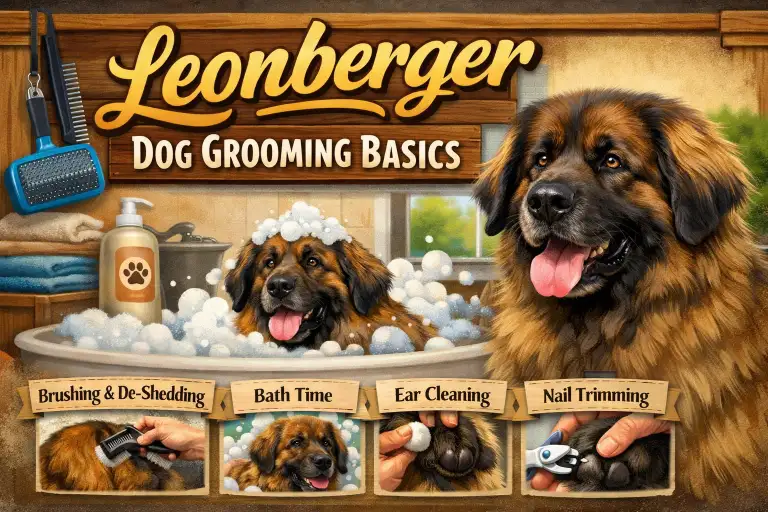
Leonbergers are not a low-maintenance giant breed. Their thick, weather-resistant double coat, heavy seasonal shedding, and massive size make grooming an essential part of responsible ownership. Proper grooming keeps a Leonberger comfortable, healthy, and looking its best while helping prevent skin problems, painful mats, and excessive shedding around the home.
A neglected coat can trap moisture, dirt, and loose undercoat close to the skin. Over time, this may lead to hot spots, yeast infections, unpleasant odors, and mats that pull painfully on the skin. In giant breeds like the Leonberger, severe matting can even restrict movement around the shoulders, chest, and hindquarters.
Regular grooming also gives owners an opportunity to check for skin problems, parasites, lumps, or changes in coat condition before they become serious health concerns.
Why Grooming Is Important for Leonbergers
The Leonberger’s double coat serves several important functions:
- Helps regulate body temperature in both hot and cold weather.
- Protects the skin from moisture, dirt, and UV exposure.
- Provides insulation during cold temperatures.
- Prevents skin irritation caused by environmental conditions.
Without regular grooming, the undercoat becomes compacted, causing excessive shedding, matting, and skin issues.
Understanding the Leonberger’s Double Coat
Leonbergers have two distinct coat layers.
- Topcoat: Long, moderately coarse, and water resistant.
- Undercoat: Dense, soft, and thick, providing insulation and temperature regulation.
Because of this coat structure, routine brushing is essential throughout the year.
Leonberger Shedding
Leonbergers are heavy shedders. They shed moderately throughout the year and experience two major shedding periods annually.
- Spring: They lose their thick winter undercoat.
- Fall: They shed to prepare for a new winter coat.
During these seasonal coat blows, daily brushing is often necessary.
Common Areas Where Mats Develop
Certain areas of the body are more likely to develop tangles and mats.
- Behind the ears
- Under the front legs
- Chest and neck
- Rear legs and feathering
- Tail and rear end
These areas should be checked during every grooming session.
How Often Should You Groom a Leonberger?
| Grooming Task | Normal Months | Heavy Shedding Seasons |
|---|---|---|
| Brushing | 2–3 times per week | Daily or every other day |
| Undercoat removal | As needed | 2–3 times per week |
| Bathing | Every 6–8 weeks | Every 6–8 weeks |
| Professional grooming | Every 8–12 weeks | Every 6–8 weeks |
| Mat checks | Weekly | Every grooming session |
Consistent grooming is far easier than trying to remove severe mats and accumulated undercoat after months of neglect.
Signs Your Leonberger Needs Grooming
Your Leonberger may need grooming if you notice:
- Excessive shedding around the home
- Tangles or mats in the coat
- A strong odor from the coat
- Dry or flaky skin
- Dirt trapped in feathering
- Hair clumps behind the ears or under the legs
Addressing these signs early helps keep the coat healthy and prevents larger grooming problems.
Essential Grooming Tools for a Leonberger
Because of their thick double coat, Leonbergers require specialized grooming tools.
| Tool | Purpose |
|---|---|
| Slicker Brush | Removes loose hair and minor tangles |
| Undercoat Rake | Reaches deep undercoat and reduces shedding |
| Pin Brush | Smooths the outer coat |
| Metal Comb | Checks for hidden mats |
| Dog Shampoo | Cleans without damaging skin oils |
| Conditioner | Helps keep long coat soft |
| High-Velocity Dryer | Removes loose undercoat after bathing |
| Nail Clippers or Grinder | Maintains healthy nail length |
| Ear Cleaner | Keeps ears clean and helps prevent infections |
Using the proper tools makes grooming sessions easier and more comfortable for both the dog and the owner.
Frequently Asked Questions About Leonberger Grooming
How often should a Leonberger be groomed?
Leonbergers should be brushed at least two to three times per week during normal months. During heavy shedding seasons in spring and fall, daily brushing is recommended to remove loose undercoat and prevent matting.
Do Leonbergers shed a lot?
Yes. Leonbergers are heavy shedders throughout the year and experience major seasonal shedding periods twice annually. Their dense undercoat can produce large amounts of loose fur if not maintained properly.
Can you shave a Leonberger in summer?
No. Shaving a Leonberger is not recommended. Their double coat helps regulate body temperature and protects the skin from heat, sunburn, and environmental damage. Removing the coat can permanently damage coat growth and reduce natural insulation.
How often should a Leonberger be bathed?
Most Leonbergers only need a bath every six to eight weeks. Dogs that swim frequently, compete in shows, or spend significant time outdoors may require more frequent bathing depending on coat condition.
What is the best brush for a Leonberger?
A slicker brush combined with an undercoat rake provides the best results for most Leonberger owners. A metal comb is also useful for checking hidden mats and tangles in feathering areas.
Are Leonbergers hypoallergenic?
No. Leonbergers are not considered hypoallergenic dogs. Their heavy shedding and thick undercoat produce large amounts of dander and hair throughout the year.
Which areas of a Leonberger mat the fastest?
The areas most likely to develop mats include behind the ears, under the front legs, around the chest and collar area, the rear feathering, and the tail.
Should I use professional grooming services?
Professional grooming every eight to twelve weeks can be beneficial, especially during heavy shedding seasons. Professional groomers can safely remove compacted undercoat and handle bathing and drying more efficiently.
How long does it take to groom a Leonberger?
A complete grooming session usually takes between one and three hours depending on coat condition, shedding level, and whether bathing and drying are included.
What are signs of skin problems during grooming?
Owners should look for redness, hot spots, unusual odors, excessive scratching, scabs, hair loss, parasites, and changes in coat texture. Early detection often prevents more serious skin conditions.
Final Thoughts
Leonberger grooming is a long-term commitment rather than an occasional task. Their impressive double coat requires regular brushing, seasonal deshedding, routine bathing, nail trimming, ear cleaning, and skin checks to remain healthy and functional.
Owners who establish a consistent grooming routine usually find that maintenance becomes easier over time. Short, regular sessions are more effective than infrequent marathon grooming days and help keep the experience positive for both dog and owner.
With proper coat care, a Leonberger’s beautiful double coat continues to provide protection, temperature regulation, and the distinctive appearance that makes this giant breed so recognizable. Consistent grooming not only improves appearance but also supports overall health, comfort, and quality of life throughout every stage of the dog’s life.

Ata Ur Rehman is the founder of Pet Age in Human Years Calculator, an educational platform that provides age conversion charts and lifespan guides for dogs, cats, birds, and other companion animals. His work focuses on helping pet owners understand how animal ages translate into human years using commonly accepted age conversion formulas and published lifespan averages.
The website compiles breed and species lifespan data from kennel clubs, breed organizations, and general animal lifespan studies to present simple and easy-to-understand guides for pet owners worldwide.
This website was created to centralize animal age conversion charts into one easy reference platform for pet owners.
This article is for general education. For symptoms, medication, diet changes, or health concerns, use a qualified veterinarian who can assess your individual pet.