On this page
Newfoundland dogs are gentle giants known for their impressive size, strength, and calm temperament. Because they belong to the giant-breed category, they age much differently than humans and smaller dog breeds. If you’ve ever wondered, “How old is my Newfoundland dog in human years?”, using a standard dog age formula or the old “1 dog year = 7 human years” rule won’t give you an accurate answer.
A Newfoundland Dog Age Calculator considers the breed’s rapid early development, giant body size, shorter lifespan, and faster aging process after adulthood. These factors provide a much more realistic estimate of your dog’s equivalent human age, helping you better understand their life stage and changing care requirements.
Whether you have a playful Newfoundland puppy, an energetic adult, or a senior companion, knowing their age in human years can help you make informed decisions about nutrition, exercise, preventive healthcare, and veterinary checkups.
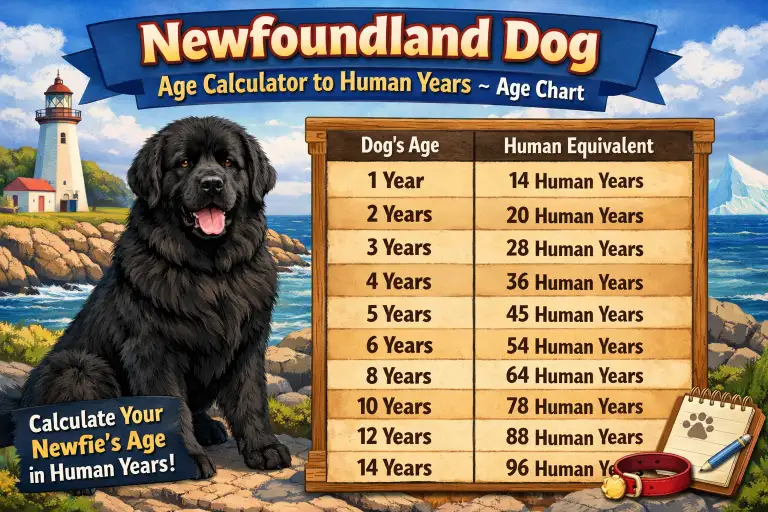
Below is a quick age conversion chart that gives an easy estimate before exploring the detailed explanation of how Newfoundland dogs age.
Quick Newfoundland Dog Age to Human Years Chart
| Newfoundland Dog Age | Human Years Equivalent | Life Stage |
|---|---|---|
| 3 Months | 5 Years | Puppy |
| 6 Months | 10 Years | Puppy |
| 1 Year | 15 Years | Adolescent |
| 2 Years | 24 Years | Young Adult |
| 3 Years | 31 Years | Adult |
| 4 Years | 38 Years | Adult |
| 5 Years | 44 Years | Mature Adult |
| 6 Years | 51 Years | Senior |
| 7 Years | 58 Years | Senior |
| 8 Years | 64 Years | Senior |
| 9 Years | 69 Years | Senior |
| 10 Years | 75 Years | Geriatric |
| 11 Years | 80 Years | Geriatric |
| 12 Years | 85 Years | Geriatric |
Why Newfoundland Dogs Age Faster Than Humans
Many people still believe that one dog year equals seven human years. While this simple formula has been around for decades, scientists now know it is inaccurate, especially for giant breeds like the Newfoundland.
Dogs experience extremely rapid growth during their first two years of life. A Newfoundland puppy develops physically and sexually much faster than a human child. After reaching adulthood, the aging process slows temporarily before accelerating again during the senior years.
Because Newfoundlands are among the largest dog breeds in the world, their bodies experience greater stress on the joints, muscles, heart, and metabolism. This contributes to a shorter average lifespan compared to smaller breeds.
Instead of aging at a constant rate, Newfoundland dogs follow a curved aging pattern:
- Extremely rapid aging during puppyhood
- Moderate aging throughout adulthood
- Accelerated aging beginning around six years of age
This explains why a six-year-old Newfoundland is already considered a senior, while many smaller dogs are still middle-aged.
Why Breed Size Matters
Research consistently shows that larger dogs generally have shorter lifespans than smaller breeds. While scientists continue studying the exact reasons, several biological factors contribute:
- Faster growth during puppyhood
- Higher metabolic demands
- Increased stress on bones and joints
- Greater risk of orthopedic diseases
- Higher incidence of heart conditions
- Earlier cellular aging
These factors make breed-specific age calculators significantly more accurate than generic dog age charts.
Dog Aging by Size Comparison
| Dog Size | Average Lifespan | Senior Age Begins | Aging Speed |
|---|---|---|---|
| Small Breeds | 13–16 Years | 9–10 Years | Slow |
| Medium Breeds | 11–14 Years | 8–9 Years | Moderate |
| Large Breeds | 10–12 Years | 7–8 Years | Fast |
| Giant Breeds (Newfoundland) | 8–10 Years | 6–7 Years | Very Fast |
How the Newfoundland Dog Age Calculator Works
A Newfoundland Dog Age Calculator uses modern canine aging research instead of relying on outdated multiplication rules.
The calculator estimates human age by considering:
- Giant breed classification
- Faster puppy development
- Slower aging during early adulthood
- Accelerated aging during senior years
- Average Newfoundland lifespan
Unlike traditional methods, this approach reflects how Newfoundland dogs actually grow and mature throughout their lives.
Factors Used in the Calculation
| Factor | Why It Matters |
|---|---|
| Breed Size | Giant breeds age faster than smaller dogs. |
| Growth Rate | Puppies mature rapidly during the first two years. |
| Lifespan | Average lifespan influences yearly age conversion. |
| Life Stage | Puppies, adults, and seniors age differently. |
| Veterinary Research | Modern canine aging studies provide more accurate estimates. |
Newfoundland Dog Age Chart by Life Stage
Understanding your dog’s life stage is often more valuable than simply knowing their equivalent human age. Each stage brings different nutritional requirements, exercise recommendations, and healthcare priorities.
| Dog Age | Human Age | Life Stage | Typical Characteristics |
|---|---|---|---|
| 0–6 Months | 0–10 Years | Puppy | Rapid growth, socialization, basic training |
| 6–12 Months | 10–15 Years | Puppy | Increased energy, continued development |
| 1–2 Years | 15–24 Years | Young Adult | Reaches adult size, still mentally maturing |
| 3–5 Years | 31–44 Years | Adult | Peak health and activity |
| 6–8 Years | 51–64 Years | Senior | Reduced energy, joint changes begin |
| 9+ Years | 69+ Years | Geriatric | Mobility issues become more common, increased veterinary care needed |
Frequently Asked Questions (FAQs)
Is the Newfoundland Dog Age Calculator accurate?
A Newfoundland Dog Age Calculator provides a much more accurate estimate than the traditional “1 dog year = 7 human years” rule because it accounts for the breed’s giant size, faster growth, and shorter lifespan. While no calculator can predict an exact biological age, it offers a realistic approximation based on modern canine aging research.
How old is a 1-year-old Newfoundland in human years?
A 1-year-old Newfoundland is approximately 15 human years old. Although they are close to their adult size, they are still developing mentally and physically.
How old is a 2-year-old Newfoundland in human years?
A 2-year-old Newfoundland is roughly 24 human years old. At this stage, most Newfoundlands have reached adulthood and are entering their prime years.
How old is a 5-year-old Newfoundland in human years?
A 5-year-old Newfoundland is about 44–45 human years old. This is considered a mature adult stage, and owners should begin monitoring weight, joint health, and overall fitness more closely.
When is a Newfoundland considered a senior dog?
Most Newfoundland dogs are considered seniors between 6 and 7 years of age. Because they are a giant breed, they typically enter their senior years earlier than small and medium-sized dogs.
What is the average lifespan of a Newfoundland dog?
The average lifespan of a Newfoundland is 8 to 10 years, although some dogs may live longer with excellent nutrition, regular exercise, preventive healthcare, and routine veterinary checkups.
Why do Newfoundland dogs age faster than smaller breeds?
Newfoundland dogs age faster because their large body size places greater demands on their bones, joints, heart, and metabolism. Giant breeds grow rapidly during puppyhood and generally have shorter lifespans than smaller dogs.
Is the “1 dog year equals 7 human years” rule correct?
No. The 7-year rule is an outdated guideline that does not reflect how dogs actually age. Dogs mature much faster during their first two years of life, and aging varies significantly depending on breed size and lifespan.
Can diet affect how a Newfoundland ages?
Yes. A balanced diet rich in high-quality protein, healthy fats, vitamins, and minerals helps maintain a healthy weight, supports joint health, and may improve overall quality of life. Proper nutrition is especially important for giant breeds like the Newfoundland.
Does exercise help Newfoundland dogs live longer?
Regular, low-impact exercise helps maintain muscle strength, healthy body weight, cardiovascular health, and joint mobility. Activities such as walking and swimming are excellent choices for Newfoundland dogs throughout most stages of life.
Can I use this age calculator for other giant dog breeds?
This calculator is designed specifically for Newfoundland dogs. While it may provide a rough estimate for other giant breeds such as Saint Bernards, Great Danes, or Mastiffs, breed-specific calculators are generally more accurate because each breed has unique growth patterns and average lifespans.
Why is knowing my Newfoundland’s age in human years important?
Understanding your Newfoundland’s equivalent human age helps you recognize their life stage, adjust nutrition and exercise, schedule appropriate veterinary care, and prepare for age-related health changes. It also makes it easier to provide the right level of care throughout your dog’s life.

Ata Ur Rehman is the founder of Pet Age in Human Years Calculator, an educational platform that provides age conversion charts and lifespan guides for dogs, cats, birds, and other companion animals. His work focuses on helping pet owners understand how animal ages translate into human years using commonly accepted age conversion formulas and published lifespan averages.
The website compiles breed and species lifespan data from kennel clubs, breed organizations, and general animal lifespan studies to present simple and easy-to-understand guides for pet owners worldwide.
This website was created to centralize animal age conversion charts into one easy reference platform for pet owners.
This article is for general education. For symptoms, medication, diet changes, or health concerns, use a qualified veterinarian who can assess your individual pet.