On this page
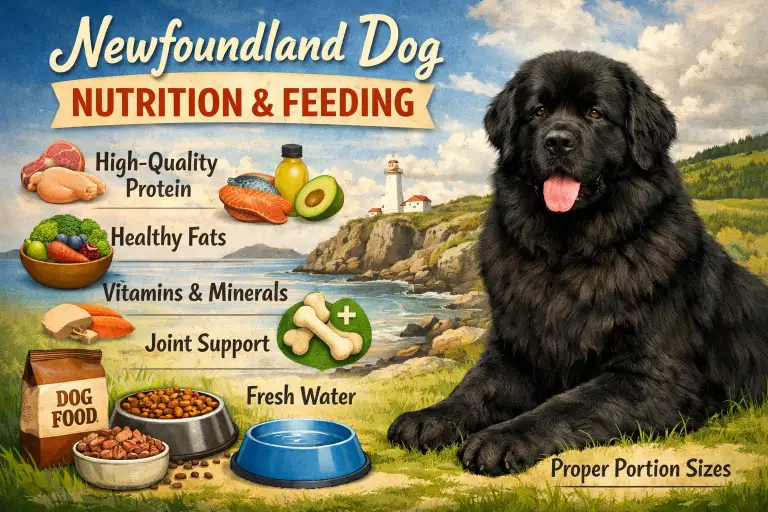
Feeding a Newfoundland dog correctly is one of the most important factors in supporting its health, mobility, and lifespan. As one of the largest dog breeds in the world, the Newfoundland has unique nutritional requirements that differ significantly from those of small and medium-sized breeds. A balanced diet helps maintain healthy muscles, supports growing bones, protects joints, promotes heart health, and keeps their thick double coat in excellent condition.
Whether you own a Newfoundland puppy, an active adult, or a senior companion, understanding how much to feed, what type of food to choose, and which nutrients matter most can prevent many common health problems. Proper nutrition also reduces the risk of obesity, digestive issues, orthopedic disorders, and nutritional deficiencies that giant breeds are more likely to experience.
This comprehensive Newfoundland feeding guide explains everything owners need to know, including daily calorie requirements, feeding schedules, recommended food types, puppy nutrition, senior diets, weight management, supplements, safe treats, foods to avoid, and practical feeding tips backed by veterinary nutrition principles.
Why Nutrition Is So Important for Newfoundland Dogs
Newfoundlands are giant working dogs originally bred to perform demanding water rescue and hauling tasks. Although modern Newfoundlands are often family companions, they still retain their massive frame, powerful muscles, and relatively slow growth pattern. These characteristics mean that proper nutrition is essential throughout every stage of life.
Unlike smaller breeds, giant breed puppies continue developing for nearly two years. Feeding excessive calories or providing an unbalanced calcium-to-phosphorus ratio during this period can increase the risk of developmental orthopedic diseases, including hip dysplasia, elbow dysplasia, and osteochondrosis.
Adult Newfoundlands require enough high-quality protein to maintain muscle mass while avoiding excessive calorie intake that contributes to obesity. Even an additional 10–15 pounds of unnecessary weight places considerable stress on their joints and cardiovascular system.
Senior Newfoundlands benefit from diets that help preserve lean muscle, reduce inflammation, and maintain healthy body weight while supporting digestion and mobility.
Core Nutritional Requirements
Every Newfoundland diet should provide balanced amounts of protein, fat, carbohydrates, vitamins, minerals, and water.
| Nutrient | Why It Matters | Recommended Focus |
|---|---|---|
| Protein | Maintains muscles, repairs tissues, supports immunity | High-quality animal protein |
| Fat | Energy source and coat health | Moderate amounts |
| Carbohydrates | Digestible energy and fiber | Easily digestible sources |
| Calcium & Phosphorus | Bone development | Balanced ratio, especially for puppies |
| Omega-3 Fatty Acids | Joint, skin and heart support | EPA and DHA sources |
| Fiber | Healthy digestion | Moderate levels |
| Water | Hydration and metabolism | Unlimited fresh water |
High-quality animal proteins such as chicken, turkey, lamb, beef, salmon, or white fish should appear among the primary ingredients. Protein quality is generally more important than simply choosing foods with the highest percentage listed on the label.
Moderate fat levels help maintain healthy skin and coat without encouraging excessive weight gain. Because Newfoundlands naturally have a lower activity level than many working breeds, calorie control is often more important than choosing extremely rich diets.
Carbohydrates from ingredients such as brown rice, oats, barley, or sweet potatoes provide steady energy while supporting digestive health.
Mineral balance is especially important during puppy growth. Large-breed puppy foods are specifically formulated to support slow, controlled skeletal development rather than rapid growth.
How Much Should You Feed a Newfoundland Dog?
There is no universal feeding amount that suits every Newfoundland. Daily food requirements depend on age, body weight, metabolism, activity level, reproductive status, and overall health.
The following calorie estimates provide a practical starting point.
| Body Weight | Low Activity | Moderate Activity | High Activity |
|---|---|---|---|
| 100 lb (45 kg) | 1,800 kcal | 2,200 kcal | 2,600 kcal |
| 120 lb (54 kg) | 2,000 kcal | 2,400 kcal | 2,900 kcal |
| 150 lb (68 kg) | 2,300 kcal | 2,800 kcal | 3,300 kcal |
These values should always be adjusted based on your dog’s body condition rather than relying solely on feeding charts printed on food packaging.
A healthy Newfoundland should have:
- Ribs that can be felt under a thin layer of fat.
- A visible waist when viewed from above.
- A tucked abdomen when viewed from the side.
- Strong muscle tone without excessive fat deposits.
If your dog begins gaining weight, reduce daily calories by approximately 5–10% and reassess after several weeks. If weight loss occurs unintentionally, increase calories gradually while investigating possible medical causes if necessary.
Best Dog Food Types for Newfoundland Dogs
Selecting the right food is just as important as feeding the correct amount. Newfoundlands thrive on complete and balanced diets formulated for large or giant breeds. The ideal food should provide high-quality protein, moderate fat, controlled calories, and balanced calcium and phosphorus to support their large frame.
| Food Type | Advantages | Considerations |
|---|---|---|
| Dry Kibble | Complete nutrition, affordable, convenient | Choose a premium large-breed formula |
| Wet Food | Highly palatable, increases moisture intake | Higher calorie density and cost |
| Fresh Food | Highly digestible, minimally processed | Expensive and requires refrigeration |
| Freeze-Dried Food | Nutrient dense and convenient | Must be portioned carefully |
| Raw Diet | Preferred by some owners | Requires careful nutritional balancing and food safety |
| Homemade Diet | Full ingredient control | Should be formulated by a veterinary nutritionist |
Most owners successfully feed a premium large-breed kibble supplemented occasionally with wet or fresh food. Regardless of diet type, consistency and proper portion control are far more important than choosing expensive boutique foods.
Foods That Are Safe for Newfoundland Dogs
Many healthy human foods can be offered occasionally as treats.
| Safe Foods | Benefits |
|---|---|
| Cooked chicken | Lean protein |
| Turkey | High-quality protein |
| Salmon | Omega-3 fatty acids |
| Pumpkin | Supports digestion |
| Carrots | Low-calorie snack |
| Green beans | Fiber and vitamins |
| Plain rice | Easy on sensitive stomachs |
| Plain yogurt | Probiotics (if tolerated) |
| Blueberries | Antioxidants |
| Apples (without seeds) | Vitamins and fiber |
Treats should account for less than 10% of daily calorie intake.
Foods That Should Never Be Fed
Some foods are toxic and should always be avoided.
| Unsafe Food | Risk |
|---|---|
| Chocolate | Toxic to the nervous system |
| Grapes and raisins | Kidney failure |
| Onions and garlic | Damage red blood cells |
| Xylitol | Dangerous drop in blood sugar |
| Alcohol | Toxic even in small amounts |
| Macadamia nuts | Muscle weakness and tremors |
| Cooked bones | Splintering and intestinal injury |
| Excess fatty foods | Pancreatitis and obesity |
Feeding Tips to Reduce the Risk of Bloat
Newfoundlands are among the breeds most susceptible to Gastric Dilatation-Volvulus (GDV), commonly known as bloat. While no feeding strategy completely eliminates the risk, good management practices can help reduce it.
- Feed two or three smaller meals rather than one large meal.
- Avoid vigorous exercise for at least one hour before and two hours after eating.
- Encourage slow eating by using slow-feeder bowls if necessary.
- Avoid sudden changes in diet.
- Ensure fresh water is always available but discourage excessive drinking immediately after meals.
- Maintain a healthy body weight.
Feeding Newfoundland Puppies
Newfoundland puppies grow rapidly but should never grow too quickly. Controlled growth helps protect developing joints and bones.
| Age | Meals Per Day | Feeding Goal |
|---|---|---|
| 8–12 weeks | 4 meals | Support healthy growth |
| 3–6 months | 3 meals | Controlled development |
| 6–12 months | 2–3 meals | Steady growth |
| 12–24 months | 2 meals | Transition to adult diet |
Large-breed puppy formulas are specifically designed to support slow, healthy skeletal development and are generally recommended until the dog reaches physical maturity.
Feeding Adult Newfoundland Dogs
Adult Newfoundlands generally perform well on two measured meals each day. Daily portions should be adjusted according to activity level, body condition, and metabolism.
Owners should regularly evaluate their dog’s body condition rather than relying solely on feeding guides printed on food packaging.
Feeding Senior Newfoundland Dogs
As Newfoundlands age, metabolism slows while the need for high-quality nutrition remains.
Senior diets should emphasize:
- High-quality protein
- Controlled calorie intake
- Omega-3 fatty acids
- Joint-supporting nutrients
- Easily digestible ingredients
Maintaining a lean body condition significantly reduces pressure on aging joints and improves mobility.
Common Feeding Mistakes
Avoid these common errors:
- Overfeeding puppies
- Free-feeding throughout the day
- Giving excessive treats
- Feeding table scraps regularly
- Switching foods too quickly
- Ignoring gradual weight gain
- Overusing supplements without veterinary advice
Frequently Asked Questions
How much food should a Newfoundland dog eat each day?
Most adult Newfoundlands require approximately 2,000–3,000 calories daily depending on their body weight, activity level, age, and metabolism. Portion sizes should always be adjusted according to body condition rather than feeding charts alone.
What is the best food for a Newfoundland dog?
The best food is a complete and balanced large- or giant-breed formula made with high-quality animal protein, moderate fat, balanced minerals, and appropriate calorie levels. Choose diets that meet established nutritional standards.
Can Newfoundland dogs eat grain-free food?
Most healthy Newfoundlands do not require grain-free diets. Unless recommended by your veterinarian because of a diagnosed allergy or medical condition, grain-inclusive diets are generally appropriate.
How many times a day should a Newfoundland be fed?
Adult Newfoundlands should usually eat two meals daily. Puppies require three to four meals depending on age, while seniors often continue doing well with two smaller meals.
Are Newfoundland dogs prone to obesity?
Yes. Because they are naturally calm and large, Newfoundlands can gain weight easily if overfed or under-exercised. Maintaining an ideal body condition is essential for joint and heart health.
What treats are safe for Newfoundland dogs?
Healthy treats include carrots, green beans, blueberries, pumpkin, cooked chicken, plain yogurt, and apple slices without seeds. Treats should contribute less than 10% of total daily calories.
Should I give my Newfoundland joint supplements?
Many owners use glucosamine, chondroitin, and omega-3 fatty acids for joint support. However, supplements should complement a balanced diet and are best discussed with your veterinarian.
Can Newfoundland puppies eat adult dog food?
No. Puppies should eat diets formulated specifically for large or giant breed puppies to support controlled growth and balanced skeletal development.
What foods are toxic to Newfoundland dogs?
Avoid chocolate, grapes, raisins, onions, garlic, xylitol, alcohol, macadamia nuts, cooked bones, and foods that are excessively fatty or heavily seasoned.
How can I tell if my Newfoundland is overweight?
You should be able to feel your dog’s ribs with light pressure without seeing them prominently. A healthy Newfoundland should also have a visible waist from above and a slight abdominal tuck from the side.
Final Thoughts
Providing proper nutrition is one of the most effective ways to help your Newfoundland live a longer, healthier, and more comfortable life. A balanced diet formulated for giant breeds, combined with measured portions, consistent feeding schedules, regular body condition assessments, and appropriate exercise, supports healthy growth in puppies, maintains muscle and mobility in adults, and improves quality of life for seniors. By focusing on nutrient quality rather than marketing claims and adjusting your dog’s diet according to age, activity level, and overall health, you can help your Newfoundland remain strong, active, and healthy throughout every stage of life.

Ata Ur Rehman is the founder of Pet Age in Human Years Calculator, an educational platform that provides age conversion charts and lifespan guides for dogs, cats, birds, and other companion animals. His work focuses on helping pet owners understand how animal ages translate into human years using commonly accepted age conversion formulas and published lifespan averages.
The website compiles breed and species lifespan data from kennel clubs, breed organizations, and general animal lifespan studies to present simple and easy-to-understand guides for pet owners worldwide.
This website was created to centralize animal age conversion charts into one easy reference platform for pet owners.
This article is for general education. For symptoms, medication, diet changes, or health concerns, use a qualified veterinarian who can assess your individual pet.