On this page
Norfolk Terrier training works best when it is short, consistent, positive, and built around this breed’s bold terrier personality. Norfolk Terriers are small dogs, but they are energetic, intelligent, independent, and easily distracted by movement, smells, and small animals. Because of this, they need more than basic commands—they need structure, patience, recall practice, leash manners, socialization, and clear behavior boundaries.
This Norfolk Terrier training guide explains how to train a Norfolk Terrier puppy or adult dog using simple, practical steps. You’ll learn how to handle common training challenges such as stubbornness, barking, digging, poor recall, leash pulling, puppy biting, and difficulty focusing around distractions.
The goal is not to make your Norfolk Terrier act like a different breed. The goal is to guide their natural confidence, curiosity, and energy into better behavior at home, on walks, around guests, and in new environments.
Quick Breed Traits Snapshot
| Trait | What It Means for Training |
|---|---|
| High Energy | Needs daily movement, play, and short training sessions to prevent boredom |
| Intelligence | Learns quickly but may ignore repetitive training if it becomes boring |
| Independence | Responds better to rewards and consistency than harsh correction |
| Prey Drive | Needs strong recall, leash control, and impulse-control practice |
| Alert Nature | May bark at noises, strangers, animals, or movement outside |
| Social Personality | Benefits from early exposure to people, dogs, sounds, and new places |
Why Norfolk Terrier Training Matters
Training your Norfolk Terrier is important because this breed is confident, alert, and naturally curious. Without clear rules, a Norfolk Terrier may start barking excessively, digging, chasing small animals, jumping on people, pulling on the leash, or ignoring recall commands.
Good training helps your dog understand what behavior is expected. It also makes everyday life easier for you, especially during walks, vet visits, grooming, feeding routines, travel, and interactions with guests or other pets.
Because Norfolk Terriers are independent thinkers, training should begin early and continue throughout adulthood. Puppies need foundation skills, while adult dogs need regular reinforcement so they do not fall back into unwanted habits.
Training Benefits at a Glance
| Training Benefit | Why It Matters for Norfolk Terriers |
|---|---|
| Better Safety | Helps prevent chasing, bolting, and ignoring recall outdoors |
| Improved Behavior | Reduces barking, digging, jumping, nipping, and leash pulling |
| Stronger Focus | Helps your dog listen even around distractions |
| Better Social Skills | Teaches calm behavior around people, dogs, and new places |
| Lower Stress | Creates predictable routines that help your dog feel secure |
| Stronger Bond | Builds trust between you and your Norfolk Terrier |
Understanding Norfolk Terrier Behavior Before Training
Before starting obedience training, it helps to understand how Norfolk Terriers think. They were bred as active working terriers, so they are naturally brave, alert, and ready to investigate. This makes them fun companions, but it can also make training harder if sessions are too long, boring, or inconsistent.
A Norfolk Terrier may know a command but choose not to follow it when something more exciting appears. This does not always mean the dog is being “bad.” It often means the reward is not strong enough, the distraction is too high, or the command has not been practiced enough in real-life situations.
For best results, use positive reinforcement, high-value treats, praise, toys, and short sessions. Avoid yelling or harsh punishment, because it can make a stubborn or sensitive dog less willing to cooperate.
Behavior Traits & Training Tips
| Behavior | What It Looks Like | Best Training Response |
|---|---|---|
| Stubbornness | Ignores commands or walks away during training | Use better rewards, shorter sessions, and consistent cues |
| Prey Drive | Chases squirrels, birds, cats, or fast-moving objects | Practice recall, leash control, and “leave it” daily |
| Barking | Barks at noises, strangers, doors, or windows | Reward quiet behavior and teach a calm “quiet” cue |
| Digging | Digs in the yard, garden, bedding, or furniture | Redirect energy with play, walks, scent games, and a permitted digging area |
| Jumping | Jumps on visitors or family members for attention | Reward four paws on the floor and ignore jumping |
| Poor Focus | Gets distracted quickly during lessons | Train in low-distraction areas before adding challenges |
Norfolk Terrier Puppy Training
Norfolk Terrier puppy training should start as soon as your puppy comes home. Early training helps prevent habits that become harder to fix later, such as nipping, barking for attention, jumping on people, pulling on the leash, and refusing to come when called.
Keep puppy sessions short. Most Norfolk Terrier puppies do best with 5-minute sessions repeated several times a day. Focus on one skill at a time and end each session before your puppy becomes bored or frustrated.
Best first skills for a Norfolk Terrier puppy:
- Name recognition
- Sit
- Come when called
- Gentle leash introduction
- Crate comfort
- Potty routine
- Bite inhibition
- Handling for grooming
- Calm greetings
- Short socialization sessions
Do not expect perfect obedience from a young puppy. The main goal is to build trust, routine, focus, and confidence.
Adult Norfolk Terrier Training
Adult Norfolk Terriers can still learn new behaviors, even if they already have bad habits. The key is consistency. If your adult dog has been barking, pulling, digging, or ignoring commands for months or years, you may need more repetition before the new behavior becomes reliable.
Start by choosing the most important behavior to fix first. For many adult Norfolk Terriers, this is recall, leash pulling, excessive barking, or jumping on guests. Do not try to fix everything at once. Work in small steps and reward the behavior you want to see more often.
Adult dogs usually benefit from 10–15 minute sessions, once or twice daily. If your dog becomes distracted or frustrated, shorten the session and increase the reward value.
Step-by-Step Norfolk Terrier Obedience Training
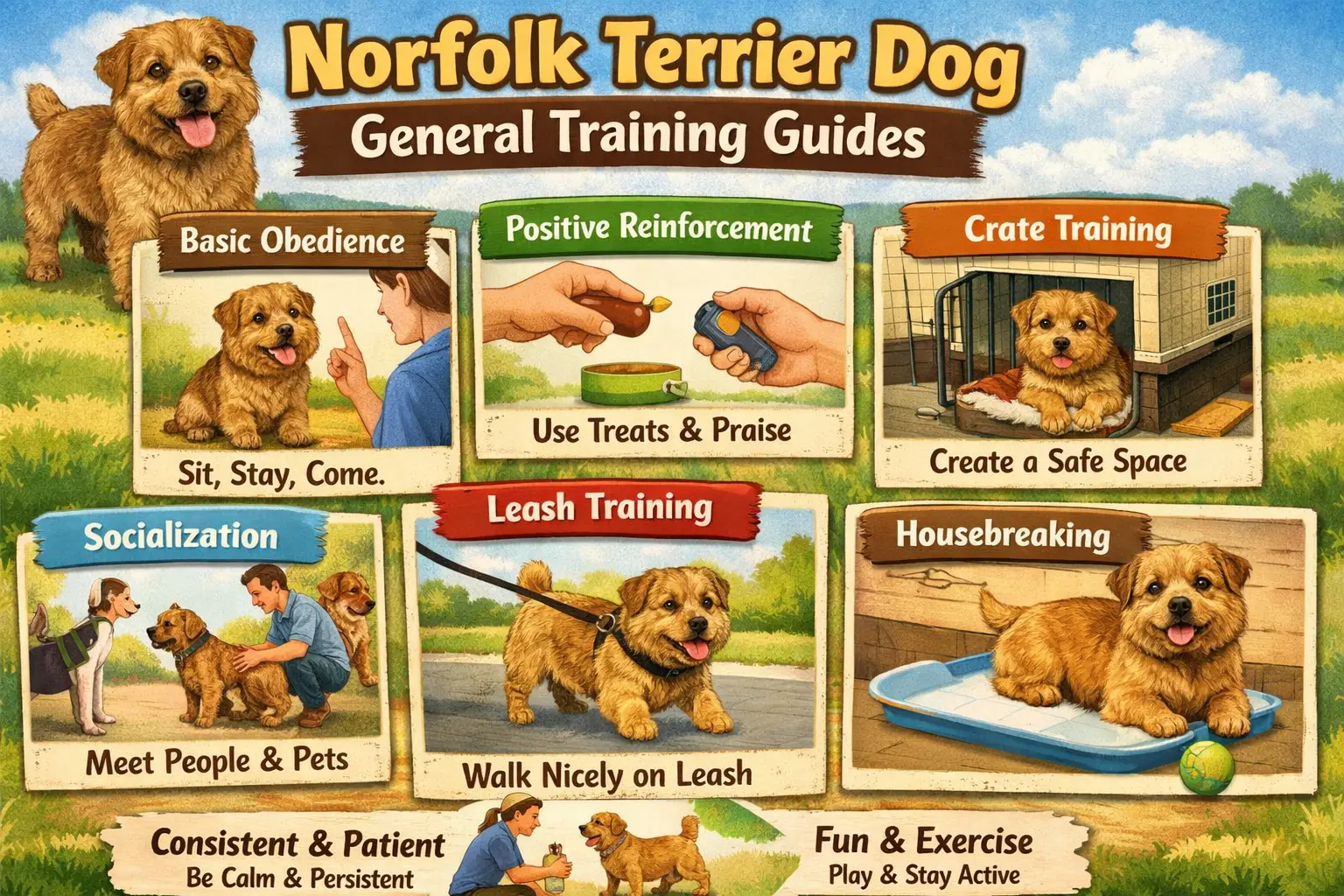
Norfolk Terrier obedience training should begin with simple commands that improve safety and everyday control. Start indoors where distractions are low, then practice in the yard, on walks, and around mild distractions.
Command Training Quick Reference
| Command | How to Teach It | Why It Matters | Typical Practice Time |
|---|---|---|---|
| Sit | Hold a treat above the nose, move it slightly back, say “sit,” then reward | Builds focus and calm control | 1–2 weeks |
| Stay | Ask for sit, say “stay,” pause briefly, then reward before increasing distance | Helps with patience and impulse control | 2–3 weeks |
| Come | Use a happy voice, crouch down, say “come,” and reward immediately | Essential for safety and recall | 2–4 weeks |
| Leave It | Cover a treat, say “leave it,” then reward when your dog looks away | Helps prevent chasing, stealing, and unsafe eating | 2–3 weeks |
| Quiet | Wait for a pause in barking, say “quiet,” then reward the silence | Helps reduce excessive barking | 2–4 weeks |
| Heel / Walk Nice | Reward your dog for staying near your side without pulling | Improves leash manners | 2–5 weeks |
Norfolk Terrier Recall Training
Recall training is one of the most important skills for a Norfolk Terrier because this breed can be tempted to chase small animals or follow interesting scents. A strong recall can help keep your dog safer, especially outdoors.
Start recall training inside your home. Say your dog’s name, use the cue “come,” and reward immediately when they move toward you. Once your dog responds reliably indoors, practice in a fenced yard or quiet outdoor area using a long leash.
Recall training tips:
- Use high-value treats that your dog does not get all the time.
- Never punish your dog after they come to you.
- Practice before your dog is highly distracted.
- Use a long leash outdoors until recall is reliable.
- Reward quickly so your dog connects the command with the behavior.
- Do not use “come” repeatedly if your dog is not ready to respond.
Norfolk Terrier Leash Training
Leash training helps your Norfolk Terrier walk calmly without pulling, lunging, or chasing. Because this breed is alert and curious, walks can quickly become overstimulating if leash manners are not practiced.
Begin leash training indoors or in a quiet yard. Reward your dog for walking beside you, checking in with you, and keeping the leash loose. If your dog pulls, stop walking. Continue only when the leash relaxes.
Loose-leash walking steps:
- Start in a low-distraction area.
- Hold treats near your side to encourage position.
- Reward your dog when the leash is loose.
- Stop moving when your dog pulls.
- Change direction if your dog becomes too focused on something ahead.
- Practice short walks before expecting long, calm walks.
How to Stop Norfolk Terrier Barking
Barking is common in Norfolk Terriers because they are alert and responsive to sounds, visitors, animals, and movement. The goal is not to stop all barking. The goal is to teach your dog when to settle and how to respond calmly after alerting you.
First, identify the trigger. Your dog may bark because of boredom, excitement, fear, window watching, door sounds, or lack of exercise. Once you know the cause, you can choose the right training response.
Barking training plan:
- Block window access if outside movement causes repeated barking.
- Teach a “quiet” cue by rewarding silence after a bark pause.
- Reward calm behavior before barking starts.
- Give more exercise and mental stimulation if barking comes from boredom.
- Use short training sessions around doorbells, knocks, or visitor sounds.
- Avoid yelling, because it may make your dog think you are barking too.
Norfolk Terrier Potty Training Basics
Norfolk Terrier potty training works best with a predictable routine. Puppies need frequent potty breaks, while adult dogs may need retraining if they have developed indoor accidents or inconsistent habits.
Take your Norfolk Terrier outside after waking up, after meals, after play, after naps, and before bedtime. Choose one potty area and reward immediately after your dog finishes outside. Do not wait until you are back indoors to reward, because the timing matters.
Potty training basics:
- Use a consistent potty schedule.
- Take puppies out frequently during the day.
- Reward immediately after outdoor potty success.
- Clean indoor accidents thoroughly to remove scent.
- Supervise closely indoors until habits improve.
- Use a crate or safe space when you cannot supervise.
Sample Norfolk Terrier Training Schedule
A simple weekly schedule helps your Norfolk Terrier learn faster because it creates repetition without making training overwhelming. Rotate obedience, leash work, recall, socialization, and behavior practice throughout the week.
Weekly Training Schedule
| Day | Puppy Focus | Adult Focus | Main Goal |
|---|---|---|---|
| Monday | 5 minutes: sit, name, come | 10 minutes: sit, stay, come | Build obedience basics |
| Tuesday | 5 minutes: leash introduction | 10 minutes: loose-leash walking | Improve walking manners |
| Wednesday | 5 minutes: recall games | 10 minutes: long-leash recall | Strengthen come command |
| Thursday | 5 minutes: handling and socialization | 10 minutes: calm greetings | Improve confidence |
| Friday | 5 minutes: leave it | 10 minutes: leave it and quiet | Build impulse control |
| Saturday | 5–10 minutes: review weak skills | 10–15 minutes: review weak skills | Fix problem areas |
| Sunday | Short walk and calm play | Walk, play, and calm settling | Reinforce real-life behavior |
Common Norfolk Terrier Training Problems and Fixes
Even with consistent training, Norfolk Terriers can develop behavior problems if they are bored, under-exercised, overstimulated, or allowed to repeat unwanted habits. Most issues improve when you combine clear rules, daily practice, rewards, and enough physical and mental activity.
Common Problems & Fixes
| Problem | Likely Cause | Training Fix | When to Get Help |
|---|---|---|---|
| Excessive Barking | Alertness, boredom, excitement, or anxiety | Teach “quiet,” reward calm behavior, reduce triggers, and increase exercise | If barking is constant, anxious, or aggressive |
| Digging | Boredom, energy, prey drive, or habit | Redirect to toys, increase activity, and provide a safe digging area | If digging becomes destructive or obsessive |
| Nipping / Puppy Biting | Teething, excitement, or attention-seeking | Redirect to chew toys and reward gentle play | If biting becomes intense or aggressive |
| Ignoring Commands | Distractions, weak rewards, or inconsistent training | Practice in easier settings and use higher-value rewards | If poor response creates safety risks |
| Leash Pulling | Excitement, curiosity, or lack of leash practice | Stop when pulling starts and reward loose-leash walking | If pulling causes choking, lunging, or reactivity |
| Poor Recall | Prey drive, distractions, or weak reinforcement | Use long-leash recall practice and reward heavily | If your dog cannot safely return when called |
| Fear or Anxiety | Poor socialization, stress, or past negative experiences | Use gradual exposure, calm routines, and positive reinforcement | If fear leads to aggression, hiding, or panic |
When to Seek Professional Training Help
Many Norfolk Terrier training problems can improve at home, but some situations need professional support. If your dog shows aggression, extreme fear, severe anxiety, repeated biting, intense leash reactivity, or unsafe recall problems, it is better to get help from a qualified trainer or veterinarian.
Professional support is also useful if you feel stuck, overwhelmed, or unsure how to correct a behavior without making it worse. A good trainer can help you build a plan that fits your dog’s age, temperament, and environment.
To understand your dog’s current life stage, use the Norfolk Terrier Dog Age Calculator.
Norfolk Terrier Training FAQs
Are Norfolk Terriers easy to train?
Norfolk Terriers are smart and can learn quickly, but they are also independent. They are easiest to train when sessions are short, rewards are valuable, and rules are consistent.
How do you train a Norfolk Terrier puppy?
Start with name recognition, sit, come, potty routine, crate comfort, gentle handling, and short leash practice. Keep sessions around 5 minutes and reward good behavior immediately.
How do I stop my Norfolk Terrier from barking so much?
Find the trigger first, then reward quiet behavior, reduce repeated barking triggers, teach a “quiet” cue, and provide enough exercise and mental stimulation.
Why does my Norfolk Terrier ignore commands?
A Norfolk Terrier may ignore commands because the distraction is too strong, the reward is not motivating enough, or the command has not been practiced in enough situations. Go back to easier training settings and rebuild the behavior step by step.
How long should Norfolk Terrier training sessions be?
Puppies usually do best with 5-minute sessions. Adult Norfolk Terriers can usually handle 10–15 minutes. Short, frequent sessions are more effective than long sessions.
Can an adult Norfolk Terrier still be trained?
Yes. Adult Norfolk Terriers can learn new behaviors with consistency, patience, and positive reinforcement. Older habits may take longer to change, but improvement is possible.

Ata Ur Rehman is the founder of Pet Age in Human Years Calculator, an educational platform that provides age conversion charts and lifespan guides for dogs, cats, birds, and other companion animals. His work focuses on helping pet owners understand how animal ages translate into human years using commonly accepted age conversion formulas and published lifespan averages.
The website compiles breed and species lifespan data from kennel clubs, breed organizations, and general animal lifespan studies to present simple and easy-to-understand guides for pet owners worldwide.
This website was created to centralize animal age conversion charts into one easy reference platform for pet owners.
This article is for general education. For symptoms, medication, diet changes, or health concerns, use a qualified veterinarian who can assess your individual pet.