On this page
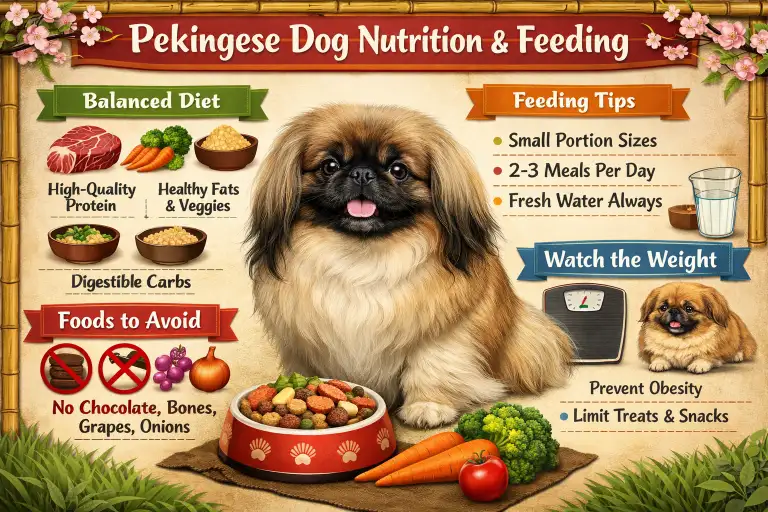
Pekingese dogs may be small in size, but their dietary needs require careful attention. A proper Pekingese diet should provide balanced nutrition, controlled calories, and highly digestible ingredients that support long-term health without contributing to unnecessary weight gain. Because this breed has a compact body, a brachycephalic (flat-faced) structure, and relatively low exercise requirements, feeding mistakes can have a greater impact than they do in many other breeds.
Nutrition plays a major role in a Pekingese dog’s lifespan, mobility, coat condition, digestive health, dental health, and overall quality of life. Even small amounts of excess food can gradually lead to obesity, which may increase stress on the joints, worsen breathing difficulties, and reduce daily comfort. Maintaining a healthy body condition is one of the most important aspects of responsible Pekingese care.
Pekingese dogs also have several breed-specific feeding considerations. Their short muzzle can make large kibble difficult to chew, while their dense double coat benefits from adequate protein and healthy fats. Because many Pekingese are selective eaters, owners sometimes rely too heavily on treats or table scraps, which can quickly disrupt a balanced feeding routine.
A healthy Pekingese feeding plan should focus on:
- Providing balanced nutrition without excess calories
- Supporting healthy weight management and body condition
- Using high-quality protein sources to maintain muscle mass
- Including healthy fats that support skin and coat health
- Choosing easily digestible ingredients that support gut health
- Selecting food sizes and textures suitable for flat-faced breeds
Whether you are feeding a Pekingese puppy, adult, or senior dog, nutritional requirements change throughout life. Understanding what to feed, how much to feed, and which foods are most appropriate can help prevent common health issues while supporting healthy aging. This Pekingese feeding guide explains the nutritional needs, food choices, feeding schedules, and portion recommendations that help this breed thrive.
What to Feed a Pekingese: Nutritional Needs and Best Food Choices
Choosing the best food for a Pekingese is not about following trends or purchasing the most expensive product. The goal is to provide a balanced diet that delivers the nutrients this breed needs while helping maintain a healthy weight. Because Pekingese dogs consume relatively small portions, every ingredient should contribute meaningful nutritional value.
A high-quality Pekingese diet should be nutrient-dense, moderately calorie-controlled, and formulated for small breeds. Foods that provide quality protein, appropriate fat levels, digestible carbohydrates, fiber, vitamins, and minerals help support energy levels, immune function, skin health, and healthy aging.
How Much and How Often to Feed a Pekingese
One of the most common questions owners ask is how much should a Pekingese eat. While choosing quality food is important, feeding the correct amount is equally critical. Pekingese dogs are naturally small, relatively low-energy, and highly prone to weight gain, which means portion control should always be part of a healthy feeding routine.
A healthy Pekingese diet should provide enough calories to maintain an ideal body condition without encouraging obesity. Overfeeding can place additional strain on the joints, heart, and respiratory system, while underfeeding may lead to nutrient deficiencies and muscle loss.
Pekingese calorie needs by weight and activity level
The calorie ranges above include meals, treats, snacks, and any human foods given throughout the day. Activity level, age, metabolism, and health conditions may increase or decrease an individual dog’s requirements.
Pekingese feeding chart (general guideline)
- 7–9 lb Pekingese: approximately ¼–⅓ cup of dry food daily
- 10–12 lb Pekingese: approximately ⅓–½ cup of dry food daily
- 13–14 lb Pekingese: approximately ½ cup of dry food daily
Always adjust portions based on your dog’s body condition rather than relying solely on package recommendations.
Understanding what Pekingese can eat is an important part of maintaining a healthy diet. While high-quality dog food should provide most of their nutrition, certain human foods can be offered safely in moderation. Others should never be fed because they may cause digestive upset, toxicity, or serious health complications.
Many owners also ask what human food can Pekingese eat. Safe options include small amounts of cooked chicken, turkey, eggs, pumpkin, carrots, apples without seeds, and plain rice. These foods should be occasional treats and should never replace a complete and balanced dog food.
Some Pekingese dogs require dietary adjustments based on age, weight, activity level, or health conditions. Puppies, adults, and senior dogs all have different nutritional requirements, and understanding these differences can help prevent obesity, digestive issues, and age-related health problems.
Frequently Asked Questions About Pekingese Diet and Feeding
What is the best diet for a Pekingese?
A healthy Pekingese diet should include high-quality protein, moderate fat levels, digestible carbohydrates, fiber, vitamins, and minerals. Because Pekingese dogs are prone to weight gain, calorie control is just as important as ingredient quality.
How much should a Pekingese eat per day?
Most adult Pekingese dogs need approximately 200 to 400 calories per day depending on their weight, age, activity level, and overall health. Portion sizes should be adjusted based on body condition rather than feeding guidelines alone.
What is the best dog food for a Pekingese?
The best dog food for a Pekingese is a complete and balanced formula designed for small breeds. Look for named animal proteins, moderate fat content, digestible ingredients, and an AAFCO nutritional adequacy statement.
Can Pekingese eat human food?
Some human foods are safe in small amounts, including cooked chicken, turkey, eggs, pumpkin, carrots, plain rice, and apples without seeds. Human foods should only be occasional treats and should never replace a balanced dog food.
How often should a Pekingese be fed?
Most adult Pekingese dogs do best with two meals per day. Puppies typically require three to four meals daily, while senior dogs often benefit from two smaller meals that are easier to digest.
What foods should Pekingese avoid?
Pekingese should never eat chocolate, grapes, raisins, onions, garlic, xylitol, alcohol, cooked bones, or fatty table scraps. These foods can cause serious health problems and may be toxic.
How much should a Pekingese puppy eat?
Pekingese puppies need multiple small meals throughout the day to support healthy growth. The exact amount depends on age, weight, and the calorie density of the food being fed.
Are Pekingese prone to obesity?
Yes. Pekingese dogs are one of the breeds most prone to weight gain because of their small size and relatively low activity levels. Careful portion control and limited treats are important for maintaining a healthy weight.
What treats are best for a Pekingese?
Small, low-calorie treats are best for Pekingese dogs. Treats should make up no more than 10% of total daily calorie intake and should be broken into small pieces whenever possible.
Do senior Pekingese need a different diet?
Yes. Senior Pekingese often benefit from fewer calories, easily digestible ingredients, omega-3 fatty acids for joint support, and food textures that are easier to chew if dental issues develop.

Ata Ur Rehman is the founder of Pet Age in Human Years Calculator, an educational platform that provides age conversion charts and lifespan guides for dogs, cats, birds, and other companion animals. His work focuses on helping pet owners understand how animal ages translate into human years using commonly accepted age conversion formulas and published lifespan averages.
The website compiles breed and species lifespan data from kennel clubs, breed organizations, and general animal lifespan studies to present simple and easy-to-understand guides for pet owners worldwide.
This website was created to centralize animal age conversion charts into one easy reference platform for pet owners.
This article is for general education. For symptoms, medication, diet changes, or health concerns, use a qualified veterinarian who can assess your individual pet.