On this page
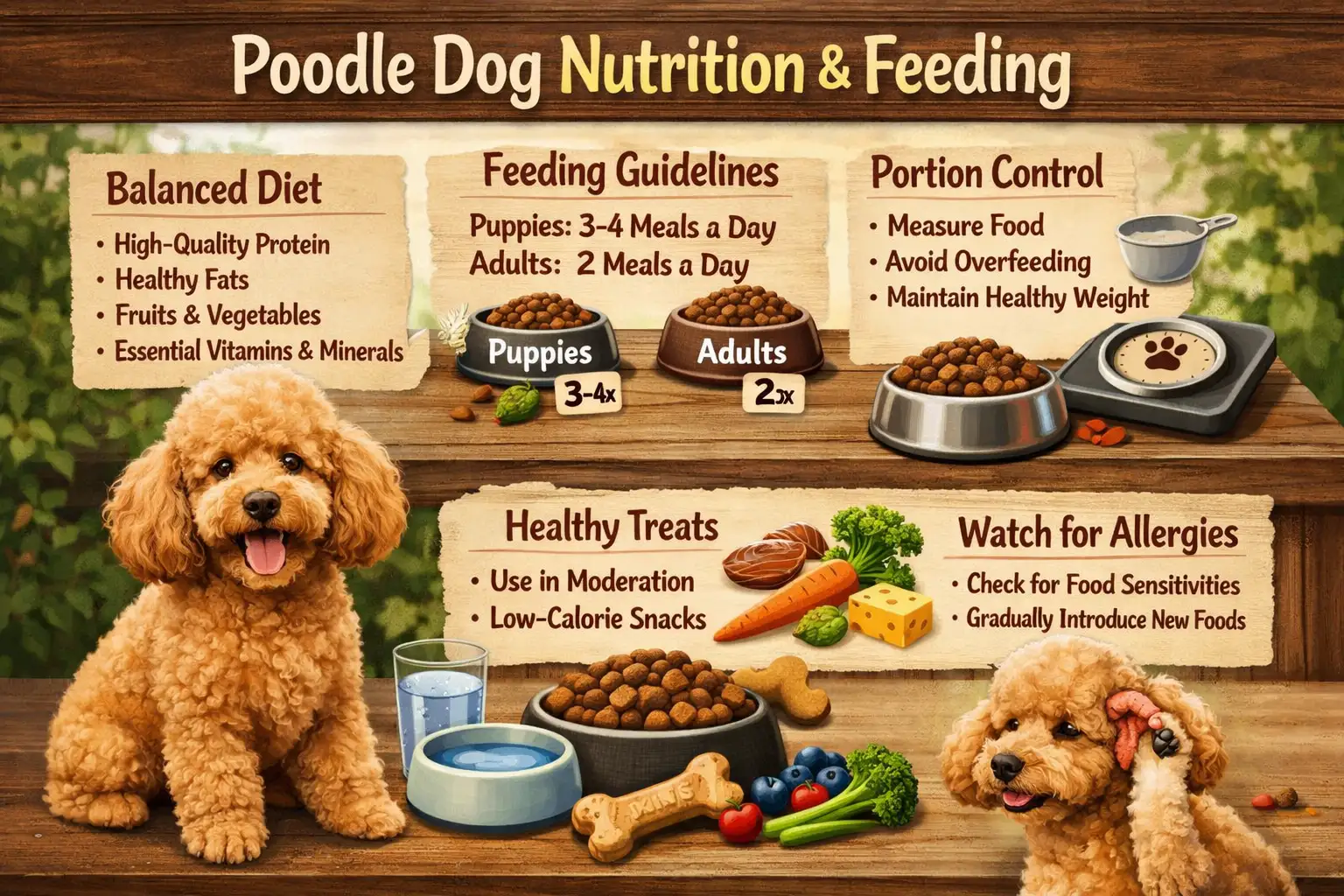
Using the right Poodle feeding chart can help you determine how much food your dog needs based on age, weight, size, and activity level. Feeding the correct portions supports healthy growth, maintains ideal body condition, and helps prevent common issues such as obesity, digestive upset, and low energy.
This guide covers feeding recommendations for Toy Poodles, Miniature Poodles, and Standard Poodles. You’ll learn how much a Poodle should eat, daily calorie needs, feeding schedules by age, important nutrients, and the best food choices for long-term health.
While every dog is different, the feeding charts and nutrition guidelines below provide a practical starting point that can be adjusted based on your Poodle’s weight, activity level, and life stage.
Why Poodles Need the Right Diet
- Poodles often have sensitive digestion and skin
- Smaller Poodles have faster metabolisms and may require more frequent meals
- Their curly coat relies on quality protein and healthy fats
- Overfeeding can quickly lead to unhealthy weight gain
- Underfeeding may result in low energy and poor body condition
Even small feeding mistakes can lead to itching, digestive problems, inconsistent energy levels, or unwanted weight changes. Following an appropriate feeding schedule and portion size is one of the most important parts of Poodle care.
Poodle Sizes and Feeding Differences
Poodles come in three recognized sizes. Each size has different calorie requirements, feeding schedules, and nutritional considerations.
| Poodle Size | Typical Weight | Feeding Considerations | Common Nutrition Concerns |
|---|---|---|---|
| Toy Poodle | 4-6 lbs (2-3 kg) | Small portions, more frequent meals | Low blood sugar, picky eating |
| Miniature Poodle | 10-15 lbs (4.5-7 kg) | Balanced portions and consistent schedule | Sensitive stomach, allergies |
| Standard Poodle | 40-70 lbs (18-32 kg) | Careful calorie control and weight management | Joint stress, excess weight gain |
Toy Poodles often need smaller meals throughout the day, while Standard Poodles usually benefit from structured portion control. Understanding these differences helps you choose the right feeding approach for your dog’s size and lifestyle.
What This Means for Feeding
- One feeding plan does not work for every Poodle
- Portion sizes should be adjusted based on age, weight, and activity level
- Quality ingredients matter more than feeding larger amounts
- Daily calorie needs vary significantly between Toy, Miniature, and Standard Poodles
- Regular monitoring helps maintain an ideal body condition
Before looking at feeding charts and calorie recommendations, it helps to understand the nutrients that support healthy growth, energy levels, digestion, skin health, and coat quality.
What Nutrients Poodles Need for Optimal Health
Safe Foods and Foods to Avoid
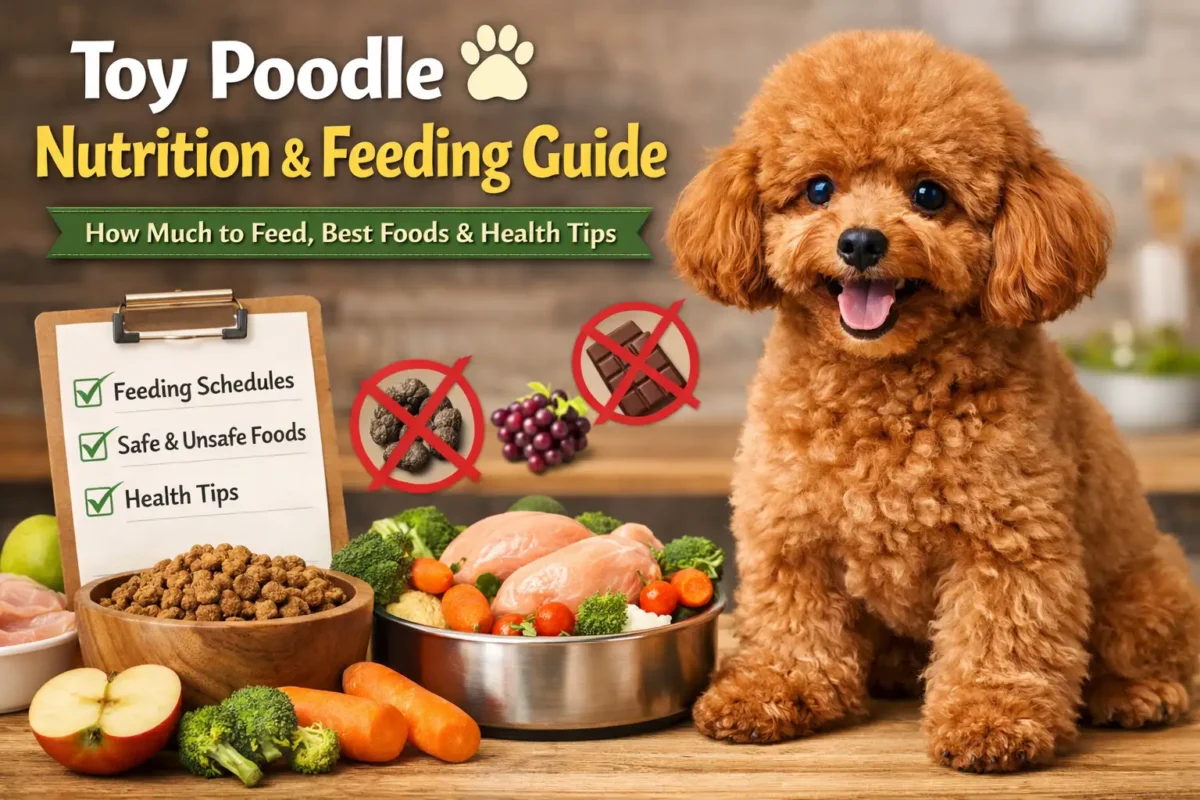
Many owners like to supplement their Poodle’s diet with healthy human foods. While some foods can be offered safely in moderation, others should never be fed because they can be toxic or cause serious health problems.
| Safe Foods (Small Amounts) | Foods to Avoid |
|---|---|
| Cooked chicken | Chocolate |
| Plain rice | Grapes and raisins |
| Carrots | Onions and garlic |
| Apples (without seeds) | Xylitol (artificial sweetener) |
| Plain pumpkin | Alcohol |
Even healthy foods should only be given as occasional treats. Large amounts can affect your Poodle’s calorie intake and make portion control more difficult.
Avoid feeding spicy, heavily salted, fried, or sugary foods, as these can contribute to digestive problems and unnecessary weight gain.
Treat and Water Tips
- Treats should make up less than 10% of daily calories
- Use small training treats whenever possible
- Adjust meal portions if treats are given frequently
- Always provide access to fresh, clean water
- Poodles eating dry food may require additional water intake throughout the day
Choosing high-quality food and managing treats carefully helps maintain a healthy weight and supports long-term health.
Special Diets, Common Feeding Problems, and Practical Feeding Tips
Not every Poodle has the same nutritional needs. Age, activity level, allergies, weight, and medical conditions can all affect feeding requirements. Understanding common feeding challenges can help you make better dietary decisions.
Special Diets for Poodles
Some Poodles benefit from specialized feeding plans based on their health status and lifestyle.
| Condition | Diet Focus | What to Avoid |
|---|---|---|
| Food allergies | Limited ingredients, single protein source | Multiple proteins, unnecessary fillers |
| Sensitive stomach | Easy-to-digest foods | Rapid food changes |
| Overweight Poodles | Controlled calories, increased fiber | Free feeding, excessive treats |
| Senior Poodles | Moderate protein, joint-supporting nutrients | Very high-fat foods |
| Highly active Poodles | Higher calorie intake | Low-energy feeding plans |
Whenever you change your Poodle’s diet, transition gradually to reduce the risk of digestive upset.
Common Feeding Problems and Solutions
| Problem | Likely Cause | Simple Solution |
|---|---|---|
| Poodle refuses food | Too many treats, stress, inconsistent schedule | Reduce treats and establish routine meal times |
| Loose stool | Sudden food change | Transition food more gradually |
| Weight gain | Overfeeding or excess treats | Measure portions and review calorie intake |
| Constant hunger | Boredom, low-fiber diet | Increase activity and discuss diet adjustments |
| Gas or digestive discomfort | Food sensitivity | Use simpler ingredients and monitor reactions |
If your Poodle is gaining weight despite following a feeding chart, review treat intake, activity levels, and overall calorie consumption before increasing or decreasing food amounts.
Safe Food Switching Tips
- Transition to new food over 7-10 days
- Gradually increase the amount of new food
- Monitor stool quality and appetite
- Slow the transition if digestive issues appear
- Avoid switching multiple foods at the same time
When to Consult a Veterinarian
- Unexplained weight loss or weight gain
- Persistent vomiting or diarrhea
- Severe itching or recurring skin problems
- Sudden loss of appetite
- Long-term digestive issues
Most feeding issues can be corrected with consistent routines, proper portion control, and high-quality nutrition. Monitoring your Poodle’s weight and body condition regularly helps ensure that feeding recommendations remain appropriate throughout life.
More Poodle Resources
Use these related Poodle resources for topics that are covered in more detail on their dedicated pages:
- Poodle Dog Age Calculator
- Poodle Dog Breed Guide
- Poodle Training Guide
- Poodle Age Chart
- Poodle Grooming Guide
- Poodle Cost of Ownership Guide

Ata Ur Rehman is the founder of Pet Age in Human Years Calculator, an educational platform that provides age conversion charts and lifespan guides for dogs, cats, birds, and other companion animals. His work focuses on helping pet owners understand how animal ages translate into human years using commonly accepted age conversion formulas and published lifespan averages.
The website compiles breed and species lifespan data from kennel clubs, breed organizations, and general animal lifespan studies to present simple and easy-to-understand guides for pet owners worldwide.
This website was created to centralize animal age conversion charts into one easy reference platform for pet owners.
This article is for general education. For symptoms, medication, diet changes, or health concerns, use a qualified veterinarian who can assess your individual pet.