On this page
Portuguese Water Dogs are energetic, intelligent, medium-to-large working dogs originally bred for water retrieval and active companionship. Because of their athletic build and high activity levels, proper nutrition plays a major role in maintaining energy, muscle development, coat quality, joint health, digestion, and long-term wellness.
Whether you own a Portuguese Water Dog puppy, an active adult, or a senior companion, feeding the right diet can improve daily performance, support healthy aging, and reduce the risk of obesity and nutrition-related health problems.
Why Nutrition Matters for Portuguese Water Dogs
The Portuguese Water Dog breed has several characteristics that influence its dietary needs:
- High energy levels and exceptional stamina.
- Strong, muscular bodies requiring quality protein sources.
- Dense curly or wavy coats that benefit from healthy fats and omega fatty acids.
- A tendency to gain weight when calorie intake exceeds exercise levels.
- Active lifestyles that require balanced nutrition for recovery and endurance.
Signs of Poor Nutrition in Portuguese Water Dogs
An unbalanced diet or improper feeding routine can lead to several health concerns, including:
- Constant hunger or food obsession.
- Unexpected weight gain.
- Dull coat and flaky skin.
- Digestive problems and inconsistent stools.
- Reduced stamina during exercise.
- Slow recovery after physical activity.
Benefits of a High-Quality Portuguese Water Dog Diet
- Steady energy throughout the day.
- Healthy lean muscle maintenance.
- Improved coat shine and skin health.
- Better joint support and mobility.
- Easier weight management.
- Improved immune function and overall wellbeing.
Because every Portuguese Water Dog has a different activity level, calorie intake and portion sizes should always match the dog’s lifestyle.
Best Diet for a Portuguese Water Dog
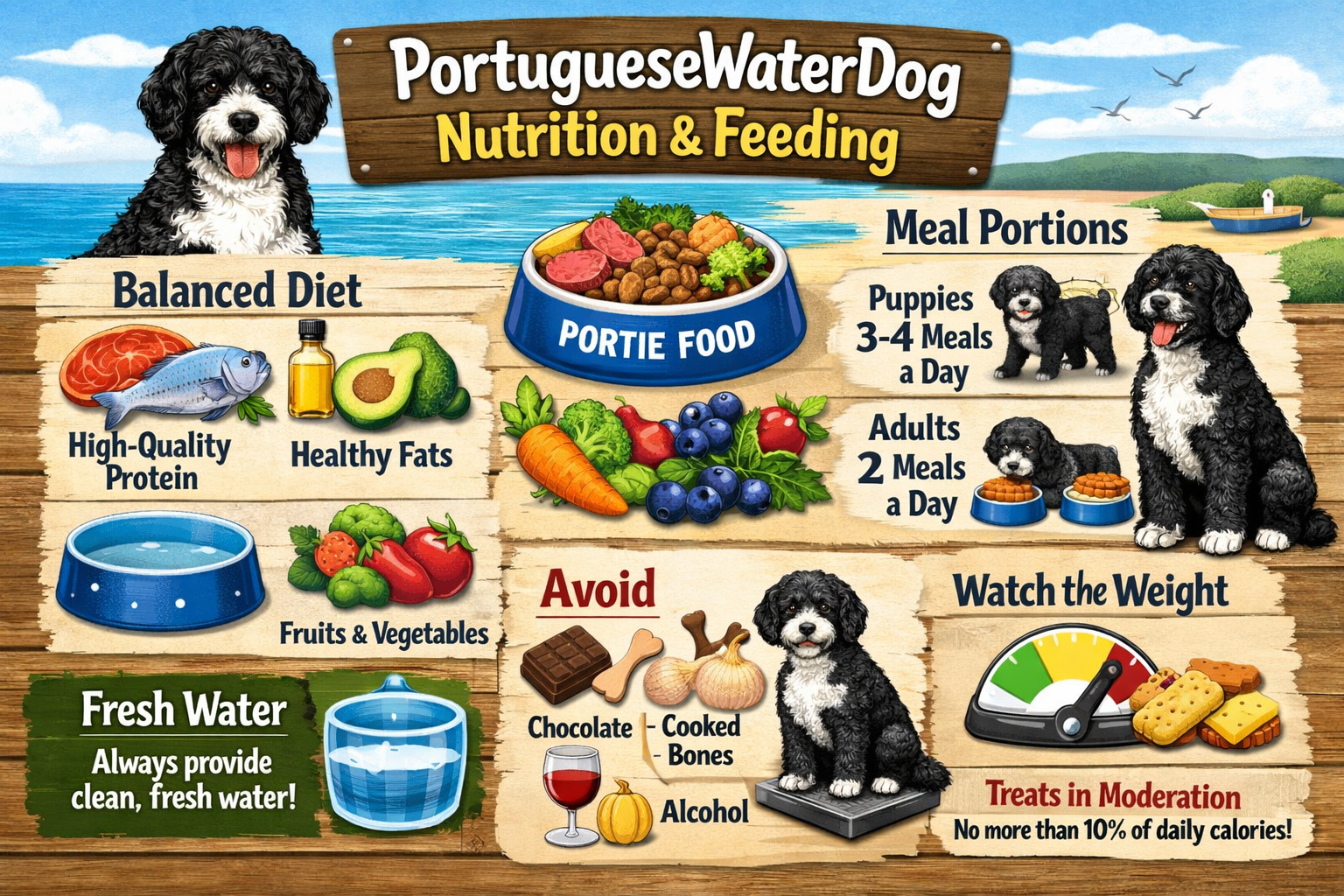
The best food for a Portuguese Water Dog should contain a balanced combination of protein, fats, carbohydrates, vitamins, and minerals.
Protein Requirements
Protein is the most important nutrient for maintaining muscle mass and supporting an active lifestyle. Look for dog foods that list real animal protein such as chicken, salmon, turkey, lamb, or beef as the first ingredient.
Healthy Fats
Fat provides concentrated energy while supporting skin health, coat quality, and brain function. Omega-3 fatty acids from fish oil are especially beneficial for Portuguese Water Dogs.
Carbohydrates
Moderate amounts of digestible carbohydrates provide steady energy and support digestive health without unnecessary calorie overload.
Vitamins and Minerals
Essential nutrients support immune health, bone development, joint function, and overall wellness throughout every life stage.
| Nutrient | Recommended Range | Primary Benefit |
|---|---|---|
| Protein | 22% – 30% | Muscle growth and maintenance |
| Fat | 12% – 18% | Energy production and coat health |
| Carbohydrates | Moderate levels | Digestion and sustained energy |
| Omega-3 Fatty Acids | Included regularly | Joint, skin, and coat support |
Grain-free diets are not necessary for most Portuguese Water Dogs unless recommended by a veterinarian for allergies or sensitivities.
How Much Should You Feed a Portuguese Water Dog?
The ideal amount of food depends on body weight, age, activity level, metabolism, and overall health condition.
| Dog Weight | Low Activity | Moderate Activity | High Activity |
|---|---|---|---|
| 35 lbs | 800 calories | 950 calories | 1,100 calories |
| 45 lbs | 950 calories | 1,100 calories | 1,300 calories |
| 55 lbs | 1,100 calories | 1,300 calories | 1,550 calories |
| 60 lbs | 1,200 calories | 1,400 calories | 1,650 calories |
Portuguese Water Dog Feeding Schedule
| Life Stage | Meals Per Day | Feeding Notes |
|---|---|---|
| Puppies (Under 12 Months) | 3-4 meals | Supports rapid growth and stable energy levels. |
| Adults | 2 meals | Promotes healthy digestion and weight control. |
| Seniors | 2 smaller meals | Supports digestion and reduced calorie needs. |
A healthy Portuguese Water Dog should have a visible waistline and ribs that can be felt easily without excess body fat covering them.
Avoid free-feeding whenever possible, as this breed can become overweight if given unrestricted access to food.
Best Dog Food Types for Portuguese Water Dogs
Portuguese Water Dogs can thrive on several types of diets when properly balanced and nutritionally complete.
| Food Type | Advantages | Disadvantages | Best For |
|---|---|---|---|
| Dry Kibble | Affordable, convenient, nutritionally balanced | Lower moisture content | Most households |
| Fresh Food | Highly digestible with increased moisture | Higher monthly cost | Dogs with sensitive stomachs |
| Raw Diet | High protein and minimal processing | Requires careful balancing and food safety | Experienced owners |
| Canned Food | Highly palatable and easy to chew | More expensive and calorie dense | Picky eaters and seniors |
| Freeze-Dried Food | Convenient with long shelf life | Premium price point | Travel or food rotation |
| Homemade Diet | Full ingredient control | Difficult to balance correctly | Veterinary-supervised feeding plans |
Safe Foods and Toxic Foods for Portuguese Water Dogs
| Safe Foods | Toxic Foods |
|---|---|
| Cooked chicken | Chocolate |
| Plain rice | Grapes and raisins |
| Carrots | Onions and garlic |
| Apples without seeds | Xylitol sweetener |
| Plain pumpkin | Alcohol |
| Cooked eggs | Cooked bones |
Treats should account for no more than 10% of your Portuguese Water Dog’s daily calorie intake.
Common Feeding Problems in Portuguese Water Dogs
Some Portuguese Water Dogs require dietary adjustments due to allergies, age, activity changes, or medical conditions.
- Food allergies: Symptoms may include itchy skin, ear infections, digestive upset, or excessive scratching.
- Weight gain: Neutered and senior dogs often require fewer calories than active adults.
- Constant hunger: Food-seeking behavior is frequently caused by boredom rather than genuine hunger.
- Digestive sensitivity: Rapid food changes often result in diarrhea or loose stools.
| Problem | Possible Cause | Recommended Solution |
|---|---|---|
| Picky eating | Too many treats or inconsistent feeding | Use scheduled meals and reduce snacks |
| Always hungry | Boredom or insufficient activity | Increase exercise and use measured portions |
| Weight gain | Excess calories | Reduce portions and choose lower-calorie treats |
| Loose stool | Rapid diet changes | Transition foods over 7 to 10 days |
| Loss of appetite | Stress or illness | Monitor closely and contact a veterinarian |
When Should You Contact a Veterinarian?
Seek veterinary advice if your Portuguese Water Dog experiences persistent vomiting, diarrhea, rapid weight loss, chronic itching, appetite changes, or ongoing digestive problems.
Whenever changing foods, transition gradually over one to two weeks to reduce the risk of stomach upset and digestive discomfort.
Frequently Asked Questions About Feeding Portuguese Water Dogs
What is the best food for a Portuguese Water Dog?
The best food contains high-quality animal protein, healthy fats, omega-3 fatty acids, and balanced vitamins and minerals appropriate for the dog’s life stage and activity level.
How many times per day should a Portuguese Water Dog eat?
Adult Portuguese Water Dogs typically do best with two meals daily, while puppies often require three to four meals.
Are Portuguese Water Dogs prone to obesity?
Yes. Despite their athletic nature, Portuguese Water Dogs can gain weight quickly if overfed or under-exercised.
Can Portuguese Water Dogs eat grain-free diets?
Yes, but grain-free food is only necessary when recommended by a veterinarian due to allergies or sensitivities.
What protein is best for Portuguese Water Dogs?
Chicken, salmon, turkey, lamb, and beef are excellent protein choices for supporting muscle health and energy levels.
How long should I transition to a new dog food?
Most veterinarians recommend a gradual transition over seven to fourteen days to minimize digestive upset.

Ata Ur Rehman is the founder of Pet Age in Human Years Calculator, an educational platform that provides age conversion charts and lifespan guides for dogs, cats, birds, and other companion animals. His work focuses on helping pet owners understand how animal ages translate into human years using commonly accepted age conversion formulas and published lifespan averages.
The website compiles breed and species lifespan data from kennel clubs, breed organizations, and general animal lifespan studies to present simple and easy-to-understand guides for pet owners worldwide.
This website was created to centralize animal age conversion charts into one easy reference platform for pet owners.
This article is for general education. For symptoms, medication, diet changes, or health concerns, use a qualified veterinarian who can assess your individual pet.