On this page
Potty training is much easier when you follow a schedule that matches your puppy’s age. Young puppies have limited bladder control, which means taking them outside at the right times is often more important than any training technique.
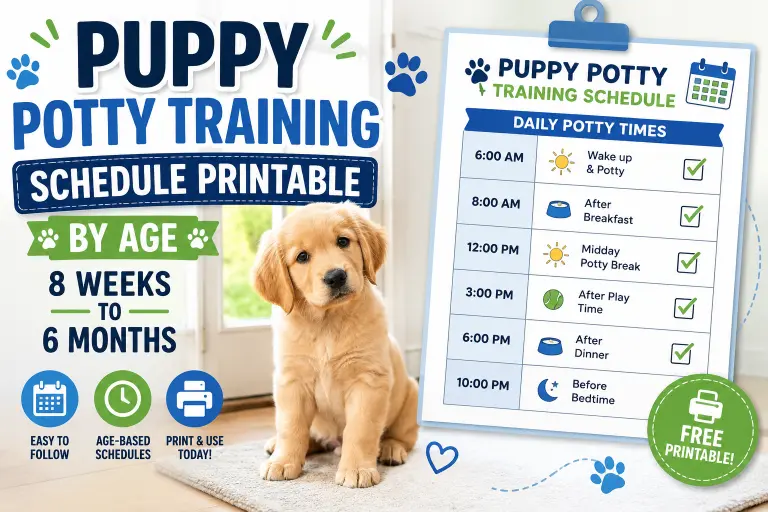
This puppy potty training schedule printable gives you age-based potty times you can follow throughout the day. Use the schedule as a starting point, then adjust slightly based on your puppy’s breed, size, activity level, and progress.
The goal is simple: create enough opportunities for your puppy to succeed so accidents become less frequent and good habits develop faster.
Puppy Potty Training Schedule Printable by Age
The schedules below are designed for healthy puppies that are actively being house trained. Remember that puppies should always go outside after waking up, after meals, after play sessions, and before bedtime—even if those times fall outside the schedule.
8–10 Weeks Old Puppy Potty Schedule Chart
At this age, puppies typically need to go outside every 60–90 minutes while awake.
| Time | Potty Break |
|---|---|
| 6:00 AM | Wake up and potty |
| 7:00 AM | After breakfast |
| 8:00 AM | Potty break |
| 9:30 AM | Potty break |
| 11:00 AM | Potty break |
| 12:00 PM | After lunch |
| 1:00 PM | Potty break |
| 2:30 PM | Potty break |
| 4:00 PM | Potty break |
| 5:00 PM | After dinner |
| 6:30 PM | Potty break |
| 8:00 PM | Potty break |
| 9:30 PM | Final potty before bed |
Nighttime potty trips are usually still necessary at this age. Many puppies need one or two overnight bathroom breaks.
11–12 Weeks Old Puppy Potty Schedule Chart
Most puppies can begin holding their bladder slightly longer, usually around 2 hours during the day.
| Time | Potty Break |
|---|---|
| 6:00 AM | Wake up and potty |
| 7:00 AM | After breakfast |
| 9:00 AM | Potty break |
| 11:00 AM | Potty break |
| 12:00 PM | After lunch |
| 2:00 PM | Potty break |
| 4:00 PM | Potty break |
| 5:00 PM | After dinner |
| 7:00 PM | Potty break |
| 9:30 PM | Final potty before bed |
Accidents may still happen occasionally, especially during playtime. If they do, shorten the time between potty breaks rather than assuming your puppy is not learning.
3–4 Months Old Puppy Potty Schedule Chart
By this stage, many puppies can handle 3–4 hours between bathroom trips during the day.
| Time | Potty Break |
|---|---|
| 6:30 AM | Wake up and potty |
| 7:00 AM | After breakfast |
| 10:00 AM | Potty break |
| 12:00 PM | After lunch |
| 3:00 PM | Potty break |
| 5:30 PM | After dinner |
| 8:00 PM | Potty break |
| 10:00 PM | Final potty before bed |
Continue taking your puppy outside immediately after naps and energetic play sessions. These situations often trigger the need to urinate even if the next scheduled potty break is not due yet.
5–6 Months Old Puppy Potty Schedule Chart
Most puppies can now stay comfortable for longer periods and follow a simpler routine.
| Time | Potty Break |
|---|---|
| 6:30 AM | Wake up and potty |
| 7:00 AM | After breakfast |
| 11:00 AM | Potty break |
| 1:00 PM | After lunch |
| 5:00 PM | After dinner |
| 8:00 PM | Potty break |
| 10:00 PM | Final potty before bed |
Many puppies at this age can sleep through the night without needing a bathroom break. However, individual puppies develop at different rates, so continue monitoring for signs that they need to go out sooner.
How to Use the Puppy Potty Training Schedule Printable
A potty schedule only works when it becomes part of your daily routine. The chart should be viewed as a guide, not a strict rule that replaces observation.
Start by printing the schedule that matches your puppy’s age. Keep it somewhere visible, such as on the refrigerator, near the crate, or in a family command center where everyone can follow the same routine.
When it’s time for a potty break:
- Take your puppy to the same potty area.
- Give them a few minutes to finish.
- Reward successful potty trips immediately with praise or a small treat.
- Return indoors after they have gone.
Consistency matters more than perfection. If your puppy has an accident, avoid punishment. Instead, ask yourself whether a potty opportunity was missed or whether the time between bathroom breaks was too long.
You should also build potty trips around key events, including:
- Waking up from sleep
- Finishing meals
- Drinking large amounts of water
- Ending a play session
- Leaving the crate
- Going to bed
Following both the schedule and these natural potty triggers will usually produce faster results than relying on fixed times alone.
Adjusting Potty Times as Your Puppy Gets Older
Your puppy’s potty schedule should evolve as their bladder control improves. Keeping the same schedule for months can lead to unnecessary trips outside, while extending intervals too quickly can increase accidents.
A good rule is to let your puppy’s success guide adjustments. If they consistently stay accident-free between scheduled potty breaks for one to two weeks, you can gradually increase the time between outings.
Here are general daytime potty intervals many puppies can handle:
| Puppy Age | Typical Potty Interval |
|---|---|
| 8–10 weeks | 1–1.5 hours |
| 11–12 weeks | 2 hours |
| 3–4 months | 3–4 hours |
| 5–6 months | 4–6 hours |
Keep in mind that these are averages, not guarantees. Small breeds often need more frequent potty breaks than larger breeds because they have smaller bladders.
Watch for signs that your puppy may be ready for longer intervals:
- Consistently staying dry between potty trips
- Going to the door when they need to go out
- Sleeping longer at night without accidents
- Fewer urgent bathroom needs during the day
On the other hand, return to shorter intervals if you notice:
- Frequent accidents indoors
- Restlessness before scheduled potty times
- Increased accidents after play sessions
- Difficulty holding it through the night
Making gradual changes helps maintain progress while giving your puppy time to develop reliable bladder control.
Printable Puppy Potty Schedule Templates
In addition to age-based schedules, many owners find it helpful to use tracking sheets during the house-training process. Tracking helps identify patterns and makes it easier to predict when your puppy needs to go outside.
Daily Puppy Potty Tracking Sheet
Use this simple template to record bathroom activity throughout the day.
| Time | Potty Attempt | Successful? | Notes |
|---|---|---|---|
Track entries for several days to spot trends. For example, you may discover your puppy consistently needs a bathroom break 20 minutes after breakfast or immediately after afternoon play sessions.
Weekly Potty Training Tracker
A weekly tracker helps monitor overall progress.
| Day | Accidents | Successful Potty Trips | Notes |
|---|---|---|---|
| Monday | |||
| Tuesday | |||
| Wednesday | |||
| Thursday | |||
| Friday | |||
| Saturday | |||
| Sunday |
This type of potty schedule chart can be especially useful when multiple family members share responsibility for training.
Blank Puppy Potty Schedule Template
If your puppy follows a unique routine, create a customized schedule.
| Time | Planned Potty Break |
|---|---|
| Morning | |
| Mid-Morning | |
| Lunch | |
| Afternoon | |
| Evening | |
| Before Bed |
The best printable schedule is the one that matches your puppy’s actual routine. Don’t hesitate to adjust times as your puppy grows and develops better bladder control.
What to Do If Your Puppy Is Still Having Accidents
Even with a well-planned puppy potty training schedule printable, accidents can still happen. Most setbacks are caused by timing issues rather than a puppy refusing to learn.
First, review the schedule honestly. If accidents occur regularly, your puppy may simply need more frequent bathroom opportunities.
Consider these adjustments:
- Reduce the time between potty breaks by 30–60 minutes.
- Add a potty trip immediately after active play.
- Take your puppy outside more quickly after meals.
- Increase supervision when indoors.
- Use a crate appropriately when direct supervision isn’t possible.
Pay attention to when accidents occur. The timing often reveals the solution.
For example:
- Accidents shortly after eating may indicate a need for a post-meal potty trip sooner than scheduled.
- Accidents during play often suggest excitement is causing your puppy to ignore signals until it’s too late.
- Morning accidents may mean the first potty trip needs to happen immediately after waking.
If accidents suddenly increase after weeks of success, consider whether there have been changes in routine, feeding times, water intake, or activity levels.
In rare cases, persistent accidents despite a consistent schedule may warrant a discussion with your veterinarian to rule out underlying health issues.
Most puppies improve significantly when owners focus on consistency, supervision, and age-appropriate potty times rather than expecting perfect results immediately.
FAQs About Puppy Potty Training Schedules
How often should an 8-week-old puppy go potty?
Most 8-week-old puppies need a potty break every 60–90 minutes while they are awake. They should also go outside immediately after waking up, eating, drinking, and playing. Waiting too long between potty trips at this age is one of the most common causes of accidents.
Can I use the same potty schedule for every puppy age?
No. A puppy’s bladder capacity increases as they grow. An 8-week-old puppy needs much more frequent bathroom breaks than a 5- or 6-month-old puppy. Following an age-appropriate potty schedule helps prevent accidents and supports faster house training.
Should I wake my puppy at night for potty breaks?
Young puppies often need at least one nighttime potty break. As they mature, many can sleep through the night without needing to go outside. If your puppy is waking up and having accidents overnight, a scheduled nighttime potty trip may still be necessary.
How long does it take to potty train a puppy using a schedule?
Every puppy learns at a different pace, but many owners notice significant improvement within a few weeks of following a consistent routine. Complete house training may take several months, especially for younger puppies and smaller breeds.
What should I do if my puppy keeps having accidents despite following the schedule?
Review whether potty breaks are frequent enough for your puppy’s age. Increase supervision, add extra trips after meals and playtime, and look for patterns in accident timing. If accidents persist despite consistency and proper management, consult your veterinarian to rule out medical issues.
Conclusion
A well-planned puppy potty training schedule printable gives your puppy the structure they need to succeed. Instead of guessing when your puppy needs to go outside, you can follow an age-based routine that matches their current level of bladder control.
Start with the schedule designed for your puppy’s age, stay consistent with potty breaks, and adjust intervals as your puppy grows. Pair the schedule with close supervision and positive reinforcement, and you’ll greatly reduce accidents while building reliable house-training habits.
Remember that no schedule is perfect for every puppy. Use the printable potty schedule charts as a guide, track your puppy’s progress, and make small adjustments based on their individual needs. Consistency over time is what ultimately leads to a fully house-trained dog.

Ata Ur Rehman is the founder of Pet Age in Human Years Calculator, an educational platform that provides age conversion charts and lifespan guides for dogs, cats, birds, and other companion animals. His work focuses on helping pet owners understand how animal ages translate into human years using commonly accepted age conversion formulas and published lifespan averages.
The website compiles breed and species lifespan data from kennel clubs, breed organizations, and general animal lifespan studies to present simple and easy-to-understand guides for pet owners worldwide.
This website was created to centralize animal age conversion charts into one easy reference platform for pet owners.
This article is for general education. For symptoms, medication, diet changes, or health concerns, use a qualified veterinarian who can assess your individual pet.