On this page
If you’ve ever wondered, “How old is my Saluki in human years?”, you’re in the right place. Our Saluki Dog Age Calculator helps estimate your Saluki’s equivalent human age using modern canine aging research rather than the outdated “1 dog year = 7 human years” rule. Salukis mature rapidly during their first two years and then age more gradually throughout adulthood, making breed-specific calculations far more accurate.
Whether you have a playful Saluki puppy, an energetic adult, or a gentle senior companion, understanding your dog’s life stage helps you provide the right nutrition, exercise, preventive care, and veterinary attention. Along with the calculator, this guide includes a detailed Saluki age chart, explains how Salukis age compared to humans, and provides practical care tips for every stage of life.
How the Saluki Dog Age Calculator Works
The calculator estimates your Saluki’s human age based on modern canine aging models that consider how medium-to-large athletic breeds mature. Unlike the old seven-year rule, this approach recognizes that dogs age very quickly as puppies and young adults before their aging rate slows.
Using the calculator is simple:
- Enter your Saluki’s age in months or years.
- The calculator estimates the equivalent human age.
- Compare the result with the age chart below.
- Learn what that life stage means for your dog’s health and daily care.
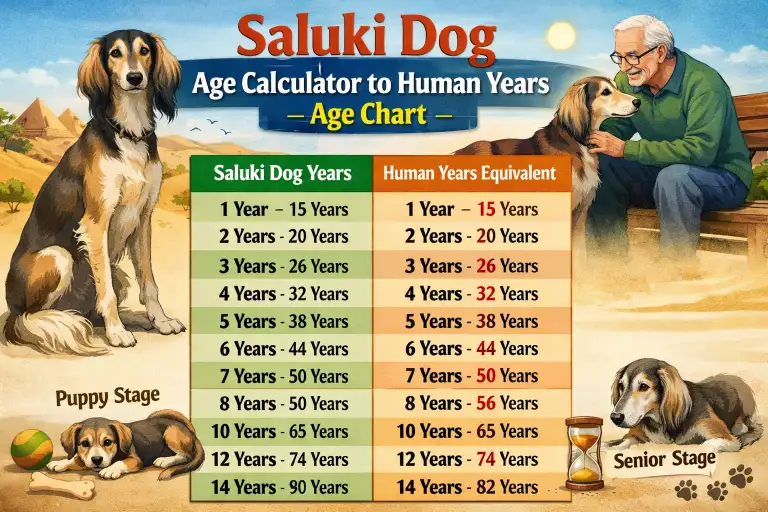
Saluki Dog Age to Human Years Chart
| Saluki Age | Human Age Equivalent | Life Stage | Typical Characteristics |
|---|---|---|---|
| 3 Months | 5 Years | Puppy | Rapid growth and socialization |
| 6 Months | 9 Years | Puppy | Learning, developing coordination |
| 1 Year | 15 Years | Adolescent | Near adult size, high energy |
| 2 Years | 24 Years | Young Adult | Fully mature physically |
| 3 Years | 28 Years | Adult | Peak athletic condition |
| 4 Years | 32 Years | Adult | Confident and energetic |
| 5 Years | 36 Years | Adult | Prime years |
| 6 Years | 40 Years | Adult | Excellent endurance |
| 7 Years | 44 Years | Mature Adult | Slight slowing begins |
| 8 Years | 48 Years | Senior | Increased health monitoring |
| 9 Years | 52 Years | Senior | Reduced stamina |
| 10 Years | 56 Years | Senior | Senior wellness focus |
| 11 Years | 60 Years | Senior | More frequent veterinary care |
| 12 Years | 64 Years | Senior | Advanced senior stage |
| 13 Years | 68 Years | Senior | Comfortable lifestyle important |
| 14 Years | 72 Years | Senior | Exceptional longevity |
This chart provides a quick estimate. Every Saluki ages differently depending on genetics, nutrition, exercise, body condition, and healthcare.
Why the 7-Year Rule Isn’t Accurate
Many people still believe one dog year equals seven human years, but modern veterinary research shows this is incorrect.
Salukis experience:
- Very rapid growth during puppyhood
- Early physical maturity
- Slower aging during adulthood
- Gradual changes during senior years
| Aging Method | Accuracy | Suitable for Salukis? |
|---|---|---|
| 7-Year Rule | Low | No |
| Linear Conversion | Moderate | No |
| Modern Canine Aging Model | High | Yes |
Because Salukis are lean athletic sighthounds, they generally remain active longer than heavier breeds of similar size.
Saluki Growth and Development
Salukis develop differently from many other breeds.
Puppy (0–12 Months)
During the first year your Saluki experiences rapid physical growth while learning social behaviors. Proper nutrition and controlled exercise are essential.
Young Adult (1–3 Years)
Muscle development continues while energy levels remain extremely high. Regular exercise and training are important during this stage.
Adult (3–7 Years)
Most Salukis reach their prime during adulthood. They maintain excellent endurance, agility, and overall health when properly exercised.
Mature Adult (7–8 Years)
You may notice subtle changes including slightly longer recovery after exercise and reduced stamina.
Senior (8+ Years)
Senior Salukis still enjoy daily walks and light running but benefit from joint support, regular wellness exams, and age-appropriate nutrition.
Average Saluki Lifespan
The average Saluki lifespan is approximately 12 to 14 years, although many healthy Salukis live even longer with excellent care.
Factors affecting lifespan include:
- Genetics
- Nutrition
- Exercise
- Preventive healthcare
- Dental care
- Healthy body weight
- Early disease detection
Signs Your Saluki Is Getting Older
As Salukis age, you may notice gradual physical and behavioral changes.
Common signs include:
- Sleeping more often
- Less interest in intense running
- Gray hair around the muzzle
- Reduced stamina
- Mild joint stiffness
- Slower recovery after exercise
- Changes in hearing or vision
- Weight management becoming more important
These changes occur gradually and should always be discussed with your veterinarian if they appear suddenly.
Caring for Your Saluki at Every Age
| Age | Nutrition | Exercise | Healthcare |
|---|---|---|---|
| Puppy | High-quality puppy food | Short play sessions | Vaccinations and growth checks |
| Young Adult | Balanced adult diet | Daily walks and running | Annual exams |
| Adult | Weight maintenance | Regular vigorous exercise | Preventive screenings |
| Mature Adult | Joint-support diet | Moderate activity | Blood work and dental care |
| Senior | Senior formula diet | Gentle daily walks | Twice-yearly veterinary visits |
Saluki Compared With Other Dog Sizes
Salukis are often classified as medium-to-large sighthounds. Their aging pattern differs from many heavier breeds.
| Breed Size | Typical Lifespan | Aging Speed |
|---|---|---|
| Small Dogs | 13–16 Years | Slow |
| Medium Dogs | 11–14 Years | Moderate |
| Saluki | 12–14 Years | Moderate with extended athletic adulthood |
| Large Dogs | 9–12 Years | Faster |
| Giant Dogs | 7–10 Years | Fastest |
Although Salukis are tall dogs, they generally age more gracefully than many heavier large breeds because of their lean body structure.
How to Keep Your Saluki Healthy as They Age
Supporting healthy aging involves more than simply feeding good food.
Key recommendations include:
- Maintain an ideal body condition.
- Provide daily physical exercise.
- Include mental stimulation through training and enrichment.
- Schedule routine veterinary examinations.
- Keep vaccinations and parasite prevention current.
- Monitor dental health.
- Watch for mobility changes.
- Adjust calorie intake as activity decreases.
Frequently Asked Questions
How old is a 2-year-old Saluki in human years?
A 2-year-old Saluki is approximately equal to a 24-year-old person using modern canine aging estimates.
Is the 7-year rule accurate for Salukis?
No. Salukis mature much faster during their first two years and then age more slowly afterward, making the traditional seven-year rule inaccurate.
When is a Saluki considered a senior?
Most Salukis enter their senior years at around 8 years of age, although many remain active beyond this point.
What is the average lifespan of a Saluki?
Most Salukis live between 12 and 14 years, with some living even longer when provided excellent nutrition, exercise, and veterinary care.
Why do Salukis age differently from other dogs?
Their lean athletic build, genetics, metabolism, and breed-specific development all influence how they age compared with heavier breeds.
Does diet affect how a Saluki ages?
Yes. Maintaining a healthy weight and providing balanced nutrition throughout life can significantly improve quality of life during the senior years.
Can senior Salukis still exercise?
Yes. Regular low-impact exercise helps maintain joint mobility, muscle strength, and overall health, although intensity should be adjusted to your dog’s condition.
Final Thoughts
Understanding your Saluki’s age in human years provides more than an interesting comparison—it helps you make informed decisions about nutrition, exercise, healthcare, and overall well-being. Because Salukis mature quickly and remain athletic well into adulthood, modern canine aging models offer a much more realistic estimate than the traditional seven-year rule.
Use the Saluki Dog Age Calculator together with the age chart above to better understand your dog’s current life stage and provide the care they need to enjoy a long, healthy, and active life.

Ata Ur Rehman is the founder of Pet Age in Human Years Calculator, an educational platform that provides age conversion charts and lifespan guides for dogs, cats, birds, and other companion animals. His work focuses on helping pet owners understand how animal ages translate into human years using commonly accepted age conversion formulas and published lifespan averages.
The website compiles breed and species lifespan data from kennel clubs, breed organizations, and general animal lifespan studies to present simple and easy-to-understand guides for pet owners worldwide.
This website was created to centralize animal age conversion charts into one easy reference platform for pet owners.
This article is for general education. For symptoms, medication, diet changes, or health concerns, use a qualified veterinarian who can assess your individual pet.