On this page
The Samoyed’s famous fluffy white coat is one of the breed’s most recognizable features, but it is also one of the most demanding to maintain. Samoyeds have a thick double coat designed to protect them from harsh Arctic temperatures while helping regulate body temperature throughout the year.
The outer layer consists of long protective guard hairs that repel dirt, moisture, and harmful UV rays. Beneath this lies a dense, soft undercoat that provides insulation during winter and helps regulate temperature during warmer months.
Because of this unique coat structure, Samoyeds are considered one of the heaviest shedding dog breeds. They experience year-round shedding along with intense seasonal shedding periods commonly known as a Samoyed coat blow.
Samoyed Coat Structure Explained
| Coat Layer | Primary Function | Grooming Requirement |
|---|---|---|
| Guard Hair (Outer Coat) | Repels dirt, moisture, and sun exposure | Requires gentle brushing to prevent breakage |
| Undercoat | Provides insulation and temperature regulation | Needs regular removal during shedding seasons |
| Double-Coat System | Protects against heat and cold naturally | Should never be shaved or clipped short |
Can you shave a Samoyed? No. Shaving a Samoyed damages the coat’s natural insulation system and can lead to uneven regrowth, skin irritation, sunburn, and overheating.
Why Do Samoyeds Shed So Much?
If you’re wondering “Do Samoyeds shed a lot?”, the answer is yes. Samoyeds shed continuously throughout the year and experience two major seasonal shedding events during spring and autumn.
During a coat blow, large amounts of undercoat loosen and fall out rapidly. If the dead coat is not removed, it can become compacted against the skin, causing matting, reduced airflow, and skin irritation.
Samoyed Shedding Calendar
| Season | What Happens | Recommended Grooming |
|---|---|---|
| Winter | Dense winter undercoat remains intact | Brush 2–3 times weekly |
| Spring | Heavy shedding and coat blow begin | Daily brushing and deshedding |
| Summer | Lighter coat remains for cooling | Brush 2–3 times weekly |
| Autumn | Second major coat blow occurs | Increase brushing frequency |
Heavy shedding in Samoyeds is completely normal and does not necessarily indicate poor health when managed properly.
Why Samoyed Coats Mat So Easily
Despite their soft and fluffy appearance, Samoyeds are highly prone to matting. Mats develop when loose undercoat becomes trapped beneath the outer guard hairs.
The most common areas where mats develop include:
- Behind the ears
- Under collars and harnesses
- Armpits
- Back legs and feathering
- Tail base
Regular brushing prevents mats from tightening against the skin and causing discomfort or infection.
Compared to short-haired breeds, Samoyeds require:
- More frequent brushing sessions
- Longer drying times after bathing
- Additional care during seasonal shedding periods
- Regular undercoat maintenance
Skipping grooming allows dead fur to accumulate, increasing the risk of painful mats and skin problems.
How to Groom a Samoyed at Home
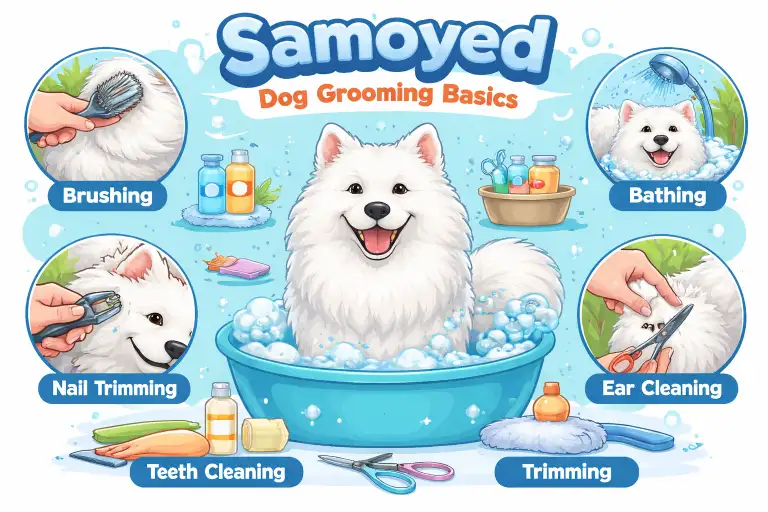
Many owners ask, “How do I groom a Samoyed at home?” Fortunately, home grooming is possible with the correct tools and a consistent routine.
The secret to successful Samoyed grooming is consistency. Frequent light grooming sessions are far easier than occasional deep grooming sessions.
Essential Samoyed Grooming Tools
| Tool | Purpose | Why It’s Important |
|---|---|---|
| Slicker Brush | Removes loose fur from outer coat | Prevents tangles and debris buildup |
| Pin Brush | Daily maintenance brushing | Gentle on guard hairs |
| Undercoat Rake | Removes loose undercoat | Essential during coat blow |
| Metal Comb | Detects hidden mats | Final inspection tool |
| Dog Shampoo | Cleans skin and coat safely | Maintains natural oils |
| High Velocity Dryer | Dries thick coat completely | Prevents moisture-related skin issues |
Avoid using human shampoos or brushes because they can damage your Samoyed’s skin barrier and coat quality.
How to Brush a Samoyed Properly
Brushing a Samoyed requires reaching all the way down to the skin rather than brushing only the surface fur.
Follow these simple steps:
- Start with a dry coat whenever possible.
- Work in small sections.
- Lift the coat and brush from the skin outward.
- Use gentle and slow strokes.
- Take breaks if your dog becomes stressed.
Pay extra attention to high-risk matting areas such as behind the ears, under the collar, and around the legs.
How Often Should You Groom a Samoyed?
| Grooming Task | Normal Schedule | During Coat Blow |
|---|---|---|
| Brushing | 2–3 times weekly | Daily |
| Undercoat Removal | Weekly | Every 2–3 days |
| Bathing | Every 6–8 weeks | Every 6–8 weeks |
| Drying | After every bath | After every bath |
How Often Should You Bathe a Samoyed?
Samoyeds do not require frequent bathing. Most healthy adults only need a bath every 6 to 8 weeks unless they become exceptionally dirty.
For safe bathing:
- Brush thoroughly before bathing.
- Use lukewarm water.
- Choose a gentle dog shampoo.
- Rinse thoroughly to remove residue.
- Dry the coat completely to the skin.
A damp undercoat can cause hot spots, odors, and skin infections.
Common Matting Areas in Samoyeds
| Area | Why Mats Develop | Prevention Method |
|---|---|---|
| Behind Ears | Moisture and friction | Brush every few days |
| Under Collar | Trapped fur and rubbing | Remove collar indoors when safe |
| Armpits | Movement and compacted undercoat | Inspect during each grooming session |
| Back Legs | Heavy feathering | Use metal comb weekly |
Never cut mats close to the skin using scissors, as accidental injuries are common.
Additional Samoyed Grooming Care: Nails, Ears, Teeth, and Skin
Complete Samoyed grooming involves much more than brushing alone. Nail trimming, ear cleaning, dental care, and skin inspections are equally important.
Samoyed Nail Care
Long nails can alter your dog’s gait and contribute to joint discomfort over time.
- Trim small amounts frequently.
- Use quality nail clippers or grinders.
- Avoid cutting into the quick.
- Reward your dog after trimming sessions.
If you hear your Samoyed’s nails clicking on hard floors, they are likely overdue for trimming.
| Activity Level | Recommended Nail Schedule |
|---|---|
| Highly Active | Every 3–4 weeks |
| Moderately Active | Every 2–3 weeks |
| Low Activity | Every 1–2 weeks |
Ear Cleaning for Samoyeds
Although upright ears stay cleaner than floppy ears, Samoyeds can still develop wax buildup and infections.
- Inspect ears weekly.
- Use dog-safe ear cleaning solutions.
- Only clean visible areas.
- Never insert cotton swabs deep into the ear canal.
| Ear Condition | Meaning | Recommended Action |
|---|---|---|
| Pink and Clean | Healthy ears | Continue weekly checks |
| Mild Wax | Normal buildup | Clean gently |
| Strong Odor | Possible infection | Veterinary examination |
| Redness or Swelling | Irritation or allergy | Veterinary care required |
Common Samoyed Skin Problems
Samoyeds can develop several skin issues that are hidden beneath their dense coat.
- Hot spots
- Environmental allergies
- Dry skin
- Yeast infections
- Bacterial infections
| Symptom | Possible Cause | Recommended Action |
|---|---|---|
| Red moist patch | Hot spot | Consult groomer or veterinarian |
| Excessive scratching | Allergies | Veterinary advice |
| Greasy odor | Yeast infection | Veterinary examination |
| Hair loss | Skin disease or infection | Veterinary diagnosis |
Common Samoyed Grooming Mistakes to Avoid
| Mistake | Risk | Possible Result |
|---|---|---|
| Shaving the coat | Destroys insulation system | Sunburn and poor regrowth |
| Over-bathing | Removes natural oils | Dry itchy skin |
| Poor drying | Trapped moisture | Hot spots and infections |
| Skipping brushing | Undercoat buildup | Severe matting |
| Using human products | Incorrect pH balance | Skin irritation |
Professional Grooming vs Home Grooming for Samoyeds
| Task | Home Grooming | Professional Grooming |
|---|---|---|
| Brushing | Yes | Yes |
| Bathing | Yes | Yes |
| Nail Trimming | Yes | Yes |
| Heavy Deshedding | Difficult | Recommended |
| Severe Mat Removal | No | Yes |
| Coat Blow Management | Challenging | Best performed by professionals |
Samoyed Grooming FAQs
Are Samoyeds high maintenance?
Yes. Their thick double coat requires regular brushing and seasonal deshedding.
How often should I brush my Samoyed?
Brush 2–3 times weekly and daily during coat blow periods.
Can I shave my Samoyed in summer?
No. Shaving damages the coat and interferes with natural temperature regulation.
Do Samoyeds need professional grooming?
Most owners benefit from professional grooming during heavy shedding seasons.
Do Samoyeds smell bad?
Healthy Samoyeds are generally low odor when groomed properly.
When Should You See a Groomer or Veterinarian?
Seek professional help if you notice:
- Large or painful mats
- Red or moist skin patches
- Strong odors from ears or skin
- Sudden hair loss
- Pain during brushing or grooming
Early treatment prevents small grooming problems from becoming serious health issues.

Ata Ur Rehman is the founder of Pet Age in Human Years Calculator, an educational platform that provides age conversion charts and lifespan guides for dogs, cats, birds, and other companion animals. His work focuses on helping pet owners understand how animal ages translate into human years using commonly accepted age conversion formulas and published lifespan averages.
The website compiles breed and species lifespan data from kennel clubs, breed organizations, and general animal lifespan studies to present simple and easy-to-understand guides for pet owners worldwide.
This website was created to centralize animal age conversion charts into one easy reference platform for pet owners.
This article is for general education. For symptoms, medication, diet changes, or health concerns, use a qualified veterinarian who can assess your individual pet.