On this page
Choosing the best dog food for Schipperkes starts with understanding how this breed actually uses energy. Schipperkes are small dogs, but their nutrition needs are not small. They are active, alert, food-motivated, and quick-moving dogs with a fast metabolism, so diet plays a major role in healthy weight, steady energy, digestion, coat quality, and long-term wellness.
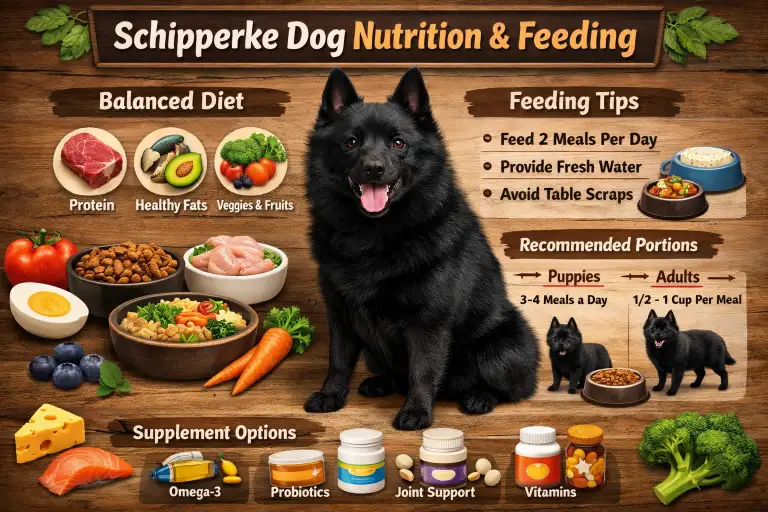
This Schipperke feeding guide explains what to feed, how much to feed, how often to feed, and which foods to avoid. Whether you have a growing puppy, an active adult, or a senior Schipperke, the goal is the same: provide complete nutrition without overfeeding.
Most Schipperkes weigh around 10–16 pounds. Because they are small but energetic, they need nutrient-dense food in carefully measured portions. Too much food can quickly lead to weight gain, while too little food may leave them tired, hungry, or undernourished.
A healthy Schipperke diet should:
- Support lean muscle without unnecessary calories
- Provide enough healthy fat for energy and coat condition
- Include digestible carbohydrates and fiber for gut health
- Supply complete vitamins and minerals for immune, joint, and metabolic support
- Match your dog’s age, weight, activity level, and body condition
For most owners, the best food for a Schipperke is a complete and balanced dog food that meets recognized nutritional standards and fits the dog’s life stage. Puppies need growth-focused nutrition, adults need controlled energy, and seniors often need easier digestion with careful calorie management.
Feeding also connects closely with age and activity. To understand how your Schipperke’s age compares with human years and how life stage may affect care needs, use the Schipperke Dog Age Calculator.
Before choosing a brand or food type, focus on the core feeding framework: balanced nutrients, measured portions, consistent meal timing, and regular body condition checks. These basics help your Schipperke stay lean, energetic, and healthy.
How Much to Feed a Schipperke
How much to feed a Schipperke depends on weight, age, activity level, metabolism, and body condition. A young active Schipperke may need more calories than a less active adult of the same weight, while a senior Schipperke may need fewer calories to avoid gradual weight gain.
The table below gives a practical daily calorie range for Schipperkes. Use it as a starting point, then adjust based on your dog’s body condition and your vet’s advice.
| Schipperke Weight | Activity Level | Estimated Daily Calories |
|---|---|---|
| 10 lbs | Low activity | 230–270 kcal |
| 10 lbs | Moderate activity | 270–300 kcal |
| 10 lbs | High activity | 300–340 kcal |
| 13 lbs | Low activity | 290–330 kcal |
| 13 lbs | Moderate activity | 330–370 kcal |
| 13 lbs | High activity | 370–410 kcal |
| 16 lbs | Low activity | 350–390 kcal |
| 16 lbs | Moderate activity | 390–430 kcal |
| 16 lbs | High activity | 430–470 kcal |
Important: calories from treats, chews, toppers, training rewards, and table scraps count toward the daily total. For a small dog like a Schipperke, even a few extra snacks can noticeably affect weight.
Schipperke Feeding Schedule by Age
| Life Stage | Meals Per Day | Feeding Goal |
|---|---|---|
| Puppy, 2–6 months | 3–4 small meals | Support growth and stable energy |
| Puppy, 6–12 months | 2–3 meals | Maintain growth without overfeeding |
| Adult, 1–7 years | 2 meals | Maintain lean weight and steady energy |
| Senior, 7+ years | 2 smaller meals | Support digestion and weight control |
Portion control tips for Schipperkes:
- Use a measuring cup or gram scale instead of guessing portions.
- Avoid free-feeding if your Schipperke is food-motivated or gaining weight.
- Check body condition weekly: ribs should be easy to feel, and the waist should be visible from above.
- Reduce portions slightly if weight increases, and increase carefully if your dog becomes too lean.
- Recheck feeding amounts when your dog moves from puppy to adult or adult to senior life stage.
Best Dog Food for Schipperkes
The best dog food for Schipperkes is usually a complete, balanced formula made for small or active dogs, with enough protein for lean muscle, moderate fat for energy, and controlled calories to prevent weight gain. The right choice depends on your dog’s age, activity level, digestion, dental health, and any food sensitivities.
Look for food that clearly states it is complete and balanced for your dog’s life stage. Puppies should eat puppy or growth formulas, adults should eat maintenance formulas, and seniors may benefit from formulas that support digestion, weight control, and joint health.
Common food options for Schipperkes:
| Food Type | Best For | Watch Out For |
|---|---|---|
| Dry kibble | Convenience, portion control, daily feeding | Low-quality formulas, excess calories, poor digestibility |
| Wet food | Picky eaters, hydration support, softer texture | Higher cost, faster spoilage, extra calories |
| Fresh or gently cooked food | Digestibility and simple ingredients | Cost, storage needs, portion accuracy |
| Freeze-dried or raw-style food | High-protein feeding preferences | Food safety, handling risk, nutrient balance |
| Homemade food | Dogs with special needs under guidance | High risk of nutrient imbalance without expert formulation |
How to choose a good Schipperke food:
- Choose a complete and balanced formula for your dog’s life stage.
- Prioritize digestible animal protein such as chicken, turkey, beef, lamb, fish, or egg.
- Use moderate fat levels for energy, especially for active adult Schipperkes.
- Avoid formulas that cause loose stool, itching, vomiting, or repeated stomach upset.
- Match calorie density to your dog’s size so portions are not too large or too small.
- Use small-breed kibble size if your dog struggles with larger pieces.
Do not choose food only because the label says “premium,” “natural,” or “superfood.” For Schipperkes, the better question is whether the food supports healthy weight, good stool quality, steady energy, and a shiny coat without causing digestive issues.
Best Food for Schipperke Puppies
Schipperke puppies need food designed for growth. Puppy formulas provide higher energy and nutrient levels than adult food. Feed smaller meals throughout the day to support steady energy and reduce stomach upset.
- Use a puppy formula until your Schipperke reaches maturity.
- Feed 3–4 meals daily during early puppy months.
- Avoid overfeeding, even if the puppy seems hungry.
- Track growth and body condition instead of relying only on appetite.
Best Food for Adult Schipperkes
Adult Schipperkes usually do best on a measured, complete diet with enough protein and fat to support activity without excess calories. Most adults should eat two meals per day rather than one large meal or unlimited food.
- Feed two measured meals daily.
- Adjust portions based on exercise and body condition.
- Use treats carefully during training.
- Recheck weight regularly because small changes matter in a small breed.
Best Food for Senior Schipperkes
Senior Schipperkes may need fewer calories as activity slows, but they still need quality protein to support muscle. Some seniors also benefit from softer food, added moisture, or diets designed for sensitive digestion.
- Keep protein quality strong unless your vet recommends otherwise.
- Reduce calories if weight gain begins.
- Consider softer textures if chewing becomes difficult.
- Ask your vet before changing food for kidney, heart, or metabolic concerns.
If you are unsure whether your Schipperke is a puppy, adult, or senior in care terms, compare age and life stage using the Schipperke Dog Age Calculator.
Foods Schipperkes Can and Cannot Eat
Schipperkes can eat many plain, dog-safe foods in small amounts, but toxic foods should be completely avoided. Because Schipperkes are small, even small portions of unsafe foods can cause serious problems.
Use this table as a quick safety guide:
| Safe Foods | How to Serve | Unsafe or Toxic Foods |
|---|---|---|
| Chicken, turkey, lean beef | Cooked, plain, no bones | Chocolate |
| Eggs | Cooked plain | Grapes and raisins |
| Rice, oats, pasta | Cooked and plain | Onions and garlic |
| Carrots, green beans, peas | Plain, small portions | Macadamia nuts |
| Apples and blueberries | Small pieces, no seeds or core | Xylitol or birch sugar |
| Pumpkin | Plain, not pie filling | Alcohol |
| Plain yogurt | Unsweetened, small amount | Coffee and caffeine |
| Sweet potato | Cooked and plain | Fatty, salty, or spicy table scraps |
Treat rules for Schipperkes:
- Keep treats under 10% of daily calories.
- Use very small pieces for training.
- Reduce meal portions if training treats are used heavily.
- Avoid fatty table scraps, cooked bones, and seasoned foods.
- Introduce new foods one at a time so you can spot digestive reactions.
Fresh water should always be available, especially if your Schipperke eats dry kibble, exercises heavily, or spends time in warm weather.
Common Schipperke Feeding Problems
Schipperkes are intelligent and food-motivated, which can make feeding problems more common. Begging, fast eating, picky eating, and weight gain often come from inconsistent feeding habits rather than the food itself.
Common feeding problems and fixes:
| Problem | Likely Cause | Practical Fix |
|---|---|---|
| Weight gain | Overfeeding, too many treats, low activity | Measure meals, reduce treats, increase daily movement |
| Constant hunger | Small portions, learned begging, low-fiber diet | Check calories, use structured meals, discuss satiety options with your vet |
| Sensitive stomach | Sudden food changes, rich treats, too much fat | Change food gradually and use easier-to-digest meals |
| Food allergies or intolerance | Reaction to ingredients or proteins | Use a vet-guided elimination diet or limited-ingredient food |
| Picky eating | Too many toppers, inconsistent feeding, texture preference | Use a consistent schedule and avoid constant food switching |
| Fast eating | Excitement, competition, habit | Use a slow-feeder bowl or split meals into smaller portions |
How to Switch Schipperke Food Safely
When changing your Schipperke’s food, switch gradually instead of replacing the full meal at once. A slow transition helps reduce vomiting, loose stool, gas, and appetite changes.
- Days 1–2: feed mostly old food with a small amount of new food.
- Days 3–5: increase the new food gradually.
- Days 6–7: move closer to mostly new food.
- Days 8–10: complete the switch if digestion remains normal.
Slow the transition down if your dog develops loose stool, vomiting, or appetite loss. Dogs with chronic digestive issues should change food under veterinary guidance.
When to Ask a Vet About Your Schipperke’s Diet
Most healthy Schipperkes can do well on a complete, measured diet, but some feeding issues need professional help. Ask your vet or a veterinary nutritionist before using homemade diets, raw diets, major restriction diets, or supplements for medical concerns.
Get veterinary advice if your Schipperke has:
- Sudden weight gain or weight loss
- Chronic diarrhea, vomiting, or food refusal
- Itchy skin, repeated ear issues, or suspected food allergies
- Poor coat condition despite a balanced diet
- Ongoing hunger even with measured meals
- Medical conditions that may require a special diet
The best dog food for Schipperkes is not one single brand or one fixed diet. It is the food that matches your dog’s age, weight, activity level, digestion, and body condition while keeping them lean and energetic. Start with a complete food, measure portions carefully, limit treats, and adjust feeding as your Schipperke moves through each life stage.
Schipperke Feeding FAQs
What is the best dog food for Schipperkes?
The best dog food for Schipperkes is a complete and balanced small-breed or active-dog formula that matches their age, weight, activity level, and digestion. Most Schipperkes do well with food that provides quality animal protein, moderate fat, controlled calories, and digestible ingredients.
How much should a Schipperke eat per day?
Most adult Schipperkes need around 230–470 calories per day, depending on weight and activity level. A 10 lb Schipperke may need less food, while a highly active 16 lb Schipperke may need more. Always adjust portions based on body condition, treats, and your vet’s advice.
How often should I feed a Schipperke?
Adult Schipperkes usually do best with two measured meals per day. Puppies may need 3–4 smaller meals daily, while senior Schipperkes often do better with two smaller meals to support digestion and weight control.
What should I feed a Schipperke puppy?
A Schipperke puppy should eat a complete puppy formula designed for growth. Choose food with quality protein, enough calories for development, and small kibble size if needed. Feed small meals throughout the day and avoid overfeeding, even if the puppy seems hungry.
Can Schipperkes eat wet food?
Yes, Schipperkes can eat wet food if it is complete and balanced for their life stage. Wet food can help picky eaters and add moisture, but it may be higher in calories, so portions should be measured carefully.
Can Schipperkes eat homemade food?
Schipperkes can eat homemade food only if it is properly balanced. Homemade diets can easily miss important nutrients, so they should be created with help from a vet or veterinary nutritionist, especially for puppies, seniors, or dogs with health issues.
What foods should Schipperkes avoid?
Schipperkes should avoid chocolate, grapes, raisins, onions, garlic, xylitol, alcohol, caffeine, macadamia nuts, cooked bones, fatty table scraps, and heavily seasoned foods. Because Schipperkes are small, even small amounts of toxic foods can be dangerous.
Why is my Schipperke always hungry?
A Schipperke may seem hungry because of high food motivation, learned begging, too many treats, low-fiber food, or portions that do not match activity level. Measure meals, limit treats, and check body condition before increasing food.
How do I know if I am overfeeding my Schipperke?
You may be overfeeding your Schipperke if the ribs are hard to feel, the waist is not visible from above, weight is increasing, or treats are being given often. Reduce portions gradually and track body condition weekly.
Should Schipperkes be free-fed?
Free-feeding is usually not ideal for Schipperkes because many are food-motivated and can gain weight quickly. Measured meals are better for portion control, weight management, and consistent digestion.

Ata Ur Rehman is the founder of Pet Age in Human Years Calculator, an educational platform that provides age conversion charts and lifespan guides for dogs, cats, birds, and other companion animals. His work focuses on helping pet owners understand how animal ages translate into human years using commonly accepted age conversion formulas and published lifespan averages.
The website compiles breed and species lifespan data from kennel clubs, breed organizations, and general animal lifespan studies to present simple and easy-to-understand guides for pet owners worldwide.
This website was created to centralize animal age conversion charts into one easy reference platform for pet owners.
This article is for general education. For symptoms, medication, diet changes, or health concerns, use a qualified veterinarian who can assess your individual pet.