On this page
A Scottish Deerhound age chart helps dog owners understand their pet’s age in human years using a breed-specific aging model. Unlike the outdated “one dog year equals seven human years” rule, giant breeds like the Scottish Deerhound age much faster during their early years and enter senior stages earlier than smaller dogs.
If you are wondering “How old is my Scottish Deerhound in human years?”, this guide explains the Scottish Deerhound dog years to human years conversion, lifespan, life stages, and how to care for your Deerhound at every age.
Because Scottish Deerhounds are a giant dog breed, their biological aging process is different from small and medium-sized dogs. A breed-specific Scottish Deerhound age calculator provides a more realistic estimate by considering their growth rate, adult size, and shorter average lifespan.
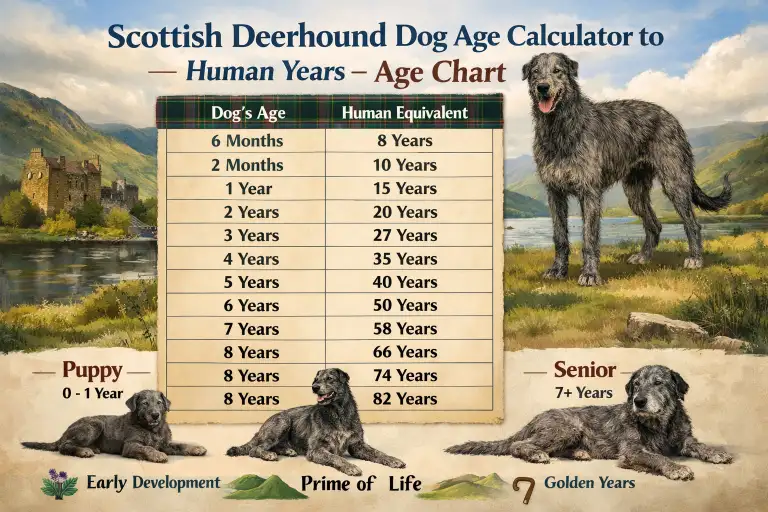
Scottish Deerhound Age Chart (Dog Years to Human Years)
The table below shows the estimated Scottish Deerhound human age equivalent. This chart is designed to help owners understand their dog’s life stage and make better decisions about food, exercise, and veterinary care.
| Scottish Deerhound Age | Human Age Equivalent | Life Stage |
|---|---|---|
| 6 Months | About 10 Human Years | Puppy |
| 1 Year | About 18–20 Human Years | Young Adult |
| 2 Years | About 24–28 Human Years | Adult |
| 3 Years | About 35 Human Years | Adult |
| 4 Years | About 42–45 Human Years | Mature Adult |
| 5 Years | About 50–55 Human Years | Mature Adult |
| 6 Years | About 58–62 Human Years | Early Senior |
| 7 Years | About 65–70 Human Years | Senior |
| 8 Years | About 75 Human Years | Senior |
| 9 Years | About 80+ Human Years | Geriatric |
| 10 Years | About 85+ Human Years | Geriatric |
Note: Every Scottish Deerhound ages differently. Genetics, nutrition, weight, exercise, and healthcare can influence how quickly a dog shows signs of aging.
How Old Is My Scottish Deerhound in Human Years?
Many owners search for “Scottish Deerhound age in human years” because their dog may appear younger or older than expected. A 6-year-old Scottish Deerhound, for example, is not middle-aged like a human—it is closer to a senior adult because giant breeds experience faster biological aging.
The traditional seven-year calculation does not accurately represent Scottish Deerhound aging. A one-year-old Deerhound is already comparable to a young adult human, while a seven-year-old Deerhound may be similar to a person in their late 60s or early 70s.
This faster aging pattern happens because giant breeds:
- Grow extremely quickly during puppyhood
- Reach physical maturity earlier
- Experience more stress on joints and organs
- Usually have shorter lifespans than smaller breeds
Scottish Deerhound Lifespan and Aging Stages
The average Scottish Deerhound lifespan is around 8 to 11 years. Some dogs may live longer with excellent genetics, proper nutrition, healthy weight management, and regular veterinary care.
Since Scottish Deerhounds are giant dogs, they typically become seniors earlier than many other breeds. Many Deerhounds begin showing age-related changes around 6 years old.
| Life Stage | Age Range | Common Changes |
|---|---|---|
| Puppy | 0–1.5 Years | Rapid growth, learning, high energy |
| Adolescent | 1.5–3 Years | Muscle development and maturity |
| Adult | 3–5 Years | Peak strength and physical condition |
| Senior | 6–8 Years | Joint stiffness, slower movement, lower energy |
| Geriatric | 9+ Years | More health monitoring and comfort care |
How Scottish Deerhounds Age Compared to Humans
Scottish Deerhounds do not age at a constant rate. Their first two years represent the fastest period of development, similar to humans moving from infancy into adulthood.
After maturity, aging becomes slower for a short period. Many Deerhounds between 3 and 5 years old appear healthy and active, but internal aging is already progressing.
During their senior years, changes often become easier to notice. Owners may see:
- Reduced stamina
- Longer recovery after exercise
- Joint stiffness
- More sleeping and resting
- Changes in mobility
Scottish Deerhound Age-Based Care Guide
Understanding your Scottish Deerhound’s biological age helps you provide the right care at every stage of life.
| Age | Recommended Care Focus |
|---|---|
| Puppy (0–1.5 Years) | Controlled growth, balanced nutrition, training, joint protection |
| Young Adult (1.5–3 Years) | Healthy exercise routine and muscle development |
| Adult (3–5 Years) | Maintain ideal weight and routine health checks |
| Early Senior (6–7 Years) | Monitor joints, heart health, and mobility |
| Senior (8+ Years) | Comfort care, mobility support, regular veterinary visits |
How to Help Your Scottish Deerhound Live a Longer, Healthier Life
Because Scottish Deerhounds age faster than many breeds, preventive care is extremely important. The right lifestyle choices can improve comfort and quality of life throughout their years.
Provide Proper Nutrition
A balanced diet helps maintain lean muscle, healthy joints, and proper body weight. Giant breeds should avoid excessive weight gain because extra weight places additional stress on bones and joints.
Maintain Appropriate Exercise
Scottish Deerhounds need regular activity, but exercise should match their age. Puppies require controlled activity during growth, adults benefit from daily walks, and seniors need gentle movement to maintain mobility.
Schedule Regular Veterinary Care
Routine checkups become increasingly important as Scottish Deerhounds age. Early monitoring can help identify heart problems, joint issues, and other age-related conditions before they become serious.
Create a Comfortable Home Environment
Senior Scottish Deerhounds benefit from supportive bedding, easy access to favorite areas, and adjustments that reduce strain on aging joints.
Frequently Asked Questions About Scottish Deerhound Age
How do I calculate my Scottish Deerhound’s age in human years?
A Scottish Deerhound’s human age is calculated using a giant-breed aging model rather than the simple seven-year rule. Breed size, lifespan, and development speed all affect the conversion.
Is a 7-year-old Scottish Deerhound considered old?
Yes. A 7-year-old Scottish Deerhound is generally considered a senior because giant breeds age faster and have shorter lifespans compared to smaller dogs.
What is the average lifespan of a Scottish Deerhound?
The average Scottish Deerhound lifespan is approximately 8 to 11 years, although some dogs may live longer with excellent care.
When does a Scottish Deerhound become a senior?
Most Scottish Deerhounds are considered seniors around 6 years old due to their giant size and faster aging process.
Why does my Scottish Deerhound seem older than other dogs the same age?
Scottish Deerhounds age faster because giant breeds experience rapid growth, increased physical stress, and earlier senior changes compared to smaller breeds.
Final Thoughts
A Scottish Deerhound age chart provides a better understanding of your dog’s true life stage than the outdated seven-year rule. Knowing your Deerhound’s human-equivalent age can help you adjust nutrition, exercise, veterinary care, and daily routines as they grow.

Ata Ur Rehman is the founder of Pet Age in Human Years Calculator, an educational platform that provides age conversion charts and lifespan guides for dogs, cats, birds, and other companion animals. His work focuses on helping pet owners understand how animal ages translate into human years using commonly accepted age conversion formulas and published lifespan averages.
The website compiles breed and species lifespan data from kennel clubs, breed organizations, and general animal lifespan studies to present simple and easy-to-understand guides for pet owners worldwide.
This website was created to centralize animal age conversion charts into one easy reference platform for pet owners.
This article is for general education. For symptoms, medication, diet changes, or health concerns, use a qualified veterinarian who can assess your individual pet.