On this page
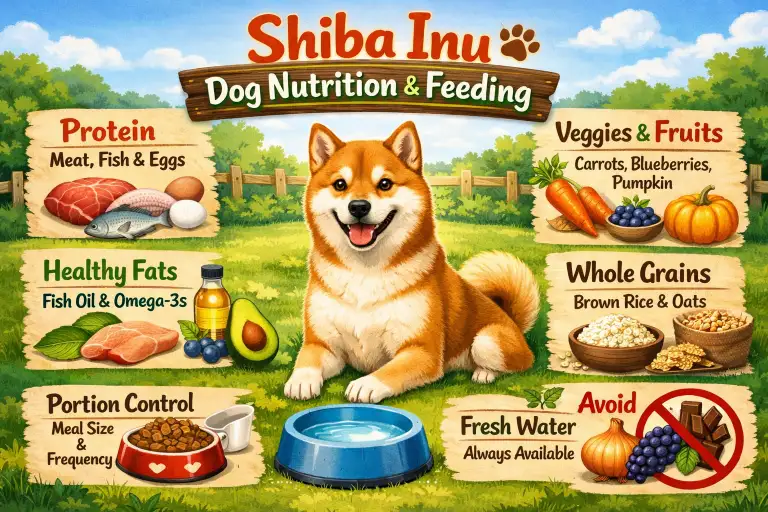
Choosing the best food for a Shiba Inu can feel overwhelming because there are countless options available. Fortunately, most healthy Shiba Inus thrive on a complete and balanced dog food designed for their age, activity level, and overall health needs.
Shiba Inus are energetic and athletic dogs, but they are also efficient with calories compared to many other active breeds. Feeding food that is too rich can contribute to obesity, while low-quality diets may lead to poor coat condition, digestive issues, allergies, or itchy skin.
When choosing the best dog food for a Shiba Inu, look for:
- High-quality animal protein such as chicken, turkey, salmon, fish, or lamb.
- Moderate fat levels suitable for an active medium-sized breed.
- An AAFCO statement confirming the food is complete and balanced.
- Simple ingredient formulas for dogs with sensitive stomachs.
- Omega-3 and Omega-6 fatty acids to support healthy skin and coat.
Best Types of Dog Food for Shiba Inus
| Food Type | Best For | Advantages | Disadvantages | Recommended for Shiba Inu? |
|---|---|---|---|---|
| Dry Kibble | Most adult dogs | Affordable, convenient, supports dental health | Lower moisture content | Yes |
| Wet Food | Picky eaters and seniors | Highly palatable and hydrating | More expensive | Yes, mixed with kibble |
| Fresh Food | Owners seeking minimal processing | Excellent digestibility | Higher cost | Yes, if nutritionally balanced |
| Freeze-Dried Food | Travel and picky dogs | Long shelf life and strong flavor | Expensive | Yes |
| Raw Diet | Experienced owners | High protein and minimal processing | Safety and nutritional risks | Use caution |
| Homemade Diet | Owners wanting ingredient control | Useful for allergies | Risk of nutritional deficiencies | Only with veterinary guidance |
For most households, high-quality kibble remains the best food for adult Shiba Inus. Many owners improve taste and hydration by mixing a small amount of wet food with dry kibble.
Contrary to popular belief, grain-free dog food is not necessary for most Shiba Inus. Unless your dog has a diagnosed grain allergy, whole grains such as rice, oats, and barley provide valuable energy and fiber.
Whenever changing diets, transition slowly over 7 to 10 days to avoid digestive upset and loose stool.
How Much Should a Shiba Inu Eat? Feeding Chart and Daily Calories
One of the most common questions owners ask is, “How much should I feed my Shiba Inu?” Portion control is extremely important because this breed can gain weight quickly when overfed.
Your dog’s daily calorie needs depend on:
- Body weight
- Age
- Activity level
- Neuter status
- Overall health condition
An indoor companion dog requires significantly fewer calories than a Shiba Inu that regularly hikes, runs, or participates in agility activities.
Shiba Inu Feeding Chart by Weight and Activity Level
| Weight | Low Activity | Moderate Activity | High Activity |
|---|---|---|---|
| 15 lbs (7 kg) | 400-450 calories | 500-550 calories | 600-650 calories |
| 20 lbs (9 kg) | 500-550 calories | 600-650 calories | 700-750 calories |
| 25 lbs (11 kg) | 600-650 calories | 700-750 calories | 850-900 calories |
Most adult Shiba Inus perform best when fed two meals per day, typically one in the morning and one in the evening.
Shiba Inu Feeding Schedule by Age
| Life Stage | Meals Per Day | Feeding Notes |
|---|---|---|
| Puppy (Under 6 Months) | 3-4 Meals | Supports growth and digestion |
| Adult | 2 Meals | Ideal for weight management |
| Senior | 2 Meals | May require reduced calories |
A healthy Shiba Inu should have a visible waist when viewed from above, and you should be able to feel the ribs without pressing hard.
Treats should contribute no more than 10% of total daily calories.
Common Shiba Inu Feeding Problems and Solutions
| Problem | Possible Cause | Recommended Solution |
|---|---|---|
| Picky Eating | Too many treats or free feeding | Establish scheduled meal times |
| Loose Stool | Sudden food changes | Transition diets slowly |
| Weight Gain | Excess calories or treats | Reduce portions and snacks |
| Skipping Meals | Normal breed behavior | Maintain a consistent routine |
| Itchy Skin | Food sensitivity or allergy | Consider limited ingredient diets |
Safe Foods and Toxic Foods for Shiba Inus
| Food | Status | Important Notes |
|---|---|---|
| Cooked Chicken | Safe | Serve plain and boneless |
| Plain Rice | Safe | Useful for digestive upset |
| Carrots | Safe | Low-calorie snack |
| Apples | Safe | Remove seeds and core |
| Peanut Butter | Safe | Must be xylitol-free |
| Chocolate | Toxic | Potentially fatal |
| Grapes and Raisins | Toxic | May cause kidney failure |
| Onions and Garlic | Toxic | Damage red blood cells |
| Alcohol | Toxic | Medical emergency |
| Xylitol | Toxic | Common in sugar-free products |
Frequently Asked Questions About Feeding a Shiba Inu
Why does my Shiba Inu skip meals?
Many Shiba Inus naturally regulate their food intake and occasionally skip meals. Maintain a routine and avoid excessive treats.
Is grain-free food better for Shiba Inus?
No. Most Shiba Inus thrive on grain-inclusive diets unless a veterinarian recommends otherwise.
Can I mix wet and dry dog food?
Yes. Combining wet and dry food can improve taste and hydration while maintaining balanced nutrition.
What is the best protein for a Shiba Inu?
Chicken, turkey, fish, lamb, and salmon are excellent protein sources for healthy Shiba Inus.
How often should I feed an adult Shiba Inu?
Most adults do best with two meals per day spaced evenly apart.

Ata Ur Rehman is the founder of Pet Age in Human Years Calculator, an educational platform that provides age conversion charts and lifespan guides for dogs, cats, birds, and other companion animals. His work focuses on helping pet owners understand how animal ages translate into human years using commonly accepted age conversion formulas and published lifespan averages.
The website compiles breed and species lifespan data from kennel clubs, breed organizations, and general animal lifespan studies to present simple and easy-to-understand guides for pet owners worldwide.
This website was created to centralize animal age conversion charts into one easy reference platform for pet owners.
This article is for general education. For symptoms, medication, diet changes, or health concerns, use a qualified veterinarian who can assess your individual pet.