On this page
Siberian Husky training is different from training many other dog breeds. Huskies are intelligent, energetic, social, and independent, but they were not bred to wait for constant human direction. They were bred to move, think, pull, explore, and make decisions while working over long distances.
That is why many owners search for help after their Husky ignores commands, pulls on the leash, runs away, refuses recall, or only listens when treats are involved. This does not mean your Husky is untrainable. It means your training method must match the way this breed thinks.
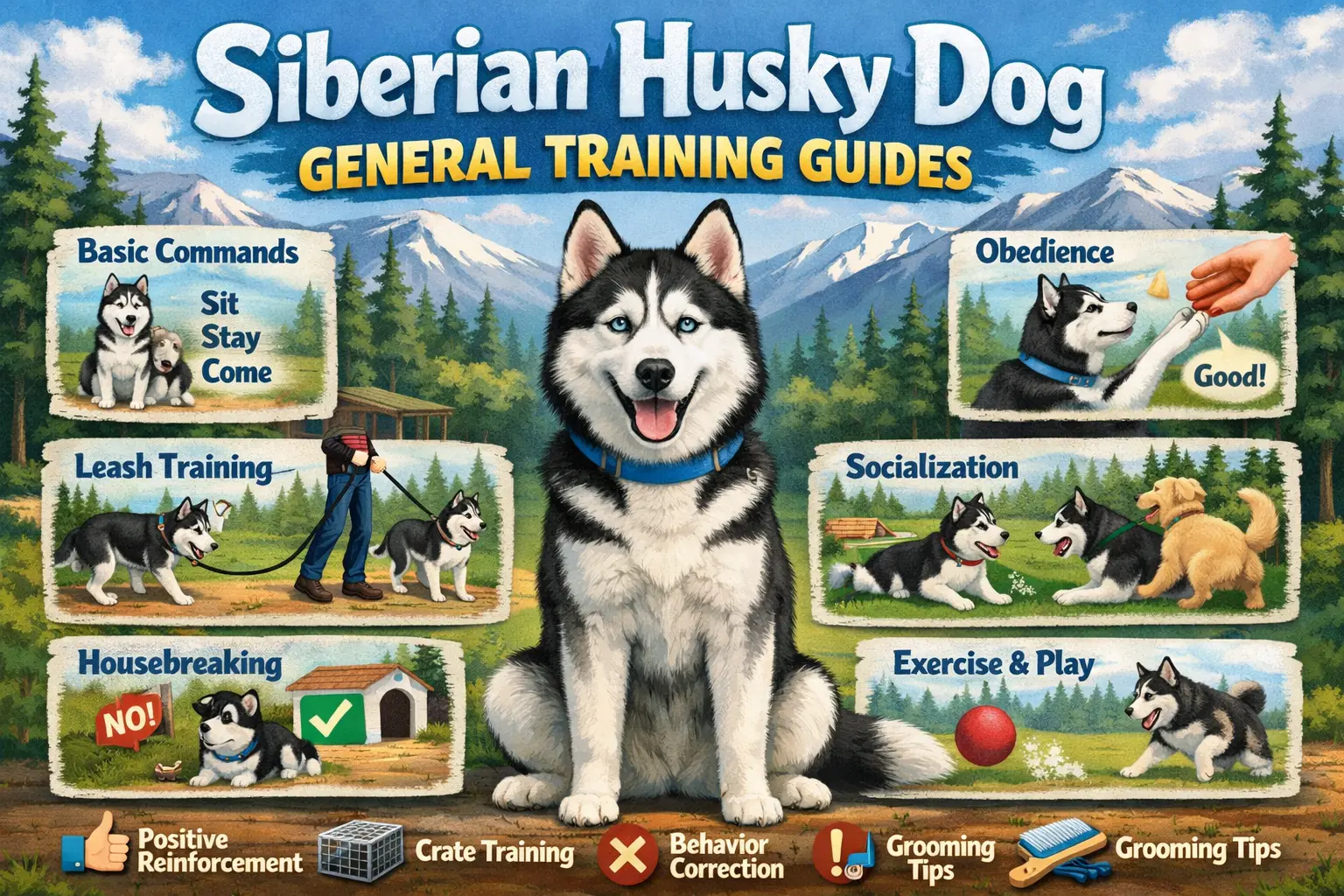
This Siberian Husky training guide explains how to train a Husky that listens by using clear rules, short sessions, high-value rewards, leash structure, recall practice, and breed-specific behavior management. The goal is not blind obedience. The goal is cooperation, safety, and better communication.
Whether you are training a Husky puppy, an adolescent Husky, an adult Husky, or a rescue, the same principle applies: Huskies learn best when training is consistent, rewarding, and connected to real-life behavior.
Why Siberian Husky Training Is Challenging
Siberian Husky training is challenging because this breed is independent, highly active, easily distracted, and strongly motivated by movement. A Husky may understand a command but still choose not to follow it if the reward is weak, the environment is too exciting, or the behavior has not been practiced enough.
Many training problems happen because owners expect Huskies to behave like people-pleasing breeds. Huskies are smart, but they are not automatic obedience dogs. They often ask, “Is this worth it?” before responding.
Good training matters because an untrained Husky can become difficult and unsafe. Common risks include leash pulling, escaping, chasing small animals, ignoring recall, jumping, destructive behavior, and poor impulse control outdoors.
Good Husky training helps your dog:
- Listen more reliably at home and outside
- Walk better on a leash without constant pulling
- Build safer recall habits
- Stay calmer inside the home
- Use mental energy instead of becoming destructive
- Understand household rules more clearly
Common Husky Traits vs Owner Expectations
| Siberian Husky Trait | What Owners Often Expect | Training Reality |
|---|---|---|
| Independent thinking | Instant obedience | The Husky needs motivation and repetition |
| High prey drive | Reliable off-leash recall | Recall must be trained carefully with a long line |
| High endurance | A short walk is enough | Mental and physical exercise are both needed |
| Strong curiosity | The dog stays close naturally | Boundaries and leash structure are essential |
| Vocal behavior | A quiet dog | Howling and talking are normal Husky behaviors |
How to Train a Husky That Listens
To train a Husky that listens, you need to make training short, clear, rewarding, and consistent. Long sessions usually fail because Huskies get bored quickly. Repeating commands over and over also teaches the dog that listening the first time is optional.
The best approach is to train one skill at a time, reward quickly, and practice in different places before expecting reliable behavior outdoors.
Basic Husky Training Session Structure
| Training Element | Best Approach |
|---|---|
| Session length | 5–10 minutes |
| Sessions per day | 2–4 short sessions |
| Best time | Before meals, walks, or play |
| Training location | Quiet place first, then more distracting areas |
| Rewards | High-value treats, toys, praise, and movement |
Start with easy wins. Teach name response, sit, hand targeting, leash focus, and coming when called in a quiet space. Once your Husky responds well indoors, repeat the same skills in the yard, driveway, sidewalk, park, and around mild distractions.
Siberian Husky Training Timeline by Age
Husky training changes by age. A puppy needs foundations, a teenage Husky needs consistency, and an adult Husky needs reliability. The mistake many owners make is expecting adult-level obedience before the dog has been trained through each stage.
Husky Training Timeline
| Husky Age Stage | Main Training Focus | What to Prioritize |
|---|---|---|
| 8–12 weeks | Bonding and basics | Name response, potty routine, crate comfort, gentle handling |
| 3–6 months | Foundation obedience | Sit, stay, come, leash basics, socialization |
| 6–18 months | Impulse control | Recall, leash manners, jumping control, calm behavior |
| Adult Husky | Reliability | Practice around distractions, household rules, problem behaviors |
| Rescue Husky | Trust and routine | Consistency, confidence building, slow retraining |
If you also want to understand your Husky’s age stage in human years, use the Siberian Husky Dog Age Calculator to match training expectations with your dog’s life stage.
Husky Puppy Training Basics
Husky puppy training should begin with routines, engagement, and simple obedience. A young Husky puppy does not need harsh corrections or long sessions. They need structure, repetition, and rewards for calm choices.
Start with these core puppy skills:
- Name response
- Potty routine
- Crate comfort
- Sit and wait
- Gentle leash walking
- Coming when called indoors
- Calm handling and grooming tolerance
- Positive socialization with people, sounds, surfaces, and safe dogs
Do not wait until your Husky is older to start training. Waiting often allows pulling, jumping, mouthing, escaping, and ignoring commands to become habits.
Husky Leash Training
Leash training is one of the most important parts of Siberian Husky training because pulling is natural for this breed. A Husky often pulls because moving forward is rewarding. If pulling gets the dog where they want to go, the behavior becomes stronger.
To teach better leash manners, stop rewarding pulling. When the leash becomes tight, stop walking. When your Husky turns back, checks in, or loosens the leash, reward and move forward again.
Husky Leash Training Fixes
| Leash Problem | Why It Happens | What to Do |
|---|---|---|
| Pulling hard | Forward movement is rewarding | Stop when the leash tightens |
| Zig-zag walking | The dog is scanning and exploring | Reward walking beside you for short distances |
| Lunging at animals | Prey drive or excitement | Create distance and reward attention back to you |
| Ignoring you outside | The environment is too rewarding | Use better rewards and practice in easier areas first |
Husky Recall Training
Recall training is difficult for many Huskies because the breed has strong curiosity, high prey drive, and a love of running. For this reason, many Huskies should not be trusted off-leash in unsecured areas, even after training.
Start recall training indoors. Say your recall cue once, reward heavily when your Husky comes, then practice with more distance. After indoor recall improves, move to a fenced area or use a long line outdoors.
Rules for Husky recall training:
- Use one clear recall word
- Reward every successful recall in the beginning
- Never punish your Husky after they come to you
- Use a long line before practicing in open areas
- Do not call your Husky repeatedly if they are not ready to respond
- Practice around distractions slowly
Recall should be trained as a safety behavior, not just an obedience trick.
Crate Training a Husky
Crate training can help a Husky settle, rest, and stay safe when unsupervised. It should never be used as punishment. The crate should feel like a calm resting place, not a place where the dog is trapped for long periods.
Introduce the crate slowly. Feed meals near the crate, place treats inside, keep the door open at first, and reward your Husky for entering calmly. Once your dog is comfortable, close the door for short periods and gradually increase time.
Crate training is especially useful for Husky puppies, rescue Huskies, and dogs that become destructive when left alone.
Potty Training a Husky Puppy
Potty training a Husky puppy works best with a strict routine. Take your puppy outside after waking, eating, drinking, playing, and before bedtime. Reward immediately after they potty in the correct place.
Do not punish accidents. Clean them properly and improve the schedule. Most potty training problems happen because the puppy had too much freedom too soon or was not taken outside often enough.
Potty training rules:
- Use the same potty area when possible
- Reward immediately after success
- Supervise closely indoors
- Use a crate or puppy-safe area when you cannot watch them
- Take young puppies out frequently
Common Siberian Husky Training Problems and Fixes
Most Siberian Husky training problems are not caused by stubbornness alone. They usually come from weak rewards, inconsistent rules, too much freedom, not enough exercise, or training that has not been practiced around distractions.
Common Husky Training Problems
| Problem | Why It Happens | What Works Better |
|---|---|---|
| Husky ignores commands | The reward is weak or the cue is not fully trained | Use better rewards and practice in easier places first |
| Husky pulls on the leash | Pulling creates forward movement | Stop when pulling starts and reward loose leash walking |
| Husky will not come when called | Distractions or prey drive are stronger than the cue | Train recall with a long line and high-value rewards |
| Husky runs away | Exploration is highly rewarding | Secure the yard and avoid off-leash freedom in open spaces |
| Husky bites or mouths | Puppy play, excitement, or poor impulse control | Redirect to toys and reward calm behavior |
| Husky howls or talks back | Vocal behavior is natural for the breed | Redirect and reward quiet moments |
| Husky destroys things | Boredom, excess energy, or lack of supervision | Add exercise, enrichment, crate training, and structure |
Simple Rules That Improve Husky Obedience
- Train one skill at a time
- Keep sessions short and successful
- Use rewards your Husky actually cares about
- Do not repeat commands over and over
- Practice indoors before expecting outdoor reliability
- Reward calm behavior before excitement takes over
- Use a leash or long line for safety during training
- Stay consistent with household rules
If your Husky walks away, gets frustrated, or stops engaging, end the session calmly and return to an easier step later. Pushing harder usually makes training worse.
When to Get Professional Help
Some Husky behavior problems need professional support. Contact a qualified trainer or behavior professional if your Husky shows aggression, fear, severe separation distress, repeated escaping, unsafe leash behavior, or worsening behavior despite consistent training.
You should also get help if your Husky becomes unsafe around people, children, other dogs, or small animals. Early support can prevent small problems from becoming serious behavior issues.
For a stronger breed cluster, continue with the Siberian Husky Dog Age Calculator to understand your Husky’s age stage, life stage, and age-related training expectations.
Training Approach Used in This Guide
This Siberian Husky training guide is built around reward-based training, short practice sessions, consistency, leash safety, recall management, and realistic breed expectations. Huskies are independent working dogs, so the goal is not forced obedience. The goal is to build focus, cooperation, and safer behavior through repeated practice in real-life situations.
The recommendations in this guide focus on practical owner problems such as leash pulling, ignoring commands, poor recall, escaping, puppy training, crate training, potty training, and calm household behavior.
Siberian Husky Training FAQs
Are Siberian Huskies hard to train?
Yes, Siberian Huskies can be hard to train compared with more people-focused breeds. They are intelligent but independent, easily distracted, and highly motivated by movement. They usually need short sessions, strong rewards, and consistent practice.
How do you train a Husky to listen?
To train a Husky to listen, start in a quiet place, use high-value rewards, give one clear cue, and reward immediately when your Husky responds. Once the dog listens indoors, practice the same command in slightly harder environments.
What is the best age to start Husky training?
The best age to start Husky training is as early as possible, usually around 8 weeks old. Begin with name response, potty routine, crate comfort, gentle leash practice, and simple commands like sit and come.
Can Huskies be trusted off-leash?
Many Huskies should not be trusted off-leash in unsecured areas because they have strong prey drive, curiosity, and a desire to run. Recall training is important, but a leash, long line, or fenced area is usually safer.
How do I stop my Husky from pulling on the leash?
To stop a Husky from pulling on the leash, stop walking when the leash becomes tight. Reward your Husky when they check in, slow down, or walk with a loose leash. Do not allow pulling to move the dog forward.
How long does it take to train a Husky?
Basic Husky training can begin showing results within a few weeks, but reliable behavior takes months of consistent practice. Recall, leash manners, and outdoor focus usually take longer because Huskies are easily distracted outside.

Ata Ur Rehman is the founder of Pet Age in Human Years Calculator, an educational platform that provides age conversion charts and lifespan guides for dogs, cats, birds, and other companion animals. His work focuses on helping pet owners understand how animal ages translate into human years using commonly accepted age conversion formulas and published lifespan averages.
The website compiles breed and species lifespan data from kennel clubs, breed organizations, and general animal lifespan studies to present simple and easy-to-understand guides for pet owners worldwide.
This website was created to centralize animal age conversion charts into one easy reference platform for pet owners.
This article is for general education. For symptoms, medication, diet changes, or health concerns, use a qualified veterinarian who can assess your individual pet.