On this page
The Standard Poodle is one of the oldest and most intelligent dog breeds in the world. Although many people associate the breed with France, historians generally agree that early Standard Poodle ancestors originated in Germany, where they were developed as highly skilled water retrievers and duck hunting dogs. The breed’s name comes from the German word “Pudel”, meaning “to splash in water”, highlighting the breed’s original working purpose.
Later, the breed became extremely popular in France, where breeders refined its appearance and established many of the characteristics recognized today. Despite the elegant appearance and elaborate grooming styles often seen in dog shows, the Standard Poodle remains an athletic, agile, and highly capable working breed.
Standard Poodle History and Origin
The Standard Poodle was originally bred for retrieving waterfowl from lakes and rivers. Its dense curly coat helped protect the dog from cold water, while its intelligence and athleticism made it highly effective in the field.
Unlike many companion breeds, the Standard Poodle was developed for endurance, trainability, and physical performance. Modern Standard Poodles still retain many of these working characteristics, including excellent stamina, problem-solving ability, and strong swimming skills.
Standard Poodle Size and Physical Characteristics
The Standard Poodle is the largest of the three Poodle varieties, standing significantly taller than the Miniature Poodle and Toy Poodle. The breed features a square body structure, long legs, and a deep chest that supports efficient movement and excellent endurance.
Despite their elegant appearance, Standard Poodles are surprisingly powerful and athletic dogs capable of participating in activities such as hiking, agility, obedience competitions, dock diving, and retrieving sports.
Standard Poodle Size Chart
| Physical Trait | Typical Measurements |
|---|---|
| Height | 18 to 24+ inches at the shoulder |
| Weight | 40 to 70 pounds |
| Body Shape | Square and athletic |
| Life Expectancy | 10 to 18 years |
| Coat Type | Curly, continuously growing single coat |
| Shedding Level | Very low shedding |
Standard Poodle Coat Types and Colors
One of the most distinctive features of the breed is its curly coat. Unlike double-coated breeds that shed heavily throughout the year, Standard Poodles have a single-layer coat that continuously grows. Loose hairs become trapped within the curls instead of falling onto furniture and clothing.
This characteristic contributes to the breed’s reputation as a low-shedding dog and makes it a popular option for households looking for dogs that may be better for allergy sufferers. However, the trade-off is significantly higher grooming requirements.
Common Standard Poodle colors include:
- Black Standard Poodle
- White Standard Poodle
- Brown Standard Poodle
- Silver Standard Poodle
- Gray Standard Poodle
- Apricot Standard Poodle
- Red Standard Poodle
Standard Poodle Temperament and Personality
The Standard Poodle temperament is widely regarded as one of the best among large dog breeds. These dogs are exceptionally intelligent, emotionally aware, and highly responsive to human behavior.
Many owners describe Standard Poodles as dogs that seem capable of understanding moods, routines, and family dynamics remarkably well. They prefer being actively involved in family life rather than simply living alongside their owners.
Standard Poodles are known for being:
- Highly intelligent
- Loyal and affectionate
- Easy to train
- Emotionally sensitive
- Alert but not aggressive
- Excellent family companions
Are Standard Poodles Good Family Dogs?
Yes. A well-socialized Standard Poodle is typically an excellent family dog. They are gentle with children, enjoy games and activities, and often develop very strong bonds with their owners.
Because they are sensitive dogs, they respond best to respectful handling and positive interactions. Harsh corrections and chaotic environments may cause anxiety or withdrawal.
Are Standard Poodles Good With Other Pets?
Most Standard Poodles adapt very well to living with other dogs and can coexist peacefully with cats when introduced properly during puppyhood.
Standard Poodle Exercise Requirements
One of the most common mistakes new owners make is underestimating the breed’s activity level. Standard Poodles are not low-energy companion dogs.
A healthy adult Standard Poodle typically requires:
- 60 to 90 minutes of exercise daily
- Mental stimulation activities
- Training sessions and problem-solving games
- Interactive play with family members
Excellent activities for Standard Poodles include swimming, retrieving games, hiking, obedience training, agility sports, and scent work.
Standard Poodle Training and Intelligence
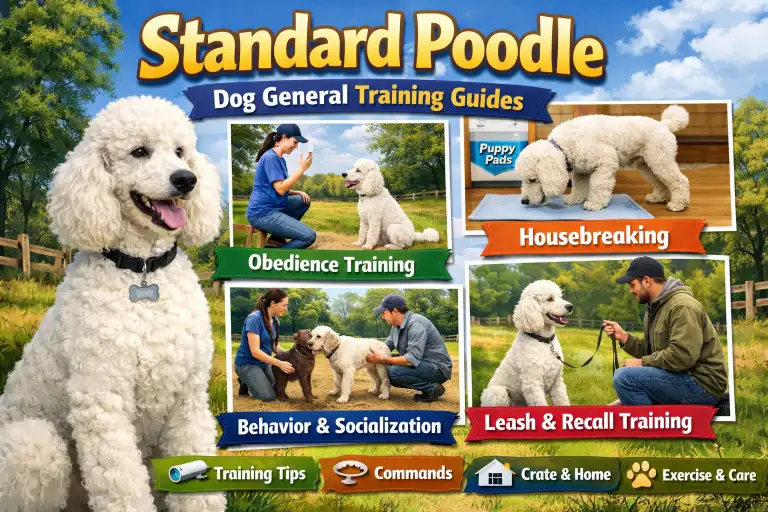
The Standard Poodle consistently ranks among the world’s smartest dog breeds. Their ability to learn commands quickly makes them highly successful in obedience competitions, service work, and therapy programs.
Positive reinforcement training methods work exceptionally well with this breed. Food rewards, praise, and consistency typically produce outstanding results.
Standard Poodle Intelligence Rating
| Trait | Rating |
|---|---|
| Intelligence | ★★★★★ |
| Trainability | ★★★★★ |
| Affection Level | ★★★★☆ |
| Energy Level | ★★★★☆ |
| Independence | ★★☆☆☆ |
Standard Poodle Grooming Requirements
Many prospective owners ask, “Do Standard Poodles shed?” While shedding is minimal, grooming requirements are among the highest of any dog breed.
Because the coat continuously grows, regular brushing and professional grooming appointments are necessary to prevent painful mats and skin problems.
Recommended Grooming Schedule
| Task | Frequency |
|---|---|
| Brushing | 3 to 5 times per week |
| Professional Grooming | Every 4 to 8 weeks |
| Ear Cleaning | Weekly |
| Nail Trimming | Every 3 to 4 weeks |
Common Standard Poodle Health Problems
Although generally healthy, Standard Poodles can be predisposed to certain inherited conditions.
| Health Condition | Risk Level |
|---|---|
| Hip Dysplasia | Moderate |
| Addison’s Disease | Moderate |
| Progressive Retinal Atrophy | Moderate |
| Gastric Dilatation Volvulus (Bloat) | Low to Moderate |
How Much Does a Standard Poodle Cost?
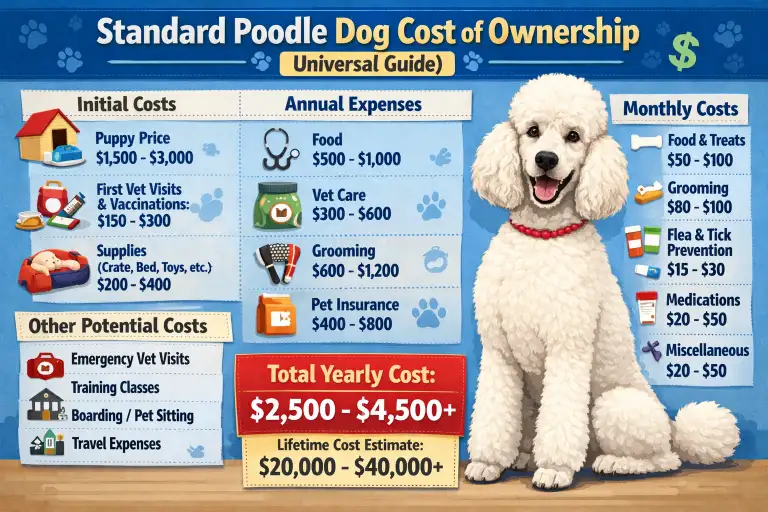
The total cost of owning a Standard Poodle extends well beyond the initial purchase price.
- Purchase price from a breeder: $1,000 to $3,500+
- Professional grooming: Ongoing lifetime expense
- Premium dog food costs
- Routine veterinary care
- Pet insurance costs
Pros and Cons of Owning a Standard Poodle
| Pros | Cons |
|---|---|
| Extremely intelligent | High grooming commitment |
| Very low shedding | Requires daily interaction |
| Excellent family dog | Can become bored easily |
| Highly trainable | Not ideal for absent owners |
Is a Standard Poodle the Right Dog for You?
The Standard Poodle is ideal for active owners looking for a highly intelligent, loyal, and trainable companion. They thrive in homes where they receive exercise, training, and regular interaction with their family.
If you are looking for a low-maintenance dog that can spend long hours alone, the Standard Poodle may not be the right choice. However, for owners willing to invest time and attention, few breeds offer the same combination of intelligence, athleticism, and companionship.
Frequently Asked Questions About Standard Poodles
Do Standard Poodles shed?
Standard Poodles are considered very low-shedding dogs, but they still require regular grooming because loose hair becomes trapped within the coat.
Are Standard Poodles hypoallergenic?
No dog breed is truly hypoallergenic, but Standard Poodles are often better tolerated by allergy sufferers because of their low shedding coat.
How much exercise does a Standard Poodle need?
Most healthy adult Standard Poodles require between 60 and 90 minutes of exercise every day.
Are Standard Poodles easy to train?
Yes. Standard Poodles are among the easiest dog breeds to train due to their intelligence and eagerness to learn.
How long do Standard Poodles live?
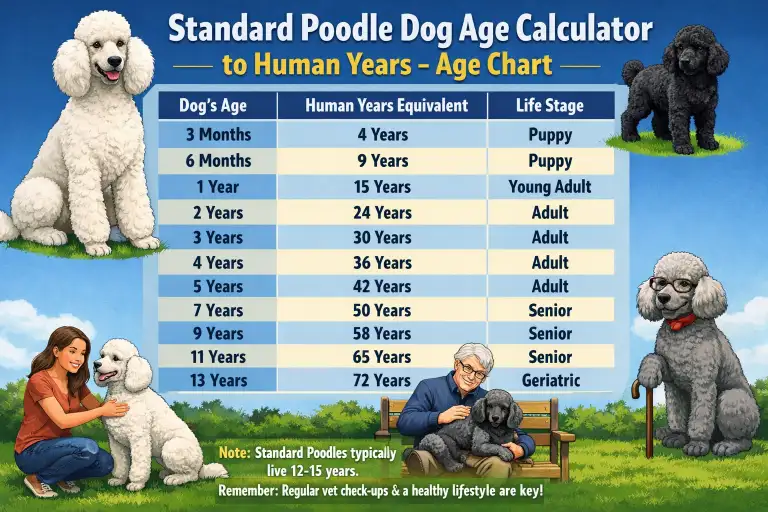
The average Standard Poodle lifespan ranges from 10 to 18 years with proper care and responsible breeding.

Ata Ur Rehman is the founder of Pet Age in Human Years Calculator, an educational platform that provides age conversion charts and lifespan guides for dogs, cats, birds, and other companion animals. His work focuses on helping pet owners understand how animal ages translate into human years using commonly accepted age conversion formulas and published lifespan averages.
The website compiles breed and species lifespan data from kennel clubs, breed organizations, and general animal lifespan studies to present simple and easy-to-understand guides for pet owners worldwide.
This website was created to centralize animal age conversion charts into one easy reference platform for pet owners.
This article is for general education. For symptoms, medication, diet changes, or health concerns, use a qualified veterinarian who can assess your individual pet.