On this page
Wondering how old your Standard Schnauzer is in human years? A Standard Schnauzer age calculator gives you a more accurate answer than the outdated “7 dog years equals 1 human year” rule.
Dogs do not age at the same speed as humans. Their first years are much faster, while adulthood and senior years follow a slower aging pattern. Because the Standard Schnauzer is a medium-sized breed, its aging process is different from small toy breeds and large giant breeds.
Our Standard Schnauzer human age calculator uses a breed-size-based aging approach to estimate your dog’s equivalent human age and help you understand their current life stage.
This Standard Schnauzer age chart helps you understand:
- How Standard Schnauzer years compare to human years
- When your dog enters adulthood and senior years
- How aging affects behavior, health, and daily needs
- What care changes are needed at different ages
For example, a 5-year-old Standard Schnauzer is not equivalent to a 35-year-old human because of simple multiplication. Based on modern canine aging patterns, a 5-year-old Standard Schnauzer is closer to a human in their mid-30s because dogs mature quickly during their early years and then age more gradually.
Use our Standard Schnauzer age calculator to find your dog’s estimated human age, then use the chart below to understand their health stage and care requirements.
Standard Schnauzer Age Chart: Dog Age Compared to Human Age
Many owners search for “how old is my Standard Schnauzer in human years?” because they want to understand whether their dog is still young, mature, or entering their senior stage.
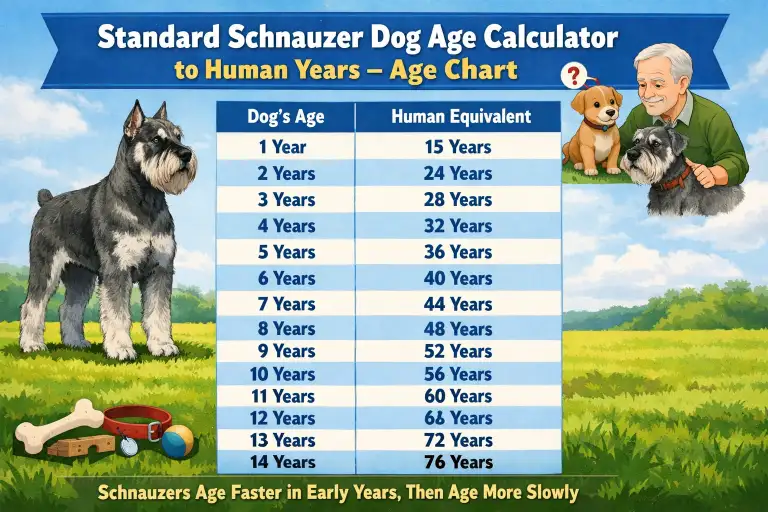
The following Standard Schnauzer dog years to human years chart is based on medium breed aging patterns rather than the inaccurate 7-year rule.
| Standard Schnauzer Age | Human Age Equivalent | Life Stage |
|---|---|---|
| 6 months | Approximately 10 years | Puppy |
| 1 year | Approximately 15 years | Puppy / Young Dog |
| 2 years | Approximately 24 years | Young Adult |
| 3 years | Approximately 28 years | Adult |
| 4 years | Approximately 32 years | Adult |
| 5 years | Approximately 36 years | Adult |
| 6 years | Approximately 40 years | Adult |
| 7 years | Approximately 44 years | Mature Adult |
| 8 years | Approximately 48 years | Mature Adult |
| 9 years | Approximately 52 years | Senior |
| 10 years | Approximately 56 years | Senior |
| 11 years | Approximately 60 years | Senior |
| 12 years | Approximately 64 years | Senior |
| 13 years | Approximately 68 years | Senior |
| 14 years | Approximately 72 years | Senior |
Why the 7 Dog Years Rule Does Not Work for Standard Schnauzers
The popular idea that one dog year equals seven human years is easy to remember, but it does not accurately represent how dogs age.
Dogs experience their fastest development during puppyhood. A one-year-old dog has already reached a level of physical and social maturity that would be much older than a seven-year-old human.
After the first two years, aging slows down. This means a 10-year-old Standard Schnauzer is not the same as a 70-year-old human. Instead, they are closer to a middle-aged person in terms of biological aging.
Standard Schnauzer Aging vs Traditional Dog Age Calculation
| Traditional Belief | Modern Understanding |
|---|---|
| Every dog year equals seven human years | Dogs age faster early and slower later |
| All dogs age at the same rate | Breed size affects aging speed |
| Older dogs automatically become inactive | Many senior Standard Schnauzers remain energetic |
Because Standard Schnauzers are medium-sized dogs, they often maintain good energy, intelligence, and activity levels well into adulthood. Understanding their true age helps owners provide better nutrition, exercise, training, and veterinary care.
Standard Schnauzer Life Stages: Puppy, Adult, and Senior Years
Understanding your Standard Schnauzer life stage helps you provide the right care at the right time. A Standard Schnauzer does not simply become “old” overnight. Aging happens gradually, with changes in energy, behavior, metabolism, and health needs.
Knowing your dog’s current stage can help you adjust their diet, exercise routine, training, and veterinary care before age-related problems become serious.
Standard Schnauzer Life Stages by Age
| Standard Schnauzer Age | Life Stage | Normal Development | Common Changes |
|---|---|---|---|
| 0–1 Year | Puppy | Rapid growth, learning, social development | High energy, chewing, curiosity, short attention span |
| 1–3 Years | Young Adult | Strong body development and confidence building | High activity needs, testing boundaries, playful behavior |
| 3–6 Years | Adult | Peak physical condition and stamina | More stable personality and predictable routine |
| 7–9 Years | Mature Adult | Beginning of slower aging changes | Needs more recovery time after activity |
| 10+ Years | Senior | Reduced energy and changing health needs | Joint stiffness, more rest, slower movement |
How Old Is My Standard Schnauzer in Human Years?
One of the most common questions owners ask is: “How old is my Standard Schnauzer in human years?”
The answer depends on your dog’s actual age, breed size, and stage of development. A Standard Schnauzer reaches maturity much faster than humans, but their later years progress more slowly.
Examples:
- A 1-year-old Standard Schnauzer is similar to a teenager in human development.
- A 2-year-old Standard Schnauzer is already comparable to a young adult human.
- A 7-year-old Standard Schnauzer is entering mature adulthood, not extreme old age.
- A 10-year-old Standard Schnauzer is similar to a human in their mid-50s.
This is why using a proper Standard Schnauzer age calculator gives a more realistic understanding of your dog’s maturity and health needs.
Signs Your Standard Schnauzer Is Getting Older
Standard Schnauzers are known for being intelligent, alert, and active dogs. Many continue enjoying walks, training, and family activities even during their senior years.
However, aging naturally brings changes. Common signs of an older Standard Schnauzer may include:
- Sleeping more than when they were younger
- Taking longer to recover after exercise
- Mild stiffness after resting
- Less interest in intense play
- Gray hair around the muzzle and face
- Changes in hearing or vision
- Needing more frequent rest periods
These changes are often normal parts of aging. However, sudden changes in behavior, appetite, movement, or energy levels should be discussed with a veterinarian.
Standard Schnauzer Age and Health: What Owners Should Know
Your Standard Schnauzer’s age affects more than appearance. Aging changes how your dog processes food, recovers from exercise, and responds to health challenges.
Understanding their true age helps you make better decisions about:
- Daily exercise levels
- Food portions and nutrition
- Joint support
- Dental care
- Routine veterinary visits
- Mental stimulation
Care Needs Based on Standard Schnauzer Age
| Life Stage | Nutrition Focus | Exercise Needs | Health Care Focus |
|---|---|---|---|
| Puppy (0–1 Year) | Growth nutrition and balanced calories | Short play sessions and training activities | Vaccines, socialization, development checks |
| Adult (1–6 Years) | Maintain healthy weight and muscle | Daily walks, play, and mental stimulation | Routine yearly checkups |
| Mature Adult (7–9 Years) | Support joints and maintain lean body condition | Moderate exercise with recovery time | Dental care and wellness monitoring |
| Senior (10+ Years) | Easy digestion and age-appropriate nutrition | Gentle exercise and mobility support | More frequent health checks |
How to Help Your Standard Schnauzer Live a Longer, Healthier Life
A Standard Schnauzer can enjoy a long and active life with consistent care. While genetics play an important role, daily habits have a major impact on your dog’s comfort and overall wellness.
The best way to support healthy aging is to make small adjustments as your dog gets older.
Healthy Aging Tips for Standard Schnauzers
- Maintain a healthy weight: Extra weight increases stress on joints and can shorten quality of life.
- Provide regular exercise: Standard Schnauzers need physical activity throughout life, even as seniors.
- Keep the brain active: Training games, puzzles, and new activities help maintain mental sharpness.
- Schedule regular vet visits: Preventive care helps identify age-related concerns early.
- Adjust food with age: Older dogs may need different calorie levels than active adults.
- Support joint comfort: Softer bedding and appropriate activity can improve mobility.
Aging does not mean your Standard Schnauzer stops enjoying life. Many senior dogs remain playful, affectionate, and engaged with their families. They simply need care that matches their changing needs.
Frequently Asked Questions About Standard Schnauzer Age and Human Years
How do I calculate my Standard Schnauzer’s age in human years?
You can calculate your Standard Schnauzer’s age in human years by using a breed-specific age chart or calculator. The old method of multiplying dog years by seven is inaccurate because dogs age much faster during their first years and then slow down as they become adults.
A Standard Schnauzer age calculator considers the breed’s medium size and typical aging pattern to provide a more realistic human age estimate.
How old is a 1-year-old Standard Schnauzer in human years?
A 1-year-old Standard Schnauzer is approximately equal to a 15-year-old human. At this age, your dog is still young but has already reached a large amount of physical maturity.
How old is a 2-year-old Standard Schnauzer in human years?
A 2-year-old Standard Schnauzer is roughly equivalent to a 24-year-old human. Most dogs at this age are considered young adults with strong energy levels and developing behavior patterns.
How old is a 5-year-old Standard Schnauzer in human years?
A 5-year-old Standard Schnauzer is approximately 36 years old in human years. This stage is considered adulthood, where most dogs are physically mature and still active.
Is a 10-year-old Standard Schnauzer considered old?
Yes, a 10-year-old Standard Schnauzer is generally considered a senior dog, but that does not mean they are unhealthy or inactive. Many Standard Schnauzers continue enjoying walks, training, and family activities well into their senior years.
What is the average lifespan of a Standard Schnauzer?
The average Standard Schnauzer lifespan is usually around 13–16 years when provided with proper nutrition, exercise, preventive veterinary care, and a healthy lifestyle.
Do Standard Schnauzers age faster than humans?
Yes. Standard Schnauzers age much faster than humans during their early years. Their first two years represent significant physical and mental development, while aging becomes slower and steadier during adulthood.
Why does the 7-year dog age rule not work for Standard Schnauzers?
The 7 dog years equals 1 human year formula does not account for breed size, genetics, or different life stages. Standard Schnauzers mature quickly early in life and then follow a slower aging curve, making a breed-specific age chart much more accurate.
When does a Standard Schnauzer become a senior dog?
Most Standard Schnauzers are considered senior dogs around 9–10 years old. However, individual dogs may age differently depending on genetics, health, diet, and lifestyle.
How can I help my Standard Schnauzer age well?
You can support healthy aging by providing:
- A balanced diet suitable for your dog’s age
- Regular exercise and mental stimulation
- Routine veterinary checkups
- Healthy weight management
- Joint and dental care
- A comfortable home environment
Understanding your Standard Schnauzer’s true age in human years helps you make better decisions about their care at every stage of life.

Ata Ur Rehman is the founder of Pet Age in Human Years Calculator, an educational platform that provides age conversion charts and lifespan guides for dogs, cats, birds, and other companion animals. His work focuses on helping pet owners understand how animal ages translate into human years using commonly accepted age conversion formulas and published lifespan averages.
The website compiles breed and species lifespan data from kennel clubs, breed organizations, and general animal lifespan studies to present simple and easy-to-understand guides for pet owners worldwide.
This website was created to centralize animal age conversion charts into one easy reference platform for pet owners.
This article is for general education. For symptoms, medication, diet changes, or health concerns, use a qualified veterinarian who can assess your individual pet.