On this page
Meta Title: Welsh Springer Spaniel Grooming Guide: Brushing, Bathing & Coat Care
Meta Description: Learn how to groom a Welsh Springer Spaniel with this complete grooming guide. Discover brushing schedules, bathing tips, coat care, shedding control, grooming tools, and expert maintenance advice.
Primary Keywords: Welsh Springer Spaniel grooming, Welsh Springer Spaniel grooming guide, how to groom a Welsh Springer Spaniel, Welsh Springer Spaniel coat care, Welsh Springer Spaniel shedding
Related Search Queries:
- How often should you groom a Welsh Springer Spaniel?
- Do Welsh Springer Spaniels shed a lot?
- What brush is best for a Welsh Springer Spaniel?
- Can you shave a Welsh Springer Spaniel?
- How do you prevent mats on a Welsh Springer Spaniel?
- Are Welsh Springer Spaniels high maintenance?
Welsh Springer Spaniels are energetic sporting dogs known for their beautiful red-and-white coats, athletic ability, and love of outdoor activities. Their coat was developed to protect them while working in fields and water, but that same protective coat requires regular grooming to stay healthy.
A proper Welsh Springer Spaniel grooming routine is not only about keeping your dog looking clean. Grooming plays an important role in maintaining healthy skin, preventing painful mats, controlling shedding, reducing odor, and identifying health problems early.
Unlike short-coated breeds that need minimal maintenance, Welsh Springer Spaniels have a medium-length double coat with feathering around the ears, chest, legs, belly, and tail. These areas can easily trap dirt, moisture, grass seeds, and debris after outdoor activities.
Why Grooming Is Important for a Welsh Springer Spaniel
Regular grooming helps your Welsh Springer Spaniel stay comfortable and healthy throughout every stage of life. Because this breed enjoys outdoor activities, their coat often collects mud, pollen, and moisture that can create grooming challenges.
A consistent grooming routine helps:
- Remove loose hair and reduce shedding around the home
- Prevent painful mats and tangles
- Maintain healthy skin and natural coat oils
- Reduce the risk of ear infections and skin irritation
- Keep feathering clean and manageable
- Allow early detection of lumps, parasites, or skin problems
Many professional groomers describe the Welsh Springer Spaniel as a moderate-maintenance breed. They are not difficult to groom, but skipping regular care can quickly lead to tangled feathering, especially behind the ears, under the legs, and around the tail.
Starting grooming early also helps puppies become comfortable with brushing, bathing, nail trimming, and handling. Dogs that learn grooming habits when young usually tolerate professional grooming and veterinary examinations much better.
Welsh Springer Spaniel Coat Type and Grooming Requirements
The Welsh Springer Spaniel has a double coat designed to provide protection from weather conditions while working outdoors. Understanding the coat structure is important because it determines how often your dog needs grooming.
The Two Layers of a Welsh Springer Spaniel Coat
- Soft undercoat: Provides insulation and helps regulate body temperature.
- Outer coat: A longer protective layer that helps repel water, dirt, and debris.
This double coat means Welsh Springer Spaniels experience year-round shedding, with heavier shedding usually occurring during seasonal changes in spring and fall.
Loose undercoat can become trapped beneath the outer coat if brushing is neglected. Over time, this creates tangles and mats that pull on the skin and cause discomfort.
Areas That Need Extra Grooming Attention
- Ears: Long feathering can trap moisture and dirt.
- Legs: Feathering can collect mud, grass, and burrs.
- Chest and belly: These areas often collect debris during outdoor activities.
- Tail: Longer hair can become tangled without regular brushing.
Welsh Springer Spaniel Coat Characteristics and Grooming Impact
| Coat Feature | Description | Grooming Requirement |
|---|---|---|
| Double coat | Two layers protect the dog from weather | Regular brushing removes loose undercoat |
| Feathering | Longer hair around ears, legs, chest, and tail | Needs frequent brushing to prevent mats |
| Water-resistant coat | Designed for outdoor work | Must be dried properly after bathing |
| Seasonal shedding | Heavy shedding during coat changes | Extra brushing may be needed |
| Medium-length hair | Requires more care than short coats | Cannot be ignored between grooming sessions |
The key to successful Welsh Springer Spaniel grooming is consistency. A few minutes of brushing several times per week is much easier than trying to remove large mats after weeks of neglect.
How to Groom a Welsh Springer Spaniel at Home
Grooming a Welsh Springer Spaniel at home is simple when it becomes part of a regular routine. This breed does not require complicated haircuts, but it does need consistent brushing, bathing, drying, and coat maintenance to stay healthy.
The most important parts of a home grooming routine include:
- Regular brushing to prevent tangles and remove loose hair
- Proper bathing with dog-safe products
- Complete drying to protect the skin
- Checking ears, nails, paws, and skin regularly
Welsh Springer Spaniel Grooming Schedule
| Grooming Task | Recommended Frequency | Purpose |
|---|---|---|
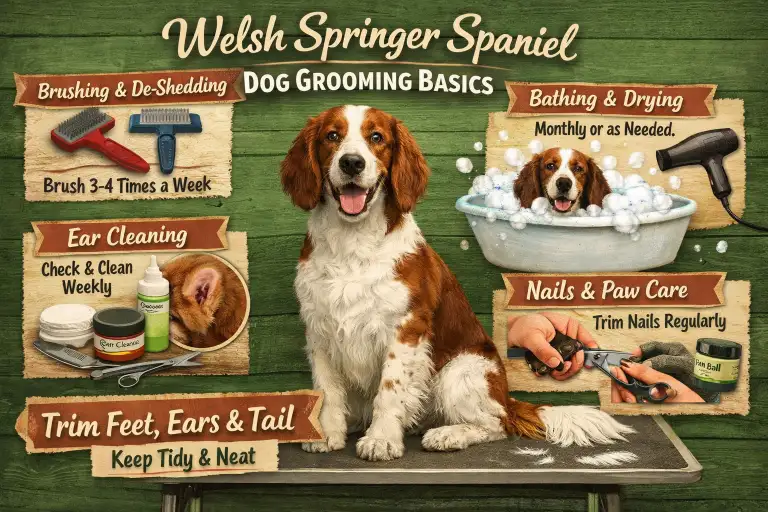
| Brushing | 3–4 times per week | Removes loose hair and prevents mats |
| Feathering areas | Every other day | Stops tangles around ears and legs |
| Bathing | Every 4–6 weeks or when needed | Keeps skin and coat clean |
| Ear checks | Weekly | Helps prevent infections |
| Nail trimming | Every 2–4 weeks | Maintains comfortable movement |
| Dental care | Several times per week | Supports healthy teeth and gums |
How to Brush a Welsh Springer Spaniel Correctly
Brushing is the most important part of Welsh Springer Spaniel coat care. Because this breed has feathering and a double coat, brushing should be done carefully to remove loose hair without damaging the coat.
Always brush your Welsh Springer Spaniel before bathing. Washing a tangled coat can make mats tighter and more difficult to remove.
Areas That Need Extra Brushing
- Behind the ears
- Under the front legs
- Back legs and feathering
- Chest area
- Belly hair
- Tail feathering
Use gentle strokes and work through small sections. Pulling aggressively on tangles can make grooming uncomfortable and may cause your dog to dislike future grooming sessions.
Best Grooming Tools for Welsh Springer Spaniels
| Grooming Tool | Purpose |
|---|---|
| Slicker brush | Removes loose hair and small tangles from feathering |
| Metal comb | Finds hidden knots and checks coat condition |
| Pin brush | Provides gentle everyday brushing |
| Dog shampoo | Cleans the coat while protecting skin balance |
| Drying towels | Removes excess moisture after bathing |
Bathing a Welsh Springer Spaniel
Welsh Springer Spaniels do not need frequent baths unless they become dirty from outdoor activities. Too much bathing can remove natural oils and cause dry or itchy skin.
Most dogs of this breed do well with bathing every 4–6 weeks, although active dogs that spend time outdoors may need more frequent cleaning.
Bathing Tips for Welsh Springer Spaniels
- Brush the coat before the bath
- Use only dog-specific shampoo
- Rinse thoroughly to remove all product
- Dry the coat completely after bathing
- Check ears and skin during the process
A damp coat can create an environment where bacteria and yeast grow, especially around the ears and thick feathering.
Welsh Springer Spaniel Ear, Nail, Skin, and Dental Care
Complete grooming goes beyond coat maintenance. Regular health checks help keep your Welsh Springer Spaniel comfortable and allow you to notice problems early.
Ear Care
Welsh Springer Spaniels have floppy ears that can trap moisture and reduce airflow. This makes regular ear checks especially important.
Watch for:
- Bad odor
- Redness
- Excess wax buildup
- Head shaking
- Scratching at ears
If these signs appear, veterinary advice is recommended.
Nail Care
Long nails can affect how your Welsh Springer Spaniel walks and may contribute to discomfort over time. Trim nails regularly and avoid allowing them to become overgrown.
A simple rule: if you hear your dog’s nails clicking on hard floors, they are usually too long.
Skin Checks
Regular brushing gives owners a chance to check the skin underneath the coat.
Look for:
- Red spots
- Dry or flaky skin
- Hair loss
- Sores
- Unusual smells
Professional Grooming for Welsh Springer Spaniels
Many owners can handle daily grooming at home, but professional grooming is still helpful for maintaining coat condition and managing feathering.
Most Welsh Springer Spaniels benefit from professional grooming every 8–12 weeks.
A professional groomer can help with:
- Neatening feathering
- Removing difficult mats
- Managing seasonal shedding
- Safe coat trimming
- Overall coat assessment
Common Welsh Springer Spaniel Grooming Mistakes
| Mistake | Why It Causes Problems | Better Approach |
|---|---|---|
| Shaving the coat | Can affect the coat’s protective function | Maintain natural coat length |
| Skipping brushing | Creates mats and discomfort | Brush several times weekly |
| Using human shampoo | May irritate dog skin | Use dog-specific products |
| Bathing too often | Can dry the skin | Follow a proper schedule |
| Ignoring ears | Raises infection risk | Check ears weekly |
Frequently Asked Questions About Welsh Springer Spaniel Grooming
How often should a Welsh Springer Spaniel be groomed?
A Welsh Springer Spaniel should be brushed several times per week, with full grooming maintenance including bathing and coat checks every few weeks. Professional grooming is usually helpful every 8–12 weeks.
Do Welsh Springer Spaniels shed a lot?
Yes. Welsh Springer Spaniels shed throughout the year and usually shed more heavily during spring and fall. Regular brushing helps control loose hair.
Are Welsh Springer Spaniels high-maintenance dogs?
Welsh Springer Spaniels are considered moderate-maintenance dogs. Their grooming needs are manageable, but they require consistent brushing because of their double coat and feathering.
What is the best brush for a Welsh Springer Spaniel?
A slicker brush combined with a metal comb works well for most Welsh Springer Spaniels. These tools help remove loose hair and prevent mats in feathered areas.
Can you shave a Welsh Springer Spaniel?
Shaving is generally not recommended because the double coat provides protection from weather and helps regulate temperature. Regular trimming and brushing are better options.
How do you stop a Welsh Springer Spaniel from getting mats?
The best way to prevent mats is regular brushing, especially around the ears, legs, chest, and tail. Removing small tangles early prevents painful mat buildup.
How often should you bathe a Welsh Springer Spaniel?
Most Welsh Springer Spaniels should be bathed every 4–6 weeks or when they become dirty. Dogs that spend a lot of time outdoors may need occasional extra baths.
When should I take my Welsh Springer Spaniel to a groomer?
A professional groomer is helpful when mats become difficult to remove, feathering needs trimming, or your dog is uncomfortable during home grooming.
With a consistent grooming routine, Welsh Springer Spaniels can maintain a healthy, beautiful coat while staying comfortable and active. Regular brushing, ear care, nail trimming, and professional maintenance help support long-term health and quality of life.

Ata Ur Rehman is the founder of Pet Age in Human Years Calculator, an educational platform that provides age conversion charts and lifespan guides for dogs, cats, birds, and other companion animals. His work focuses on helping pet owners understand how animal ages translate into human years using commonly accepted age conversion formulas and published lifespan averages.
The website compiles breed and species lifespan data from kennel clubs, breed organizations, and general animal lifespan studies to present simple and easy-to-understand guides for pet owners worldwide.
This website was created to centralize animal age conversion charts into one easy reference platform for pet owners.
This article is for general education. For symptoms, medication, diet changes, or health concerns, use a qualified veterinarian who can assess your individual pet.