On this page
Australian Terrier training works best when it matches the breed’s confident, alert, and independent personality. These small terriers are smart and loyal, but they can also be vocal, easily distracted, and quick to make their own decisions. That means successful training is not about force. It is about short sessions, clear rules, strong rewards, and consistent daily practice.
This Australian Terrier training guide explains how to train an Australian Terrier puppy or adult dog using simple, realistic steps. You’ll learn how to build obedience, reduce barking, improve leash walking, manage prey drive, and prevent common behavior problems before they become habits.
Australian Terriers are not usually difficult to train, but they do need the right approach. Because they were bred to be alert working terriers, they respond best to training that feels active, rewarding, and mentally interesting.
In this guide, you’ll learn:
- How Australian Terrier temperament affects training
- How to train an Australian Terrier puppy, adult, or senior dog
- How to reduce barking, pulling, jumping, and ignoring commands
- How to build better obedience without harsh corrections
- When professional help may be needed
This is a breed-specific training guide, not a generic command list. The goal is to help you understand how Australian Terriers learn so you can build better habits, stronger communication, and calmer behavior at home.
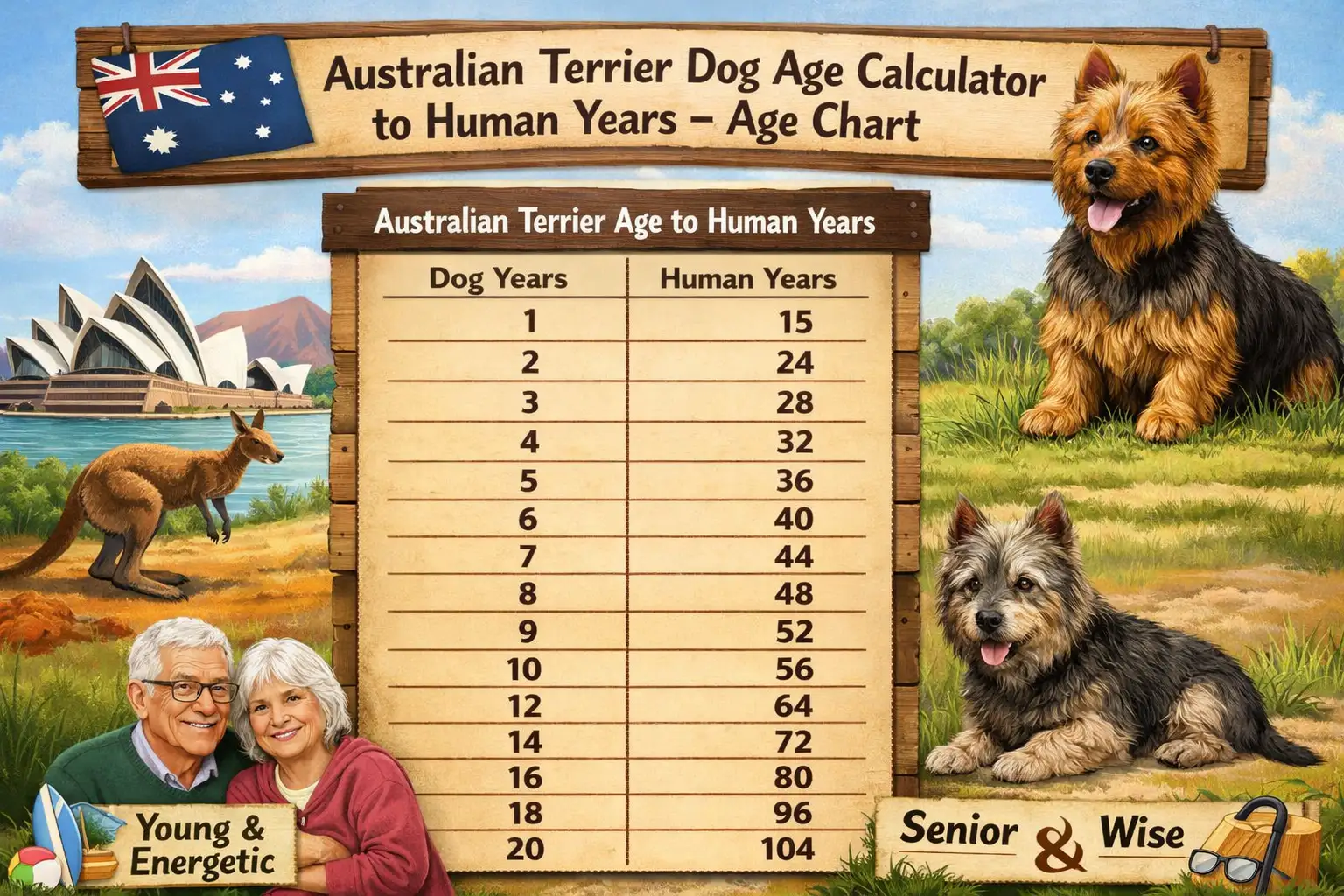
Helpful related tool: If you want to understand your dog’s age stage before choosing a training routine, use the Australian Terrier Dog Age Calculator.
Understanding Australian Terrier Temperament and Behavior
Australian Terriers may be small, but they often behave like much larger dogs. They are confident, curious, alert, and naturally active. Their temperament has a direct impact on how training should be handled.
Here are the main traits that affect Australian Terrier training:
- Independent thinking
Australian Terriers like to make choices on their own. They are not trying to be difficult; they simply need a clear reason to listen. - Alert and vocal nature
This breed often barks to warn, react, or demand attention. Barking training should begin early. - Strong prey drive
Australian Terriers may chase birds, cats, squirrels, or fast-moving objects. This affects recall, leash walking, and impulse control. - Fast learning but quick boredom
They can learn commands quickly, but repetitive training may cause them to lose interest.
Many owners describe Australian Terriers as stubborn. In most cases, the real issue is motivation. This breed usually responds better to rewards, games, praise, and variety than to pressure or punishment.
How Temperament Affects Training
| Australian Terrier Trait | Training Impact | Best Training Response |
|---|---|---|
| Independent mindset | May ignore weak commands | Use high-value rewards and clear timing |
| Alert personality | May bark at sounds or movement | Reward quiet behavior and calm focus |
| High prey drive | May chase or pull outdoors | Practice recall, leash control, and impulse training |
| High intelligence | May get bored quickly | Keep sessions short, varied, and fun |
When training matches their temperament, Australian Terriers usually learn faster and behave better. The key is to make the right behavior more rewarding than barking, pulling, chasing, or ignoring commands.
How to Train an Australian Terrier: Basic Training Rules
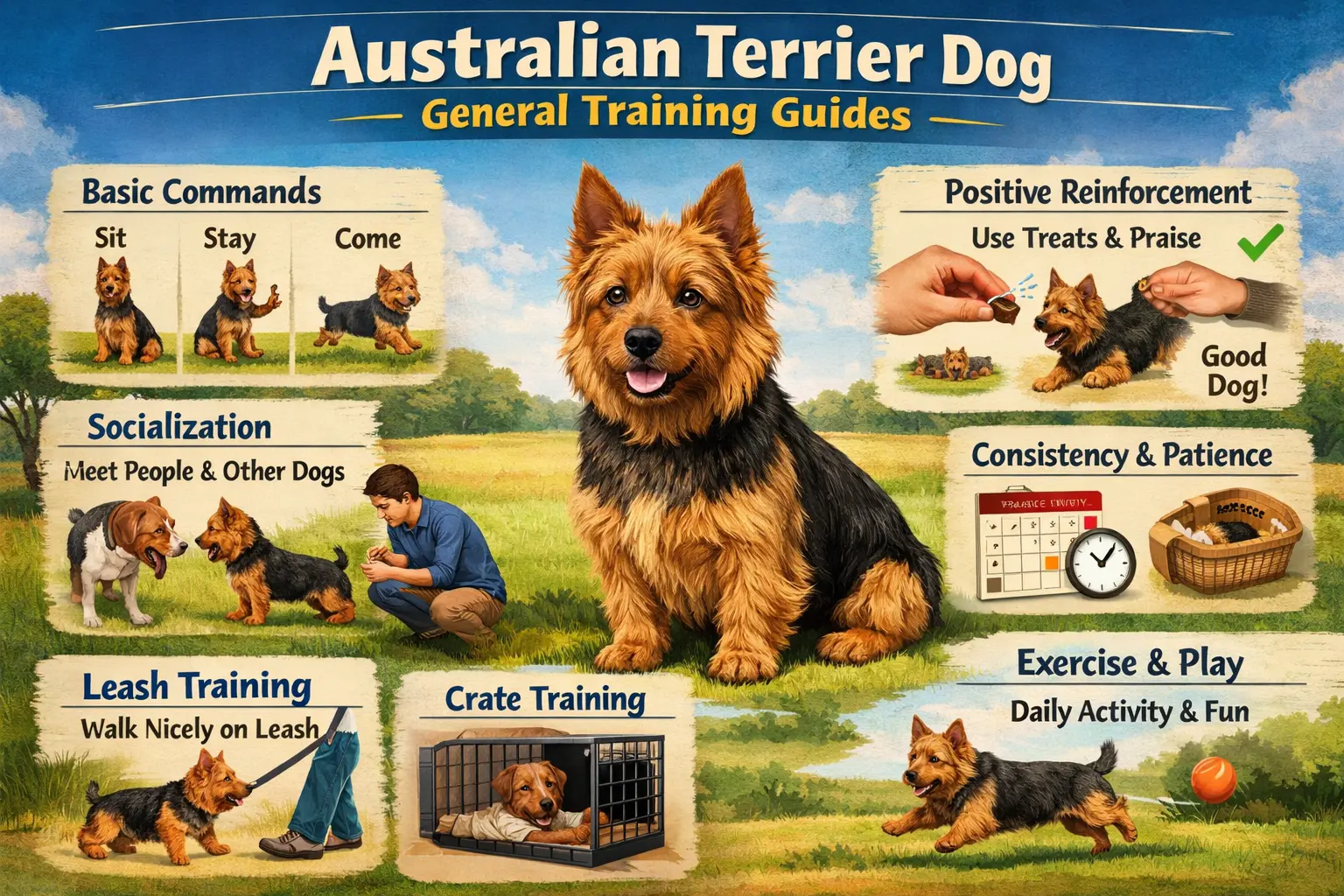
To train an Australian Terrier successfully, keep lessons short, positive, and consistent. This breed does not need long training sessions. It needs clear repetition in small daily blocks.
Start with these Australian Terrier training rules:
- Use 5-10 minute sessions instead of long lessons
- Train 2-3 times per day when possible
- Use treats, toys, praise, or play as rewards
- Begin in a quiet space before adding distractions
- Reward the behavior you want before correcting the behavior you dislike
- Stop before your dog becomes bored or frustrated
Simple Australian Terrier Training Plan
| Training Part | Best Approach |
|---|---|
| Session length | 5-10 minutes |
| Sessions per day | 2-3 short sessions |
| Best rewards | Small treats, toys, praise, short play |
| Best location | Quiet room first, then yard, then outdoor areas |
| Best start age | As early as possible with simple puppy lessons |
| Training style | Positive, calm, consistent, and reward-based |
What to Teach First
Start with daily-life skills before advanced commands. These basics make your Australian Terrier easier to manage at home and outdoors.
- Name recognition and attention
- Sit before food, doors, and play
- Loose-leash walking
- Coming when called
- Calm greetings without jumping
- Quiet behavior instead of demand barking
If your Australian Terrier ignores commands, do not immediately assume they are being stubborn. First check whether the session is too long, the reward is too weak, or the environment is too distracting.
Australian Terrier Training by Age
Australian Terrier training should change as your dog grows. A puppy needs socialization and basic habits. An adult dog needs consistency and behavior control. A senior dog may need slower sessions and gentler expectations.
| Age Stage | Main Training Focus | Best Approach |
|---|---|---|
| Puppy | Socialization, potty routine, name response, bite control | Very short sessions, frequent rewards, calm exposure |
| Adult | Leash walking, barking control, recall, obedience | Consistent rules, daily practice, stronger rewards |
| Senior | Maintaining habits, gentle mental exercise, calm routines | Shorter sessions, patience, low-impact activities |
Your dog’s age affects energy, focus, and learning speed. For age-based context, you can check your dog’s life stage with the Australian Terrier Dog Age Calculator.
Australian Terrier Puppy Training
Australian Terrier puppy training should begin with simple routines. Puppies need to learn what is expected before they can handle distractions or advanced commands.
- Teach their name using treats and praise
- Reward calm behavior before meals and play
- Start leash practice indoors before outdoor walks
- Introduce safe people, sounds, surfaces, and environments
- Redirect biting or chewing toward toys
Keep puppy training upbeat and brief. A few successful minutes several times per day are better than one long session that ends in frustration.
Adult Australian Terrier Training
Adult Australian Terriers can learn new habits, but they may already have patterns such as barking, pulling, or ignoring recall. Training should focus on consistency and replacing unwanted behavior with a better option.
- Reward attention before giving commands
- Practice leash walking in low-distraction areas first
- Use high-value rewards for recall and impulse control
- Set the same rules every day so your dog is not confused
Senior Australian Terrier Training
Senior Australian Terriers still benefit from training, but the goal should be comfort, mental stimulation, and maintaining good habits. Keep sessions gentle and avoid pushing through tiredness.
- Use calm reward-based practice
- Review familiar commands instead of demanding long sessions
- Add puzzle toys, sniffing games, and simple obedience refreshers
- Adjust expectations if your dog has reduced energy or mobility
Solving Common Australian Terrier Training Problems
Most Australian Terrier behavior problems come from natural breed instincts, unclear rules, boredom, or too much freedom too soon. The solution is not punishment. The solution is better structure, better rewards, and more consistent practice.
Common Problems and What Helps
| Problem | Why It Happens | What Helps |
|---|---|---|
| Excessive barking | Alert nature, boredom, attention-seeking | Reward quiet moments, reduce triggers, teach calm focus |
| Digging | Prey drive, energy, instinct | Add mental games, supervised outdoor time, approved digging outlets |
| Pulling on leash | Excitement, curiosity, chasing instinct | Practice loose-leash walking daily with rewards for checking in |
| Ignoring commands | Weak motivation or too many distractions | Use better rewards and train in easier environments first |
| Jumping up | Attention-seeking or excitement | Ignore jumping and reward four paws on the floor |
| Poor recall | Prey drive or outdoor distractions | Practice recall on a long line with high-value rewards |
Australian Terrier Barking Training
Barking is one of the most common Australian Terrier training challenges. Because this breed is naturally alert, the goal is not to stop every bark. The goal is to teach your dog when to settle and focus back on you.
- Reward quiet behavior before barking starts
- Use a calm cue such as “quiet” only when your dog can succeed
- Block repeated window barking when needed
- Add daily mental exercise to reduce boredom barking
Australian Terrier Leash Training
Australian Terriers often pull because they are curious and quick to react to movement. Start leash training in a quiet area and reward your dog whenever they walk near you or check back in.
- Reward your dog for walking beside you
- Stop moving when pulling becomes strong
- Restart when the leash relaxes
- Practice before exciting walks, not only during them
Recall and Prey-Drive Training
Because Australian Terriers have prey drive, recall training should be practiced carefully. Do not rely on off-leash recall in unsafe areas until your dog has a strong history of coming back around distractions.
- Use a long line for safe practice
- Reward recall with high-value treats or play
- Never punish your dog after they come back
- Practice around mild distractions before harder ones
Common Owner Mistakes to Avoid
- Repeating commands many times without reward or follow-through
- Training only after a problem appears
- Using punishment instead of teaching an alternative behavior
- Expecting long focus from a bored terrier
- Skipping mental exercise and relying only on walks
Australian Terriers need both physical activity and brain work. Short training games, puzzle toys, sniffing walks, and reward-based obedience practice can reduce many common behavior problems.
When Australian Terrier Owners Should Seek Professional Help
Most Australian Terrier training issues can improve at home with time, structure, and consistency. However, some behavior problems need professional guidance to keep your dog, your family, and other pets safe.
Consider professional help if you notice:
- Growling, snapping, or biting
- Fear that does not improve with gentle training
- Strong reactions toward people, dogs, or other animals
- Panic when left alone
- Sudden behavior changes without a clear reason
- Training problems that get worse instead of better
These are not “bad dog” problems. They may be signs of fear, stress, anxiety, pain, or confusion. A qualified trainer can help with everyday behavior problems, while more serious fear, aggression, or anxiety may require support from a veterinary behavior professional.
Australian Terrier Training FAQs
Are Australian Terriers easy to train?
Australian Terriers can be easy to train when lessons are short, consistent, and reward-based. They are smart and quick learners, but their independent terrier nature means they may ignore commands if training feels boring or unrewarding.
How do you train an Australian Terrier?
Train an Australian Terrier with short daily sessions, clear rules, positive reinforcement, and high-value rewards. Start in a quiet area, teach simple commands first, then slowly add distractions as your dog becomes more reliable.
When should Australian Terrier puppy training start?
Australian Terrier puppy training should start as early as possible with simple routines such as name response, potty habits, gentle handling, leash introduction, and calm socialization. Keep puppy sessions short and positive.
Why does my Australian Terrier bark so much?
Australian Terriers bark because they are naturally alert, vocal, and quick to react to sounds or movement. Barking often increases when the dog is bored, under-exercised, seeking attention, or allowed to rehearse the behavior too often.
How do I stop an Australian Terrier from pulling on the leash?
To reduce leash pulling, practice in quiet areas first and reward your Australian Terrier whenever they walk near you or check back in. Stop moving when the leash becomes tight, then continue once the leash relaxes.
Can Australian Terriers be trained off leash?
Australian Terriers can learn recall, but off-leash freedom should be handled carefully because of their prey drive. Practice recall on a long line first and avoid unsafe open areas until your dog reliably returns around distractions.
How long should Australian Terrier training sessions be?
Most Australian Terrier training sessions should last about 5-10 minutes. Short sessions work better than long lessons because this breed learns quickly but can become bored with too much repetition.
Do Australian Terriers need different training as they age?
Yes. Australian Terrier puppies need socialization and basic habits, adult dogs need consistency and behavior control, and senior dogs may need gentler training with shorter sessions. Training should match your dog’s age, energy level, attention span, and behavior needs.
Final Thoughts on Australian Terrier Training
Training an Australian Terrier takes patience, clear communication, and daily consistency. This breed can become a loyal, confident, and well-mannered companion when training respects its terrier personality.
Focus on short lessons, strong rewards, early socialization, barking control, leash manners, and recall practice. When you understand how your Australian Terrier thinks, training becomes easier for both you and your dog.
More Australian Terrier Resources
Use these related Australian Terrier resources for topics that are covered in more detail on their dedicated pages:
- Australian Terrier Dog Breed Guide
- Australian Terrier Age Chart
- Australian Terrier Grooming Guide
- Australian Terrier Nutrition and Feeding Guide
- Australian Terrier Cost of Ownership Guide

Ata Ur Rehman is the founder of Pet Age in Human Years Calculator, an educational platform that provides age conversion charts and lifespan guides for dogs, cats, birds, and other companion animals. His work focuses on helping pet owners understand how animal ages translate into human years using commonly accepted age conversion formulas and published lifespan averages.
The website compiles breed and species lifespan data from kennel clubs, breed organizations, and general animal lifespan studies to present simple and easy-to-understand guides for pet owners worldwide.
This website was created to centralize animal age conversion charts into one easy reference platform for pet owners.
This article is for general education. For symptoms, medication, diet changes, or health concerns, use a qualified veterinarian who can assess your individual pet.