On this page
Australian Terrier nutrition needs to match the breed’s small size, high energy, and tendency to gain weight when portions are not measured carefully. A healthy Australian Terrier diet should support steady energy, lean muscle, digestion, skin, coat health, and long-term weight control.
This Australian Terrier feeding guide explains what to feed, how much to feed by weight and life stage, which foods are safe, which foods to avoid, and how to adjust meals for puppies, adults, seniors, and active dogs.
Quick answer: Most adult Australian Terriers need about 30-40 calories per pound of body weight per day, usually split into 2 meals daily. Puppies need more frequent meals, while senior or less active dogs may need smaller portions to prevent weight gain.
For age-related feeding decisions, you can also check your dog’s life stage using the Australian Terrier Dog Age Calculator.
Australian Terrier nutrition quick guide
| Feeding factor | Best guideline |
|---|---|
| Best diet type | Complete, balanced small-breed dog food |
| Adult meals per day | 2 meals daily |
| Puppy meals per day | 3-4 smaller meals daily |
| Senior meals per day | 2 smaller, measured meals |
| Calories | About 30-40 calories per pound of body weight |
| Treat limit | No more than 10% of daily calories |
| Main risk | Overfeeding, weight gain, and digestive upset |
Table of contents
- Why breed-specific nutrition matters
- What Australian Terriers should eat daily
- Australian Terrier nutrition chart
- Best food types for Australian Terriers
- How much to feed an Australian Terrier
- Australian Terrier diet chart by weight
- Puppy, adult, and senior feeding tips
- Safe foods, toxic foods, and treats
- Common feeding mistakes and when to see a vet
Why breed-specific nutrition matters for Australian Terriers
Australian Terriers were bred to work. They are active, curious, and often fearless, which means they burn energy quickly but can also gain weight if meals, treats, and table scraps are not controlled.
Because they are small dogs, even minor feeding mistakes add up quickly. A few extra treats each day, slightly oversized portions, or free-feeding can lead to noticeable weight gain within a few months.
The goal of an Australian Terrier diet is not to feed as much as possible. The goal is to maintain a lean body, stable energy, firm stools, healthy skin, and a strong coat while avoiding unnecessary weight gain.
How proper nutrition affects daily life and long-term health
A well-balanced Australian Terrier diet supports:
- Steady energy without crashes or restlessness
- Lean muscle and healthy body condition
- Better digestion and firmer stools
- Healthy skin and coat quality
- Better focus during training
- Long-term weight control
Poor feeding habits may show up as:
- Weight gain or difficulty staying lean
- Soft stools, gas, or stomach upset
- Dull coat or itchy skin
- Low stamina or sluggish behavior
- Begging, picky eating, or inconsistent appetite
Many of these problems are not simply “normal for the breed.” They can be signs that the food type, feeding amount, treat intake, or feeding schedule needs adjustment.
What Australian Terriers Should Eat Daily
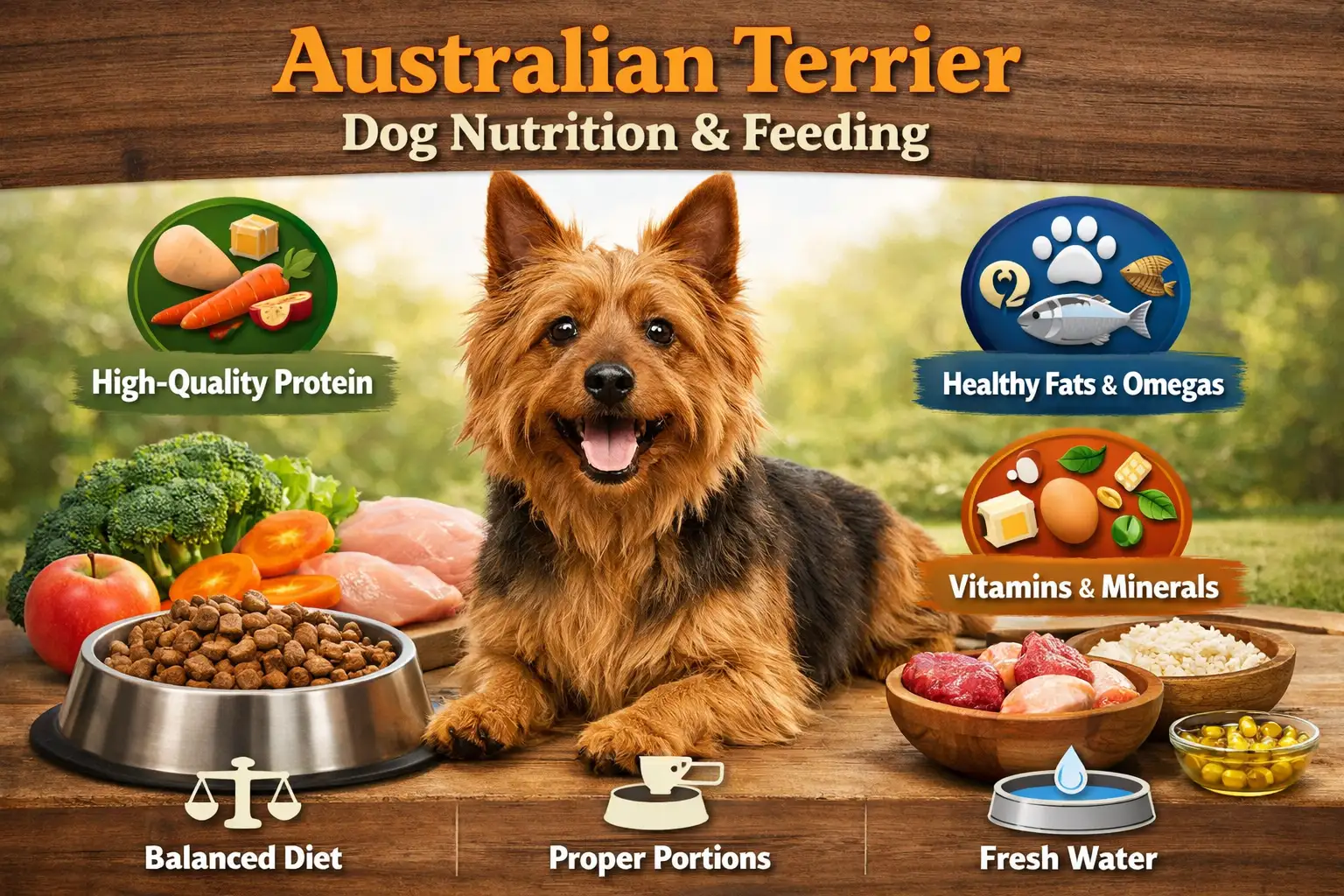
Australian Terriers do best on a complete, balanced, high-quality diet made for small or active dogs. Their food should provide enough protein and fat for energy, but portions must stay controlled because this breed can gain weight quickly.
You do not need trendy food or complicated feeding routines. Most Australian Terriers do well with a simple feeding plan built around measured meals, digestible ingredients, and consistent portions.
Basic nutrition Australian Terriers need every day
Every healthy Australian Terrier diet should include:
- Protein for muscle maintenance and daily energy
- Fat for energy, skin support, and coat health
- Carbohydrates for steady fuel and meal balance
- Fiber for digestion and stool quality
- Vitamins and minerals for bones, organs, immunity, and overall health
The key is balance. Very high-fat foods, excessive treats, or poorly planned homemade meals can create problems even when the ingredients look healthy.
Australian Terrier nutrition chart
| Nutrient | Why it matters | Ideal range or level | Good food sources |
|---|---|---|---|
| Protein | Supports lean muscle, energy, and repair | Moderate to high | Chicken, turkey, lamb, fish, eggs |
| Fat | Supports energy, skin, and coat condition | Moderate | Chicken fat, fish oil, salmon, balanced dog food formulas |
| Carbohydrates | Provide steady energy and help balance meals | Moderate | Rice, oats, sweet potatoes, barley |
| Fiber | Supports digestion and stool quality | Controlled amount | Pumpkin, beet pulp, vegetables, balanced kibble |
| Vitamins and minerals | Support bones, organs, immunity, and metabolism | Balanced, not excessive | Complete and balanced dog food |
| Water | Supports digestion, temperature control, and kidney function | Available at all times | Fresh drinking water, wet food moisture |
This Australian Terrier nutrition chart should be used as a practical guide, not as a medical prescription. Dogs with allergies, chronic digestive issues, kidney problems, pancreatitis, or other health concerns may need a vet-guided diet.
Best food types for Australian Terriers
The best dog food for Australian Terriers is not one single brand or formula. The best choice is a food that matches your dog’s age, weight, activity level, digestion, and body condition.
| Food type | Best for | Watch out for |
|---|---|---|
| Dry food | Daily feeding, easy measuring, budget-friendly meals | Portions can be overestimated if not measured |
| Wet food | Picky eaters, dogs needing more moisture | Can add calories quickly if mixed with kibble |
| Fresh or gently cooked food | Dogs that need softer or more appealing meals | Must be balanced and portioned carefully |
| Small-breed formulas | Small mouths, higher energy needs, easier chewing | Some formulas may be calorie-dense |
| Sensitive-stomach formulas | Dogs with gas, loose stools, or food sensitivity | Switch slowly and avoid unnecessary food changes |
For most Australian Terriers, a measured small-breed adult formula is the easiest daily option. Puppies should eat puppy food, adults should eat adult maintenance food, and seniors may need lower-calorie or easier-to-digest meals depending on their condition.
Ingredients to look for and ingredients to limit
Good ingredients to look for:
- Named animal proteins such as chicken, turkey, lamb, fish, or eggs
- Healthy fat sources in controlled amounts
- Digestible carbohydrates such as rice, oats, barley, or sweet potato
- Fiber sources that support stool quality
- Clear ingredient labels and complete dog food formulas
Ingredients or feeding habits to limit:
- Too many high-calorie treats
- Fatty table scraps
- Artificial colors or unnecessary flavor additives
- Very high-fat foods unless recommended by a veterinarian
- Unbalanced homemade diets
The first few ingredients matter, but the full formula matters too. A food should support your dog’s body condition, stool quality, energy, and coat health over time.
How Much to Feed an Australian Terrier
How much to feed an Australian Terrier depends on body weight, age, activity level, metabolism, neuter status, and the calorie density of the food. Feeding the right amount is just as important as choosing the right food.
Most adult Australian Terriers need about 30-40 calories per pound of body weight per day. Active dogs may need more, while older, less active, or overweight dogs may need less.
Australian Terrier diet chart by weight
| Dog weight | Daily calories | Dry food per day | Approx. grams per day |
|---|---|---|---|
| 12 lb / 5.5 kg | 360-480 kcal | ¾ to 1 cup | 75-110 g |
| 14 lb / 6.5 kg | 420-560 kcal | 1 to 1¼ cups | 95-135 g |
| 16 lb / 7.3 kg | 480-640 kcal | 1¼ to 1½ cups | 115-160 g |
| 18 lb / 8.2 kg | 540-720 kcal | 1½ to 1¾ cups | 135-180 g |
These feeding amounts are starting points only. Cup and gram amounts vary depending on the calorie density of the food. Always check the food label and adjust based on your Australian Terrier’s body shape, energy, and weight trend.
How much to feed an Australian Terrier per day
As a simple daily rule, feed enough to keep your Australian Terrier lean, active, and satisfied without becoming round or sluggish. If your dog is gaining weight, reduce portions slightly or cut back treats. If your dog is losing weight or seems low-energy, review meal size, food quality, and activity level.
A healthy Australian Terrier should have a visible waist from above. You should be able to feel the ribs with light pressure, but the ribs should not be sharply visible in a healthy adult dog.
Feeding frequency by life stage
| Life stage | Meals per day | Feeding goal |
|---|---|---|
| Australian Terrier puppy | 3-4 meals | Support growth, steady energy, and digestion |
| Adult Australian Terrier | 2 meals | Maintain lean weight and stable energy |
| Senior Australian Terrier | 2 smaller meals | Support digestion, weight control, and aging needs |
Puppies need more frequent meals because they grow quickly and have smaller stomachs. Adults usually do best with two measured meals per day. Seniors may need fewer calories, softer food, or smaller meals depending on dental health, digestion, and activity level.
To understand whether your Australian Terrier is a puppy, adult, or senior in life-stage terms, use the Australian Terrier Dog Age Calculator.
Adjust feeding based on activity level
Your Australian Terrier may need more food if they:
- Walk, train, or play actively every day
- Are still growing as a puppy
- Lose weight too easily
- Seem hungry and low-energy despite measured feeding
Your Australian Terrier may need less food if they:
- Spend most of the day indoors
- Are gaining weight
- Receive frequent treats or table scraps
- Are senior, neutered, or less active
Treats, Human Foods, and Foods Australian Terriers Must Avoid
Treats and human foods can be part of your Australian Terrier’s routine, but they must be handled carefully. Because this breed is small, too many treats can quickly lead to weight gain, picky eating, or stomach problems.
The rule is simple: treats should support training and bonding, not replace balanced meals.
How many treats are okay?
Treats should make up no more than 10% of your Australian Terrier’s daily calories. For small dogs, this usually means very small pieces, not full-size treats every time.
Good treat habits:
- Use small training treats
- Break treats into tiny pieces
- Subtract treat calories from the daily food amount
- Avoid feeding from the table
- Use praise, play, or toys as rewards too
Safe human foods for Australian Terriers
Some human foods are safe for Australian Terriers in small amounts. These should be plain, unseasoned, and introduced slowly.
| Safe food | How to serve it |
|---|---|
| Plain cooked chicken or turkey | Small pieces, no salt, spices, skin, or bones |
| Carrots | Small raw or cooked pieces |
| Green beans | Plain, cooked or raw, no seasoning |
| Apple slices | No seeds or core |
| Plain rice or oatmeal | Small amounts, cooked plain |
| Pumpkin | Plain pumpkin only, not sweetened pie filling |
Introduce new foods one at a time. If your dog develops vomiting, loose stools, itching, or appetite changes, stop the new food and return to the normal diet.
Foods Australian Terriers must avoid
Some foods are dangerous for dogs and should never be fed to Australian Terriers, even in small amounts.
| Food | Status | Why it is a problem |
|---|---|---|
| Chocolate | Toxic | Can affect the heart, nerves, and digestion |
| Grapes and raisins | Toxic | Can cause serious kidney problems |
| Onions and garlic | Toxic | Can damage red blood cells |
| Xylitol | Toxic | Can cause dangerous blood sugar drops and liver problems |
| Cooked bones | Unsafe | Can splinter, choke, or injure the digestive tract |
| Fatty table scraps | Unsafe | Can trigger stomach upset and may increase pancreatitis risk |
| Alcohol or caffeine | Toxic | Can cause serious poisoning symptoms |
If your Australian Terrier eats something toxic, contact a veterinarian or emergency pet clinic right away.
Special Diet Needs, Common Feeding Mistakes, and When to See a Vet
Most Australian Terriers do well on a balanced diet, but some dogs need extra care. Sensitive stomachs, itchy skin, weight gain, food intolerance, dental problems, and aging can all affect how your dog should be fed.
Special diet needs in Australian Terriers
Some Australian Terriers may need a more specific feeding plan if they have:
- Frequent loose stools or gas
- Food sensitivity or suspected allergies
- Itchy skin or recurring ear problems
- Weight gain or trouble losing weight
- Lower activity as they age
- Dental issues that make chewing difficult
Australian Terriers with sensitive stomachs often do better with:
- Simple ingredient food
- Moderate fat levels
- Consistent feeding times
- Slow food transitions
- Limited table scraps and fewer random treats
For Australian Terrier weight control:
- Measure every meal
- Limit treats to 10% of daily calories
- Use a lower-calorie food if advised by a vet
- Avoid free-feeding
- Track body shape, not just weight
Do not switch to grain-free, raw, homemade, or prescription-style diets without a clear reason. Special diets can help some dogs, but they can also create nutritional gaps if not planned correctly.
Common feeding mistakes owners make
Many Australian Terrier feeding problems come from daily habits, not from one bad meal.
Common mistakes include:
- Free-feeding all day instead of using measured meals
- Giving too many treats during training
- Feeding table scraps too often
- Guessing portions instead of measuring food
- Switching foods too quickly
- Using adult food for puppies too early
- Ignoring gradual weight gain
Fixing these habits often improves digestion, weight, energy, and stool quality within a few weeks.
Switching Australian Terrier dog food safely
When changing food, transition slowly to reduce the risk of vomiting, gas, or loose stools.
| Days | Old food | New food |
|---|---|---|
| Days 1-3 | 75% | 25% |
| Days 4-6 | 50% | 50% |
| Days 7-9 | 25% | 75% |
| Day 10+ | 0% | 100% |
If your Australian Terrier has a sensitive stomach, extend the transition over 14 days instead of 10 days.
When to see a veterinarian
Talk to a veterinarian if your Australian Terrier:
- Refuses food for more than a day
- Loses weight or gains weight quickly
- Has ongoing diarrhea or vomiting
- Has constant itching or recurring ear problems
- Seems tired, weak, or unusually low-energy
- Has a sudden appetite change
- Needs a special diet for a medical condition
This guide is for general Australian Terrier feeding education. A veterinarian can help diagnose medical issues and recommend a diet that fits your dog’s health, age, weight, and activity level.
Australian Terrier Nutrition and Feeding FAQs
What do Australian Terriers eat?
Australian Terriers should eat a complete and balanced dog food that matches their age, weight, activity level, and digestion. Most do well with high-quality small-breed food that includes animal protein, moderate fat, digestible carbohydrates, fiber, vitamins, and minerals.
How much should I feed an Australian Terrier per day?
Most adult Australian Terriers need about 30-40 calories per pound of body weight per day. This usually equals around ¾ to 1¾ cups of dry food per day, depending on the dog’s weight, activity level, and the calorie density of the food.
How many times a day should an Australian Terrier eat?
Adult Australian Terriers usually do best with 2 measured meals per day. Puppies often need 3-4 smaller meals daily, while senior Australian Terriers may do better with 2 smaller meals that are easier to digest.
What is the best dog food for Australian Terriers?
The best dog food for Australian Terriers is a complete, balanced formula made for small or active dogs. Look for named animal protein, controlled fat, digestible carbohydrates, and clear feeding instructions. The best choice depends on your dog’s age, body condition, digestion, and activity level.
Do Australian Terriers need small-breed dog food?
Many Australian Terriers do well on small-breed dog food because the kibble size is easier to chew and the formula often matches the higher energy needs of smaller dogs. However, the food still needs to be measured carefully because some small-breed formulas are calorie-dense.
Can Australian Terriers eat wet food?
Yes, Australian Terriers can eat wet food if it is complete and balanced. Wet food can help picky eaters and adds moisture to the diet, but it should be portioned carefully, especially if mixed with dry food, because calories can add up quickly.
What foods should Australian Terriers avoid?
Australian Terriers should avoid chocolate, grapes, raisins, onions, garlic, xylitol, cooked bones, alcohol, caffeine, and fatty table scraps. These foods can cause serious health problems and should never be used as treats.
Can Australian Terriers eat human food?
Australian Terriers can eat some plain human foods in small amounts, such as cooked chicken, turkey, carrots, green beans, apple slices without seeds, plain rice, oatmeal, and plain pumpkin. Human food should stay limited and should not replace balanced dog food.
How much should an Australian Terrier puppy eat?
An Australian Terrier puppy should eat puppy food split into 3-4 meals per day. Exact portions depend on age, weight, growth rate, and food calories. Puppies should not be underfed because they need steady nutrition for growth, but portions should still be measured to avoid unhealthy weight gain.
Do senior Australian Terriers need a different diet?
Senior Australian Terriers may need fewer calories, smaller meals, softer food, or a formula that supports digestion and weight control. If a senior dog gains weight, loses weight, has dental problems, or develops ongoing stomach issues, the diet should be reviewed with a veterinarian.
Final Thoughts on Australian Terrier Nutrition
Feeding an Australian Terrier well does not need to be complicated. Focus on a complete and balanced diet, measured portions, limited treats, slow food transitions, and regular body-condition checks.
The best Australian Terrier feeding plan is one that keeps your dog lean, energetic, comfortable, and consistent over time. If your dog’s age, weight, activity level, or health changes, adjust the diet instead of feeding the same amount forever.
More Australian Terrier Resources
Use these related Australian Terrier resources for topics that are covered in more detail on their dedicated pages:
- Australian Terrier Dog Breed Guide
- Australian Terrier Training Guide
- Australian Terrier Age Chart
- Australian Terrier Grooming Guide
- Australian Terrier Cost of Ownership Guide

Ata Ur Rehman is the founder of Pet Age in Human Years Calculator, an educational platform that provides age conversion charts and lifespan guides for dogs, cats, birds, and other companion animals. His work focuses on helping pet owners understand how animal ages translate into human years using commonly accepted age conversion formulas and published lifespan averages.
The website compiles breed and species lifespan data from kennel clubs, breed organizations, and general animal lifespan studies to present simple and easy-to-understand guides for pet owners worldwide.
This website was created to centralize animal age conversion charts into one easy reference platform for pet owners.
This article is for general education. For symptoms, medication, diet changes, or health concerns, use a qualified veterinarian who can assess your individual pet.