On this page
The Shetland Sheepdog, also known as the Sheltie, is a small, intelligent, and loyal herding breed known for its thick double coat, alert expression, and strong bond with family. Originally developed in the Shetland Islands of Scotland, this breed is often chosen by owners who want a smart companion with strong trainability, an affectionate personality, and an active lifestyle.
This Shetland Sheepdog guide covers the key things owners need to know before choosing or caring for a Sheltie, including temperament, size, grooming, exercise, training, health, lifespan, and age-related care. If you already own a Sheltie and want to understand your dog’s real-life age better, use our Shetland Sheepdog Age Calculator to estimate your dog’s age in human years.
Shetland Sheepdog Appearance and Personality
The Shetland Sheepdog is a small to medium-sized dog with a balanced body, expressive face, and a long double coat. Most Shelties stand between 13 and 16 inches tall and usually weigh between 15 and 25 pounds. Their coat commonly appears in sable, black, blue merle, tricolor, and combinations with white or tan markings.
Shelties are best known for their intelligence, loyalty, and alert nature. They are highly responsive to their owners and often learn commands quickly. Because they were originally bred as herding dogs, they may try to chase, circle, or herd children, pets, or moving objects if they are not trained early.
This breed is usually affectionate with family but may be reserved around strangers. Their alertness makes them good watchdogs, but it can also lead to frequent barking if they are bored, under-exercised, or not properly socialized.
Quick Answer: The Shetland Sheepdog is a loyal, intelligent, and active small herding dog best suited for owners who can provide regular grooming, daily exercise, training, and mental stimulation. Shelties are usually good family dogs, but they may bark often, shed heavily during seasonal coat changes, and try to herd children or pets without early training.
| Shetland Sheepdog Trait | Quick Summary |
|---|---|
| Best For | Active families, attentive owners, training-focused homes |
| Size | 13-16 inches, usually 15-25 lbs |
| Temperament | Intelligent, loyal, alert, sensitive, affectionate |
| Exercise Needs | Moderate to high daily activity |
| Grooming Needs | Moderate to high because of the thick double coat |
| Lifespan | Usually around 12-14 years |
| Main Challenges | Barking, shedding, herding instinct, separation sensitivity |
Shetland Sheepdog Size and Weight Comparison
| Gender | Height Range | Weight Range |
|---|---|---|
| Male | 13-16 inches | 15-25 lbs |
| Female | 13-16 inches | 15-20 lbs |
Shetland Sheepdog Personality Traits at a Glance
| Trait | Description |
|---|---|
| Loyalty | Forms a close bond with family and often prefers staying near its owners. |
| Intelligence | Highly trainable and quick to learn commands, routines, and games. |
| Alertness | Notices sounds and movement quickly, making the breed naturally watchful. |
| Playfulness | Enjoys fetch, agility, puzzle toys, and interactive family play. |
| Herding Instinct | May chase or herd children, pets, bicycles, or moving objects without training. |
Shetland Sheepdog Lifespan, Age, and Human Years
The average Shetland Sheepdog lifespan is usually around 12 to 14 years, although some Shelties may live longer with proper care, healthy weight management, regular exercise, dental care, and routine veterinary checkups. Because Shelties are smaller dogs, they often age more slowly than giant breeds, but their aging pattern still changes after puppyhood.
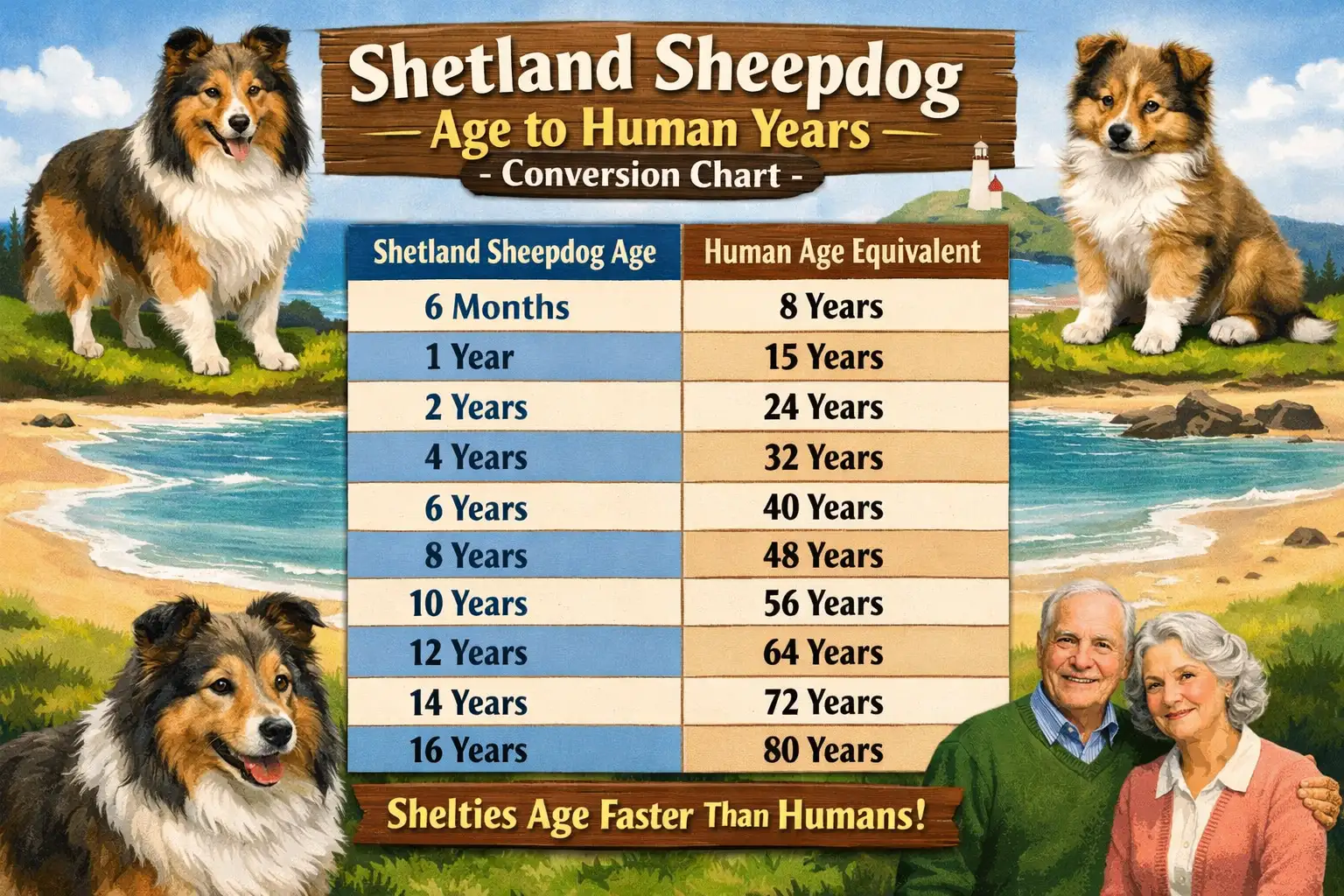
A Sheltie’s age in human years is not calculated by simply multiplying by seven. Dogs mature quickly in the first two years of life, then aging slows into a breed-size-based pattern. That is why a Shetland Sheepdog age calculator is more useful than a simple one-size-fits-all formula.
For the most accurate estimate, use the Shetland Sheepdog Age Calculator to compare your Sheltie’s dog age with an estimated human age equivalent.
Shetland Sheepdog Age Chart
| Sheltie Age | Life Stage | Care Focus |
|---|---|---|
| 0-1 year | Puppy | Socialization, basic training, vaccination schedule, controlled exercise |
| 1-2 years | Young adult | Obedience training, activity routine, healthy weight habits |
| 3-6 years | Adult | Exercise consistency, dental care, coat maintenance, mental stimulation |
| 7-10 years | Mature adult | Joint support, weight control, annual health screening |
| 11+ years | Senior | Senior vet checks, mobility support, softer exercise, comfort-focused care |
Exercise, Grooming, and Health Needs
Shetland Sheepdogs are active and intelligent dogs that need both physical exercise and mental stimulation. A daily routine should include walks, structured play, training sessions, and problem-solving activities. Without enough activity, a Sheltie may become bored and develop barking, chewing, chasing, or restless behavior.
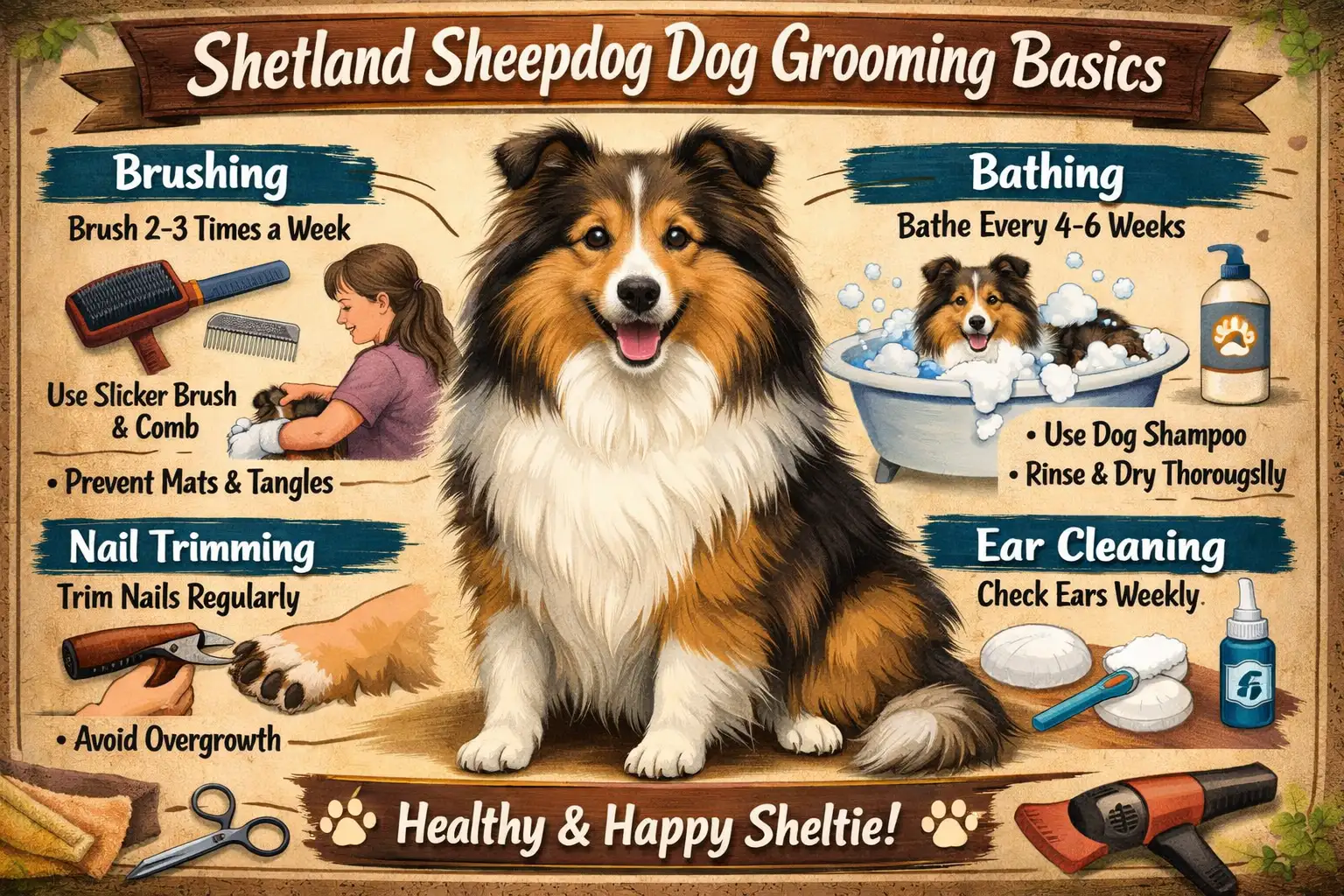
Grooming is one of the most important parts of Shetland Sheepdog care. Their thick double coat needs brushing several times per week to prevent tangles, loose hair buildup, and matting behind the ears, chest, legs, and tail. During shedding seasons, more frequent brushing is usually needed.
Shelties are generally healthy dogs, but owners should be aware of breed-related health concerns such as Collie Eye Anomaly, hip dysplasia, hypothyroidism, von Willebrand disease, dental issues, and seizures. Regular vet visits, responsible breeding history, healthy weight control, and early screening can help reduce long-term health risks.
Shetland Sheepdog Grooming and Health Checklist
| Care Type | Recommended Frequency | Notes |
|---|---|---|
| Brushing | 2-3 times per week | Increase during seasonal shedding. |
| Bathing | Every 2-3 months | Bathe as needed using dog-safe shampoo. |
| Nail Trimming | Every 3-4 weeks | Long nails can affect comfort and movement. |
| Ear Check | Monthly | Look for wax, odor, redness, or irritation. |
| Dental Care | Several times per week | Helps reduce plaque, tartar, and bad breath. |
| Vet Checkups | At least annually | Senior Shelties may need more frequent visits. |
Shetland Sheepdog Health Concerns and Lifespan Factors
| Health Issue | Common Timing | Owner Focus |
|---|---|---|
| Collie Eye Anomaly | Early life | Eye screening and responsible breeder history |
| Hip Dysplasia | Adult years | Healthy weight, controlled exercise, vet monitoring |
| Hypothyroidism | Middle age or senior years | Bloodwork and thyroid monitoring |
| Von Willebrand Disease | Often identified early | Testing before surgery or breeding |
| Dental Disease | Adult and senior years | Routine brushing and dental checkups |
| Seizures | Variable | Veterinary diagnosis and ongoing management |
Shetland Sheepdog Training and Owner Suitability
Shetland Sheepdogs are highly trainable because they are intelligent, observant, and eager to work with their owners. They usually respond best to positive reinforcement, short training sessions, praise, treats, and consistent routines. Harsh training methods are not recommended because many Shelties are sensitive and may become nervous or withdrawn.
The biggest training challenge is managing the breed’s herding instinct and barking tendency. A Sheltie may chase running children, follow other pets, bark at sounds, or react to movement outside the window. Early socialization, calm redirection, recall training, and impulse-control exercises are important for building better behavior.
This breed is best suited for owners who can provide daily attention, grooming, training, and activity. Shelties can live in apartments if their exercise and barking are managed, but they are usually a better fit for active households that enjoy structured play, walks, training games, and close companionship.
For deeper behavior help, read our Shetland Sheepdog Training Guide.
Shetland Sheepdog Training Challenges vs. Strengths
| Aspect | Strengths | Challenges |
|---|---|---|
| Trainability | Quick learner, eager to please, responsive to routines | Can become bored if training is repetitive |
| Herding Instinct | Good focus and natural working drive | May chase, circle, nip, or herd people and pets |
| Socialization | Very bonded with family | May be reserved or bark around strangers |
| Barking | Useful alert watchdog behavior | Can become excessive without training and stimulation |
Shetland Sheepdog Pros and Cons
Shetland Sheepdogs can be excellent family dogs for the right home, but they are not a low-maintenance breed. Their intelligence, loyalty, and beauty make them appealing, while their grooming needs, barking tendency, and exercise requirements can be challenging for owners who want a calmer or less involved pet.
Pros and Cons of Owning a Shetland Sheepdog
| Pros | Cons |
|---|---|
| Loyal and affectionate with family | Needs regular grooming and coat maintenance |
| Highly intelligent and trainable | May bark frequently if not trained |
| Good choice for active families | Needs daily exercise and mental stimulation |
| Alert and watchful | May be reserved around strangers |
| Usually good with respectful children | May try to herd children or other pets |
Is a Shetland Sheepdog Right for You?
A Shetland Sheepdog is a good choice if you want a smart, loyal, and trainable dog that enjoys being involved in family life. This breed works best for owners who have time for brushing, daily walks, training games, and regular interaction. Shelties are not ideal for owners who want a very quiet, low-shedding, or low-maintenance dog.
Choose a Shetland Sheepdog if you can handle barking, coat care, and mental stimulation. Consider another breed if you are away from home most of the day, dislike regular grooming, or need a dog that is naturally calm without much training.
| Good Match | Not the Best Match |
|---|---|
| Owners who enjoy training and interactive play | Owners who want a very low-maintenance dog |
| Families who can provide exercise and structure | Homes where barking would be a major issue |
| People comfortable with regular brushing | Owners who dislike shedding or coat care |
| Active households with time for companionship | Very busy owners who are rarely home |
Shetland Sheepdog Compared With Similar Breeds
Shetland Sheepdogs are often compared with Collies and Australian Shepherds because all three breeds are intelligent, loyal, and connected to herding work. The Sheltie is smaller than both and may be easier to manage physically, but it still needs daily activity, training, and coat care.
Shetland Sheepdog Comparison with Similar Breeds
| Breed | Size Range | Temperament | Exercise Needs |
|---|---|---|---|
| Shetland Sheepdog | 13-16 inches, 15-25 lbs | Loyal, alert, intelligent, sensitive | Moderate to high |
| Rough Collie | 22-26 inches, 50-75 lbs | Gentle, loyal, calm, family-focused | Moderate to high |
| Australian Shepherd | 18-23 inches, 40-65 lbs | Energetic, intense, smart, work-driven | Very high |
Shetland Sheepdog FAQs
Are Shetland Sheepdogs good family dogs?
Yes, Shetland Sheepdogs can be excellent family dogs for active homes. They are loyal, intelligent, and affectionate, but they need training, socialization, grooming, and daily exercise to behave well around children and other pets.
Do Shetland Sheepdogs bark a lot?
Many Shetland Sheepdogs are vocal because they are alert herding dogs. Barking can be reduced with exercise, mental stimulation, socialization, and consistent training.
How long do Shetland Sheepdogs live?
Shetland Sheepdogs usually live around 12 to 14 years. Healthy weight, exercise, dental care, grooming, and regular vet checkups can support a better quality of life as they age.
Are Shelties easy to train?
Yes, Shelties are usually easy to train because they are intelligent and eager to please. They do best with positive reinforcement, consistency, and early socialization.
How old is my Shetland Sheepdog in human years?
A Shetland Sheepdog’s age in human years depends on life stage and breed size. Instead of using a simple seven-year rule, use our Shetland Sheepdog Age Calculator for a better estimate.
Do Shetland Sheepdogs shed a lot?
Yes, Shetland Sheepdogs shed regularly and usually shed more heavily during seasonal coat changes. Their thick double coat needs brushing several times per week to control loose hair and prevent mats.
Are Shetland Sheepdogs good for apartments?
Shetland Sheepdogs can live in apartments if they get enough daily exercise, mental stimulation, and barking control. However, their alert nature and vocal behavior may be challenging in noise-sensitive buildings.
Are Shetland Sheepdogs good for first-time owners?
Shetland Sheepdogs can be good for committed first-time owners, but they are not the easiest beginner breed. New owners must be ready for training, grooming, barking management, socialization, and daily activity.
For deeper topic-specific help, see the Shetland Sheepdog age chart, Shetland Sheepdog grooming guide, Shetland Sheepdog nutrition and feeding guide and Shetland Sheepdog cost of ownership guide.
Final Thoughts on Shetland Sheepdog Care
The Shetland Sheepdog is a smart, loyal, and affectionate breed best suited for owners who can provide regular grooming, daily exercise, mental stimulation, and patient training. Shelties are not the lowest-maintenance dogs, but they can become outstanding companions for families and individuals who understand their needs.
If you are already caring for a Sheltie, the next step is understanding your dog’s age and life stage. Use the Shetland Sheepdog Age Calculator to estimate your Sheltie’s age in human years and adjust care based on their stage of life.

Ata Ur Rehman is the founder of Pet Age in Human Years Calculator, an educational platform that provides age conversion charts and lifespan guides for dogs, cats, birds, and other companion animals. His work focuses on helping pet owners understand how animal ages translate into human years using commonly accepted age conversion formulas and published lifespan averages.
The website compiles breed and species lifespan data from kennel clubs, breed organizations, and general animal lifespan studies to present simple and easy-to-understand guides for pet owners worldwide.
This website was created to centralize animal age conversion charts into one easy reference platform for pet owners.
This article is for general education. For symptoms, medication, diet changes, or health concerns, use a qualified veterinarian who can assess your individual pet.