On this page
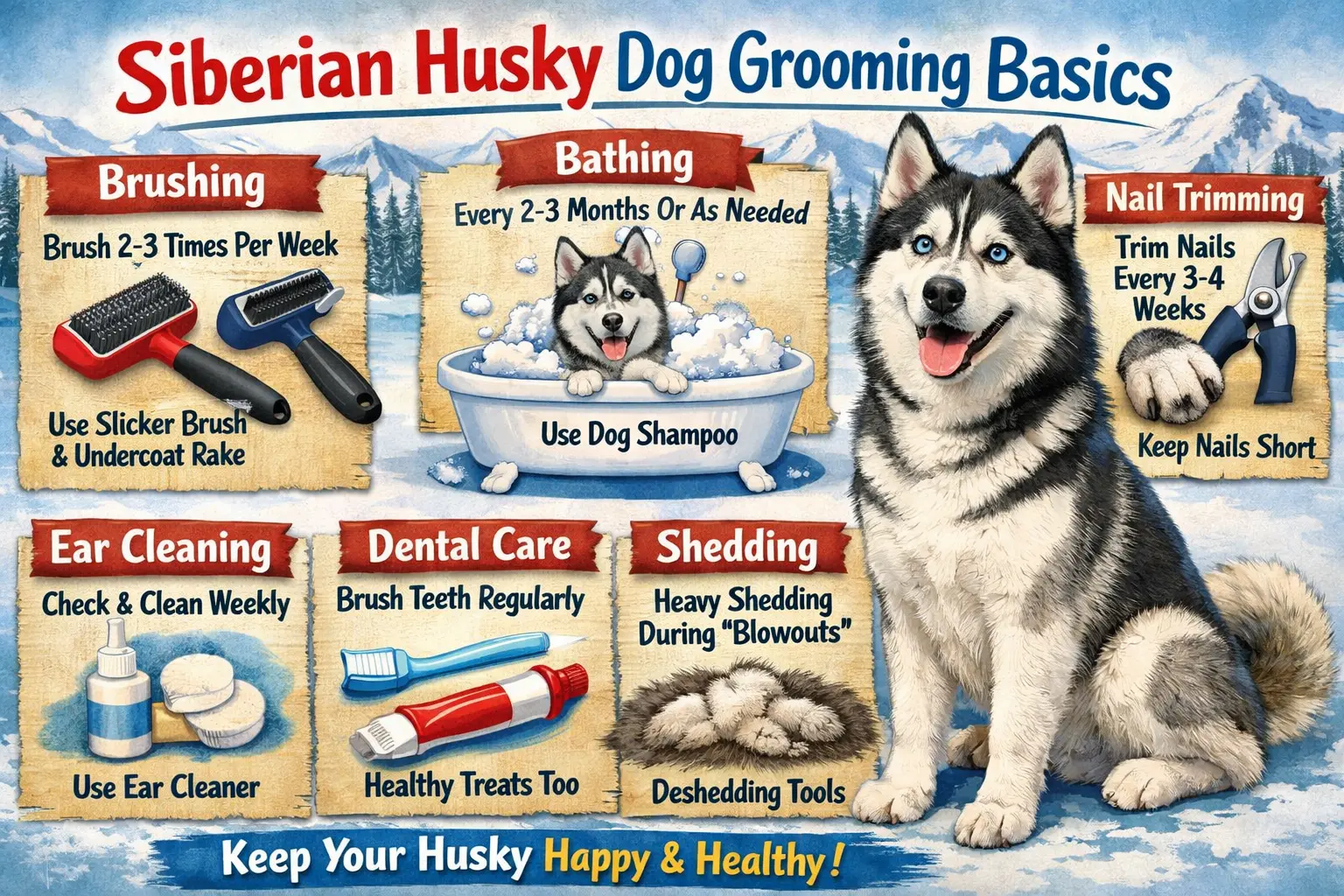
Quick answer: Siberian Husky grooming is mainly about managing shedding, protecting the double coat, and removing loose undercoat without shaving or over-bathing. Most Huskies need brushing 1–2 times per week, daily brushing during heavy shedding seasons, and baths only every 8–12 weeks unless they are dirty.
Siberian Husky grooming is often misunderstood. Huskies may look naturally clean and do not need haircuts, but their thick double coat makes coat care a serious part of ownership. A Husky is usually low-odor, but high-shedding, especially during spring and fall when the undercoat blows out heavily.
This Siberian Husky grooming guide explains how to groom a Husky at home, how often to brush and bathe them, which grooming tools to use, how to manage shedding, and which common grooming mistakes to avoid.
Proper grooming is not about making a Husky look polished. It is about keeping the coat functional, protecting the skin, preventing compacted undercoat, and helping your dog stay comfortable throughout the year.
Unlike many breeds, Siberian Huskies should not be shaved, clipped, or frequently bathed. Their coat is built for insulation and temperature regulation. Grooming should focus on removing dead undercoat, supporting healthy skin, and protecting the guard coat.
Siberian Husky Grooming Guide: What Owners Need to Know
| Grooming Need | Recommended Routine | Why It Matters |
|---|---|---|
| Brushing | 1–2 times per week | Controls loose fur and prevents undercoat buildup |
| Heavy shedding season | Daily brushing | Removes blown undercoat before it packs against the skin |
| Bathing | Every 8–12 weeks | Prevents dry skin from over-bathing |
| Haircuts | Not recommended | Shaving can damage coat function |
| Nails | Every 3–4 weeks | Prevents discomfort and walking issues |
If you want a low-shedding breed, a Siberian Husky is not the right match. But if you understand the coat and follow a consistent routine, Husky grooming becomes manageable and predictable.
Jump to: Double coat | Shedding | Tools | Home routine | Bathing | Mistakes
Understanding the Siberian Husky Double Coat
To groom a Siberian Husky correctly, you first need to understand how the double coat works. The coat is not just fur. It is a natural protection system that helps regulate body temperature, protects the skin, and shields the dog from dirt, sun, and moisture.
A Husky’s coat has two layers, and each layer needs to be treated differently during grooming.
| Coat Layer | What It Does | Grooming Rule |
|---|---|---|
| Guard coat | Protects from sun, dirt, and moisture | Do not shave or cut it |
| Undercoat | Insulates the dog and sheds heavily | Remove loose undercoat with brushing |
Most of the hair you see around your home comes from the undercoat, not the guard coat. That is why the goal of Siberian Husky coat care is not trimming. The goal is controlled deshedding.
Why Siberian Huskies Shed So Much
Siberian Huskies shed because their undercoat changes with the seasons. This heavy shedding period is often called blowing coat. During this phase, large clumps of undercoat loosen and come out quickly.
Husky shedding is normal, but it becomes a problem when loose undercoat is not removed. Trapped undercoat can reduce airflow, irritate the skin, and make shedding inside the home feel worse.
| Season | Shedding Level | Owner Action |
|---|---|---|
| Spring | Very heavy | Brush daily to remove winter undercoat |
| Summer | Moderate | Brush weekly and check for trapped fur |
| Fall | Very heavy | Brush daily as the coat changes again |
| Winter | Lower | Light brushing is usually enough |
During spring and fall, daily brushing may be needed. Short, frequent grooming sessions work better than one long session because they are easier on the dog and more effective for heavy shedding.
Should You Shave a Siberian Husky?
No. You should not shave a Siberian Husky unless a veterinarian requires it for a medical reason. Shaving does not stop shedding and does not make a Husky cooler. It removes the coat’s natural protection and can cause uneven regrowth.
Shaving a Husky can:
- Remove protection from sun exposure
- Increase risk of skin irritation
- Damage the guard coat
- Cause uneven coat regrowth
- Make temperature regulation harder
The correct way to help a Husky stay comfortable is deshedding, not shaving.
Best Siberian Husky Grooming Tools
The right Husky grooming tools should remove loose undercoat without cutting the healthy guard coat. You do not need many tools, but you do need tools that can reach through a thick double coat safely.
| Tool | Best For | How Often to Use |
|---|---|---|
| Slicker brush | Loose surface hair and light brushing | 1–2 times per week |
| Undercoat rake | Removing loose undercoat during shedding | During coat blow |
| Metal comb | Checking missed areas and small tangles | After brushing |
| High-velocity dryer | Blowing out loose undercoat after a bath | Optional, best during shedding |
A slicker brush and undercoat rake are usually enough for most home grooming routines. A metal comb helps you check whether loose undercoat is still packed near the skin.
Tools You Should Not Use on a Husky
| Tool | Why to Avoid It |
|---|---|
| Clippers | Can damage the protective coat |
| Shaving blades | Remove insulation and sun protection |
| Fur-cutting deshedding tools | May cut healthy guard hairs |
| Human brushes | Do not reach the undercoat properly |
Using the wrong tool is one of the fastest ways to create coat problems. Husky grooming should remove dead undercoat, not cut healthy coat.
How to Groom a Siberian Husky at Home
To groom a Siberian Husky at home, start with gentle brushing, remove loose undercoat in sections, check the coat with a comb, and avoid cutting or shaving the fur. The routine should be calm, slow, and consistent.
- Start with a slicker brush to remove loose surface hair.
- Use an undercoat rake gently through thick areas such as the neck, sides, and back legs.
- Work in small sections instead of pulling through the whole coat at once.
- Use a metal comb to check for packed undercoat or missed tangles.
- During heavy shedding, groom daily in short sessions.
- Stop if the skin looks red or irritated.
Always brush with light pressure. Pulling too hard can hurt the skin and make your Husky resist grooming in the future.
If your Husky is older, overweight, or less active, grooming may also connect with age-related care. You can check life-stage expectations using the Siberian Husky Dog Age Calculator.
Bathing, Nails, Ears, and Skin Care for Siberian Huskies
Siberian Huskies do not need frequent baths. Their coats are naturally cleaner and lower-odor than many breeds. Over-bathing can strip natural oils and lead to dry, itchy skin.
| Grooming Task | Recommended Frequency |
|---|---|
| Brushing | 1–2 times per week |
| Brushing during shedding season | Daily |
| Bathing | Every 8–12 weeks or when dirty |
| Nail trimming | Every 3–4 weeks |
| Ear cleaning | Only when dirty |
| Teeth cleaning | At least once per week |
When bathing a Husky, use dog-safe shampoo, rinse thoroughly, and dry the undercoat completely. Damp undercoat can trap moisture and increase the risk of skin irritation.
Long nails can change how your dog walks and cause discomfort. Trim small amounts at a time, and ask a groomer or vet for help if you are unsure.
Husky ears usually need minimal cleaning. Clean only when there is visible dirt or wax, and never push anything deep into the ear. Redness, odor, or frequent head shaking may signal an ear issue.
Skin and Coat Warning Signs
Grooming is also the best time to check your Husky’s skin. Do not ignore changes in smell, texture, or hair loss.
| Warning Sign | Possible Cause |
|---|---|
| Dry flakes | Dry skin, diet issue, or over-bathing |
| Red or itchy skin | Allergies or irritation |
| Strong smell | Possible skin infection |
| Hair loss | Skin, coat, or health problem |
| Damp packed fur | Incomplete drying after bathing |
If symptoms continue or worsen, your Husky should be checked by a veterinarian.
Grooming Puppies, Adults, and Senior Siberian Huskies
Husky grooming needs change slightly with age. Puppies need gentle handling, adults need consistency, and senior Huskies may need shorter, more careful grooming sessions.
| Life Stage | Grooming Focus |
|---|---|
| Puppy | Build comfort with brushing and handling |
| Adult | Maintain brushing routine and manage shedding |
| Senior | Use shorter sessions and check skin sensitivity |
Senior Huskies may have more sensitive skin, less patience for long grooming sessions, or age-related mobility issues. Keep sessions shorter and focus on comfort.
Home Grooming vs Professional Grooming
Most Siberian Husky grooming can be done at home, but professional grooming can help during heavy coat blow or when you are struggling to remove packed undercoat.
| Grooming Task | At Home | Professional Help |
|---|---|---|
| Regular brushing | Yes | Usually not needed |
| Nail trimming | Yes, with care | Useful if unsure |
| Heavy coat blow | Possible but time-consuming | Helpful |
| Skin issues | No | Vet needed |
Common Siberian Husky Grooming Mistakes
| Mistake | Why It Hurts the Coat |
|---|---|
| Shaving the coat | Damages natural temperature protection |
| Bathing too often | Can cause dry, itchy skin |
| Skipping brushing | Allows loose undercoat to build up |
| Using cutting tools | May damage healthy guard hairs |
| Not drying after baths | Can trap moisture near the skin |
Most Husky grooming problems come from doing the wrong things, not from doing too little. The safest approach is simple: brush consistently, remove loose undercoat, bathe only when needed, and never shave the coat.
For more breed-specific care, grooming, feeding, training, and life-stage guidance, visit the Siberian Husky Dog Full Guide.
Next step: If you want to understand your Husky’s age, life stage, and care needs, use the Siberian Husky Dog Age Calculator.
For more detail, see our Siberian Husky nutrition and feeding guide.

Ata Ur Rehman is the founder of Pet Age in Human Years Calculator, an educational platform that provides age conversion charts and lifespan guides for dogs, cats, birds, and other companion animals. His work focuses on helping pet owners understand how animal ages translate into human years using commonly accepted age conversion formulas and published lifespan averages.
The website compiles breed and species lifespan data from kennel clubs, breed organizations, and general animal lifespan studies to present simple and easy-to-understand guides for pet owners worldwide.
This website was created to centralize animal age conversion charts into one easy reference platform for pet owners.
This article is for general education. For symptoms, medication, diet changes, or health concerns, use a qualified veterinarian who can assess your individual pet.