On this page
The Basset Hound is one of the most recognizable dog breeds in the world. With its long ears, droopy eyes, short legs, and laid-back expression, it often appears calm, sleepy, and easygoing. While there is truth to that image, living with a Basset Hound involves much more than most people expect.
Originally bred as a scent-tracking hound, the Basset Hound combines a relaxed indoor personality with an incredibly powerful sense of smell and a surprisingly independent mind. These dogs are affectionate family companions, but they are also determined, stubborn, and highly focused when following a scent.
This guide provides a realistic look at Basset Hound temperament, personality, lifestyle compatibility, daily care requirements, exercise needs, and ownership expectations. It is designed to help prospective and current owners understand what life with a Basset Hound is actually like beyond common breed stereotypes.
Basset Hound History and Breed Background
The Basset Hound originated in France, where breeders developed a scent hound capable of tracking rabbits, hares, and small game at a slow, steady pace. Unlike faster hunting dogs, Bassets allowed hunters to follow comfortably on foot while the dog worked a scent trail.
The name “Basset” comes from the French word bas, meaning “low,” a reference to the breed’s short stature.
Over time, the breed gained popularity in England and later in North America, where it transitioned from a hunting companion to a beloved family pet. Despite this shift, modern Basset Hounds still retain the instincts and behaviors that made them exceptional scent trackers centuries ago.
Their physical structure was intentionally designed for scent work:
- Short legs keep the nose close to the ground.
- Long ears help collect and funnel scent particles.
- Loose facial skin traps scent around the nose.
- A powerful scenting system allows them to follow trails for long distances.
Today, the Basset Hound possesses one of the strongest scenting abilities in the canine world, second only to the Bloodhound in many scent-tracking tasks.
Basset Hound Appearance and Physical Characteristics
Although their short legs make them appear small, Basset Hounds are surprisingly heavy, muscular dogs with dense bone structure.
Many first-time owners are surprised by how strong and solid an adult Basset Hound feels when walking on a leash.
Basset Hound Size and Physical Statistics
| Trait | Typical Range |
|---|---|
| Height | 13–15 inches |
| Weight | 40–65 pounds |
| Body Type | Long body, heavy-boned, low to the ground |
| Coat Type | Short, smooth, dense coat |
| Common Colors | Tri-color, lemon and white, red and white, mahogany and white |
| Life Expectancy | 10–13 years |
The breed’s movement is distinctive, featuring a slow, rolling gait designed for endurance rather than speed.
Basset Hounds are not built for:
- Long-distance running
- Repetitive jumping
- Agility sports
- High-impact exercise
Their structure is designed for steady movement and scent tracking rather than athletic performance.
Distinctive Physical Features and Their Purpose
| Feature | Original Purpose |
|---|---|
| Long Ears | Help trap scent near the nose |
| Loose Facial Skin | Holds scent particles while tracking |
| Short Legs | Keep the nose close to scent trails |
| Deep Chest | Supports endurance during tracking |
| Powerful Nose | Enables exceptional scent detection |
Understanding these physical traits helps owners appreciate why certain health and exercise limitations exist within the breed.
Basset Hound Temperament and Personality
The Basset Hound is widely known for its gentle, affectionate, and easygoing temperament.
Most Bassets enjoy spending time with their families and are happiest when included in daily household activities. They tend to be calm indoors and are often content relaxing near their owners for extended periods.
However, beneath that relaxed exterior is a determined scent hound with a highly independent personality.
Core Personality Traits
| Trait | What Owners Can Expect |
|---|---|
| Affectionate | Enjoys companionship and family interaction |
| Independent | Often prefers making its own decisions |
| Gentle | Usually patient and tolerant |
| Stubborn | May ignore commands when distracted |
| Social | Generally friendly toward people and dogs |
| Scent-Driven | Easily distracted by interesting smells |
One of the most important things new owners must understand is that Basset Hounds were bred to work independently.
Unlike breeds developed specifically for obedience, Bassets often evaluate commands before deciding whether they are worth following.
This does not indicate low intelligence. In fact, the breed is highly capable but tends to prioritize scent and personal judgment over immediate obedience.
Are Basset Hounds Good Family Dogs?
For many families, the answer is yes.
Basset Hounds typically form strong bonds with household members and are known for their calm and patient nature.
With Children
Most Basset Hounds are:
- Gentle with children
- Patient during family activities
- Less likely to overwhelm small children due to moderate energy levels
However, all interactions between dogs and young children should be supervised.
Children should also be taught to avoid pulling ears, climbing on the dog, or disturbing it while resting.
With Strangers
Most Basset Hounds are:
- Friendly
- Curious
- Neutral rather than protective
While they may bark or howl when visitors arrive, they are generally poor guard dogs because of their social nature.
With Other Dogs
Basset Hounds were originally bred to work in hunting packs.
As a result, they usually:
- Enjoy canine companionship
- Adapt well to multi-dog households
- Display relatively low levels of dog aggression
With Cats and Small Pets
Compatibility depends largely on:
- Socialization
- Individual temperament
- Early introductions
While many Basset Hounds live successfully with cats, their strong scent and prey drive may encourage chasing behavior outdoors.
Basset Hound Vocalization and Noise Levels
One often-overlooked aspect of the breed is its voice.
Basset Hounds are known for:
- Deep barking
- Classic hound howling
- Vocal responses to excitement
- Alert barking when hearing unfamiliar sounds
Noise Level Overview
| Situation | Common Response |
|---|---|
| Visitors Arrive | Barking or howling |
| Boredom | Vocalization increases |
| Following Scents | Occasional baying |
| Separation | Some individuals may howl |
Potential owners living in apartments or noise-sensitive neighborhoods should consider this characteristic carefully.
Living With a Basset Hound
Life with a Basset Hound is generally relaxed but requires consistency.
These dogs thrive when routines remain predictable and expectations are realistic.
Daily Exercise Requirements
Despite their low-energy reputation, Basset Hounds still require daily activity.
Most adults benefit from:
- One or two daily walks
- Opportunities to explore scents
- Moderate physical activity
Ideal Exercise Activities
- Neighborhood walks
- Sniffing adventures
- Scent games
- Puzzle toys
- Tracking activities
Activities that are generally less suitable include:
- Long-distance running
- Frequent jumping
- Intense agility training
- High-impact sports
Because scent exploration is mentally stimulating, allowing a Basset Hound to investigate smells during walks is often just as valuable as physical exercise.
Mental Stimulation Needs
Mental exercise plays a significant role in preventing boredom.
Without sufficient enrichment, some Basset Hounds may become:
- Vocal
- Stubborn
- Destructive
- Difficult to motivate
Effective Mental Enrichment
| Activity | Benefit |
|---|---|
| Scent Games | Uses natural instincts |
| Food Puzzles | Encourages problem-solving |
| Snuffle Mats | Provides scent-based enrichment |
| Training Sessions | Builds engagement |
| New Walking Routes | Offers mental stimulation |
Grooming and Daily Maintenance
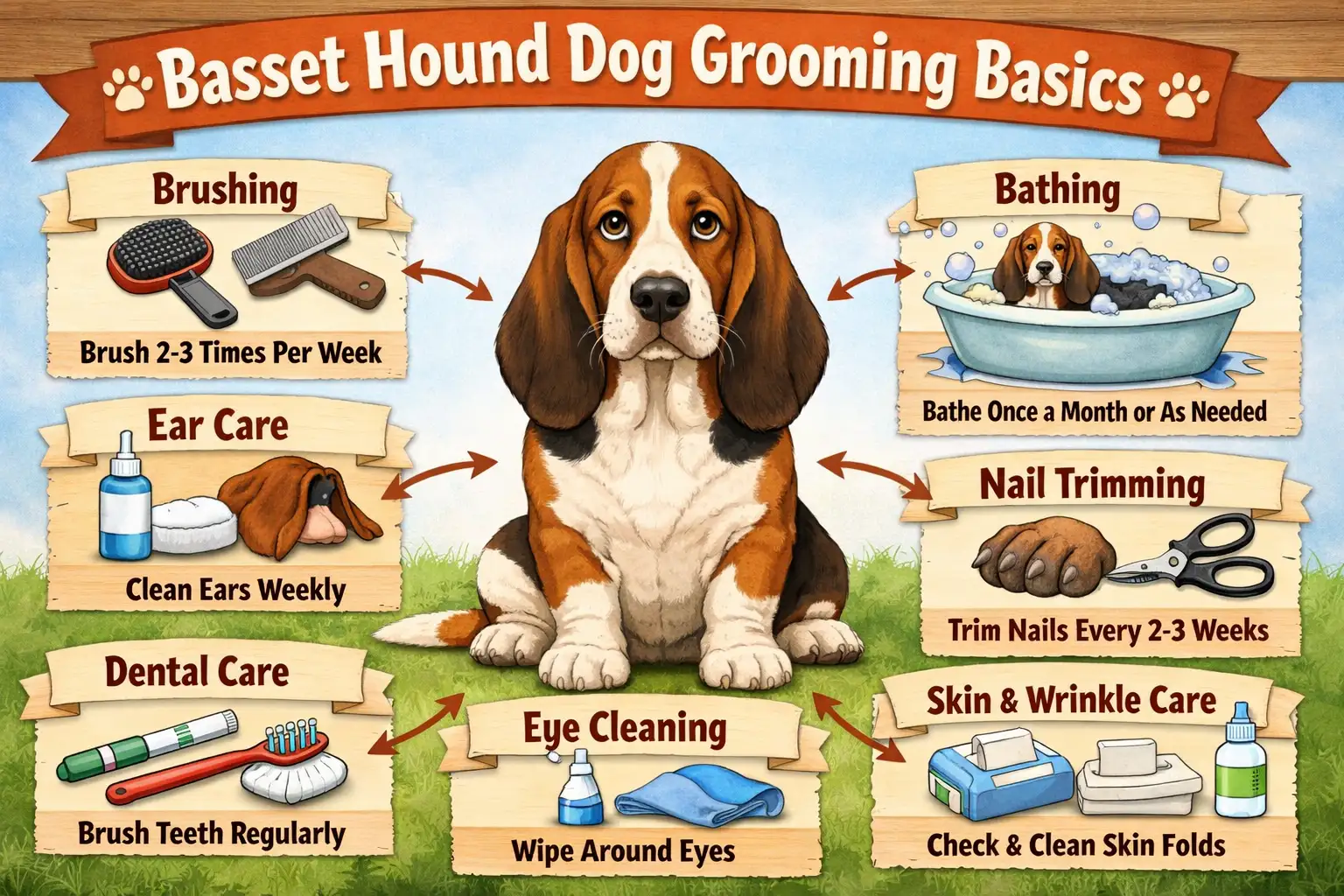
The Basset Hound’s short coat is relatively easy to maintain compared to many long-coated breeds.
Basic Grooming Requirements
| Task | Frequency |
|---|---|
| Brushing | Weekly |
| Ear Cleaning | Weekly |
| Nail Trimming | Every 3–4 weeks |
| Bathing | Every 1–2 months |
| Dental Care | Several times per week |
The ears require the most attention.
Because they are long and heavy, they can trap:
- Moisture
- Dirt
- Wax
- Bacteria
Regular ear care significantly reduces the risk of infections.
Common Health Considerations
Like all breeds, Basset Hounds have several health concerns owners should understand.
Common Issues
| Health Concern | Why It Matters |
|---|---|
| Obesity | Increases stress on joints and spine |
| Ear Infections | Long ears reduce airflow |
| Joint Problems | Heavy body weight affects mobility |
| Back Issues | Long spine creates vulnerability |
| Skin Fold Irritation | Moisture can accumulate in folds |
Maintaining a healthy body weight is one of the most effective ways to support long-term health.
Pros and Cons of Owning a Basset Hound
Advantages
| Pros |
|---|
| Affectionate and loyal |
| Excellent family companion |
| Generally good with children |
| Moderate exercise requirements |
| Friendly with other dogs |
| Low-maintenance coat |
Challenges
| Cons |
|---|
| Stubborn and independent |
| Strong scent drive |
| Can be noisy |
| Prone to weight gain |
| Requires consistent ear care |
| Recall can be unreliable outdoors |
Is a Basset Hound Right for You?
A Basset Hound may be an excellent choice if you want:
- A calm companion
- Moderate exercise needs
- A family-friendly dog
- A breed with a unique personality
- A loyal and affectionate pet
A Basset Hound may not be the best fit if you want:
- Immediate obedience
- Off-leash reliability
- A highly athletic dog
- A quiet breed
- Advanced canine sports participation
Lifestyle Compatibility Guide
| Lifestyle | Good Match? |
|---|---|
| Families with Children | Yes |
| Apartment Living | Possible with training |
| First-Time Owners | Yes, with realistic expectations |
| Seniors | Often yes |
| Multi-Pet Homes | Usually yes |
| Active Runners | Generally no |
To understand your dog's current life stage, use the Basset Hound Dog Age Calculator.
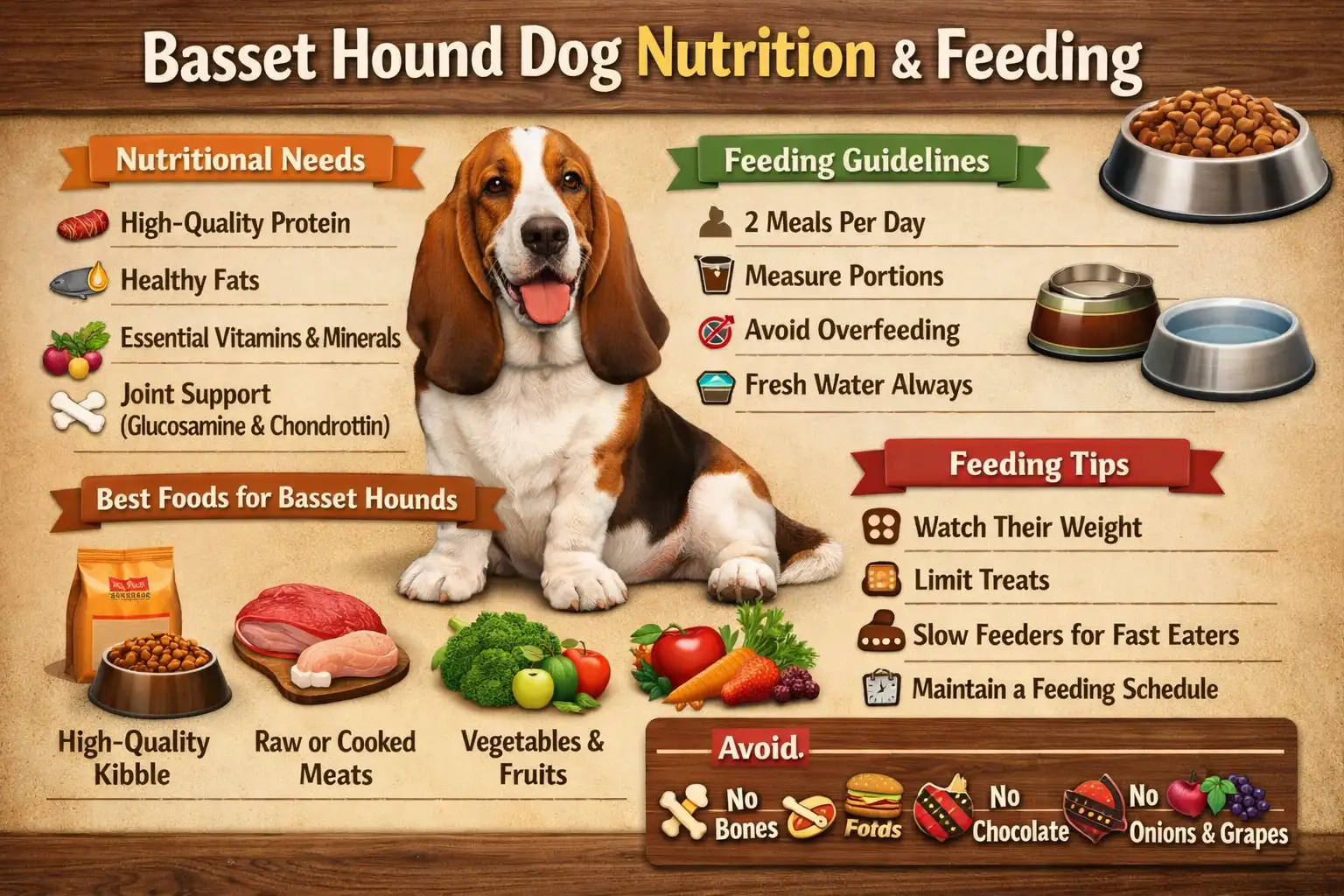
For deeper breed-specific guidance, see the Basset Hound Training Guide, Basset Hound Age Chart, Basset Hound Grooming Guide, Basset Hound Nutrition & Feeding Guide, and Basset Hound Cost of Ownership Guide.
Final Thoughts
The Basset Hound is a charming, affectionate, and highly distinctive breed that offers a unique combination of companionship and independence. While often described as laid-back, these dogs remain true scent hounds at heart, driven by powerful instincts that influence their behavior every day.
Owners who appreciate patience, enjoy relaxed walks, and understand the breed’s stubborn streak are often rewarded with a loyal companion that brings warmth, personality, and plenty of character to the home.
The Basset Hound is not the most obedient dog, the fastest dog, or the most athletic dog—but for the right owner, it can be one of the most rewarding companions to live with.

Ata Ur Rehman is the founder of Pet Age in Human Years Calculator, an educational platform that provides age conversion charts and lifespan guides for dogs, cats, birds, and other companion animals. His work focuses on helping pet owners understand how animal ages translate into human years using commonly accepted age conversion formulas and published lifespan averages.
The website compiles breed and species lifespan data from kennel clubs, breed organizations, and general animal lifespan studies to present simple and easy-to-understand guides for pet owners worldwide.
This website was created to centralize animal age conversion charts into one easy reference platform for pet owners.
This article is for general education. For symptoms, medication, diet changes, or health concerns, use a qualified veterinarian who can assess your individual pet.