On this page
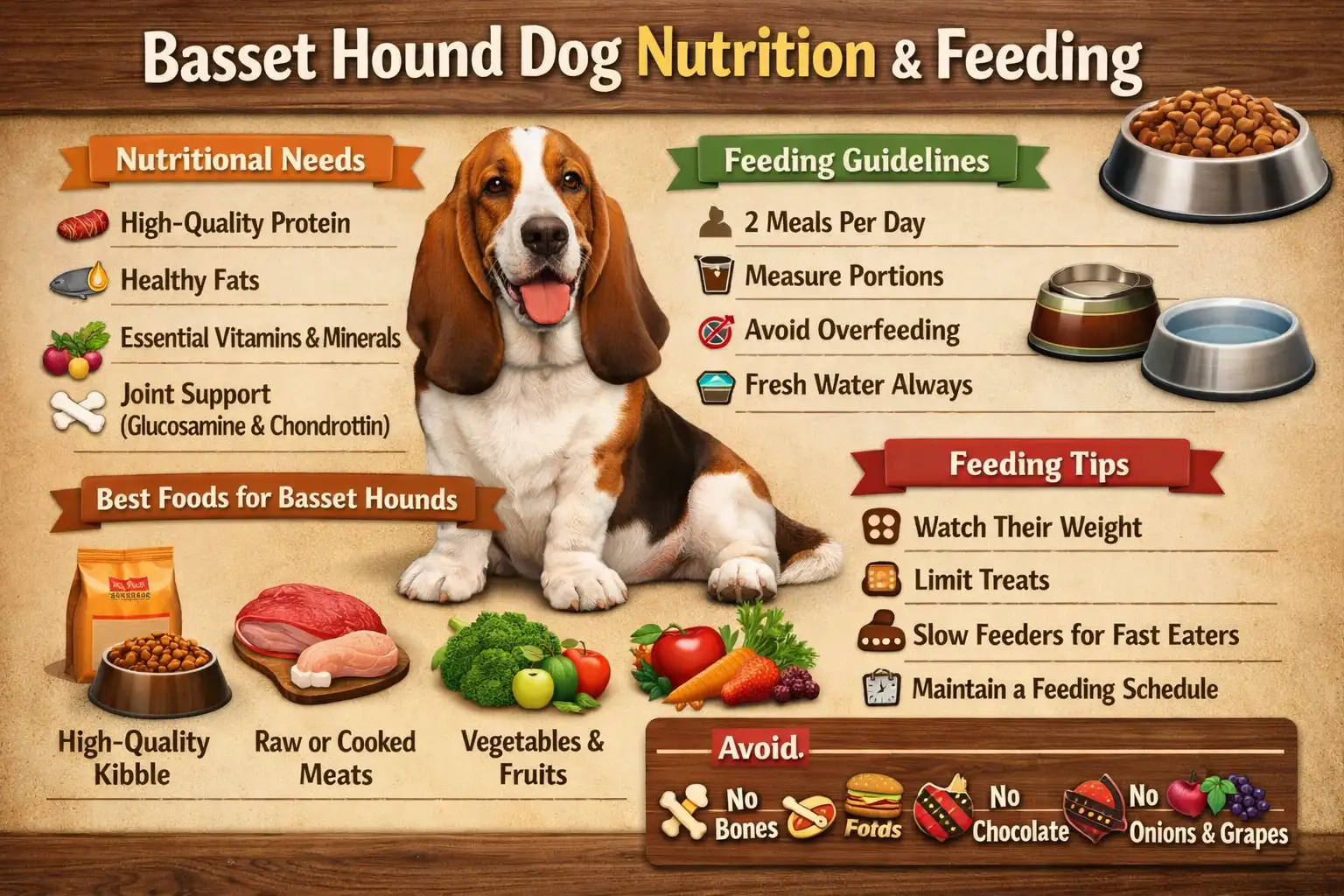
Basset Hounds are affectionate, food-loving dogs with a body structure that makes proper nutrition especially important. Their long backs, short legs, heavy bone structure, and naturally moderate activity levels mean that even small feeding mistakes can lead to significant health problems over time.
Unlike highly active breeds that burn calories quickly, Basset Hounds are efficient energy users. They were originally developed to follow scent trails slowly and steadily for long periods rather than sprinting or performing intense physical work. In modern homes, this often means a healthy appetite combined with relatively modest exercise needs. When calorie intake consistently exceeds energy expenditure, weight gain can occur surprisingly fast.
Maintaining proper nutrition helps support:
- Healthy body weight
- Joint and spinal health
- Strong muscles and mobility
- Healthy digestion
- Skin and ear health
- Long-term quality of life
A successful feeding plan is not about feeding less. It is about feeding the right food in the right amounts while adjusting portions based on age, activity level, body condition, and overall health.
Why Nutrition Matters for Basset Hounds
Basset Hounds are particularly vulnerable to obesity because of their body structure and lifestyle.
Excess weight places additional stress on:
- Spine
- Hips
- Elbows
- Shoulders
- Knees
- Intervertebral discs
Because of their long backs and heavy frames, even a few extra pounds can significantly affect comfort and mobility.
Proper nutrition also helps reduce the risk of:
- Joint deterioration
- Arthritis progression
- Digestive issues
- Skin problems
- Reduced stamina
- Age-related mobility decline
Many owners accidentally overfeed because Basset Hounds often appear hungry, even when they have consumed enough calories. Learning to evaluate body condition rather than appetite is one of the most important feeding skills for this breed.
Nutritional Requirements for Basset Hounds
A balanced diet should provide adequate nutrients without excess calories.
Key Nutritional Priorities
| Nutrient | Recommended Range | Why It Matters |
|---|---|---|
| Protein | 22–26% Dry Matter | Supports muscle maintenance and overall health |
| Fat | 10–14% Dry Matter | Provides energy while helping control weight |
| Fiber | 3–6% | Supports digestion and satiety |
| Omega-3 Fatty Acids | Moderate Levels | Supports joints, skin, and inflammation control |
| Calcium & Phosphorus | Balanced Levels | Supports bone health and structural integrity |
Moderate-calorie formulas are generally more suitable than high-performance or working-dog diets.
Choosing the Best Food for a Basset Hound
The best food is not necessarily the most expensive food. The most important factors are nutritional balance, calorie control, digestibility, and consistency.
What to Look For
- Complete and balanced nutrition
- Appropriate calorie density
- Quality protein sources
- Moderate fat content
- Digestible ingredients
- Life-stage appropriate formulation
What to Ignore
Many marketing terms have little nutritional value, including:
- Premium
- Holistic
- Natural
- Gourmet
- Superfood
Instead of focusing on marketing claims, focus on nutritional adequacy and calorie content.
Comparing Different Food Types
| Food Type | Advantages | Disadvantages | Best For |
|---|---|---|---|
| Dry Kibble | Affordable, convenient, balanced | Portion control still required | Most households |
| Wet Food | Highly palatable, increased moisture | Easier to overfeed | Picky eaters |
| Fresh Food | Highly digestible, quality ingredients | More expensive | Owners willing to measure carefully |
| Freeze-Dried | Convenient and shelf stable | Often calorie dense | Supplemental feeding |
| Raw Diet | Popular with some owners | Higher risk if improperly balanced | Experienced owners only |
| Homemade Diet | Full ingredient control | Difficult to balance correctly | Veterinary-guided plans |
For most Basset Hounds, measured portions of quality dry food or veterinarian-approved fresh food provide the safest and most practical option.
Grain-Free, Raw, and Homemade Diets
Many owners wonder whether specialty diets are better.
The answer depends on the individual dog.
Grain-Free Diets
Most Basset Hounds do not require grain-free diets. Unless a specific sensitivity has been diagnosed, grains are generally safe and nutritious.
Raw Diets
Raw diets can be successful when properly formulated but carry potential risks:
- Nutritional imbalance
- Bacterial contamination
- Inconsistent nutrient intake
Homemade Diets
Homemade meals should only be fed when developed with veterinary nutritional guidance. Guessing ingredient amounts can result in serious deficiencies over time.
How Much Should a Basset Hound Eat?
Calorie needs vary based on age, weight, activity level, metabolism, and health status.
The following chart provides general daily calorie estimates.
Basset Hound Daily Calorie Guide
| Weight | Low Activity | Moderate Activity |
|---|---|---|
| 40 lb (18 kg) | 800–900 calories | 950–1,050 calories |
| 50 lb (23 kg) | 900–1,050 calories | 1,050–1,200 calories |
| 60 lb (27 kg) | 1,050–1,200 calories | 1,200–1,350 calories |
These values include meals, treats, and snacks.
Individual needs may vary.
Feeding Frequency by Life Stage
| Life Stage | Meals Per Day | Purpose |
|---|---|---|
| Puppy | 3 meals | Supports growth and digestion |
| Adult | 2 meals | Maintains weight control |
| Senior | 2 smaller meals | Supports digestion and comfort |
Free-feeding is generally not recommended for this breed because it often contributes to weight gain.
How to Tell if Your Basset Hound Is Overweight
Rather than relying solely on the scale, evaluate body condition.
A healthy Basset Hound should:
- Have easily felt ribs beneath a thin layer of fat
- Show a visible waist when viewed from above
- Have a slight abdominal tuck when viewed from the side
Warning signs of excess weight include:
- No visible waist
- Difficulty feeling ribs
- Reduced stamina
- Heavy breathing during mild exercise
- Difficulty rising or climbing stairs
Weight Management for Basset Hounds
Obesity is one of the most common health problems in the breed.
Effective Weight Control Strategies
- Measure every meal accurately
- Limit treats to less than 10% of daily calories
- Avoid table scraps
- Increase low-impact exercise
- Use portion-controlled feeding schedules
- Monitor weight monthly
Weight loss should occur gradually. Rapid weight reduction can be unhealthy and difficult to maintain.
Digestive Issues and Sensitive Stomachs
Some Basset Hounds experience digestive sensitivity.
Common symptoms include:
- Gas
- Soft stool
- Stomach noises
- Occasional digestive upset
Helpful strategies include:
- Feeding on a consistent schedule
- Avoiding sudden food changes
- Choosing easily digestible foods
- Limiting fatty treats
- Introducing new foods gradually
Most food transitions should take 7–10 days.
Food Allergies and Intolerances
True food allergies are relatively uncommon, but food intolerances can occur.
Possible signs include:
- Chronic itching
- Recurring ear infections
- Loose stool
- Vomiting
- Skin irritation
If these symptoms persist, veterinary evaluation is recommended before making major diet changes.
Managing the “Always Hungry” Basset Hound
Many owners believe their Basset Hound is constantly hungry.
In reality, most Basset Hounds are highly food motivated and naturally interested in eating.
Helpful Management Techniques
- Feed on a consistent schedule
- Avoid free-feeding
- Use puzzle feeders
- Provide mental enrichment
- Limit unnecessary snacks
- Follow measured portions
Begging behavior does not necessarily indicate nutritional need.
Common Feeding Problems and Solutions
| Problem | Common Cause | Practical Solution |
|---|---|---|
| Weight Gain | Excess calories | Reduce portions and treats |
| Constant Hunger | Habit or boredom | Structured feeding routine |
| Gas | Rich foods | Simplify diet |
| Loose Stool | Rapid food changes | Slower transitions |
| Picky Eating | Too many extras | Remove toppers and treats |
Treats and Snacks
Treats should support training and enrichment, not replace balanced nutrition.
Treat Guidelines
- Keep treats below 10% of daily calories
- Use small pieces
- Count treats toward total calorie intake
- Choose low-calorie options when possible
Good Treat Options
- Carrot slices
- Green beans
- Plain pumpkin
- Small pieces of cooked chicken
- Commercial low-calorie training treats
Safe and Unsafe Human Foods
Safe in Small Amounts
| Safe Foods |
|---|
| Plain cooked chicken |
| Carrots |
| Green beans |
| Pumpkin |
| Plain rice |
| Apple slices without seeds |
Unsafe Foods
| Toxic Foods |
|---|
| Chocolate |
| Grapes |
| Raisins |
| Onions |
| Garlic |
| Xylitol |
| Alcohol |
| Fatty leftovers |
| Cooked bones |
Always feed human foods plain and unseasoned.
Do Basset Hounds Need Supplements?
Most healthy Basset Hounds eating a complete and balanced diet do not require supplements.
Some dogs may benefit from:
- Omega-3 fatty acids
- Joint support supplements
- Veterinary-recommended digestive support
Supplements should only be added when there is a clear reason, not simply because they are marketed as beneficial.
To understand your dog's current life stage, use the Basset Hound Dog Age Calculator.
For life-stage context, see our Basset Hound age chart.
Frequently Asked Questions
Why does my Basset Hound always seem hungry?
Food-seeking behavior is common in the breed and does not always indicate true hunger.
Can I free-feed my Basset Hound?
Free-feeding is generally discouraged because it increases the risk of obesity.
Is homemade food better than commercial food?
Only when properly formulated by a veterinary nutrition professional.
Why is my dog gaining weight on the same food?
Metabolism and activity levels often decrease with age, requiring portion adjustments.
How often should I change dog food?
Only when necessary and always through a gradual transition lasting 7–10 days.
When to Contact a Veterinarian
Seek professional advice if your Basset Hound experiences:
- Rapid weight gain or weight loss
- Persistent diarrhea
- Frequent vomiting
- Refusal to eat for more than 48 hours
- Recurring ear or skin problems
- Suspected food allergies
- Chronic digestive issues
Final Thoughts
Proper nutrition is one of the most important factors in a Basset Hound’s long-term health. Because this breed gains weight easily and carries a body structure that places extra stress on joints and the spine, careful feeding habits can have a major impact on comfort, mobility, and lifespan.
The best feeding plan is simple: choose a balanced diet, measure portions accurately, limit treats, maintain a healthy weight, and adjust food intake as your dog ages. Consistent nutrition and weight management help Basset Hounds stay active, comfortable, and healthy throughout every stage of life.

Ata Ur Rehman is the founder of Pet Age in Human Years Calculator, an educational platform that provides age conversion charts and lifespan guides for dogs, cats, birds, and other companion animals. His work focuses on helping pet owners understand how animal ages translate into human years using commonly accepted age conversion formulas and published lifespan averages.
The website compiles breed and species lifespan data from kennel clubs, breed organizations, and general animal lifespan studies to present simple and easy-to-understand guides for pet owners worldwide.
This website was created to centralize animal age conversion charts into one easy reference platform for pet owners.
This article is for general education. For symptoms, medication, diet changes, or health concerns, use a qualified veterinarian who can assess your individual pet.