On this page
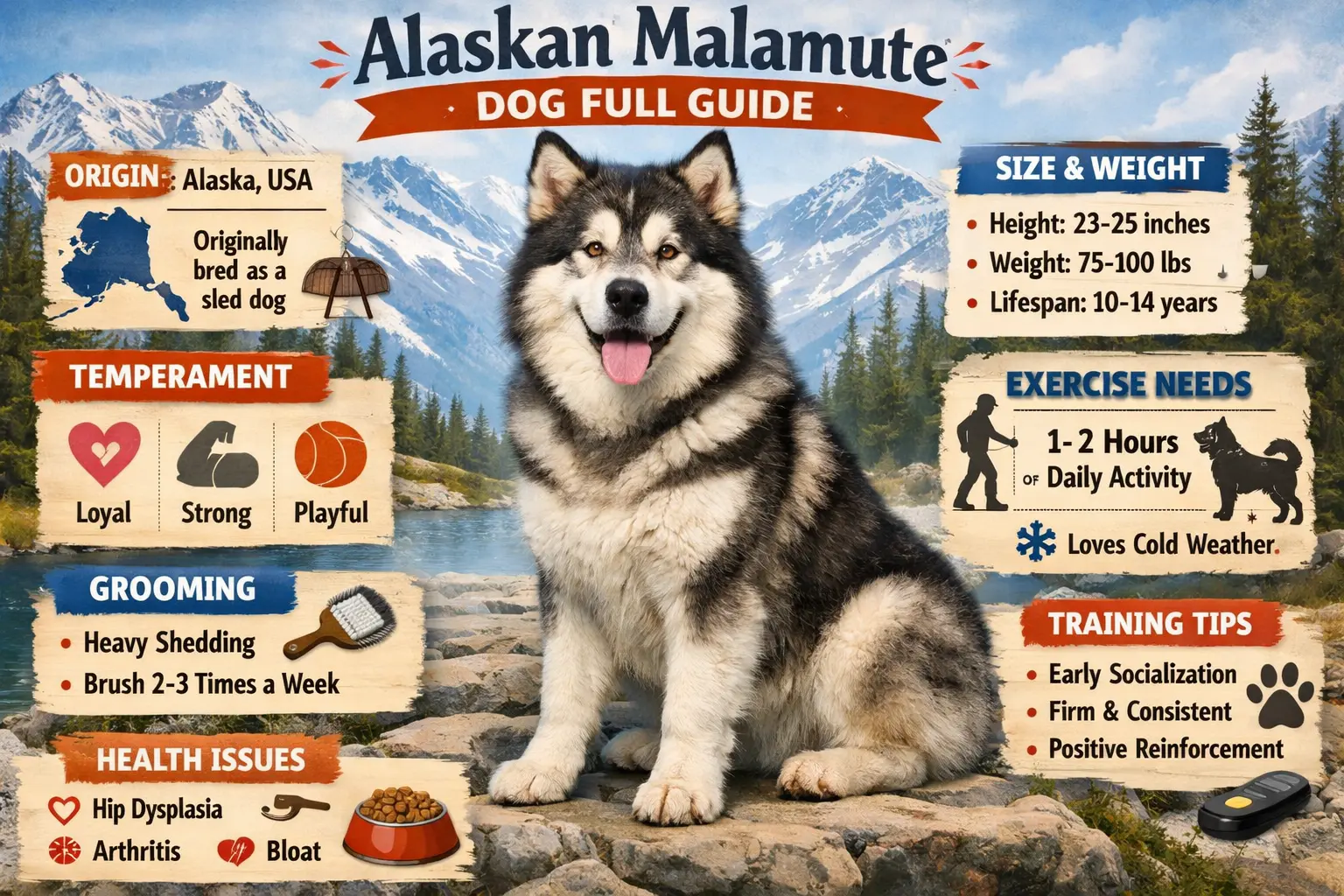
The Alaskan Malamute is known for its loyal, intelligent, and independent personality. Originally bred as a working sled dog, this breed thrives when given a purpose and enjoys being an active member of the family. Malamutes are affectionate with their owners and typically form strong bonds with their household, although they can be somewhat reserved around unfamiliar people.
Because of their working-dog heritage, Alaskan Malamutes have high energy levels and require both physical exercise and mental stimulation. Without sufficient activity, they may become bored and develop destructive behaviors such as digging, chewing, or excessive vocalization. Daily walks, interactive play sessions, and training exercises are essential for keeping them happy and well-balanced.
Malamutes are generally patient and playful with children, making them a good choice for active families. However, their large size and strength mean interactions with younger children should always be supervised. They can coexist with other dogs when properly socialized, but their natural prey drive may make them less suitable for households with small pets such as rabbits, hamsters, or cats.
Early socialization and consistent training are especially important with this breed. Alaskan Malamutes are highly intelligent but can also be stubborn, meaning positive reinforcement and firm leadership are necessary for successful training.
Alaskan Malamute Temperament at a Glance
| Setting | Behavior | Notes |
|---|---|---|
| Family | Loyal and affectionate | Forms strong bonds with owners |
| Children | Patient and playful | Supervision recommended with young children |
| Strangers | Reserved but friendly | Socialization improves confidence |
| Other Pets | Can coexist with proper introductions | Strong prey drive requires caution |
| Exercise Needs | Very high | Needs 1–2 hours of daily exercise plus mental stimulation |
Alaskan Malamutes are best suited for active individuals, outdoor enthusiasts, and families who can dedicate time to exercise, training, and companionship. They are generally not recommended for first-time dog owners, people with limited mobility, or households unable to meet their physical and mental needs.
Health, Lifespan, and Care Needs
One of the most common questions potential owners ask is, “How long do Alaskan Malamutes live?” The typical Alaskan Malamute lifespan ranges from 10 to 14 years, which is considered a healthy life expectancy for a large working breed. Genetics, nutrition, exercise, preventive healthcare, and weight management all play important roles in determining an individual dog’s longevity.
Like many large breeds, Alaskan Malamutes can be prone to several hereditary health conditions. The most common include hip dysplasia, elbow dysplasia, cataracts, progressive retinal atrophy (PRA), and hypothyroidism. Responsible breeders perform health screenings to reduce the likelihood of passing these conditions to future generations.
Maintaining a healthy body weight is one of the most effective ways to support a longer Alaskan Malamute lifespan. Excess weight increases stress on joints and can contribute to mobility issues, arthritis, and other health complications later in life. Regular veterinary examinations, high-quality nutrition, and consistent exercise help support long-term health.
As Malamutes age, their care requirements change. Puppies require proper growth management, adults need regular physical activity and mental enrichment, and senior dogs often benefit from joint support, routine bloodwork, and more frequent veterinary monitoring.
Common Health Conditions
| Health Issue | Risk Level | Recommended Screening |
|---|---|---|
| Hip Dysplasia | Moderate | OFA Hip Evaluation |
| Elbow Dysplasia | Moderate | OFA Elbow Evaluation |
| Eye Disorders | Moderate | CERF/OFA Eye Examination |
| Hypothyroidism | Low–Moderate | Annual Blood Testing |
| Chondrodysplasia | Rare | Genetic Testing if Recommended |
Grooming Requirements
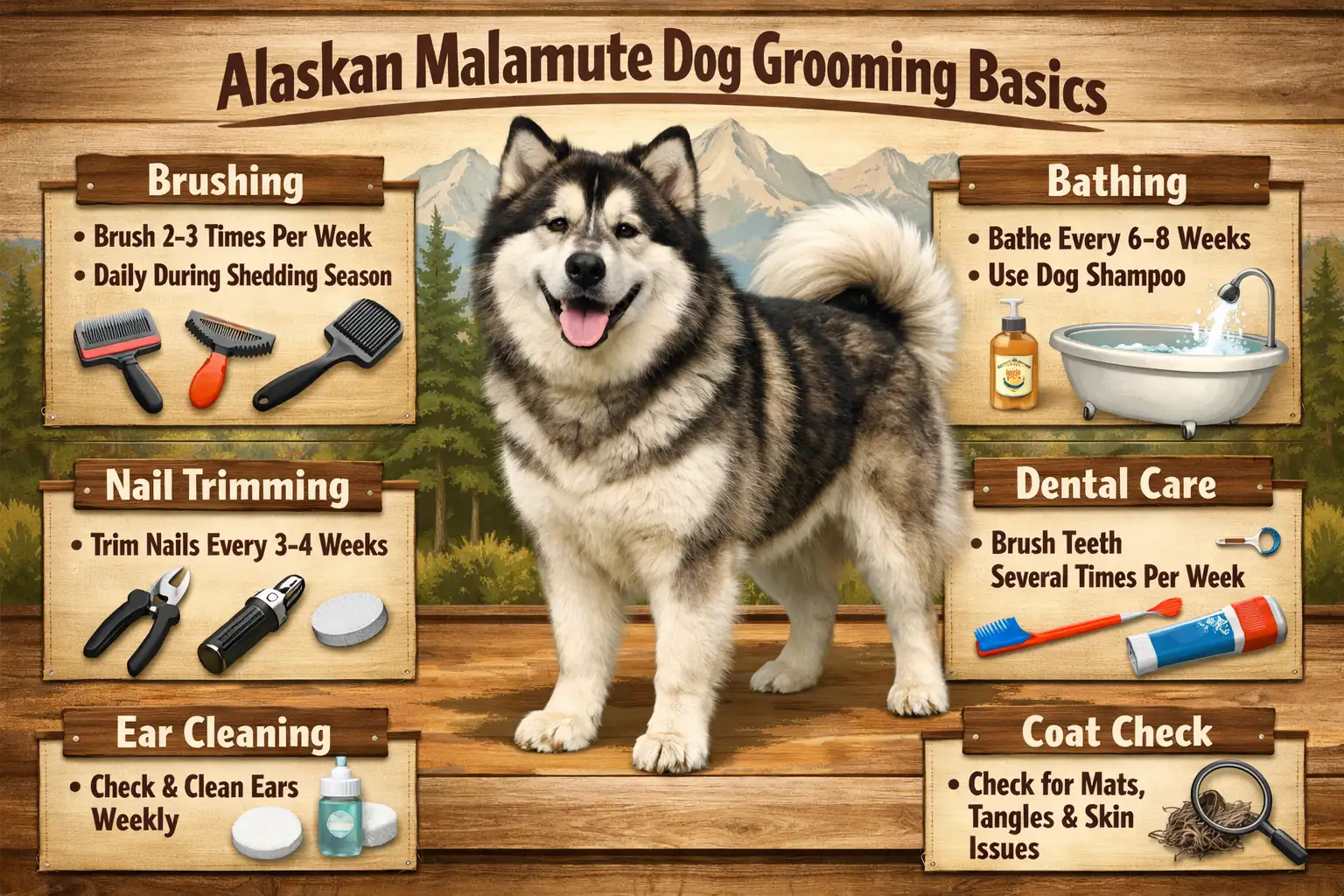
The Alaskan Malamute’s thick double coat provides excellent insulation in cold climates but requires regular maintenance. Routine grooming not only improves appearance but also contributes to overall skin and coat health.
| Grooming Task | Frequency |
|---|---|
| Brushing | Weekly; daily during seasonal shedding |
| Bathing | As needed |
| Nail Trimming | Every 3–4 weeks |
| Ear Cleaning | Weekly |
| Teeth Brushing | Several times per week |
With proper healthcare, nutrition, grooming, and exercise, Alaskan Malamutes can remain active, healthy companions throughout their lives.
Ownership Considerations, Cost, and Comparisons
Before bringing home an Alaskan Malamute, potential owners should carefully consider the long-term commitment involved. This breed requires significant time, attention, exercise, and financial investment throughout its lifetime.
Cost of Owning an Alaskan Malamute
The purchase price of an Alaskan Malamute puppy typically ranges from $1,500 to $3,500, depending on pedigree, breeder reputation, location, and health testing.
Ongoing Ownership Costs
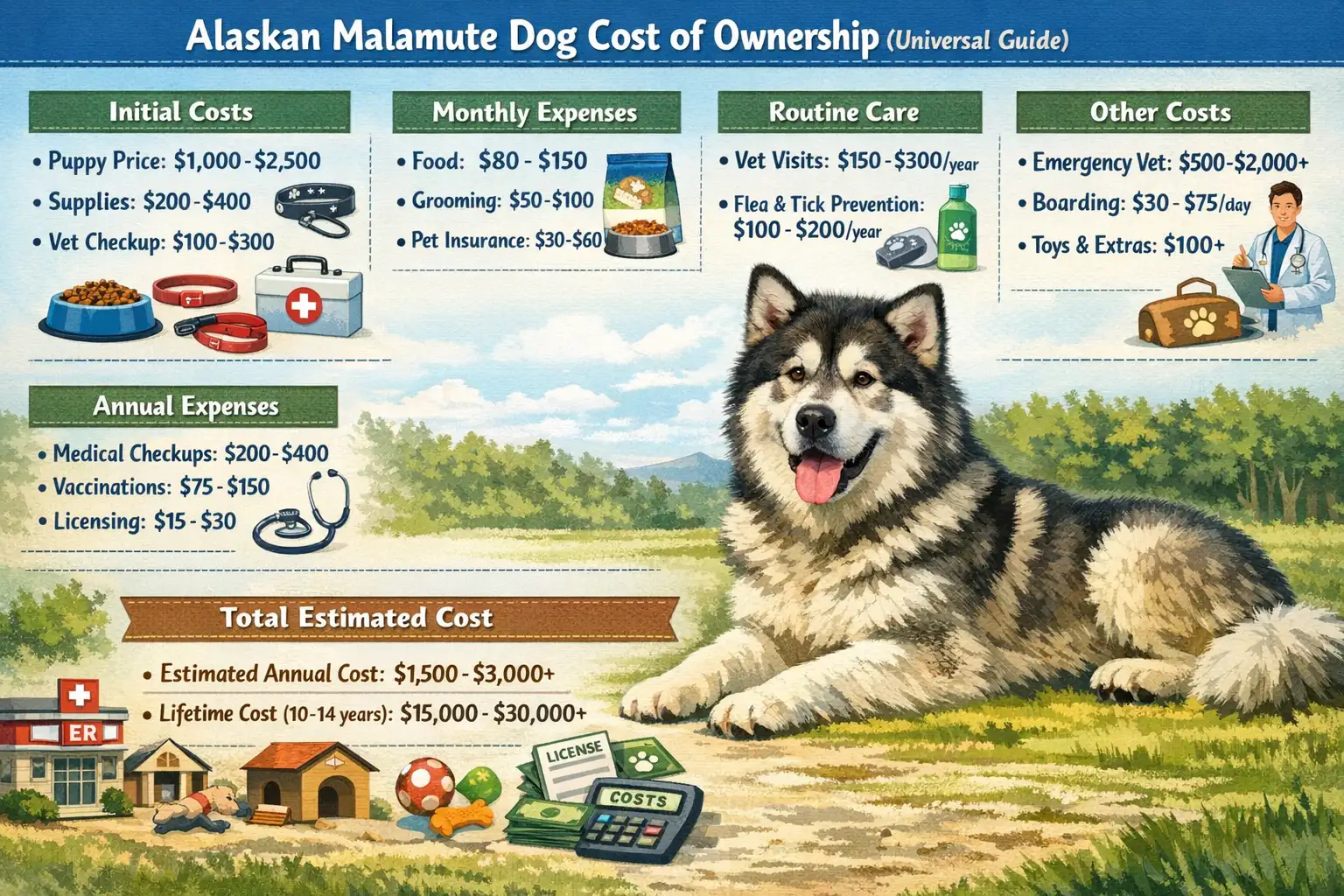
Beyond the initial purchase price, owners should budget for food, veterinary care, grooming supplies, training, and pet insurance. Because Alaskan Malamutes are a large breed, food and healthcare costs are generally higher than those of smaller dogs.
| Expense | Estimated Cost |
|---|---|
| Puppy Purchase | $1,500–$3,500 |
| Annual Food | $500–$1,000 |
| Grooming | $100–$300 |
| Routine Veterinary Care | $300–$600 |
| Pet Insurance | $50–$120 per month |
Pros and Cons of Owning an Alaskan Malamute
| Pros | Cons |
|---|---|
| Loyal and affectionate | High exercise requirements |
| Intelligent and capable | Can be stubborn and independent |
| Strong working ability | Heavy seasonal shedding |
| Good with active families | Strong prey drive |
| Adaptable to cold climates | Requires experienced ownership |
Comparing Alaskan Malamutes With Similar Breeds
Many prospective owners compare the Alaskan Malamute to other northern breeds such as the Siberian Husky and Samoyed. While these breeds share certain traits, there are important differences in size, temperament, and maintenance requirements.
| Breed | Size | Energy Level | Trainability | Shedding | Family Friendly |
|---|---|---|---|---|---|
| Alaskan Malamute | Large | High | Moderate | Heavy | Good |
| Siberian Husky | Medium | High | Moderate | Moderate | Good |
| Samoyed | Large | High | Moderate | Heavy | Excellent |
| Alaskan Husky | Large | Very High | Moderate | Moderate | Good |
The Alaskan Malamute is generally larger and more powerful than the Siberian Husky, while also being more independent. Owners looking for a strong working dog with excellent endurance often prefer the Malamute.
Who Should Choose an Alaskan Malamute?
This breed is best suited for active individuals and families who enjoy outdoor activities such as hiking, backpacking, running, and winter sports. Owners should be prepared to provide daily exercise, ongoing training, and consistent companionship.
Alaskan Malamutes are not ideal for sedentary lifestyles, small apartments, or households where the dog will spend long periods alone.
To understand your dog's current life stage, use the Alaskan Malamute Dog Age Calculator.
For deeper breed-specific guidance, see the Alaskan Malamute Training Guide, Alaskan Malamute Age Chart, Alaskan Malamute Grooming Guide, Alaskan Malamute Nutrition & Feeding Guide, and Alaskan Malamute Cost of Ownership Guide.
Final Thoughts
The Alaskan Malamute is a powerful, intelligent, and loyal breed with a rich working heritage. Their affectionate nature, impressive strength, and endurance make them excellent companions for active owners who understand the responsibilities that come with caring for a large working dog.
With a typical Alaskan Malamute lifespan of 10 to 14 years, proper nutrition, exercise, preventive healthcare, and regular grooming play essential roles in helping these dogs live long, healthy lives. For owners willing to invest the necessary time and effort, the Alaskan Malamute can be a rewarding companion that provides years of loyalty, adventure, and companionship.

Ata Ur Rehman is the founder of Pet Age in Human Years Calculator, an educational platform that provides age conversion charts and lifespan guides for dogs, cats, birds, and other companion animals. His work focuses on helping pet owners understand how animal ages translate into human years using commonly accepted age conversion formulas and published lifespan averages.
The website compiles breed and species lifespan data from kennel clubs, breed organizations, and general animal lifespan studies to present simple and easy-to-understand guides for pet owners worldwide.
This website was created to centralize animal age conversion charts into one easy reference platform for pet owners.
This article is for general education. For symptoms, medication, diet changes, or health concerns, use a qualified veterinarian who can assess your individual pet.