On this page
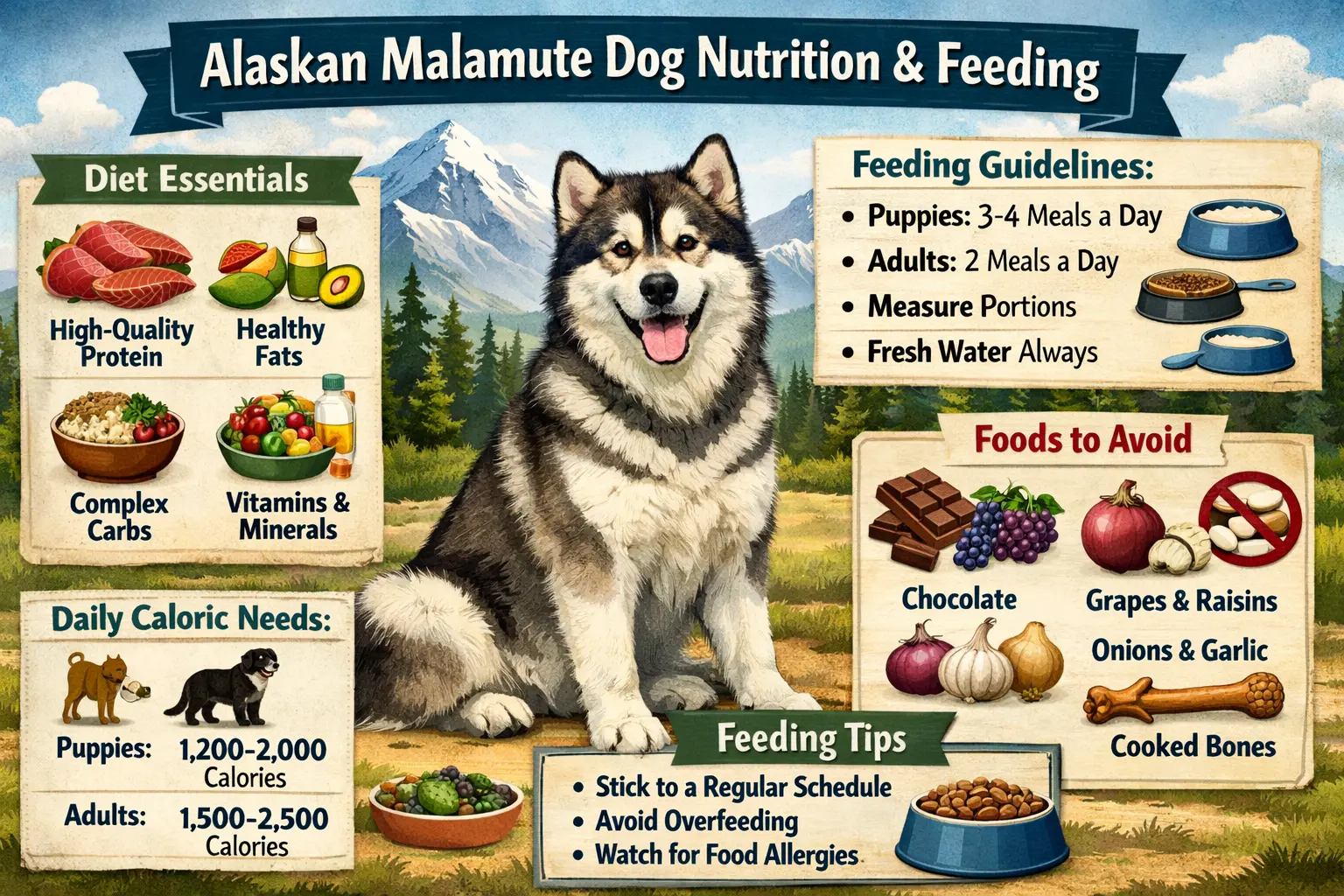
Knowing how much to feed an Alaskan Malamute is one of the most important parts of keeping this powerful working breed healthy. Feeding too little can affect muscle development, energy levels, and coat quality, while overfeeding can quickly lead to excess weight and increased stress on the joints.
Most adult Alaskan Malamutes need between 2.5 and 4 cups of high-quality dog food per day, divided into two meals. However, the exact amount depends on age, weight, activity level, metabolism, and the calorie density of the food being served.
Quick Answer
- Puppies (3–12 months): 2.5–5 cups daily across 3–4 meals
- Adults (1–7 years): 2.5–4 cups daily across 2 meals
- Seniors (7+ years): 2–3.5 cups daily across 2 meals
- Daily Calories: Approximately 1,500–2,000 calories for most adult Malamutes
- Highly Active Dogs: May require significantly more calories during periods of intense exercise
Because every dog is different, owners should regularly monitor body condition, weight trends, and activity levels rather than relying solely on package feeding recommendations.
Alaskan Malamute Feeding Chart by Weight and Age
The following feeding chart provides a practical starting point for determining daily food intake.
| Dog Weight | Puppy (3–12 Months) | Adult (1–7 Years) | Senior (7+ Years) |
|---|---|---|---|
| 40–60 lbs | 2.5–3 cups/day | 2–2.5 cups/day | 1.5–2 cups/day |
| 60–80 lbs | 3–4 cups/day | 2.5–3 cups/day | 2–2.5 cups/day |
| 80–100 lbs | 4–5 cups/day | 3–3.5 cups/day | 2.5–3 cups/day |
| 100+ lbs | 5+ cups/day | 3.5–4 cups/day | 3–3.5 cups/day |
These recommendations assume a quality commercial dog food formulated for large-breed dogs. Foods with higher calorie density may require smaller serving sizes.
How Much Should I Feed My Alaskan Malamute?
Most owners should base feeding amounts on three factors:
1. Body Weight
Larger Malamutes naturally require more calories and food volume than smaller individuals. A 100-pound Malamute will generally consume considerably more food than a 60-pound dog.
2. Activity Level
Alaskan Malamutes were originally bred as working sled dogs and can have very different calorie requirements depending on their lifestyle.
- Low activity: Lower end of feeding range
- Moderate activity: Average feeding recommendations
- High activity: Increased calories and protein requirements
- Working dogs: May require substantial calorie increases
3. Age and Life Stage
Puppies need additional nutrients to support growth and development, while senior dogs often require fewer calories due to reduced activity levels.
How Many Cups of Food Should an Alaskan Malamute Eat Per Day?
A healthy adult Alaskan Malamute typically eats between 2.5 and 4 cups of dry food daily.
General guidelines:
| Life Stage | Daily Food Amount |
|---|---|
| Puppy | 2.5–5 cups |
| Adult | 2.5–4 cups |
| Senior | 2–3.5 cups |
The number of cups should always be adjusted according to the calorie content of the food and your dog’s physical condition.
How Many Times a Day Should You Feed an Alaskan Malamute?
Meal frequency is just as important as portion size.
Puppies
Puppies under six months of age should usually be fed three to four times per day to support healthy growth and maintain stable energy levels.
Adults
Most adult Alaskan Malamutes do best on two meals per day. Dividing food into morning and evening meals can improve digestion and help prevent overeating.
Seniors
Senior Malamutes generally remain on a twice-daily feeding schedule, although portion sizes may need adjustment to maintain a healthy body weight.
Daily Calorie Requirements for Alaskan Malamutes
Calories provide a more accurate feeding guide than cups alone because dog foods vary significantly in calorie density.
| Activity Level | Estimated Daily Calories |
|---|---|
| Low Activity | 1,300–1,600 |
| Moderate Activity | 1,500–2,000 |
| Highly Active | 2,000–2,800 |
| Working/Sled Dogs | 2,800+ |
Owners should routinely assess body condition and make gradual adjustments when necessary.
Why Proper Feeding Matters for Alaskan Malamutes
Alaskan Malamutes are prone to weight gain when overfed and under-exercised. Excess weight can contribute to:
- Joint stress
- Reduced mobility
- Lower energy levels
- Increased risk of obesity-related health problems
- Reduced overall lifespan
Maintaining an ideal body condition through proper nutrition and portion control helps support long-term health, mobility, and quality of life.
To understand your dog's current life stage, use the Alaskan Malamute Dog Age Calculator.
For life-stage context, see our Alaskan Malamute age chart.
Alaskan Malamute Feeding FAQs
How much should a 70 lb Alaskan Malamute eat per day?
A healthy 70 lb adult Alaskan Malamute typically needs between 2.5 and 3.5 cups of high-quality dog food per day. The exact amount depends on activity level, metabolism, age, and the calorie density of the food. Active dogs usually require more calories than less active companions.
How much should an 80 lb Alaskan Malamute eat?
An 80 lb adult Malamute generally requires 3 to 3.5 cups of food daily, divided into two meals. Working or highly active dogs may need additional calories to maintain a healthy body condition.
Is 2 cups of food enough for an Alaskan Malamute?
For most adult Alaskan Malamutes, 2 cups per day is usually below their maintenance needs. While some smaller, senior, or less active dogs may do well on this amount, most adults require between 2.5 and 4 cups daily.
How many times a day should I feed my Alaskan Malamute?
Adult Alaskan Malamutes should generally be fed twice per day. Puppies under six months often require three to four smaller meals daily, while seniors typically remain on a two-meal schedule with adjusted portions.
What is the best diet for an Alaskan Malamute?
The best diet for an Alaskan Malamute contains high-quality animal protein, moderate healthy fats, and balanced vitamins and minerals. Large-breed formulas that support joint health and muscle maintenance are often excellent choices for this breed.
Do Alaskan Malamutes need a high-protein diet?
Yes. Alaskan Malamutes benefit from diets rich in quality animal protein because protein supports muscle development, recovery, metabolism, and overall body condition. Most adult Malamutes thrive on diets containing approximately 25% to 35% protein.
Can Alaskan Malamutes eat raw food?
Many owners successfully feed raw diets, but raw feeding requires careful planning to ensure complete and balanced nutrition. Improperly formulated raw diets may lead to nutritional deficiencies over time.
What human foods can Alaskan Malamutes safely eat?
Safe options include carrots, apples without seeds, blueberries, pumpkin, cooked chicken, cooked turkey, and plain peanut butter without xylitol. These foods should only be offered in moderation as treats.
What foods should Alaskan Malamutes never eat?
Avoid chocolate, grapes, raisins, onions, garlic, alcohol, xylitol, macadamia nuts, and cooked bones. These foods can cause serious health complications and should never be included in your dog’s diet.
How do I know if I am feeding my Malamute too much?
Common signs of overfeeding include weight gain, loss of waist definition, difficulty feeling the ribs, reduced stamina, and excessive body fat around the chest and abdomen. Regular weight checks help prevent obesity.
Why is my Alaskan Malamute always hungry?
Persistent hunger may be caused by high activity levels, growth in puppies, insufficient calorie intake, boredom, or certain medical conditions. If excessive hunger continues despite proper feeding, consult your veterinarian.
How do I switch my Alaskan Malamute to a new food?
Transition gradually over 7–10 days by slowly increasing the amount of new food while reducing the old food. A gradual transition helps reduce digestive upset and improves acceptance of the new diet.
Do senior Alaskan Malamutes need a different diet?
Yes. Senior Malamutes often benefit from slightly reduced calories, highly digestible proteins, joint-supporting nutrients, and controlled fat levels to maintain a healthy weight and mobility as they age.
Should I feed my Alaskan Malamute before or after exercise?
It is generally best to avoid large meals immediately before or after intense exercise. Waiting at least one hour before activity and one hour afterward may help reduce digestive stress and support healthy digestion.
Final Thoughts
Proper nutrition plays a major role in your Alaskan Malamute’s health, energy levels, muscle condition, coat quality, and overall lifespan. While feeding charts provide a useful starting point, every dog is unique. Age, body weight, activity level, metabolism, and health status all influence daily food requirements.
Most adult Alaskan Malamutes thrive on 2.5 to 4 cups of high-quality food per day, divided into two meals and adjusted as needed to maintain an ideal body condition. Puppies require additional calories to support growth, while senior dogs often benefit from slightly lower-calorie diets and joint-supportive nutrition.
The key to successful feeding is consistency. Monitor your dog’s weight regularly, evaluate body condition, provide fresh water at all times, and make gradual adjustments whenever activity levels or life stages change. By following a balanced feeding plan and using the feeding chart as a guide, you can help your Alaskan Malamute maintain a healthy weight, strong muscles, and an active lifestyle for years to come.

Ata Ur Rehman is the founder of Pet Age in Human Years Calculator, an educational platform that provides age conversion charts and lifespan guides for dogs, cats, birds, and other companion animals. His work focuses on helping pet owners understand how animal ages translate into human years using commonly accepted age conversion formulas and published lifespan averages.
The website compiles breed and species lifespan data from kennel clubs, breed organizations, and general animal lifespan studies to present simple and easy-to-understand guides for pet owners worldwide.
This website was created to centralize animal age conversion charts into one easy reference platform for pet owners.
This article is for general education. For symptoms, medication, diet changes, or health concerns, use a qualified veterinarian who can assess your individual pet.