On this page
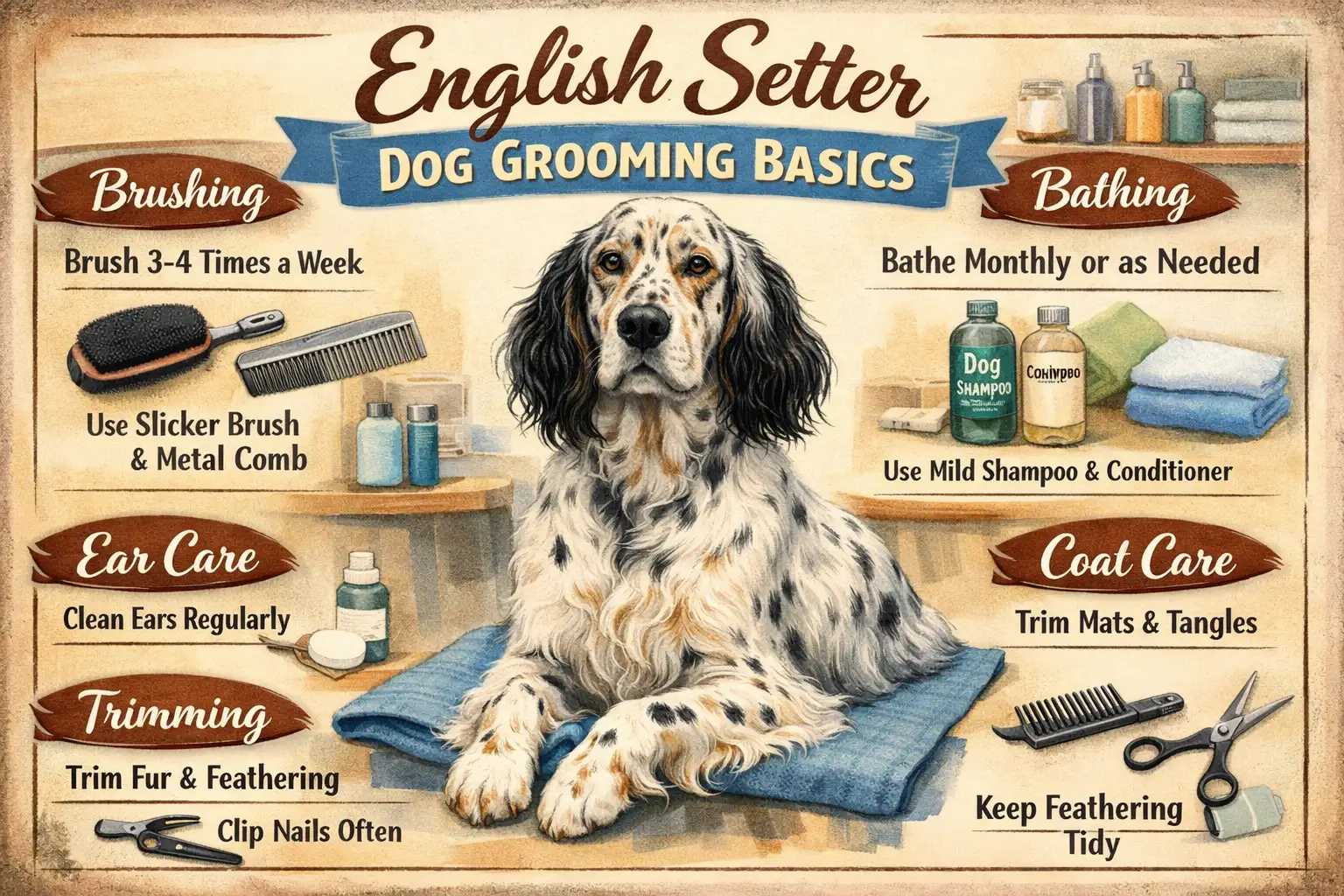
English Setters are known for their elegant appearance, silky feathered coat, and graceful movement. While their coat is beautiful, it requires regular grooming to stay healthy, tangle-free, and comfortable. Fortunately, grooming an English Setter is not difficult when you follow a consistent routine.
This guide covers everything you need to know about English Setter grooming, including brushing, bathing, shedding management, feather care, nail trimming, ear cleaning, dental care, and common grooming mistakes to avoid.
Why Grooming Matters for English Setters
Grooming is much more than keeping your dog looking good. Regular grooming helps maintain skin health, prevents painful mats, reduces shedding, and allows you to spot health problems before they become serious.
Consistent grooming helps:
- Prevent mats and tangles
- Remove dirt, debris, and allergens
- Improve skin and coat health
- Reduce excess shedding
- Keep ears clean and dry
- Make health checks easier
- Improve comfort and mobility
Dogs that are groomed regularly also tend to be more relaxed during handling and veterinary visits.
English Setter Coat Type and Grooming Needs
The English Setter has a medium-length, silky coat with feathering on several parts of the body.
Feathering Typically Appears On:
- Ears
- Chest
- Belly
- Back of legs
- Tail
- Underbody
Unlike heavy double-coated breeds, English Setters do not require extensive de-shedding treatments. However, their feathering can easily collect dirt, burrs, moisture, and debris.
Without regular grooming, these areas can quickly develop tangles and mats.
Common Areas Where Mats Form
- Behind the ears
- Under the front legs
- Around the collar area
- Chest feathering
- Belly
- Back of the thighs
- Tail feathering
Checking these areas every few days helps prevent small tangles from becoming painful mats.
English Setter Grooming Frequency Overview
| Grooming Task | How Often | Why It Matters |
|---|---|---|
| Brushing | 3–4 times per week | Prevents mats and removes dirt before it sticks |
| Full coat check | Every few days | Finds tangles early before they tighten |
| Bathing | Every 4–6 weeks | Keeps skin clean without drying it out |
| Feather trimming | Every 6–8 weeks | Keeps coat neat and easier to manage |
| Ear check | Weekly | Long ears trap moisture and dirt |
| Nail trimming | Every 3–4 weeks | Active dogs still need nail care |
Following this schedule helps keep grooming manageable throughout the year.
Do English Setters Shed?
Yes, English Setters are moderate shedders.
Most shedding occurs during seasonal coat changes in spring and fall. Regular brushing removes loose hair before it spreads throughout your home.
Factors That Affect Shedding
- Seasonal coat changes
- Nutrition quality
- Overall health
- Grooming frequency
- Stress levels
While shedding is normal, excessive hair loss may indicate skin problems, allergies, or other health concerns.
Can You Shave an English Setter?
No.
English Setters should not be shaved unless medically necessary and recommended by a veterinarian.
Shaving may:
- Damage coat texture
- Increase sun exposure
- Affect natural temperature regulation
- Cause uneven regrowth
Light trimming and feather maintenance are usually all that’s needed.
Essential Grooming Tools for English Setters
Having the right tools makes grooming faster and more effective.
| Tool | What It Is Used For | How Often |
|---|---|---|
| Slicker brush | Removes loose hair and small tangles | 2–4 times per week |
| Pin brush | Smooths feathering and long hair | 2–4 times per week |
| Metal comb | Finds hidden knots near skin | After brushing |
| Dog shampoo | Cleans coat and skin | Every 4–6 weeks |
| Towel or dog dryer | Dries coat fully after baths | After every bath |
| Nail clippers or grinder | Trims nails | Every 3–4 weeks |
Avoid using human shampoo because canine skin has a different pH balance and can become irritated.
How to Brush an English Setter Properly
Brushing is the foundation of English Setter grooming.
A few brushing sessions each week can prevent most coat problems.
Step-by-Step Brushing Routine
- Start with a dry coat.
- Brush one section at a time.
- Begin at the legs and work upward.
- Use gentle strokes.
- Focus on feathered areas.
- Check behind the ears carefully.
- Finish with a metal comb.
If You Find a Knot
- Hold the hair close to the skin.
- Work slowly from the outer edge.
- Use a comb or slicker brush.
- Never yank or pull aggressively.
Regular brushing prevents painful mats and keeps the coat looking natural.
Bathing an English Setter
Bathing removes dirt, oils, and environmental debris while keeping the coat fresh.
Recommended Bathing Schedule
| Dog Lifestyle | Bathing Frequency | Notes |
|---|---|---|
| Indoor family pet | Every 4–6 weeks | Brush well before bathing |
| Very active outdoor dog | Every 3–4 weeks | Rinse mud sooner if needed |
| Sensitive skin dog | As advised by vet | Use gentle or medicated shampoo |
Bathing Tips
- Brush thoroughly before bathing.
- Use lukewarm water.
- Avoid getting water into the ears.
- Rinse completely.
- Remove all shampoo residue.
- Dry thoroughly after bathing.
Leaving moisture trapped in feathering can contribute to skin irritation and unpleasant odors.
Why Proper Drying Matters
Many owners focus on washing but overlook drying.
Drying is a critical part of grooming.
After Every Bath
- Towel dry first
- Use a low-heat dog dryer
- Brush while drying
- Ensure feathering is completely dry
A fully dried coat is less likely to develop mats, odors, or skin problems.
Feather Care and Coat Maintenance
Feathering gives English Setters their distinctive appearance.
The longer hair on the legs, tail, chest, belly, and ears requires extra attention.
What Feather Trimming Means
Feather trimming is designed to tidy and maintain the coat.
You should:
- Trim uneven edges
- Shorten dragging hair
- Clean up feet and hocks
- Maintain neat ear feathering
You should not:
- Shave the body coat
- Remove all feathering
- Clip the coat excessively short
Proper feather care preserves the breed’s natural appearance while reducing maintenance.
Common Feather Problem Areas
| Body Area | Why Mats Form Here | How Often to Check |
|---|---|---|
| Behind ears | Rubbing and moisture | Every 2–3 days |
| Under front legs | Movement and friction | Every 2–3 days |
| Belly | Soft hair and dirt | Weekly |
| Back of legs | Long feathering | Weekly |
| Tail | Sitting and wagging | Weekly |
Seasonal Shedding and Coat Changes
English Setters experience seasonal coat transitions throughout the year.
| Season | What Happens | What You Should Do |
|---|---|---|
| Spring | Old coat falls out | Brush more often |
| Summer | Coat feels lighter | Keep feathering clean |
| Fall | New coat grows in | Watch for mats |
| Winter | Coat feels thicker | Dry coat fully after baths |
During heavy shedding periods, brushing 4–5 times weekly can significantly reduce loose hair.
Signs of Coat or Skin Problems
Watch for these warning signs during grooming sessions.
| Sign You See | What It May Mean | What to Do |
|---|---|---|
| Bad smell | Trapped moisture | Bathe and dry thoroughly |
| Red skin | Irritation or allergy | Monitor and consult vet if needed |
| Thick mats | Missed brushing | Increase brushing frequency |
| Dull coat | Coat care or nutrition issue | Review grooming routine |
Seek veterinary advice if the skin appears painful, swollen, or infected.
Nail Care and Paw Maintenance
Even active English Setters need regular nail maintenance.
| Nail Check | What You See | What It Means |
|---|---|---|
| Nails click on floor | Too long | Time to trim |
| Toes spread wide | Nail pressure | Trim soon |
| Dog pulls paw away | Discomfort | Trim carefully or seek help |
Trim small amounts regularly rather than waiting until nails become overgrown.
Ear Cleaning for English Setters
English Setters have long ears that can trap moisture and reduce airflow.
Weekly ear checks help prevent infections.
| Safe Ear Care | Unsafe Ear Care |
|---|---|
| Clean once a week | Cleaning every day |
| Use dog ear cleaner | Using alcohol or vinegar |
| Wipe visible areas only | Inserting objects deeply |
| Dry ears after baths | Leaving ears wet |
If you notice redness, odor, swelling, or discharge, contact your veterinarian.
Dental Care
Dental hygiene is often overlooked but remains an important part of overall health.
| Dental Care | How Often |
|---|---|
| Tooth brushing | 2–3 times per week |
| Dental chews | As directed |
| Mouth check | Weekly |
Regular dental care can help reduce plaque buildup and support long-term health.
Common English Setter Grooming Mistakes
| Mistake | Why It Is Bad | Better Choice |
|---|---|---|
| Skipping brushing | Causes painful mats | Brush regularly |
| Shaving the coat | Damages coat structure | Trim feathering only |
| Bathing too often | Dries skin | Follow a regular schedule |
| Using human shampoo | Skin irritation | Use dog shampoo |
| Rushing grooming | Creates stress | Stay calm and patient |
Avoiding these mistakes makes grooming safer and more enjoyable.
Grooming by Life Stage
Different ages require slightly different grooming approaches.
| Life Stage | Grooming Focus | Helpful Tips |
|---|---|---|
| Puppy | Positive experiences | Keep sessions short |
| Adult | Consistent maintenance | Follow a routine |
| Senior | Comfort and safety | Use gentle handling |
Introducing grooming early helps create lifelong good habits.
Home Grooming vs Professional Grooming
| Groom at Home | See a Professional Groomer |
|---|---|
| Regular brushing | Severe matting |
| Routine baths | Detailed feather trimming |
| Basic nail trims | Difficult handling issues |
| Ear maintenance | Complex coat problems |
Most English Setters benefit from a combination of home maintenance and occasional professional grooming.
Frequently Asked Questions
How often should an English Setter be groomed?
Brushing should be done 3–4 times per week, while bathing is typically needed every 4–6 weeks.
Do English Setters need haircuts?
No. English Setters generally need light trimming rather than full haircuts.
Can I shave my English Setter?
Shaving is not recommended because it can damage the coat and affect its natural protective functions.
Are English Setters heavy shedders?
No. They are considered moderate shedders, although shedding increases during seasonal coat changes.
What is the best brush for an English Setter?
A slicker brush combined with a metal comb works well for maintaining the coat and feathering.
How do I prevent mats in an English Setter?
Brush consistently, focus on feathered areas, and check behind the ears, under the legs, and around the tail frequently.
How often should I clean my English Setter’s ears?
Weekly ear checks and cleaning are generally recommended.
Why does my English Setter smell bad?
Persistent odors may result from trapped moisture, dirty ears, skin irritation, or inadequate drying after baths.
Quick Grooming Routine Summary
| Grooming Task | How Often |
|---|---|
| Brushing | 3–4 times per week |
| Bathing | Every 4–6 weeks |
| Feather trimming | Every 6–8 weeks |
| Ear cleaning | Weekly |
| Nail trimming | Every 3–4 weeks |
| Full coat check | Every few days |
When to See a Groomer or Veterinarian
Seek professional help if you notice:
- Tight mats close to the skin
- Red or painful skin
- Ear odor or discharge
- Sudden hair loss
- Persistent scratching
- Signs of pain during grooming
Early intervention can prevent minor grooming issues from becoming larger health problems.
Final Thoughts
English Setter grooming is not complicated, but it does require consistency. Their silky feathered coat needs regular brushing, occasional bathing, routine ear care, and periodic trimming to stay healthy and comfortable.
By following a simple grooming schedule and addressing small issues before they become major problems, you can keep your English Setter looking beautiful while supporting their overall health and wellbeing. Regular grooming sessions also strengthen the bond between you and your dog, making coat care an important part of responsible ownership rather than just a cosmetic task.

Ata Ur Rehman is the founder of Pet Age in Human Years Calculator, an educational platform that provides age conversion charts and lifespan guides for dogs, cats, birds, and other companion animals. His work focuses on helping pet owners understand how animal ages translate into human years using commonly accepted age conversion formulas and published lifespan averages.
The website compiles breed and species lifespan data from kennel clubs, breed organizations, and general animal lifespan studies to present simple and easy-to-understand guides for pet owners worldwide.
This website was created to centralize animal age conversion charts into one easy reference platform for pet owners.
This article is for general education. For symptoms, medication, diet changes, or health concerns, use a qualified veterinarian who can assess your individual pet.