On this page
Feeding a Staffordshire Bull Terrier properly is one of the most important factors in maintaining healthy weight, strong muscles, good skin condition, and long-term wellbeing. While Staffies are known for their athletic build and energetic personality, they are also highly food-motivated, making portion control and balanced nutrition essential throughout every life stage.
This Staffordshire Bull Terrier feeding guide explains what to feed, how much to feed, daily calorie requirements, feeding schedules, and common mistakes owners should avoid. Whether you have a growing puppy, an active adult, or a senior Staffy, understanding their nutritional needs helps support a healthier and longer life.
Why Nutrition Matters for Staffordshire Bull Terriers
Staffordshire Bull Terriers have a muscular frame that requires consistent nutrition to maintain lean body condition. The quality and quantity of food they receive can directly influence their overall health.
Proper nutrition helps support:
- Lean muscle development and maintenance
- Healthy skin and coat condition
- Strong immune function
- Stable energy levels
- Healthy digestion
- Weight management
- Joint health during aging
Many feeding problems are caused not by poor-quality food but by incorrect portion sizes, excessive treats, and failure to adjust feeding amounts as activity levels change.
Breed-Specific Nutritional Risks
Staffordshire Bull Terriers have several nutritional tendencies owners should understand early.
Easy Weight Gain
Staffies often have strong appetites and may continue eating even when they have already consumed enough calories. Overfeeding can quickly result in excess body fat.
Skin Sensitivities
Some Staffordshire Bull Terriers may experience skin irritation or itching that can be influenced by diet quality and fatty acid balance.
Excess Treat Consumption
Many owners unintentionally provide too many treats throughout the day. Even healthy treats contribute calories that can lead to weight gain.
Muscle Loss in Older Dogs
Senior Staffies may gradually lose muscle mass if protein intake becomes insufficient or calorie restriction becomes excessive.
Understanding these risks allows owners to make proactive feeding adjustments before problems develop.
Core Nutrition Principles for Staffordshire Bull Terriers
A balanced diet should provide the correct combination of protein, fat, carbohydrates, vitamins, and minerals.
What a Balanced Diet Looks Like
A healthy Staffordshire Bull Terrier diet should include:
- High-quality protein sources
- Moderate healthy fats
- Digestible carbohydrates
- Essential vitamins and minerals
- Consistent hydration
Protein is especially important because this breed naturally carries more lean muscle mass than many dogs of similar size.
Nutritional Role of Major Macronutrients
| Nutrient | Why It Matters for Staffies | Simple Explanation |
|---|---|---|
| Protein | Supports muscle growth and maintenance | Helps maintain strength and body condition |
| Fat | Provides concentrated energy | Supports skin, coat, and daily activity |
| Carbohydrates | Supports digestion and energy | Provides fiber and sustained fuel |
Most Staffordshire Bull Terriers perform best on diets that contain moderate to high-quality protein levels with controlled fat content.
Recommended Macronutrient Ranges
| Life Stage / Lifestyle | Protein | Fat |
|---|---|---|
| Puppy | 24–30% | 12–18% |
| Adult (Moderate Activity) | 22–26% | 10–16% |
| Athletic / Highly Active | 24–28% | 14–18% |
| Senior | 22–26% | 8–14% |
These ranges can vary slightly depending on the individual dog’s health status, activity level, and body condition.
Important Vitamins and Minerals
Several nutrients play a particularly important role in Staffordshire Bull Terrier nutrition.
| Nutrient | Why It Is Important |
|---|---|
| Omega-3 Fatty Acids | Supports skin and coat health |
| Zinc | Supports skin function and immunity |
| Calcium & Phosphorus | Supports bones and teeth |
| Vitamin E | Supports skin and cellular health |
| B Vitamins | Supports metabolism and energy production |
Most complete and balanced commercial dog foods already provide these nutrients in appropriate amounts.
How to Read Dog Food Labels
Understanding dog food labels helps owners make better feeding decisions.
| Label Part | What to Look For | What to Ignore |
|---|---|---|
| Ingredients List | Named meat sources such as chicken, beef, turkey, or fish | Marketing buzzwords |
| Guaranteed Analysis | Protein and fat percentages | Lengthy marketing descriptions |
| Complete & Balanced Statement | Nutritional adequacy confirmation | Unregulated promotional claims |
Focus on nutritional quality rather than packaging claims.
Common Feeding Mistakes
Many Staffordshire Bull Terrier owners make similar mistakes.
Common errors include:
- Feeding based on appetite rather than calorie requirements
- Giving excessive treats
- Frequently changing food brands without reason
- Overusing supplements
- Ignoring body condition changes
- Using measuring cups inaccurately
- Assuming active dogs can eat unlimited food
Consistency usually produces better results than constantly changing diets.
How Much to Feed a Staffordshire Bull Terrier
One of the most common questions owners ask is how much food a Staffordshire Bull Terrier should eat each day.
The answer depends on:
- Body weight
- Activity level
- Age
- Metabolism
- Body condition score
- Reproductive status
Daily Calorie Needs by Weight and Activity
Use the following table as a general starting point.
| Adult Weight | Low Activity | Moderate Activity | High Activity |
|---|---|---|---|
| 11 kg (24 lb) | 700–800 kcal | 850–950 kcal | 1,000+ kcal |
| 14 kg (31 lb) | 850–950 kcal | 1,000–1,100 kcal | 1,200+ kcal |
| 16 kg (35 lb) | 950–1,050 kcal | 1,100–1,250 kcal | 1,350+ kcal |
Individual needs may vary, so regular body condition monitoring remains important.
Portion Sizes Matter More Than Cup Measurements
Not all dog foods contain the same number of calories.
For example:
- One cup of food may contain 300 calories
- Another may contain 450 calories
This means measuring by cups alone can be misleading.
Always review the feeding guide provided by the manufacturer and adjust according to your dog’s body condition.
Staffordshire Bull Terrier Body Condition Chart
A healthy Staffy should appear muscular with a visible waist when viewed from above.
| Body Condition | What You May Notice | Recommended Action |
|---|---|---|
| Underweight | Ribs and hip bones clearly visible | Gradually increase food intake |
| Ideal | Ribs can be felt but not seen | Maintain current feeding amount |
| Overweight | Waist disappears and ribs are difficult to feel | Reduce calories by approximately 10–15% |
Evaluate body condition every few weeks rather than focusing solely on scale weight.
Staffordshire Bull Terrier Feeding Schedule
Meal frequency can influence hunger control and digestion.
Feeding Schedule by Life Stage
| Life Stage | Meals Per Day | Notes |
|---|---|---|
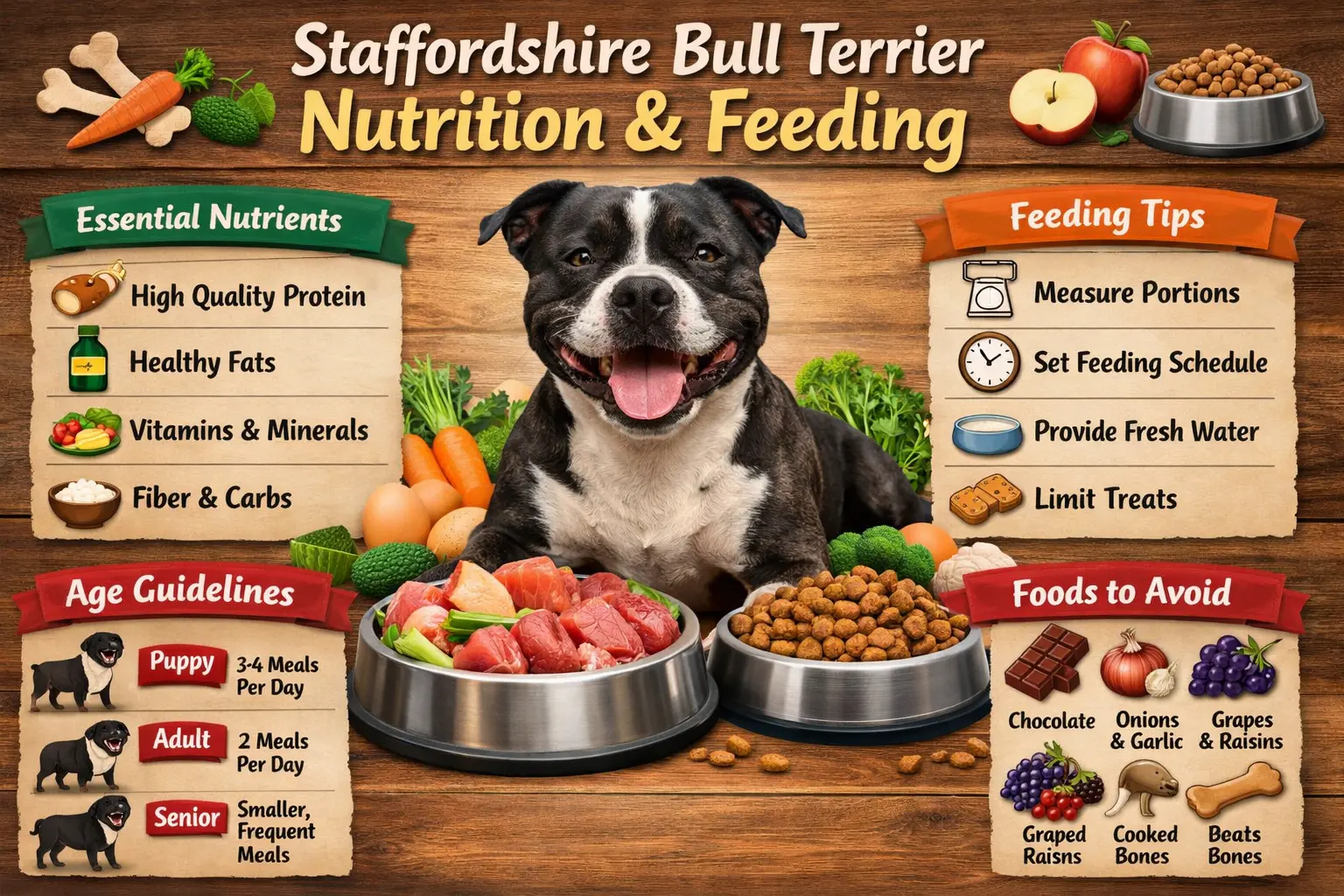
| Puppy | 3–4 meals | Supports growth and digestive development |
| Adult | 2 meals | Helps maintain stable energy and appetite control |
| Senior | 2 smaller meals | Often easier on digestion |
Feeding twice daily is generally suitable for most adult Staffordshire Bull Terriers.
Treat Guidelines
Treats should contribute no more than approximately 10% of daily calorie intake.
| Treat Type | Recommended Frequency |
|---|---|
| Training Treats | Small amounts daily |
| Dental Chews | Several times weekly |
| Safe Human Foods | Occasionally and in small portions |
Excessive treat consumption remains one of the leading causes of obesity in companion dogs.
Best Foods for Staffordshire Bull Terriers
When selecting food, prioritize:
- High-quality animal protein
- Complete and balanced nutrition
- Appropriate calorie density
- Digestible ingredients
- Consistent nutrient profile
Choose a formula that matches your dog’s age, activity level, and health requirements rather than selecting food solely based on marketing claims.
Staffordshire Bull Terrier Nutrition by Life Stage
Puppy Nutrition
Growing puppies require:
- Higher protein levels
- Higher calorie intake
- More frequent meals
- Controlled growth support
Adult Nutrition
Adult Staffies require:
- Lean muscle maintenance
- Weight management
- Consistent energy support
- Balanced nutrient intake
Senior Nutrition
Older Staffordshire Bull Terriers benefit from:
- High-quality protein
- Controlled calories
- Joint-supportive nutrition
- Easily digestible ingredients
Frequently Asked Questions
How much should a Staffordshire Bull Terrier eat per day?
Most adult Staffordshire Bull Terriers require approximately 850–1,250 calories daily depending on body weight and activity level.
How many times a day should I feed my Staffy?
Most adult Staffies do best with two meals per day, while puppies generally require three to four meals daily.
What is the best diet for a Staffordshire Bull Terrier?
A balanced diet containing high-quality protein, moderate fat levels, digestible carbohydrates, and essential nutrients is generally ideal.
Why is my Staffordshire Bull Terrier always hungry?
Staffies are naturally food-motivated dogs. Constant hunger can sometimes result from insufficient calorie intake, boredom, habit, or excessive treat consumption.
Can Staffordshire Bull Terriers gain weight easily?
Yes. Their strong appetite combined with a muscular but compact body structure makes them prone to weight gain when portions are not monitored.
Should I feed wet food or dry food?
Both can work well when nutritionally complete and balanced. The best option depends on your dog’s preferences, calorie requirements, and feeding routine.
How do I know if my Staffy is overweight?
If you cannot easily feel the ribs and your dog lacks a visible waistline, excess weight may be present.
Final Thoughts
A healthy Staffordshire Bull Terrier diet focuses on balance, consistency, and portion control. While choosing a quality food is important, monitoring body condition, adjusting calories as needed, and maintaining an appropriate feeding schedule often have a greater impact on long-term health.
By providing balanced nutrition throughout puppyhood, adulthood, and senior years, owners can help their Staffordshire Bull Terrier maintain strong muscles, healthy skin, stable energy levels, and an ideal body condition for many years.

Ata Ur Rehman is the founder of Pet Age in Human Years Calculator, an educational platform that provides age conversion charts and lifespan guides for dogs, cats, birds, and other companion animals. His work focuses on helping pet owners understand how animal ages translate into human years using commonly accepted age conversion formulas and published lifespan averages.
The website compiles breed and species lifespan data from kennel clubs, breed organizations, and general animal lifespan studies to present simple and easy-to-understand guides for pet owners worldwide.
This website was created to centralize animal age conversion charts into one easy reference platform for pet owners.
This article is for general education. For symptoms, medication, diet changes, or health concerns, use a qualified veterinarian who can assess your individual pet.