On this page
Bringing a Staffordshire Bull Terrier into your home is a long-term commitment that involves much more than the initial purchase or adoption fee. While Staffies are known for their loyalty, affectionate nature, and athletic build, they also come with ongoing expenses that many first-time owners underestimate.
Understanding the true Staffordshire Bull Terrier cost of ownership can help you prepare financially and avoid unexpected expenses. From food and veterinary care to training, insurance, and emergency costs, every aspect of ownership contributes to the overall budget.
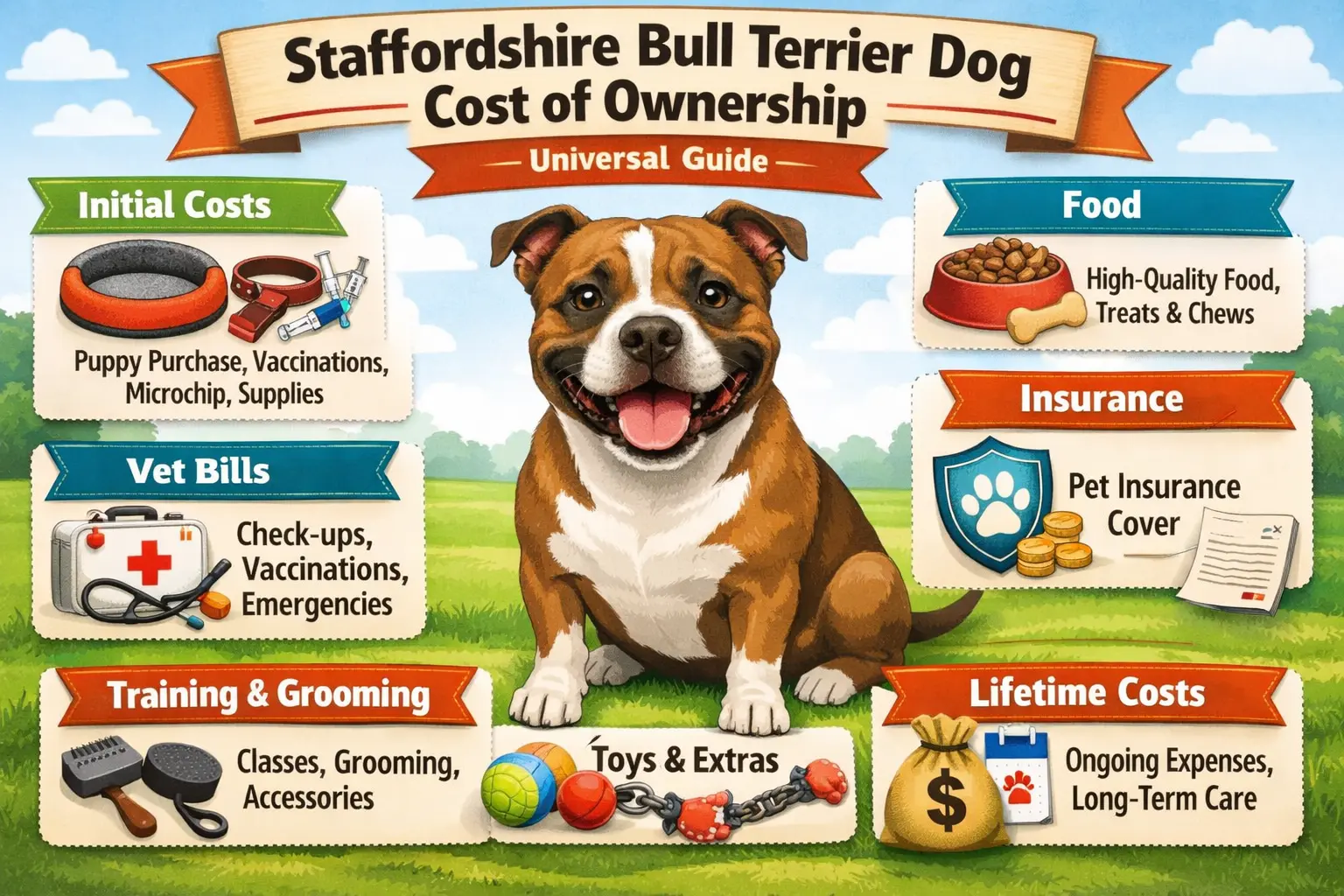
This guide covers the full financial picture of owning a Staffordshire Bull Terrier, including first-year expenses, recurring monthly costs, annual care costs, hidden expenses, and long-term ownership considerations.
Who This Guide Is For
This guide is designed for:
• Prospective owners evaluating whether a Staffordshire Bull Terrier fits their budget
• New owners planning for upcoming expenses
• Existing owners looking to estimate long-term ownership costs
• Families comparing Staffordshire Bull Terriers with other dog breeds
The figures and examples provided reflect real-world ownership scenarios rather than idealized low-cost estimates.
Why Staffordshire Bull Terriers Cost More Than Many People Expect
Many people assume Staffordshire Bull Terriers are inexpensive because they are medium-sized dogs with short coats that require minimal grooming. However, grooming is only one part of the total ownership equation.
Staffies often generate higher-than-expected expenses due to:
• High-quality food requirements for maintaining muscle mass
• Ongoing training and socialization needs
• Veterinary care for allergies and common health conditions
• Durable toys and enrichment activities
• Insurance and housing-related considerations
• Emergency medical expenses
Although they may not require frequent professional grooming, ownership costs can still be significant over their lifetime.
Quick Cost Overview
| Cost Category | Typical Cost Level |
|---|---|
| First-Year Cost | High |
| Monthly Cost | Moderate to High |
| Annual Cost | Moderate to High |
| Lifetime Cost | Significant Long-Term Commitment |
| Grooming Cost | Low |
| Veterinary Cost | Moderate to High |
The key takeaway is simple: Staffordshire Bull Terriers are not necessarily expensive to purchase, but they can be costly to own over their lifetime if you do not plan ahead.
One-Time and First-Year Costs
The first year is usually the most expensive period of ownership because many expenses occur simultaneously.
New owners typically need to pay for veterinary visits, vaccinations, supplies, training, registration, and other startup costs during the first several months.
One-Time Setup and First-Year Costs
| Expense | Typical Cost Range (First Year) | Why It Matters |
|---|---|---|
| Adoption or Breeder Fee | Moderate to High | Varies by source, pedigree, and location |
| Initial Vet Visits | Moderate | Vaccinations, examinations, parasite prevention |
| Spay or Neuter Procedure | Moderate | Common early medical expense |
| Microchipping | Low | Identification and recovery protection |
| Basic Supplies | Moderate | Crate, bed, bowls, collar, leash, toys |
| Initial Training Classes | Moderate | Helps establish behavior foundations |
Puppy First Year vs Adult Dog First Year
| Cost Area | Puppy (First Year) | Adult Dog (First Year) |
|---|---|---|
| Vet Visits | Higher | Lower |
| Vaccinations | More Frequent | Fewer Required |
| Training | Higher | Moderate |
| Food | Moderate | Moderate |
| Supplies | Higher | Lower |
| Overall Cost | High | Medium |
Puppies generally cost more because they require additional vaccinations, training sessions, supervision, and replacement items due to chewing and growth-related changes.
First-Year Cost Reality
Most Staffordshire Bull Terrier owners experience:
• Higher expenses during the first year
• Increased spending on training and healthcare
• More frequent veterinary visits
• Greater equipment and supply purchases
• Higher overall costs compared to later years
Investing in proper care during the first year often helps reduce future expenses.
Ongoing Monthly and Annual Expenses
After the first year, ownership costs become more predictable. These recurring expenses form the largest portion of total lifetime ownership costs.
Average Monthly and Annual Costs
| Expense | Monthly Cost (Average) | Yearly Cost (Average) | What It Covers |
|---|---|---|---|
| Food | Medium | Medium to High | Daily nutrition |
| Flea, Tick & Worm Prevention | Low to Medium | Medium | Preventative care |
| Routine Vet Care | Low | Medium | Checkups and vaccinations |
| Grooming & Hygiene | Low | Low to Medium | Nail, ear, and skin care |
| Training & Enrichment | Low to Medium | Medium | Toys, classes, activities |
| Miscellaneous Items | Low | Low | Replacement supplies |
| Total Estimated Cost | Medium | Medium to High | Varies by dog and lifestyle |
Some years will naturally be more expensive than others, particularly if health issues arise.
Food Costs for a Staffordshire Bull Terrier
Staffordshire Bull Terriers are muscular, energetic dogs that typically consume more calories than many owners initially expect.
Food quality, activity level, age, and health conditions all influence feeding costs.
Food Cost Factors
| Activity Level | Monthly Food Cost | Why It Changes |
|---|---|---|
| Low Activity | Lower | Reduced calorie needs |
| Average Activity | Medium | Standard exercise requirements |
| Very Active | Higher | Greater calorie consumption |
Choosing high-quality nutrition may increase monthly expenses but can contribute to better health and potentially lower veterinary costs over time.
Veterinary and Healthcare Costs
Routine healthcare is one of the most important ongoing ownership expenses.
Annual care commonly includes:
• Wellness examinations
• Vaccinations
• Parasite prevention
• Dental assessments
• General health monitoring
Common Health-Related Expenses
| Health Concern | Potential Cost Impact | Reason |
|---|---|---|
| Skin Allergies | Medium to High | Medications and follow-up visits |
| Ear Infections | Medium | Recurring treatment needs |
| Injuries | Medium | Active and energetic nature |
| Dental Care | Medium | Cleanings and maintenance |
While many Staffordshire Bull Terriers remain healthy throughout their lives, medical expenses can increase significantly when health issues arise.
Grooming and Maintenance Costs
Although Staffordshire Bull Terriers have short coats, they still require routine maintenance.
Typical grooming needs include:
• Nail trimming
• Occasional bathing
• Ear cleaning
• Dental care
• Skin monitoring
Professional grooming expenses are generally lower than those for long-haired breeds, making grooming one of the more affordable aspects of ownership.
Training and Enrichment Expenses
Training should continue throughout a Staffordshire Bull Terrier’s life.
Ongoing investments may include:
• Refresher obedience classes
• Puzzle toys
• Durable chew toys
• Interactive games
• Sports and activity programs
Proper mental stimulation can help prevent destructive behaviors that may create additional expenses.
Long-Term Ownership Reality
Most owners find that:
• Food remains one of the largest recurring expenses
• Veterinary care becomes increasingly important with age
• Enrichment costs remain ongoing
• Emergency expenses occasionally occur
• Total ownership costs add up significantly over time
Major Cost Drivers and Variations
Not every Staffordshire Bull Terrier costs the same to own. Several factors influence overall ownership expenses.
Living Situation Impact
| Living Situation | Cost Level | Why Costs Change |
|---|---|---|
| Apartment or City Living | Higher | Pet fees, higher vet costs, additional training |
| Suburban Home | Medium | More flexibility and space |
| Rural Area | Lower to Medium | Reduced service costs |
| Multi-Dog Household | Higher | Increased food and healthcare expenses |
Breed Characteristics Affecting Costs
| Factor | Cost Impact | Reason |
|---|---|---|
| Muscular Build | Medium | Increased food consumption |
| High Energy Level | Medium | More enrichment and exercise needs |
| Powerful Jaw | Medium | Faster toy replacement |
Health-Related Cost Factors
| Health Area | Possible Cost Impact | Reason |
|---|---|---|
| Allergies | Medium to High | Ongoing treatment |
| Ear Problems | Medium | Repeated care |
| Injuries | Medium | Active lifestyle |
| Dental Issues | Medium | Professional cleaning and treatment |
Pet Insurance Considerations
Pet insurance can help reduce financial risk associated with unexpected veterinary emergencies.
| Scenario | Monthly Cost | Emergency Expense Impact |
|---|---|---|
| With Insurance | Medium | Lower out-of-pocket costs |
| Without Insurance | Lower | Higher one-time expenses |
Insurance does not eliminate costs, but it can provide protection against major veterinary bills.
Hidden Costs Most Owners Forget
Many ownership expenses are overlooked during budgeting.
Common Hidden Costs
| Hidden Cost | Frequency | Why It Adds Up |
|---|---|---|
| Emergency Vet Visits | Occasional | Sudden illnesses and injuries |
| Dental Cleaning | Every Few Years | Often not covered by plans |
| Boarding or Pet Sitting | Travel Periods | Ongoing travel expenses |
| Destroyed Toys and Beds | Ongoing | Strong chewing habits |
| Skin Treatments | Ongoing for Some Dogs | Allergy management |
| Additional Training | As Needed | Behavioral support |
Even a single emergency can significantly increase annual ownership costs.
Building a Realistic Budget
A strong ownership budget should include:
• Monthly food expenses
• Preventative healthcare
• Routine veterinary visits
• Emergency savings
• Replacement toys and supplies
• Training expenses
• Insurance premiums if applicable
Setting aside money each month can make unexpected expenses easier to manage.
Smart Ways to Reduce Ownership Costs
You can lower expenses without sacrificing care by:
• Purchasing supplies in bulk
• Maintaining preventative healthcare
• Keeping your dog at a healthy weight
• Addressing health issues early
• Training consistently from a young age
• Investing in durable toys
Preventative spending is often less expensive than corrective spending.
Common Budgeting Mistakes
Many owners underestimate expenses because they:
• Budget only for food
• Ignore emergency costs
• Skip preventative care
• Delay training
• Underestimate healthcare expenses
• Fail to maintain an emergency fund
Avoiding these mistakes can make ownership more predictable and manageable.
Staffordshire Bull Terrier Lifetime Cost Overview
Most Staffordshire Bull Terriers live between 10 and 14 years, making ownership a significant long-term financial commitment.
Estimated Lifetime Ownership Impact
| Cost Level | Estimated Lifetime Cost | Typical Scenario |
|---|---|---|
| Lower-Cost Ownership | Lower Range | Healthy dog with minimal issues |
| Average Ownership | Medium Range | Routine care and occasional medical expenses |
| Higher-Cost Ownership | High Range | Health conditions, emergencies, ongoing treatment |
Lifetime costs vary greatly depending on health, lifestyle, location, and veterinary needs.
Frequently Asked Questions
How much does it cost to own a Staffordshire Bull Terrier?
The total cost depends on food quality, veterinary care, training, insurance, and lifestyle. Most owners spend significantly more during the first year than in later years.
Are Staffordshire Bull Terriers expensive dogs to own?
They are generally considered moderate-cost dogs. While grooming expenses are low, food, healthcare, and training costs can increase overall ownership expenses.
Do Staffordshire Bull Terrier puppies cost more than adults?
Yes. Puppies usually require more veterinary visits, vaccinations, supplies, and training during their first year.
Is pet insurance worth it for a Staffordshire Bull Terrier?
Many owners find insurance valuable because it helps offset the cost of unexpected illnesses and injuries.
What is the biggest ongoing expense?
For most owners, food and veterinary care represent the largest recurring costs throughout a Staffordshire Bull Terrier’s life.
Can ownership costs be reduced safely?
Yes. Preventative healthcare, proper nutrition, early training, and responsible budgeting can help lower overall expenses without affecting your dog’s well-being.
Final Thoughts
A Staffordshire Bull Terrier can be an incredibly rewarding companion, but responsible ownership requires financial preparation. While the breed may not have the highest maintenance requirements, ongoing costs for food, veterinary care, training, enrichment, and emergency expenses can add up substantially over time.
The most successful owners are those who plan ahead, maintain preventative care, and budget for both expected and unexpected expenses. Understanding the true cost of ownership before bringing a Staffy home allows you to provide a safe, healthy, and fulfilling life for your dog while avoiding financial surprises later on.
If you’re prepared for the commitment, a Staffordshire Bull Terrier can become a loyal family companion for many years while rewarding your investment with affection, companionship, and unwavering devotion.

Ata Ur Rehman is the founder of Pet Age in Human Years Calculator, an educational platform that provides age conversion charts and lifespan guides for dogs, cats, birds, and other companion animals. His work focuses on helping pet owners understand how animal ages translate into human years using commonly accepted age conversion formulas and published lifespan averages.
The website compiles breed and species lifespan data from kennel clubs, breed organizations, and general animal lifespan studies to present simple and easy-to-understand guides for pet owners worldwide.
This website was created to centralize animal age conversion charts into one easy reference platform for pet owners.
This article is for general education. For symptoms, medication, diet changes, or health concerns, use a qualified veterinarian who can assess your individual pet.