On this page
Flat-Coated Retrievers are energetic, athletic sporting dogs with a long growth period, strong appetites, and a reputation for staying “puppy-like” well into adulthood. Because of this combination, nutrition plays a much bigger role in their long-term health than many owners realize. Feeding this breed correctly isn’t just about choosing a “good dog food” — it’s about matching calories, nutrients, and feeding habits to how Flat-Coated Retrievers actually grow, move, and age.
A well-designed diet supports steady muscle development, healthy joints, a glossy black or liver-colored coat, and sustained energy without tipping into weight gain. On the other hand, poor feeding choices often show up early as digestive issues, excessive weight, dull coat condition, or inconsistent energy levels — and these problems tend to compound as the dog gets older.
Flat-Coated Retrievers are naturally active and food-motivated, which makes them easier to overfeed than many owners expect. Free-feeding, oversized portions, or relying heavily on treats during training can quietly push calorie intake well above what the dog actually needs. Over time, this extra weight places unnecessary strain on joints and reduces overall fitness, even in dogs that still appear playful and energetic.
Nutrition also matters because this breed matures slowly. Puppies and adolescents need enough protein, fat, and micronutrients to support growth, but not so much energy that they grow too fast. Controlled, balanced feeding during the first 18–24 months helps protect developing bones and joints while still fueling their high activity level.
Finally, diet affects more than just the body — it influences behavior, focus, and stamina. Flat-Coated Retrievers that are under-fueled may seem restless or fatigued, while dogs eating poorly balanced diets may struggle with inconsistent energy or digestive upset. Getting nutrition right sets the foundation for training success, long working days, and healthy aging.
Best Diet for a Flat-Coated Retriever: Nutritional Needs Explained
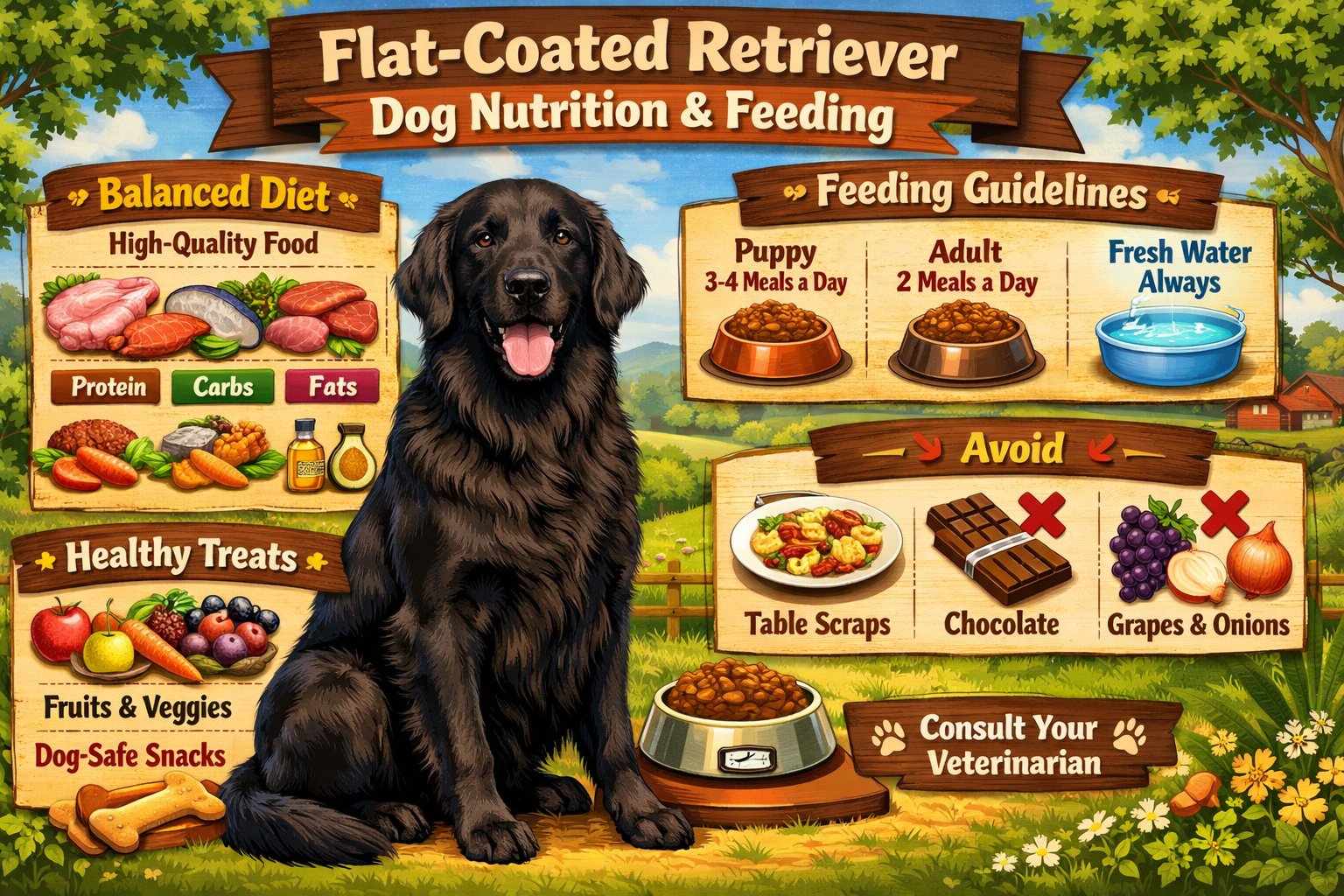
Flat-Coated Retrievers do best on a balanced, complete diet that supports their active body, long growth period, and shiny coat. This breed burns more energy than many family dogs, but they can still gain weight easily if the food quality or portions are wrong. That’s why it’s important to understand what should actually be in their food.
At the core of a good Flat-Coated Retriever diet are protein, fat, and carbohydrates, plus essential vitamins and minerals. These nutrients work together to keep muscles strong, joints supported, digestion steady, and energy levels even throughout the day.
Protein is the most important nutrient for this breed. It helps maintain lean muscle, supports recovery after exercise, and keeps the coat healthy. Flat-Coated Retrievers are sporting dogs, so their food should contain enough animal-based protein to match their activity level, especially during puppyhood and active adult years.
Fat is the main energy source. It fuels long walks, play sessions, and training while also supporting skin and coat health. Too little fat can lead to low energy and dry coat, while too much fat can cause weight gain if portions are not controlled.
Carbohydrates are not “bad” for dogs when chosen correctly. They provide steady energy and fiber for digestion. For Flat-Coated Retrievers, moderate, easy-to-digest carbs can help support gut health and keep stools firm.
Below is a quick-reference table showing general macronutrient ranges that work well for most healthy Flat-Coated Retrievers. These are typical ranges seen in quality commercial foods that meet established nutrition standards.
Recommended Macronutrient Ranges for Flat-Coated Retrievers
| Nutrient | General Range | Why It Matters |
|---|---|---|
| Protein | 22–30% | Muscle, coat, activity support |
| Fat | 12–18% | Energy, skin, coat health |
| Carbohydrates | Moderate | Digestive support, steady energy |
Beyond macronutrients, micronutrients play a big role in long-term health. These include vitamins, minerals, and fatty acids that support joints, immune function, and overall wellness. Flat-Coated Retrievers especially benefit from nutrients that support mobility and reduce inflammation over time.
Key Micronutrients to Look For in Dog Food
| Nutrient | Main Benefit |
|---|---|
| Omega-3 fatty acids | Joint support, healthy coat |
| Zinc | Skin and coat health |
| Vitamin E | Immune and cell health |
| Antioxidants | Long-term wellness support |
When choosing a diet, look for food labeled as “complete and balanced” for your dog’s life stage. This means the food meets established nutrition guidelines and provides all required nutrients without the need for extra supplements. Adding supplements on top of a balanced diet is usually unnecessary and, in some cases, can cause more harm than good.
Be cautious with marketing terms like “premium,” “natural,” or “ancestral.” These words do not guarantee nutritional quality. The ingredient list and nutrition profile matter far more than the brand claims on the front of the bag.
Most healthy Flat-Coated Retrievers do best on a grain-inclusive, balanced diet unless a veterinarian recommends otherwise. Grain-free diets are not automatically better and should not be chosen without a clear medical reason.
How Much to Feed a Flat-Coated Retriever (By Age, Weight, and Activity)
Feeding the right amount is just as important as choosing the right food. Flat-Coated Retrievers are active dogs, but they can still gain weight if portions are too big. Many owners overfeed without realizing it, especially when treats and snacks are added on top of meals.
The amount your Flat-Coated Retriever needs depends on body weight, age, and daily activity. A young, active dog needs more calories than an older dog that spends most of the day resting. Always use feeding guidelines as a starting point, then adjust based on your dog’s body shape and energy level.
Below is a general daily calorie guide for adult Flat-Coated Retrievers. These are average ranges, not exact numbers. Individual needs can vary.
Daily Calorie Needs by Weight
| Dog Weight | Daily Calories (Approx.) |
|---|---|
| 55 lbs (25 kg) | 1,300–1,600 |
| 65 lbs (30 kg) | 1,500–1,800 |
| 75 lbs (34 kg) | 1,700–2,100 |
If your dog is very active, such as hiking, training, or working regularly, they may need calories near the higher end of the range. Less active or neutered dogs often need fewer calories to stay lean.
Age also plays a big role in how much and how often to feed. Puppies need more frequent meals, while adults and seniors do better with a steady routine.
Feeding Amounts by Life Stage
| Life Stage | Meals Per Day | Feeding Focus |
|---|---|---|
| Puppy | 3–4 | Steady growth, joint safety |
| Adult | 2 | Energy balance, weight control |
| Senior | 2 | Fewer calories, joint support |
Instead of relying only on measuring cups, it’s important to watch your dog’s body shape. You should be able to feel the ribs easily without pressing hard, and your dog should have a visible waist when viewed from above. If ribs are hard to feel, portions are likely too large. If ribs are very visible, portions may be too small.
Treats count too. Training treats, table scraps, and chews can quickly add extra calories. A good rule is to keep treats under 10% of daily calories.
If your Flat-Coated Retriever is gaining weight, reduce portions slightly and limit treats before switching foods. If your dog seems hungry all the time but is already at a healthy weight, try spreading meals into smaller portions or adding low-calorie fiber like plain pumpkin (vet-approved).
What to Feed a Flat-Coated Retriever: Food Types, Treats, and Safety
Flat-Coated Retrievers can do well on different types of dog food, as long as the diet is balanced and fits their activity level. There is no single “perfect” food for every dog. The best choice is one that your dog eats well, digests well, and stays healthy on over time.
Most owners choose dry kibble because it is easy to store, measure, and feed. Others prefer fresh, canned, freeze-dried, raw, or homemade diets. Each option has benefits and downsides, especially for a large, active breed like the Flat-Coated Retriever.
Below is a simple comparison to help you understand the main food types.
Dog Food Types: Pros and Cons
| Food Type | Pros | Cons |
|---|---|---|
| Dry kibble | Easy to use, affordable, balanced | Quality varies by brand |
| Canned food | Tasty, high moisture | Higher cost, less dental benefit |
| Fresh food | Easy to digest, appealing | Expensive, short shelf life |
| Freeze-dried | Convenient, high protein | Needs rehydration, costly |
| Raw diet | Very palatable | Safety and balance risks |
| Homemade | Full control of ingredients | Must be properly formulated |
If you choose a commercial food, look for one labeled as complete and balanced for your dog’s life stage. This means it meets recognized nutrition standards and provides all required nutrients without extra supplements.
Treats are useful for training, but they should not replace meals or add too many calories. Choose small, soft treats and break them into tiny pieces. Treats should make up no more than 10% of daily calories.
Many owners like to share human food, but not all foods are safe for dogs. Some are healthy in small amounts, while others are dangerous even in tiny bites.
Safe vs Toxic Foods for Flat-Coated Retrievers
| Safe in Small Amounts | Toxic to Dogs |
|---|---|
| Cooked chicken (plain) | Chocolate |
| Plain rice or pasta | Grapes and raisins |
| Pumpkin (plain) | Onions and garlic |
| Carrots | Xylitol (sweetener) |
| Apples (no seeds) | Alcohol |
Always keep toxic foods out of reach, and never assume a small amount is safe. When in doubt, do not feed it.
Water is just as important as food. Flat-Coated Retrievers are active dogs and need constant access to clean, fresh water. A sudden increase or decrease in drinking should be discussed with a veterinarian.
Special Feeding Situations, Common Problems, and Owner FAQs
Even with good food and correct portions, feeding problems can still happen. Flat-Coated Retrievers are food-motivated dogs, but they can also be picky, gain weight easily, or have sensitive stomachs. Knowing how to handle common issues helps prevent small problems from becoming long-term health concerns.
Some Flat-Coated Retrievers skip meals or seem bored with food. This often happens when dogs get too many treats, table scraps, or snacks between meals. In most cases, sticking to a regular feeding schedule and cutting back on extras solves the problem within a few days.
Weight gain is another common issue. Because this breed loves food, portions slowly creep up over time. Reducing meal size slightly and limiting treats usually works better than switching foods right away. On the other hand, dogs that look too thin may need slightly larger portions or more calorie-dense food.
Digestive upset, such as loose stool or gas, often comes from switching foods too fast or feeding rich treats. Any food change should be done slowly over 7 to 10 days to allow the gut to adjust.
Common Feeding Problems and Practical Fixes
| Problem | Likely Cause | What to Do |
|---|---|---|
| Skipping meals | Too many treats | Remove snacks, keep routine |
| Loose stool | Fast food change | Slow transition |
| Weight gain | Overfeeding | Reduce portions |
| Always hungry | Low fiber or boredom | Split meals, add vet-approved fiber |
| Low energy | Not enough calories | Review portions and activity |
Special situations may also require diet changes. Very active dogs may need more calories, while older or less active dogs usually need fewer. Dogs with allergies or sensitive stomachs may need limited-ingredient or vet-recommended diets.
You should talk to a veterinarian or veterinary nutritionist if your Flat-Coated Retriever has ongoing digestive problems, sudden weight changes, chronic itching, or refuses food for more than a day or two. Professional guidance is especially important for homemade or therapeutic diets.

Ata Ur Rehman is the founder of Pet Age in Human Years Calculator, an educational platform that provides age conversion charts and lifespan guides for dogs, cats, birds, and other companion animals. His work focuses on helping pet owners understand how animal ages translate into human years using commonly accepted age conversion formulas and published lifespan averages.
The website compiles breed and species lifespan data from kennel clubs, breed organizations, and general animal lifespan studies to present simple and easy-to-understand guides for pet owners worldwide.
This website was created to centralize animal age conversion charts into one easy reference platform for pet owners.
This article is for general education. For symptoms, medication, diet changes, or health concerns, use a qualified veterinarian who can assess your individual pet.