On this page
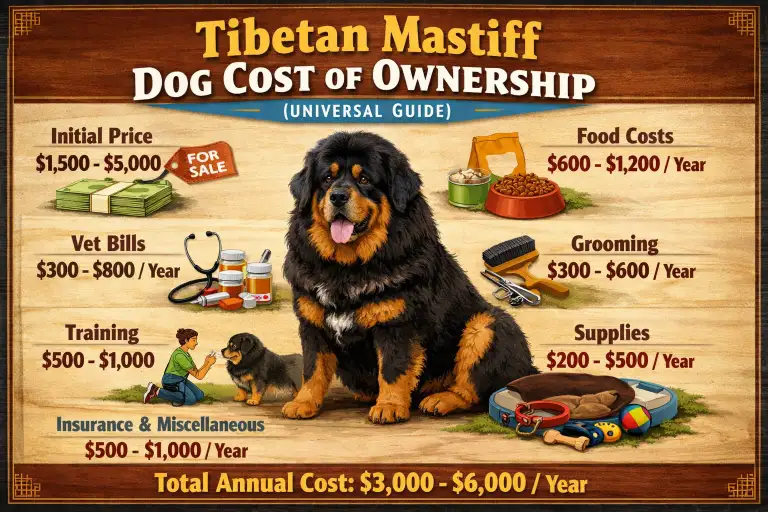
Owning a Tibetan Mastiff is significantly more expensive than owning an average dog. This giant guardian breed requires premium nutrition, larger equipment, higher veterinary expenses, stronger containment systems, and specialized training throughout its life.
Many prospective owners focus only on the purchase price, but the purchase cost represents only a small portion of the total financial commitment. The real cost of ownership comes from food, veterinary care, grooming, insurance, housing adjustments, and emergency medical expenses over the dog’s lifetime.
For most owners, the total lifetime cost of owning a Tibetan Mastiff falls between $35,000 and $85,000+, depending on health, location, and lifestyle choices.
Tibetan Mastiff Purchase Price
| Source | Typical Cost |
|---|---|
| Reputable breeder puppy | $2,500 – $6,000 |
| Show-quality bloodlines | $6,000 – $12,000+ |
| Rescue or adoption | $300 – $1,000 |
| Imported bloodlines | $8,000 – $15,000+ |
A well-bred Tibetan Mastiff puppy from health-tested parents usually costs between $3,000 and $5,000 in North America. Imported champion bloodlines can exceed $10,000.
First-Year Cost of Owning a Tibetan Mastiff
The first year is usually the most expensive period because owners must pay for setup costs, vaccinations, training, and equipment replacements while the dog grows rapidly. This is already recognized in the current content but lacks actual financial ranges.
| Expense Category | Estimated Cost |
|---|---|
| Purchase price | $2,500 – $6,000 |
| Initial veterinary care | $500 – $1,200 |
| Vaccinations | $150 – $300 |
| Spay or neuter surgery | $300 – $800 |
| Crate and supplies | $500 – $1,000 |
| Training classes | $400 – $1,500 |
| Fencing upgrades | $500 – $3,000 |
| Food | $1,000 – $1,800 |
| Insurance | $500 – $1,200 |
| Emergency fund recommendation | $2,000+ |
| Total Estimated First-Year Cost |
|---|
| $8,000 – $16,000+ |
Monthly Cost of Owning a Tibetan Mastiff
| Monthly Expense | Average Monthly Cost |
|---|---|
| Food | $90 – $180 |
| Flea, tick, and heartworm prevention | $20 – $45 |
| Pet insurance | $40 – $120 |
| Grooming | $20 – $80 |
| Toys and replacements | $15 – $40 |
| Training refreshers | $20 – $100 |
| Miscellaneous expenses | $20 – $50 |
| Estimated Monthly Total |
|---|
| $205 – $615 |
Most owners spend between $250 and $450 per month after the first year.
Annual Cost of Ownership
| Annual Expense | Typical Cost |
|---|---|
| Food | $1,100 – $2,000 |
| Veterinary care | $500 – $1,500 |
| Preventatives | $250 – $500 |
| Insurance | $500 – $1,500 |
| Grooming | $250 – $800 |
| Equipment replacement | $150 – $400 |
| Training | $200 – $1,000 |
| Estimated Annual Total |
|---|
| $3,000 – $7,500 |
Why Tibetan Mastiffs Cost More Than Most Dogs
Giant Breed Size
Adult males often weigh between 90 and 150 pounds, while some exceed that range. Medication, anesthesia, surgeries, boarding, and transportation all become more expensive as body weight increases.
Specialized Training Requirements
Tibetan Mastiffs are independent guardians rather than eager-to-please working dogs. Professional training during adolescence is strongly recommended.
Heavy-Duty Equipment
Standard leashes, crates, beds, and fencing often fail with giant breeds. Owners usually purchase premium heavy-duty equipment that costs substantially more than average dog supplies.
Veterinary Risk Profile
Common health concerns include:
- Hip dysplasia
- Elbow dysplasia
- Hypothyroidism
- Entropion
- Bloat and gastric torsion
Several of these conditions can require surgeries costing thousands of dollars.
Puppy vs Adult Ownership Costs
| Cost Area | Puppy | Adult |
|---|---|---|
| Purchase cost | Higher | Lower |
| Vaccinations | High | Lower |
| Training | Extensive | Moderate |
| Food increases | Rapidly increasing | Stable |
| Equipment purchases | Complete setup | Partial replacement |
| Total first-year cost | Highest | Lower |
Puppies are almost always more expensive during the first year of ownership.
Hidden Costs Most Owners Forget
| Hidden Expense | Typical Cost |
|---|---|
| Emergency veterinary care | $1,000 – $10,000+ |
| Boarding | $50 – $120 per day |
| Property damage | Variable |
| Dental cleaning | $300 – $1,000 |
| Travel surcharges | Variable |
| Replacing equipment | $100 – $500 annually |
The existing article correctly identifies these categories but does not quantify them, which reduces usefulness for purchase decision intent.
Estimated Lifetime Cost of a Tibetan Mastiff
| Ownership Scenario | Estimated Lifetime Cost |
|---|---|
| Healthy low-cost scenario | $35,000 – $45,000 |
| Average ownership scenario | $45,000 – $65,000 |
| Medical or high-cost scenario | $65,000 – $85,000+ |
With an average lifespan of 10 to 14 years, even healthy dogs represent a major financial commitment.
Is a Tibetan Mastiff Worth the Cost?
For the right owner, absolutely.
However, this breed is not suitable for buyers seeking a low-maintenance or budget-friendly dog. Tibetan Mastiffs require financial preparation, consistent training, secure housing, and emergency savings.
Frequently Asked Questions
How much does a Tibetan Mastiff cost per month?
Most owners spend between $250 and $450 per month excluding emergencies.
How much does a Tibetan Mastiff puppy cost?
Most puppies from reputable breeders cost between $2,500 and $6,000.
Are Tibetan Mastiffs expensive to maintain?
Yes. They are among the most expensive dog breeds to own because of their size and healthcare costs.
How much food does a Tibetan Mastiff eat?
Most adults consume approximately 4 to 7 cups of premium food per day depending on activity level and body condition.
Is pet insurance worth it for a Tibetan Mastiff?
For many owners the answer is yes because emergency surgeries and orthopedic conditions can easily exceed several thousand dollars.
What is the biggest ownership expense?
After the purchase price, food and veterinary care become the largest recurring costs.
Final Thoughts
A Tibetan Mastiff is a premium giant breed with premium ownership costs. Buyers should budget for the entire lifetime commitment rather than focusing on the purchase price alone.
If your budget comfortably supports several thousand dollars in annual expenses and a large emergency reserve, a Tibetan Mastiff can be an exceptional companion and guardian. If not, choosing a less expensive breed is often the smarter long-term decision.
Owning a Tibetan Mastiff is significantly more expensive than owning an average dog. This giant guardian breed requires premium nutrition, larger equipment, higher veterinary expenses, stronger containment systems, and specialized training throughout its life.
Many prospective owners focus only on the purchase price, but the purchase cost represents only a small portion of the total financial commitment. The real cost of ownership comes from food, veterinary care, grooming, insurance, housing adjustments, and emergency medical expenses over the dog’s lifetime.
For most owners, the total lifetime cost of owning a Tibetan Mastiff falls between $35,000 and $85,000+, depending on health, location, and lifestyle choices.
Tibetan Mastiff Purchase Price
| Source | Typical Cost |
|---|---|
| Reputable breeder puppy | $2,500 – $6,000 |
| Show-quality bloodlines | $6,000 – $12,000+ |
| Rescue or adoption | $300 – $1,000 |
| Imported bloodlines | $8,000 – $15,000+ |
A well-bred Tibetan Mastiff puppy from health-tested parents usually costs between $3,000 and $5,000 in North America. Imported champion bloodlines can exceed $10,000.
First-Year Cost of Owning a Tibetan Mastiff
The first year is usually the most expensive period because owners must pay for setup costs, vaccinations, training, and equipment replacements while the dog grows rapidly. This is already recognized in the current content but lacks actual financial ranges.
| Expense Category | Estimated Cost |
|---|---|
| Purchase price | $2,500 – $6,000 |
| Initial veterinary care | $500 – $1,200 |
| Vaccinations | $150 – $300 |
| Spay or neuter surgery | $300 – $800 |
| Crate and supplies | $500 – $1,000 |
| Training classes | $400 – $1,500 |
| Fencing upgrades | $500 – $3,000 |
| Food | $1,000 – $1,800 |
| Insurance | $500 – $1,200 |
| Emergency fund recommendation | $2,000+ |
| Total Estimated First-Year Cost |
|---|
| $8,000 – $16,000+ |
Monthly Cost of Owning a Tibetan Mastiff
| Monthly Expense | Average Monthly Cost |
|---|---|
| Food | $90 – $180 |
| Flea, tick, and heartworm prevention | $20 – $45 |
| Pet insurance | $40 – $120 |
| Grooming | $20 – $80 |
| Toys and replacements | $15 – $40 |
| Training refreshers | $20 – $100 |
| Miscellaneous expenses | $20 – $50 |
| Estimated Monthly Total |
|---|
| $205 – $615 |
Most owners spend between $250 and $450 per month after the first year.
Annual Cost of Ownership
| Annual Expense | Typical Cost |
|---|---|
| Food | $1,100 – $2,000 |
| Veterinary care | $500 – $1,500 |
| Preventatives | $250 – $500 |
| Insurance | $500 – $1,500 |
| Grooming | $250 – $800 |
| Equipment replacement | $150 – $400 |
| Training | $200 – $1,000 |
| Estimated Annual Total |
|---|
| $3,000 – $7,500 |
Why Tibetan Mastiffs Cost More Than Most Dogs
Giant Breed Size
Adult males often weigh between 90 and 150 pounds, while some exceed that range. Medication, anesthesia, surgeries, boarding, and transportation all become more expensive as body weight increases.
Specialized Training Requirements
Tibetan Mastiffs are independent guardians rather than eager-to-please working dogs. Professional training during adolescence is strongly recommended.
Heavy-Duty Equipment
Standard leashes, crates, beds, and fencing often fail with giant breeds. Owners usually purchase premium heavy-duty equipment that costs substantially more than average dog supplies.
Veterinary Risk Profile
Common health concerns include:
- Hip dysplasia
- Elbow dysplasia
- Hypothyroidism
- Entropion
- Bloat and gastric torsion
Several of these conditions can require surgeries costing thousands of dollars.
Puppy vs Adult Ownership Costs
| Cost Area | Puppy | Adult |
|---|---|---|
| Purchase cost | Higher | Lower |
| Vaccinations | High | Lower |
| Training | Extensive | Moderate |
| Food increases | Rapidly increasing | Stable |
| Equipment purchases | Complete setup | Partial replacement |
| Total first-year cost | Highest | Lower |
Puppies are almost always more expensive during the first year of ownership.
Hidden Costs Most Owners Forget
| Hidden Expense | Typical Cost |
|---|---|
| Emergency veterinary care | $1,000 – $10,000+ |
| Boarding | $50 – $120 per day |
| Property damage | Variable |
| Dental cleaning | $300 – $1,000 |
| Travel surcharges | Variable |
| Replacing equipment | $100 – $500 annually |
The existing article correctly identifies these categories but does not quantify them, which reduces usefulness for purchase decision intent.
Estimated Lifetime Cost of a Tibetan Mastiff
| Ownership Scenario | Estimated Lifetime Cost |
|---|---|
| Healthy low-cost scenario | $35,000 – $45,000 |
| Average ownership scenario | $45,000 – $65,000 |
| Medical or high-cost scenario | $65,000 – $85,000+ |
With an average lifespan of 10 to 14 years, even healthy dogs represent a major financial commitment.
Is a Tibetan Mastiff Worth the Cost?
For the right owner, absolutely.
However, this breed is not suitable for buyers seeking a low-maintenance or budget-friendly dog. Tibetan Mastiffs require financial preparation, consistent training, secure housing, and emergency savings.
Frequently Asked Questions
How much does a Tibetan Mastiff cost per month?
Most owners spend between $250 and $450 per month excluding emergencies.
How much does a Tibetan Mastiff puppy cost?
Most puppies from reputable breeders cost between $2,500 and $6,000.
Are Tibetan Mastiffs expensive to maintain?
Yes. They are among the most expensive dog breeds to own because of their size and healthcare costs.
How much food does a Tibetan Mastiff eat?
Most adults consume approximately 4 to 7 cups of premium food per day depending on activity level and body condition.
Is pet insurance worth it for a Tibetan Mastiff?
For many owners the answer is yes because emergency surgeries and orthopedic conditions can easily exceed several thousand dollars.
What is the biggest ownership expense?
After the purchase price, food and veterinary care become the largest recurring costs.
Final Thoughts
A Tibetan Mastiff is a premium giant breed with premium ownership costs. Buyers should budget for the entire lifetime commitment rather than focusing on the purchase price alone.
If your budget comfortably supports several thousand dollars in annual expenses and a large emergency reserve, a Tibetan Mastiff can be an exceptional companion and guardian. If not, choosing a less expensive breed is often the smarter long-term decision.

Ata Ur Rehman is the founder of Pet Age in Human Years Calculator, an educational platform that provides age conversion charts and lifespan guides for dogs, cats, birds, and other companion animals. His work focuses on helping pet owners understand how animal ages translate into human years using commonly accepted age conversion formulas and published lifespan averages.
The website compiles breed and species lifespan data from kennel clubs, breed organizations, and general animal lifespan studies to present simple and easy-to-understand guides for pet owners worldwide.
This website was created to centralize animal age conversion charts into one easy reference platform for pet owners.
This article is for general education. For symptoms, medication, diet changes, or health concerns, use a qualified veterinarian who can assess your individual pet.