On this page
Training a Tibetan Mastiff is very different from training most dog breeds. These dogs were developed over centuries to guard livestock, homes, and villages in remote mountain regions with little human supervision. Instead of waiting for instructions, they were expected to make decisions independently and react to threats on their own.
That independence is exactly what makes Tibetan Mastiff training challenging for many owners.
People who expect instant obedience often become frustrated when their dog ignores commands, questions instructions, or appears stubborn. In reality, a Tibetan Mastiff is rarely being disobedient. More often, the dog is evaluating the situation and deciding whether the command makes sense from its perspective.
Successful Tibetan Mastiff training is not based on dominance, punishment, or endless repetition.
It is built on:
- Trust
- Consistency
- Clear boundaries
- Patience
- Mutual respect
Owners who understand how this breed learns usually achieve reliable long-term results, while owners who rely on force or harsh corrections often create resistance, stress, and behavioral problems.
This guide explains how to train a Tibetan Mastiff puppy and adult dog using methods designed specifically for independent guardian breeds.
It applies to:
- Tibetan Mastiff puppies beginning foundation training
- Adolescent dogs entering their difficult teenage phase
- Adult Tibetan Mastiffs with inconsistent training histories
- First-time giant breed owners
- Experienced handlers working with livestock guardian breeds
Unlike breeds such as the Labrador Retriever or German Shepherd, Tibetan Mastiffs are not eager-to-please working dogs that thrive on repetition and constant instruction.
Their motivation is different.
They prefer purpose over routine and cooperation over obedience.
Understanding that difference is the foundation of successful training.
In this guide, you will learn:
- How to train a Tibetan Mastiff puppy from the first day home
- Why traditional obedience methods often fail with guardian breeds
- How to handle stubborn behavior without creating conflict
- The best age to begin Tibetan Mastiff puppy training
- How to manage barking, guarding, and territorial instincts
- Socialization strategies that reduce fear and overprotection
- When professional help becomes necessary
Why Proper Tibetan Mastiff Training Is Essential
Training is not optional for a Tibetan Mastiff.
An adult male can weigh well over 120 pounds while possessing enormous strength, confidence, and natural protective instincts. Behaviors that seem harmless in a small puppy can become serious management problems once the dog reaches maturity.
Without proper training, owners commonly experience:
- Excessive territorial behavior
- Ignoring commands outdoors
- Pulling on the leash
- Resource guarding
- Visitor management problems
- Fence guarding and barrier frustration
- Excessive nighttime barking
Because Tibetan Mastiffs were bred to guard property without direct human supervision, they naturally assume responsibility for making security decisions.
If owners fail to establish leadership and clear rules, the dog will create its own rules instead.
This often results in:
| With Proper Training | Without Proper Training |
|---|---|
| Calm confidence around visitors | Suspicion toward strangers |
| Reliable response to commands | Selective listening |
| Controlled leash manners | Pulling and lunging |
| Appropriate guarding behavior | Overprotective behavior |
| Relaxed home environment | Constant alertness and stress |
| Safe interactions in public | Difficult management situations |
Early training protects both the owner and the dog.
A well-trained Tibetan Mastiff is less likely to develop dangerous guarding habits, less likely to be restricted by local regulations, and far more capable of living successfully in modern neighborhoods and urban environments.
Many adult behavioral issues begin during puppyhood but are dismissed as “cute” or “normal.”
Examples include:
- Barking at every sound
- Blocking doors and hallways
- Guarding toys or food
- Refusing to move on walks
- Ignoring recall commands
- Becoming overly attached to one family member
Addressing these behaviors early is significantly easier than correcting them in a mature guardian dog weighing over 100 pounds.
The goal of Tibetan Mastiff training is not to eliminate the breed’s protective instincts.
The goal is to teach the dog when those instincts are necessary and when they are not.
Understanding Tibetan Mastiff Behavior and Temperament Before Training
Before starting Tibetan Mastiff obedience training, owners must understand how this breed thinks.
Many training failures happen because people treat Tibetan Mastiffs like traditional companion breeds. They expect immediate responses, constant attention, and a strong desire to please.
That expectation does not match the natural temperament of this guardian breed.
Tibetan Mastiffs were developed to protect homes, monasteries, and livestock in harsh environments. They worked independently, often making decisions without direct human commands. This history created a dog that is confident, intelligent, observant, and naturally cautious.
A Tibetan Mastiff is not asking:
“How quickly can I follow this command?”
The breed is more likely to ask:
“Why should I do this, and does this situation require my response?”
This independent thinking is normal.
It does not mean the dog is unintelligent or impossible to train.
It means training must be built around cooperation rather than control.
Key Tibetan Mastiff Traits That Affect Training
| Tibetan Mastiff Trait | Common Owner Misunderstanding | Better Training Approach |
|---|---|---|
| Independent decision-making | “My dog is stubborn” | Use consistent rules and meaningful rewards |
| Slow response to commands | “My dog does not listen” | Give clear commands and avoid repetition |
| Protective nature | “My dog is aggressive” | Teach boundaries and controlled socialization |
| Strong territorial instinct | “My dog cannot be trusted” | Teach appropriate guarding behavior |
| Low interest in repetitive drills | “Training is not working” | Use short, purposeful sessions |
| Late emotional maturity | “My puppy is difficult” | Continue patient training through adolescence |
Are Tibetan Mastiffs Easy to Train?
Tibetan Mastiffs are not considered easy-to-train dogs for beginners.
They are intelligent and capable of learning commands, but their independent personality makes them different from breeds that naturally seek human approval.
A Tibetan Mastiff can learn:
- Sit
- Stay
- Come
- Down
- Leave it
- Loose leash walking
- Door manners
- Visitor boundaries
- Calm behavior around distractions
However, success depends heavily on consistency.
Repeating commands many times, becoming frustrated, or using harsh corrections usually reduces cooperation.
The best Tibetan Mastiff training approach combines:
- Calm leadership
- Positive reinforcement
- Clear expectations
- Controlled exposure
- Daily consistency
Step-by-Step Tibetan Mastiff Training Approach
Start Training During Puppyhood
The best time to begin Tibetan Mastiff puppy training is immediately after bringing your puppy home.
Early training does not mean forcing advanced obedience.
The first goals should be:
| Puppy Training Stage | Main Goal |
|---|---|
| 8–12 weeks | Building trust and confidence |
| 3–6 months | Basic commands and socialization |
| 6–12 months | Boundary training and impulse control |
| 12+ months | Reliability and advanced behavior management |
During puppyhood, focus on teaching your Tibetan Mastiff what behavior is expected rather than only correcting mistakes.
Important early lessons include:
- Responding to its name
- Accepting handling
- Walking calmly on a leash
- Waiting at doors
- Settling around visitors
- Respecting household boundaries
Use Short and Consistent Training Sessions
Tibetan Mastiffs usually do not respond well to long repetitive training sessions.
Instead:
| Training Method | Recommended Approach |
|---|---|
| Session length | 5–15 minutes |
| Frequency | Daily practice |
| Training location | Start in quiet areas |
| Rewards | Praise, treats, calm approval |
| Commands | Clear and consistent |
Short sessions prevent boredom and keep the dog mentally engaged.
Tibetan Mastiff Socialization Training
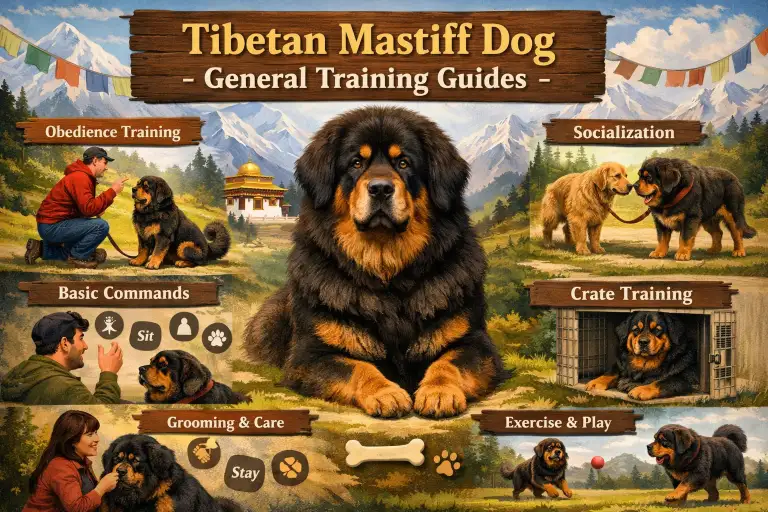
Socialization is one of the most important parts of raising a stable Tibetan Mastiff.
Because this breed is naturally protective, puppies must learn the difference between normal situations and real threats.
Proper socialization includes controlled exposure to:
- Different people
- Children
- Other dogs
- Vehicles
- New environments
- Household sounds
- Veterinary handling
The goal is not to make a Tibetan Mastiff friendly with everyone.
The goal is to create a confident dog that can remain calm when exposed to unfamiliar situations.
Never force interactions.
A nervous or uncomfortable Tibetan Mastiff should be allowed to observe from a safe distance while being rewarded for calm behavior.
Common Tibetan Mastiff Training Problems and Solutions
| Problem | Why It Happens | Training Solution |
|---|---|---|
| Ignoring commands | Too many repetitions or distractions | Practice in easier environments |
| Excessive barking | Natural guarding instinct | Teach calm behavior and appropriate alerts |
| Pulling on leash | Size and confidence | Train controlled walking early |
| Guarding visitors | Protective nature | Establish visitor boundaries |
| Refusing commands | Lack of motivation | Improve communication and rewards |
| Teenage behavior changes | Normal maturity stage | Maintain consistent rules |
When to Get Professional Training Help
Some Tibetan Mastiff behaviors require expert guidance.
Seek professional help if your dog:
- Shows aggressive behavior toward people
- Attempts to bite
- Guards food or family members intensely
- Cannot be safely controlled outdoors
- Shows extreme fear or anxiety
A trainer experienced with large guardian breeds will understand that Tibetan Mastiffs require different techniques than typical obedience breeds.
Frequently Asked Questions About Tibetan Mastiff Training
Are Tibetan Mastiffs difficult to train?
Yes, Tibetan Mastiffs can be challenging to train because they are independent thinkers. They are intelligent but do not always respond immediately like highly obedient working breeds. Consistent training, patience, and clear boundaries are essential.
What is the best age to start training a Tibetan Mastiff puppy?
Training should begin as soon as a Tibetan Mastiff puppy comes home, usually around 8 weeks old. Early training should focus on socialization, trust building, basic commands, and household rules.
How do you train a stubborn Tibetan Mastiff?
A stubborn Tibetan Mastiff usually needs better motivation and clearer communication rather than harsher correction. Use short sessions, rewards, consistency, and avoid repeating commands multiple times.
Can Tibetan Mastiffs be trained to obey commands?
Yes. Tibetan Mastiffs can learn obedience commands, but owners should understand that reliability develops slowly. This breed responds best when commands are taught through trust and consistency.
How do you stop a Tibetan Mastiff from barking?
To reduce excessive barking, identify the trigger first. Teach the dog a calm response, reward quiet behavior, and avoid encouraging constant alert barking. Because barking is part of their guarding nature, the goal is management rather than eliminating all barking.
Are Tibetan Mastiffs aggressive?
Tibetan Mastiffs are naturally protective, but proper training and socialization help prevent inappropriate aggression. A stable Tibetan Mastiff should be confident, controlled, and responsive to its owner’s guidance.
How much exercise does a trained Tibetan Mastiff need?
Tibetan Mastiffs generally need moderate daily exercise combined with mental stimulation. Long periods of repetitive activity are usually unnecessary, but regular walks, training sessions, and environmental enrichment are important.
Can first-time owners train a Tibetan Mastiff?
First-time owners can train a Tibetan Mastiff, but they must be prepared for a large, independent guardian breed. Consistency, research, and professional guidance when needed are strongly recommended.
Final Thoughts
Training a Tibetan Mastiff is a long-term commitment built on understanding the breed rather than trying to change its natural personality.
This breed was created to think independently, protect confidently, and make decisions without constant human direction. Successful owners do not fight those instincts — they guide them.
The best-trained Tibetan Mastiff is not the dog that blindly obeys every command.
It is the dog that understands boundaries, trusts its owner, remains calm in different situations, and uses its protective instincts appropriately.
With patience, consistency, and the right training approach, a Tibetan Mastiff can become a loyal, stable, and well-mannered guardian companion.

Ata Ur Rehman is the founder of Pet Age in Human Years Calculator, an educational platform that provides age conversion charts and lifespan guides for dogs, cats, birds, and other companion animals. His work focuses on helping pet owners understand how animal ages translate into human years using commonly accepted age conversion formulas and published lifespan averages.
The website compiles breed and species lifespan data from kennel clubs, breed organizations, and general animal lifespan studies to present simple and easy-to-understand guides for pet owners worldwide.
This website was created to centralize animal age conversion charts into one easy reference platform for pet owners.
This article is for general education. For symptoms, medication, diet changes, or health concerns, use a qualified veterinarian who can assess your individual pet.